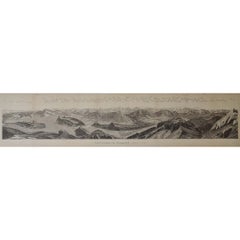
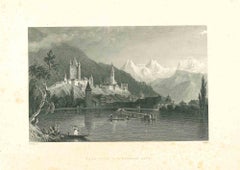
Antique Chromolithograph of Mount Rigi and Lake Lucerne, Switzerland, ca. 1890
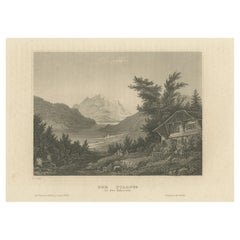
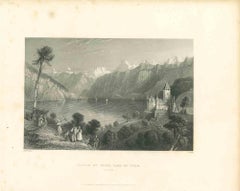
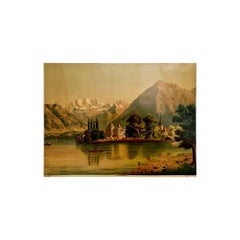
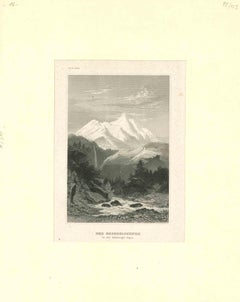
This vibrant chromolithograph, titled “Der Rigi,” offers a sweeping and idyllic view of Mount Rigi rising majestically above Lake Lucerne in central Switzerland. Created around 1890, the print captures the beauty and grandeur of the Swiss landscape in exquisite detail and full color, utilizing the chromolithographic technique that defined high-quality visual publishing in the late 19th century.
Mount Rigi, often referred to as the “Queen of the Mountains,” is one of Switzerland’s most celebrated peaks, not for its height, but for its panoramic views. Situated between Lake Lucerne and Lake Zug, it has long drawn visitors and artists captivated by the drama of its cliffs, the lush green slopes, and its prominence above the lake-filled valleys of central Switzerland. By the time this image was made, Mount Rigi had become a popular destination for tourists and wellness seekers, especially after the opening of the Rigi Railway—the first mountain cog railway in Europe—in 1871.
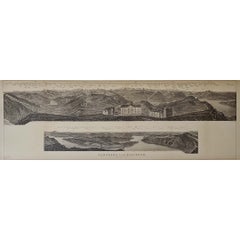
In the foreground, a tranquil alpine pasture with grazing goats and a resting herdsman adds a rustic, pastoral charm. The middle ground features steamships and sailboats navigating the blue waters of Lake Lucerne, while the background reveals the intricate topography of the Rigi massif, crisscrossed by walking paths and train tracks winding up to the summit. Atop the peak sits the historic Rigi Kulm Hotel and lookout station, popular with 19th-century travelers seeking sublime mountain views.
This print blends natural grandeur with everyday rural life, offering a poetic vision of the Swiss Alps that is both decorative and culturally rich. Ideal for collectors of Alpine imagery, travel history, or vintage views of Switzerland, this print also holds strong decorative appeal for homes with mountain, rustic, or nature-inspired interiors.
Condition Report:
Very good condition with strong, well-preserved colors. Paper shows mild age-toning in the outer margin and a few faint spots, but the image area remains clean and unmarred. No tears, repairs, or folding lines present.
Framing Tips:
To highlight the deep greens and earth tones, a natural wood frame—such as walnut, cherry, or dark maple—would be ideal. A soft ivory or pale green mat adds contrast without distracting from the image. This piece would suit alpine lodges, country homes, or any setting with a focus on nature, travel, or European charm. For best protection, use museum glass to preserve the vibrancy and detail.