Video Loading
Want more images or videos?
Request additional images or videos from the seller
1 of 11

Biblical Botanical Print – Dudaim Melon Engraving by Corvinus, 1731

$459.74per item
£340.76per item
€390per itemVAT Included
CA$641.36per item
A$650.54per item
CHF 371.48per item
MX$7,878.27per item
NOK 4,373.20per item
SEK 4,358.68per item
DKK 2,973.58per item
Quantity

About the Item

Dudaim Melon Botanical Engraving – Corvinus after Scheuchzer, 1731 This antique botanical print, titled ‘Dudaim, Melo, Pepo, Luffah,’ depicts the Dudaim Melon (Cucumis melo var. dudaim) alongside flowering vines and fruits in striking baroque style. It originates from Johann Jakob Scheuchzer’s monumental work Physica Sacra (1731–1735), often referred to as the Kupfer-Bibel, one of the most ambitious natural history and biblical illustration projects of the early 18th century. Scheuchzer sought to harmonize scripture with science, explaining Old Testament events through natural philosophy, medicine, and physics. Engraved by Johann August Corvinus, the plate demonstrates the precision and artistry typical of Augsburg’s golden age of printmaking. The Dudaim Melon, referenced in biblical texts, was thought to be imbued with mystical and medicinal properties, making this image both a botanical study and a reflection of contemporary theological thought. Collectors value Physica Sacra prints for their unique combination of natural history, biblical interpretation, and elaborate artistic presentation. This example shows the lush fruiting bodies, leaves, and blossoms with exceptional detail, making it a fine piece for both scientific and decorative interest. Condition report: Very good impression on strong paper. Some light age toning in the margins, with minor spotting consistent with age. Plate mark clearly visible. Image area clean and sharp. Framing tips: This engraving pairs well with a dark green or walnut-brown wooden frame, ideally with a cream or off-white mat to highlight the fine linework. For a more dramatic presentation, a gold-leaf frame with deep bevel matting would emphasize its baroque origins. Technique: Engraving Maker: J. A. Corvinus, Augsburg, 1731
  • Dimensions:
    Height: 13.98 in (35.5 cm)Width: 9.3 in (23.6 cm)Depth: 0 in (0.02 mm)
  • Materials and Techniques:
    Paper,Engraved
  • Place of Origin:
  • Period:
    1730-1739
  • Date of Manufacture:
    1731
  • Condition:
    Wear consistent with age and use. Condition report: Very good impression on strong paper. Some light age toning in the margins, with minor spotting consistent with age. Plate mark clearly visible. Image area clean and sharp.
  • Seller Location:
    Langweer, NL
  • Reference Number:
    Seller: PCT-62836 1stDibs: LU3054327153322

More From This Seller

View All
Botanical Engraving of Tithymalus Aiz Arbor from Caspar Commelin’s Work, 1706

Botanical Engraving of Tithymalus Aiz Arbor from Caspar Commelin’s Work, 1706

Located in Langweer, NL

Botanical Engraving of Tithymalus Aiz Arbor from Caspar Commelin’s Work, 1706 This engraving is possibly a botanical illustration from Caspar Commelin's "Praeludia Botanica," publis...

Category

Antique Early 1700s Prints

Materials

Paper

Antique Engraving of the Caper Bush and Other Plants, 1773

Antique Engraving of the Caper Bush and Other Plants, 1773

Located in Langweer, NL

Antique print titled 'Capparis Arabica (..)'. Old botany print depicting the caper bush, shepherd's purse and other plants. Originates from the first Dutch editon of an interesting t...

Category

Antique 18th Century Prints

Materials

Paper

Botanical Elegance: Antique Engravings from Johann Weinmann's Masterpiece, 1748

Botanical Elegance: Antique Engravings from Johann Weinmann's Masterpiece, 1748

Located in Langweer, NL

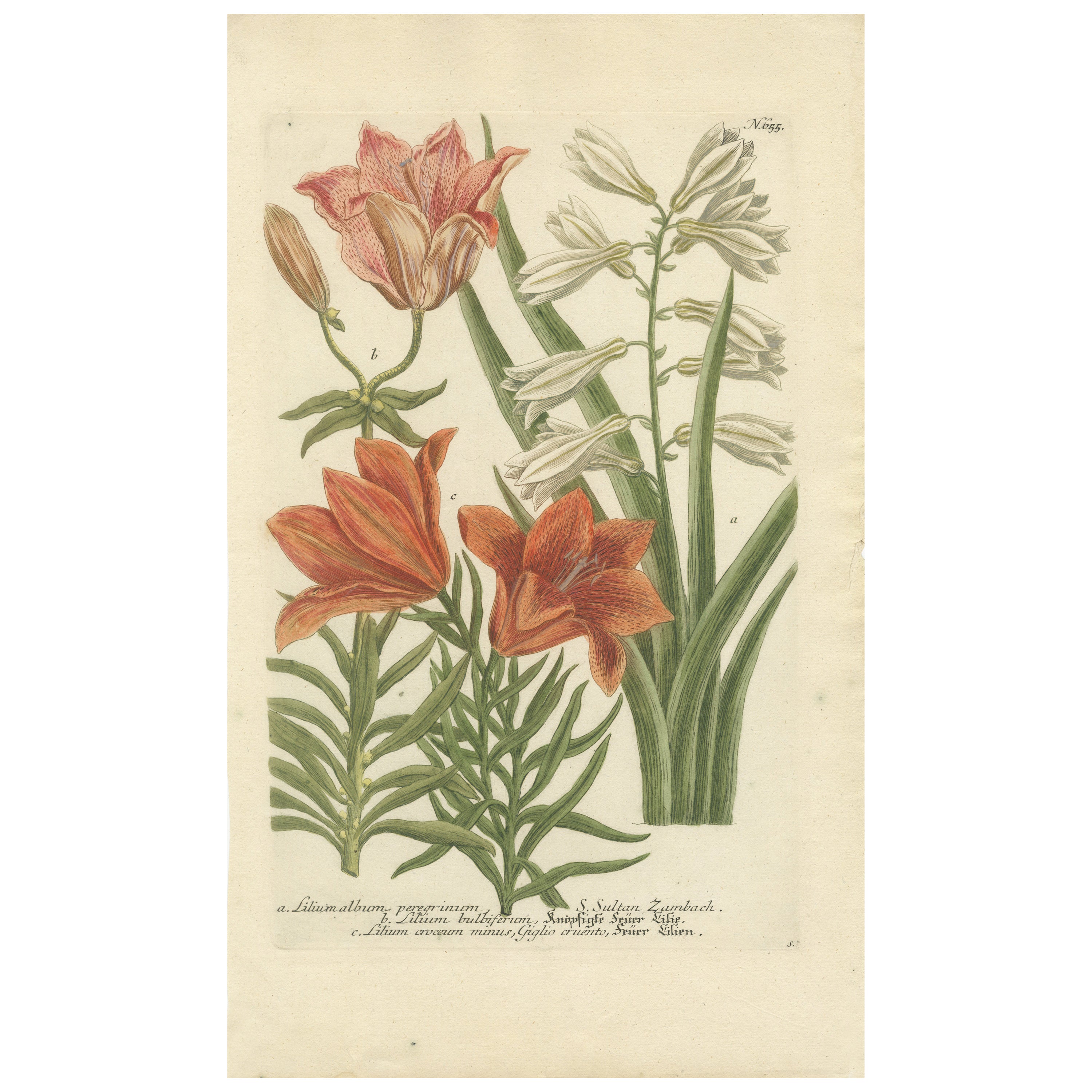
Artist or Maker: Johann Wilhelm Weinmann Title: "Lilium album peregrinum. Lilium buliferum, Knöpfigte Feuer Lilien. Lilium croceum minus, Feuer Lilien." Medium: Colored etching Catal...

Category

Antique 1740s German Prints

Materials

Paper

De Bry Engraving Expressio Germinum – Exotic Plants of St. Lawrence Island, 1598

De Bry Engraving Expressio Germinum – Exotic Plants of St. Lawrence Island, 1598

Located in Langweer, NL

De Bry Engraving “Expressio Germinum” – Exotic Plants of St. Lawrence Island, c.1598 A fascinating original 16th-century copper engraving from Theodor de Bry’s Petits Voyages (Frank...

Category

Antique 16th Century German Prints

Materials

Paper

Antique Botany Print of The Barringtonia Plant by Cook, 1803

Antique Botany Print of The Barringtonia Plant by Cook, 1803

Located in Langweer, NL

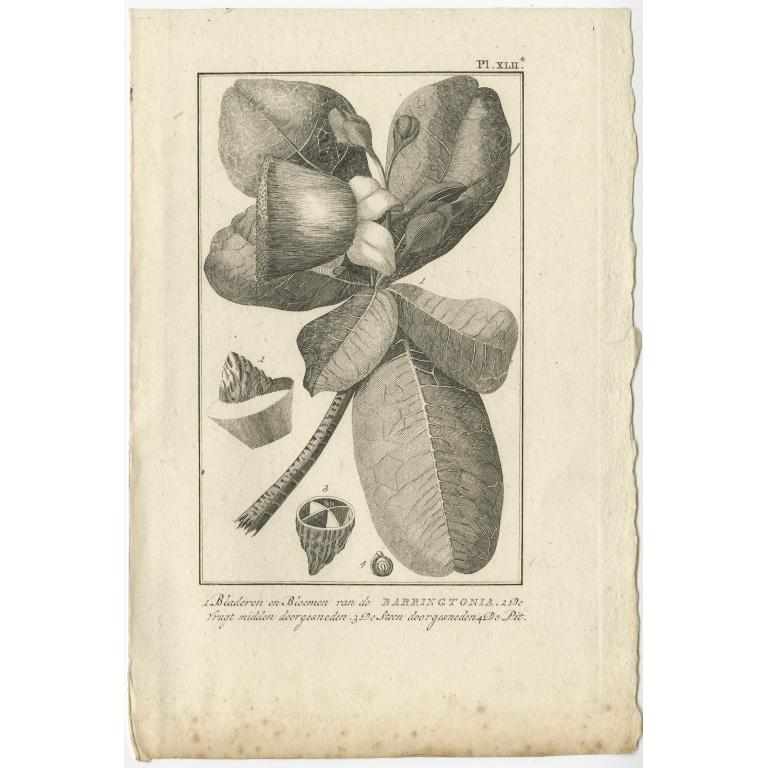
The antique botany print, titled 'Bladeren en Bloemen van de Barringtonia,' portrays the leaves and flowers of the Barringtonia plant. This plant, renowned for its unique feature of ...

Category

Antique 19th Century Prints

Materials

Paper

Elegant 1805 Hand-Colored Botanical Engraving of Bulbous Plants from Bertuch

Elegant 1805 Hand-Colored Botanical Engraving of Bulbous Plants from Bertuch

Located in Langweer, NL

Title: Elegant 1805 Hand-Colored Botanical Engraving of Bulbous Plants from Bertuch Description: This detailed hand-colored botanical engraving is taken from Friedrich Justin Be...

Category

Antique Early 1800s German Prints

Materials

Paper

You May Also Like

Caunga Cucumber Plant: A 17th Century Botanical Engraving by Hendrik van Rheede

Caunga Cucumber Plant: A 17th Century Botanical Engraving by Hendrik van Rheede

Located in Alamo, CA

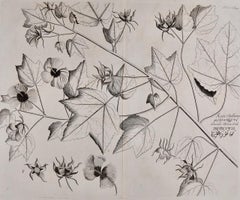
This is a rare 17th century engraving of a plant entitled "Caunga" by the Dutch botanist Hendrik van Rheede tot Drakenstein, plate 6 from his 'Hortus Indicus Malabaricus' (Garden of Malabar), published in Amsterdam in 1686 by Johann van Someren. The engraving depicts the caunga plant, also known as Inca cucumber or horned squash, which is a climbing vine that produces edible, cucumber-like fruits. Rheede's 19th century publication featured illustrations of exotic plants and fruits labelled with script in the upper right corner in Latin, Malay, Arabic, and Sanskrit. Hortus Indicus Malabaricus is believed to be the earliest comprehensive published work on the flora of Asia and the tropics. The 17th century treatise featured important illustrations of 740 plants of the region, including Indian medicinal plants. The engraving is printed on 17th century laid, chain-linked paper, watermarked with an elaborate crown design. The sheet measures 15.25" high by 18.88" wide. There is a central fold, as issued. There is a small dark spot on the left which appears to represent a paper inclusion which occurred when the hand-made paper was produced. The print is otherwise in excellent condition. There are additional Rheede botanical engravings from his 'Hortus Indicus Malabaricus' publication that are listed on my 1stdibs storefront and online website. These would make for an impressive display grouping. A discount is available for purchase of two or more of the prints. Hendrik Adriaan van Rheede tot Drakenstein...

Category

Late 17th Century Naturalistic Landscape Prints
Materials

Engraving

Early 19th Century Botanical Engraving by John Curtis

Early 19th Century Botanical Engraving by John Curtis

Located in Seaford, GB

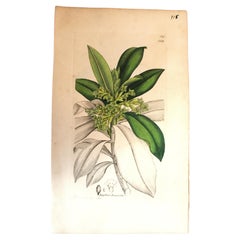
Early 19th Century Botanical Engraving by John Curtis – Hand Coloured Natural History Plate An original early 19th-century hand-coloured botanical engraving from the celebrated natural history publications of John Curtis (1791–1862), one of Britain’s most respected botanical and entomological illustrators. This beautifully detailed plate illustrates a flowering plant in scientific profile, showing bloom structure, leaves, buds, and root system with precision typical of early Victorian natural history illustration. Curtis’s work bridges science and art — created for study, yet prized today for its elegance and balance. These engravings formed part of the golden age of British botanical publishing, when artists collaborated with engravers and colourists to produce plates that were both accurate and visually refined. Each impression was printed from an engraved plate and then carefully coloured by hand, meaning no two examples are ever exactly identical. The composition has the clarity collectors seek: • Central botanical specimen • Naturalistic colour palette • Fine line engraving • Period scientific titling This makes it ideal as a single framed piece or as part of a gallery wall of antique botanical studies. About John Curtis John Curtis was a leading figure in British natural history illustration. He is best known for British Entomology and botanical works that combined taxonomic accuracy with graceful composition. His engravings are held in major museum collections and remain highly collectable in the decorative arts market. Period Early 19th century, circa 1820–1840. Technique Copperplate engraving with original hand colouring on laid paper. Condition Good antique condition consistent with age. Light toning and minor handling marks may be present, as expected with early 19th-century works on paper. Please see the images. Why Collect Curtis Botanical Prints...

Category

Antique Early 19th Century British George III Prints

Materials

Paper

Basilius Besler Botanical Engraving, Hortus Eystettensis, Early 17th Century

Basilius Besler Botanical Engraving, Hortus Eystettensis, Early 17th Century

By Basilius Besler

Located in Stockholm, SE

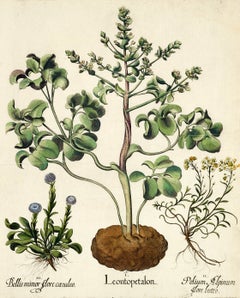
An original hand-colored botanical engraving from Basilius Besler’s Hortus Eystettensis, published in Nuremberg in 1613. Executed at the transition between Renaissance naturalism and...

Category

Antique 17th Century German Baroque Decorative Art

Materials

Paper

Early 19th Century Botanical Engraving by John Curtis

Early 19th Century Botanical Engraving by John Curtis

Located in Seaford, GB

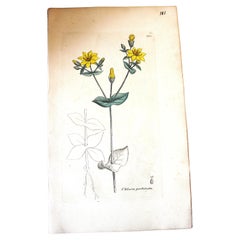
Early 19th Century Botanical Engraving by John Curtis – Hand Coloured Natural History Plate An original early 19th-century hand-coloured botanical engraving from the celebrated natural history publications of John Curtis (1791–1862), one of Britain’s most respected botanical and entomological illustrators. This beautifully detailed plate illustrates a flowering plant in scientific profile, showing bloom structure, leaves, buds, and root system with precision typical of early Victorian natural history illustration. Curtis’s work bridges science and art — created for study, yet prized today for its elegance and balance. These engravings formed part of the golden age of British botanical publishing, when artists collaborated with engravers and colourists to produce plates that were both accurate and visually refined. Each impression was printed from an engraved plate and then carefully coloured by hand, meaning no two examples are ever exactly identical. The composition has the clarity collectors seek: • Central botanical specimen • Naturalistic colour palette • Fine line engraving • Period scientific titling This makes it ideal as a single framed piece or as part of a gallery wall of antique botanical studies. About John Curtis John Curtis was a leading figure in British natural history illustration. He is best known for British Entomology and botanical works that combined taxonomic accuracy with graceful composition. His engravings are held in major museum collections and remain highly collectible in the decorative arts market. Period Early 19th century, circa 1820–1840. Technique Copperplate engraving with original hand colouring on laid paper. Condition Good antique condition consistent with age. Light toning and minor handling marks may be present, as expected with early 19th-century works on paper. Please see the images. Why Collect Curtis Botanical Prints...

Category

Antique Early 19th Century British George III Prints

Materials

Paper