Want more images or videos?
Request additional images or videos from the seller
1 of 6

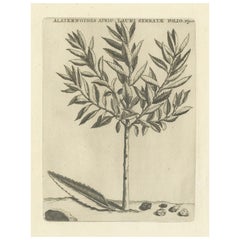
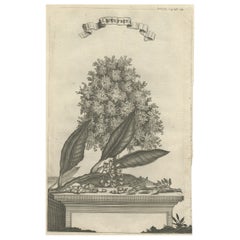
Botanical Engraving of Tithymalus Aiz Arbor from Caspar Commelin’s Work, 1706

$273.58
$341.9820% Off
£202.79
£253.4820% Off
€232VAT Included
€29020% Off
CA$381.66
CA$477.0720% Off
A$387.18
A$483.9720% Off
CHF 221.06
CHF 276.3220% Off
MX$4,688.14
MX$5,860.1820% Off
NOK 2,602.40
NOK 3,253.0120% Off
SEK 2,593.77
SEK 3,242.2120% Off
DKK 1,769.52
DKK 2,211.9020% Off

About the Item

Botanical Engraving of Tithymalus Aiz Arbor from Caspar Commelin’s Work, 1706 This engraving is possibly a botanical illustration from Caspar Commelin's "Praeludia Botanica," published in 1703. It depicts *Tithymalus Aiz Arbor Caudice Angulneri Fol*, an exotic plant species with distinct angular stems and narrow leaves. The Latin title translates to "Tithymalus Aiz tree with angular stems and oleander-like leaves," referring to its unique structural features. This engraving could be a proof print (proefdruk) of Caspar Commelin's work, *"Horti Medici Amstelaedamensis Plantæ Rariores et Exoticæ ad Vivum Æri Incisæ,"* published in 1706 by Fredericum Haringh in Leiden (Lugduni Batavorum). The style and botanical detail in the engraving align with the scientific and illustrative approach typical of the Commelins' botanical works. These illustrations were often created directly from life ("ad vivum") to accurately document rare and exotic plants, many of which were housed at the Amsterdam Hortus Medicus. Given that proof prints were commonly produced to ensure accuracy before inclusion in published works, this engraving might be part of the preparatory process for Commelin's publications. It fits with the layout and descriptions found in the 1706 edition of Caspar Commelin's botanical works, which continued the legacy initiated by his uncle, Jan Commelin. ### Description: The engraving shows a plant with a tall, angular stem and elongated, broad leaves. The leaves grow along the length of the stem in a spiral pattern, giving the plant a striking appearance. - Stem and Leaves: The illustration emphasizes the plant’s angular stem, which supports a number of broad, curving leaves. The texture of the stem and the gentle curves of the leaves are captured with fine detail, showing the plant’s natural form. - Growth Pattern: The plant stands upright with leaves growing in a spiral pattern along the stem, gradually tapering toward the top. The simple background allows the viewer to focus entirely on the botanical details of the plant. ### Maker: This engraving likely belongs to the series produced under the supervision of Caspar Commelin for his botanical publications. Caspar Commelin took over the work of his uncle, Jan Commelin, documenting rare and exotic plants brought to Europe, primarily through Dutch colonial and trade networks. Their botanical works, such as *"Horti Medici Amstelaedamensis,"* were significant in early efforts to classify and describe plants from around the world. ### What It Shows: The engraving provides a detailed depiction of the Tithymalus Aiz Arbor, showcasing its angular stem and oleander-like leaves. The plant is native to regions outside Europe and was valued for its ornamental and possibly medicinal uses. This engraving serves as an accurate scientific illustration, helping botanists and herbalists study the plant's unique characteristics. This engraving likely contributed to European efforts in the 18th century to classify and document exotic species, focusing on their botanical features and potential uses.
  • Dimensions:
    Height: 9.34 in (23.7 cm)Width: 7.29 in (18.5 cm)Depth: 0 in (0.02 mm)
  • Materials and Techniques:
    Paper,Engraved
  • Period:
    1700-1709
  • Date of Manufacture:
    1706
  • Condition:
    Condition: very good, given age. Etching / engraving on hand-laid (verge) paper. Light foxing, mostly outside the plate-mark. General age-related toning and/or occasional minor defects from handling. Study the scans carefully.
  • Seller Location:
    Langweer, NL
  • Reference Number:
    Seller: BG-13748-1281stDibs: LU3054341525622

More From This Seller

View All
Botanical Engraving of Alaternoides Afric Lauri Serratae from Commelin, 1706

Botanical Engraving of Alaternoides Afric Lauri Serratae from Commelin, 1706

Located in Langweer, NL

Botanical Engraving of Alaternoides Afric Lauri Serratae from Caspar Commelin, 1706 This engraving is possibly a botanical illustration from Caspar Commelin's *"Praeludia Botanica,"...

Category

Antique Early 1700s Dutch Prints

Materials

Paper

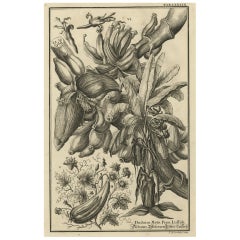
Biblical Botanical Print – Dudaim Melon Engraving by Corvinus, 1731

Biblical Botanical Print – Dudaim Melon Engraving by Corvinus, 1731

Located in Langweer, NL

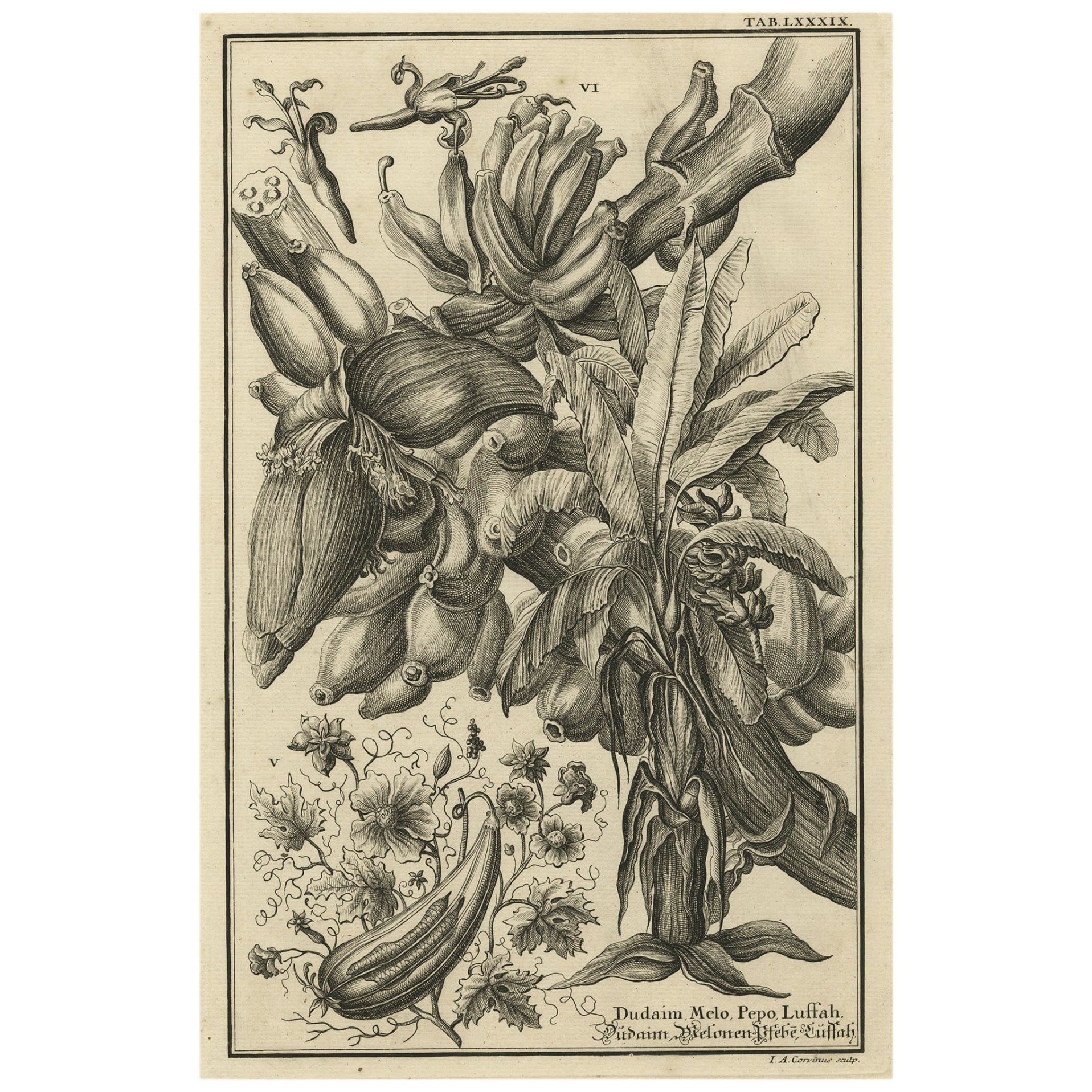
Dudaim Melon Botanical Engraving – Corvinus after Scheuchzer, 1731 This antique botanical print, titled ‘Dudaim, Melo, Pepo, Luffah,’ depicts the Dudaim Melon (Cucumis melo var. dudaim) alongside flowering vines and fruits in striking baroque style. It originates from Johann Jakob Scheuchzer’s monumental work Physica Sacra...

Category

Antique 1730s Swiss Prints

Materials

Paper

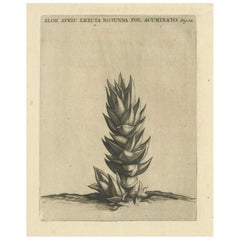
Botanical Engraving of Aloe Afric Erecta from Caspar Commelin's Work, 1706

Botanical Engraving of Aloe Afric Erecta from Caspar Commelin's Work, 1706

Located in Langweer, NL

Botanical Engraving of Aloe Afric Erecta from Caspar Commelin's Work, 1706 This engraving is likely a botanical illustration from Caspar Commelin's "Praeludia Botanica," published i...

Category

Antique Early 1700s Prints

Materials

Paper

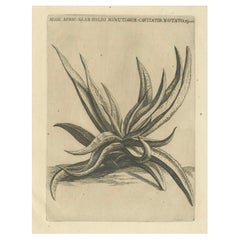
Botanical Engraving of African Aloe from Commelin’s "Praeludia Botanica", 1703

Botanical Engraving of African Aloe from Commelin’s "Praeludia Botanica", 1703

Located in Langweer, NL

African Aloe Botanical Engraving from Caspar Commelin’s "Horti Medici Amstelaedamensis," 1706 This engraving is possibly a botanical illustration from Caspar Commelin's "Praeludia B...

Category

Antique Early 1700s Prints

Materials

Paper

Rare Old Copper Engraving of a Clove Tree in the East Indies, Asia, 1659

Rare Old Copper Engraving of a Clove Tree in the East Indies, Asia, 1659

Located in Langweer, NL

Antique print titled 'Clove Tree'. Copper engraving of a clove tree. This print originates from 'Voyages and Travels to the East-Indies' by J. Nieuhof. Artists and engravers:...

Category

Antique 1650s Prints

Materials

Paper

Botanical Illustration of Cardamom Plant (Cardamomum majus arborescens) , 1696

Botanical Illustration of Cardamom Plant (Cardamomum majus arborescens) , 1696

Located in Langweer, NL

This antique print, titled "Cardamomum majus arborescens," illustrates the Cardamom plant, known for its aromatic seeds, which are commonly used as a spice in both culinary and medic...

Category

Antique 1690s Prints

Materials

Paper

You May Also Like

Basilius Besler Botanical Engraving, Hortus Eystettensis, Early 17th Century

Basilius Besler Botanical Engraving, Hortus Eystettensis, Early 17th Century

By Basilius Besler

Located in Stockholm, SE

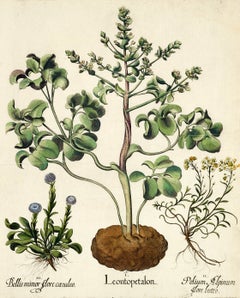
An original hand-colored botanical engraving from Basilius Besler’s Hortus Eystettensis, published in Nuremberg in 1613. Executed at the transition between Renaissance naturalism and...

Category

Antique 17th Century German Baroque Decorative Art

Materials

Paper

Early 19th Century Botanical Engraving by John Curtis

Early 19th Century Botanical Engraving by John Curtis

Located in Seaford, GB

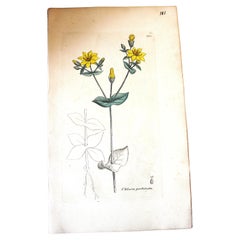
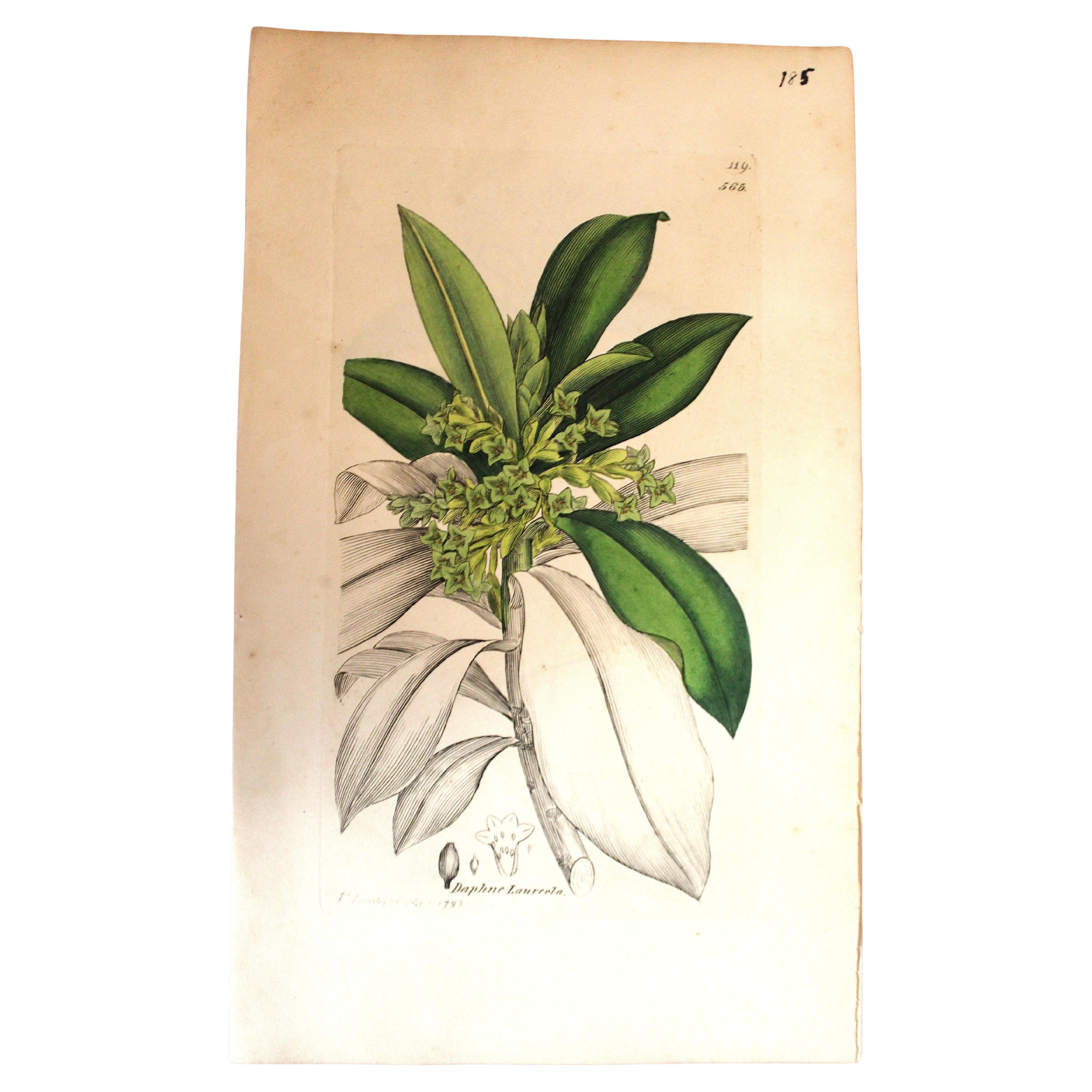
Early 19th Century Botanical Engraving by John Curtis – Hand Coloured Natural History Plate An original early 19th-century hand-coloured botanical engraving from the celebrated natural history publications of John Curtis (1791–1862), one of Britain’s most respected botanical and entomological illustrators. This beautifully detailed plate illustrates a flowering plant in scientific profile, showing bloom structure, leaves, buds, and root system with precision typical of early Victorian natural history illustration. Curtis’s work bridges science and art — created for study, yet prized today for its elegance and balance. These engravings formed part of the golden age of British botanical publishing, when artists collaborated with engravers and colourists to produce plates that were both accurate and visually refined. Each impression was printed from an engraved plate and then carefully coloured by hand, meaning no two examples are ever exactly identical. The composition has the clarity collectors seek: • Central botanical specimen • Naturalistic colour palette • Fine line engraving • Period scientific titling This makes it ideal as a single framed piece or as part of a gallery wall of antique botanical studies. About John Curtis John Curtis was a leading figure in British natural history illustration. He is best known for British Entomology and botanical works that combined taxonomic accuracy with graceful composition. His engravings are held in major museum collections and remain highly collectable in the decorative arts market. Period Early 19th century, circa 1820–1840. Technique Copperplate engraving with original hand colouring on laid paper. Condition Good antique condition consistent with age. Light toning and minor handling marks may be present, as expected with early 19th-century works on paper. Please see the images. Why Collect Curtis Botanical Prints...

Category

Antique Early 19th Century British George III Prints
Materials

Paper

Early 19th Century Botanical Engraving by John Curtis

Early 19th Century Botanical Engraving by John Curtis

Located in Seaford, GB

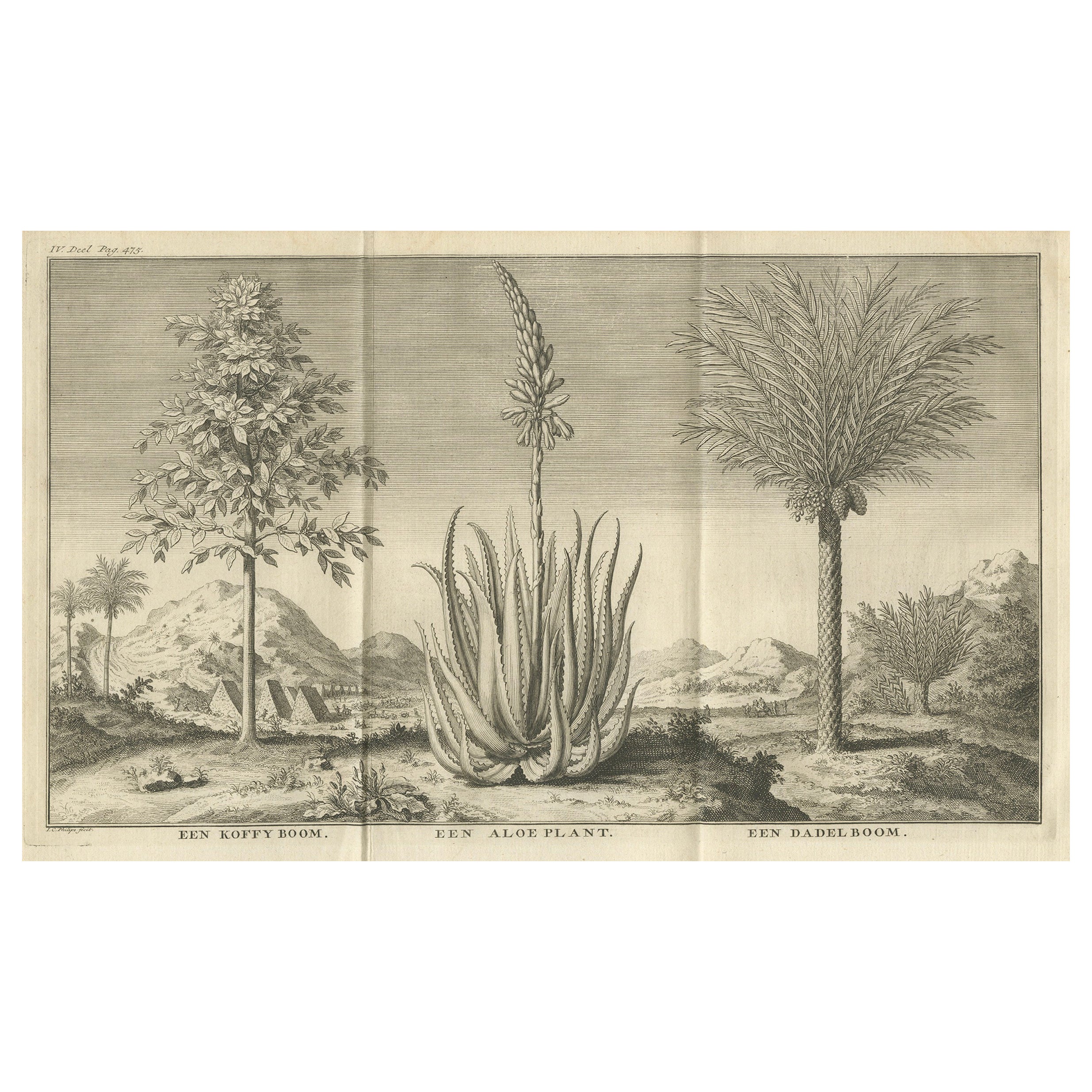
Early 19th Century Botanical Engraving by John Curtis – Hand Coloured Natural History Plate An original early 19th-century hand-coloured botanical engraving from the celebrated natural history publications of John Curtis (1791–1862), one of Britain’s most respected botanical and entomological illustrators. This beautifully detailed plate illustrates a flowering plant in scientific profile, showing bloom structure, leaves, buds, and root system with precision typical of early Victorian natural history illustration. Curtis’s work bridges science and art — created for study, yet prized today for its elegance and balance. These engravings formed part of the golden age of British botanical publishing, when artists collaborated with engravers and colourists to produce plates that were both accurate and visually refined. Each impression was printed from an engraved plate and then carefully coloured by hand, meaning no two examples are ever exactly identical. The composition has the clarity collectors seek: • Central botanical specimen • Naturalistic colour palette • Fine line engraving • Period scientific titling This makes it ideal as a single framed piece or as part of a gallery wall of antique botanical studies. About John Curtis John Curtis was a leading figure in British natural history illustration. He is best known for British Entomology and botanical works that combined taxonomic accuracy with graceful composition. His engravings are held in major museum collections and remain highly collectible in the decorative arts market. Period Early 19th century, circa 1820–1840. Technique Copperplate engraving with original hand colouring on laid paper. Condition Good antique condition consistent with age. Light toning and minor handling marks may be present, as expected with early 19th-century works on paper. Please see the images. Why Collect Curtis Botanical Prints...

Category

Antique Early 19th Century British George III Prints
Materials

Paper

Quivisia; Portesia /// Antique Botanical Botany Plants Science Engraving Buffon

Quivisia; Portesia /// Antique Botanical Botany Plants Science Engraving Buffon

By Georges-Louis Leclerc, Comte de Buffon

Located in Saint Augustine, FL

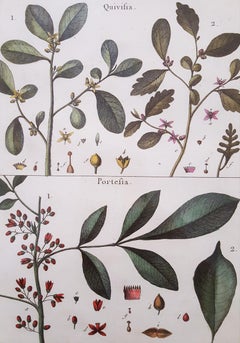
Artist: Georges-Louis Leclerc, Comte de Buffon (French, 1707-1788) Title: "Quivisia; Portesia" (Octandreie, Monogynie, Plate 302) Portfolio: Histoire Naturelle Year: 1749-1789 Medium...

Category

1740s Old Masters Still-life Prints

Materials

Watercolor, Laid Paper, Engraving, Intaglio

Chironia Baccifera Berry-Bearing Chironia /// English Botanical Flower Engraving

Chironia Baccifera Berry-Bearing Chironia /// English Botanical Flower Engraving

By William Curtis

Located in Saint Augustine, FL

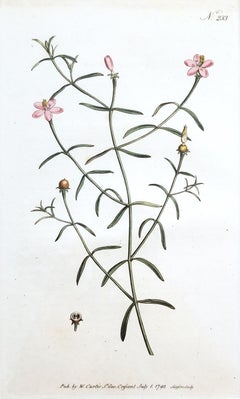
Artist: William Curtis (English, 1746-1799) Title: "Chironia Baccifera Berry-Bearing Chironia" (Vol. 7, Plate 233) Portfolio: The Botanical Magazine; or, Flower-Garden Displayed Year...

Category

1790s Victorian Still-life Prints

Materials

Watercolor, Engraving, Intaglio