Want more images or videos?
Request additional images or videos from the seller
1 of 11

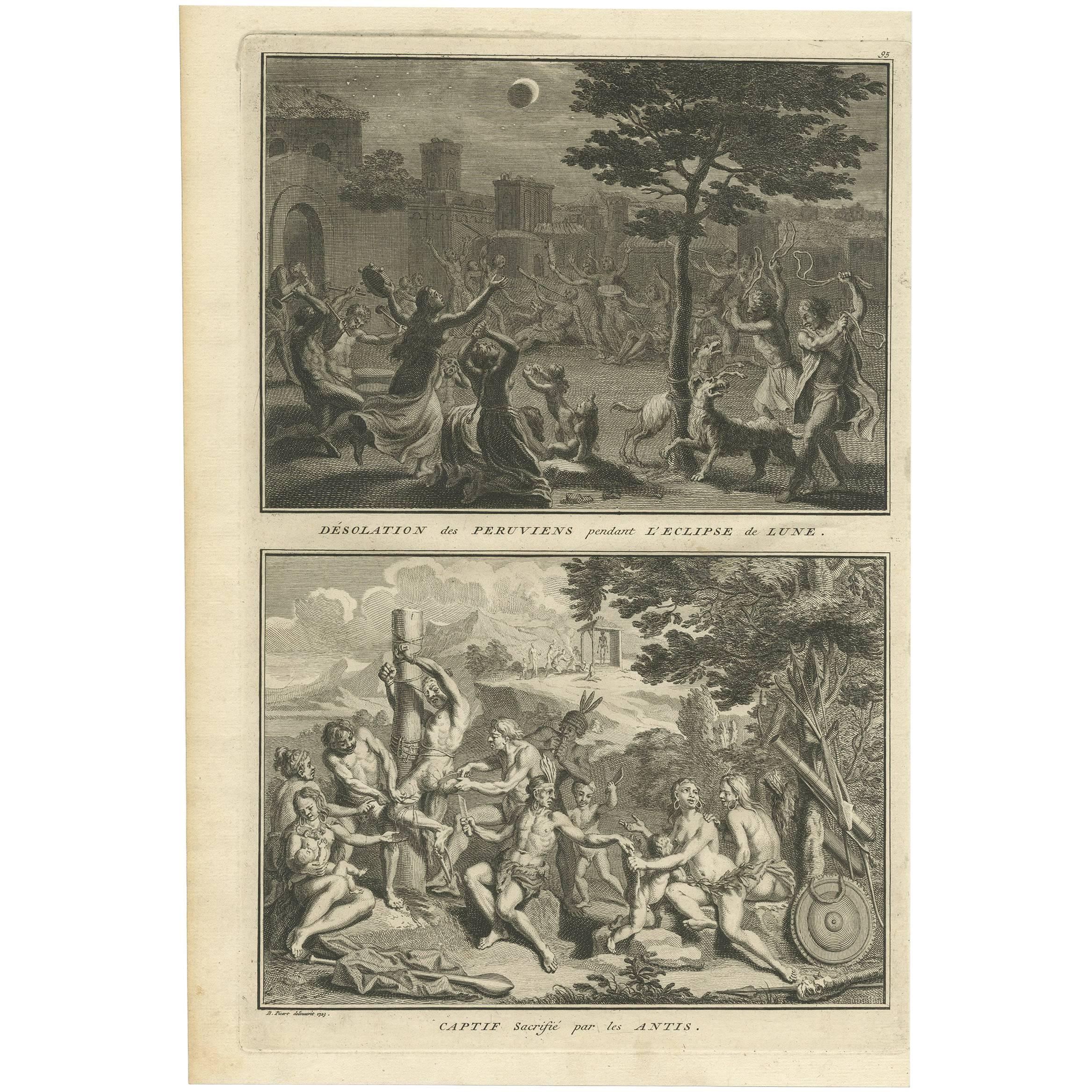
Peruvian Eclipse Panic and Antis Ritual Sacrifice – Rare 1734 Ethnographic Print

$281.78
£209.87
€240VAT Included
CA$395.72
A$401.45
CHF 228.34
MX$4,877.15
NOK 2,685.44
SEK 2,694.74
DKK 1,830.33

About the Item

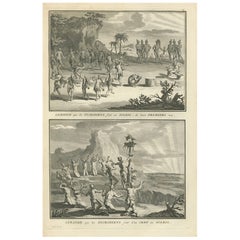
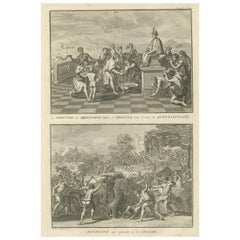
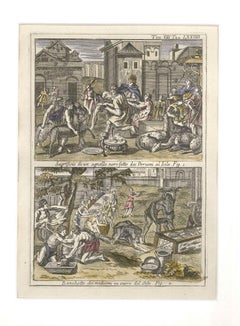
Peruvian Eclipse Panic and Antis Ritual Sacrifice – Rare 1734 Ethnographic Print This rare 1734 copperplate engraving presents two dramatic scenes interpreting South American indigenous customs, as imagined by European artists of the Enlightenment period. Issued in the influential publication "Les Cérémonies et Coutumes Religieuses de tous les Peuples du Monde," the print combines fascination, exoticism, and artistic invention, reflecting both a desire to document and a tendency to dramatize the unfamiliar. The upper scene, titled "Désolation des Péruviens pendant l’Éclipse de Lune," shows a moment of communal panic among Indigenous Peruvians during a lunar eclipse. The sky is darkened, and a crescent moon glows above a chaotic landscape of frightened figures. Men and women wave their arms, cry out, and appear to dance in desperation. Goats and dogs add to the commotion. While Indigenous cultures in the Andes did attach spiritual meaning to astronomical events like eclipses, this portrayal exaggerates the reaction through a theatrical lens, echoing European assumptions about non-Christian belief systems. The lower engraving, "Captif Sacrifié par les Antis," is more unsettling. It depicts a captive bound to a stake and surrounded by members of the Antis tribe—possibly referencing Arawakan-speaking peoples east of the Andes. The figures are muscular, dramatic, and nude or partially clothed, with women and children observing. Several tribespeople participate in the sacrificial act, while others hold ritual items or offer support. The wilderness setting, with dense foliage and tribal implements, frames the event as both barbaric and ceremonial. Though rooted in the European fascination with the “savage,” the scene serves as a historical document of how Enlightenment-era artists viewed and interpreted tribal rituals. Engraved with strong linework and intricate composition, this print exemplifies the blend of ethnography and fantasy found in early attempts to catalogue world religions. While its interpretations are speculative, it remains an important artifact in the history of visual anthropology. Condition is good. The impression is strong and detailed. There is moderate age toning and light foxing, particularly along the outer margins. The sheet is stable and untrimmed, with a faint horizontal division between the two scenes. A tall frame with an off-white mat and simple dark wood surround is recommended.
  • Dimensions:
    Height: 16.54 in (42 cm)Width: 10.24 in (26 cm)Depth: 0.01 in (0.2 mm)
  • Materials and Techniques:
    Paper,Engraved
  • Period:
    1730-1739
  • Date of Manufacture:
    1734
  • Condition:
    Condition is good. The impression is strong and detailed. There is moderate age toning and light foxing, particularly along the outer margins. The sheet is stable and untrimmed, with a faint horizontal division between the two scenes.
  • Seller Location:
    Langweer, NL
  • Reference Number:
    Seller: BG-13806-501stDibs: LU3054345019342

More From This Seller

View All
Sun Worship Rituals of the Floridians Depicted in Sacrificial Ceremonies, 1734

Sun Worship Rituals of the Floridians Depicted in Sacrificial Ceremonies, 1734

Located in Langweer, NL

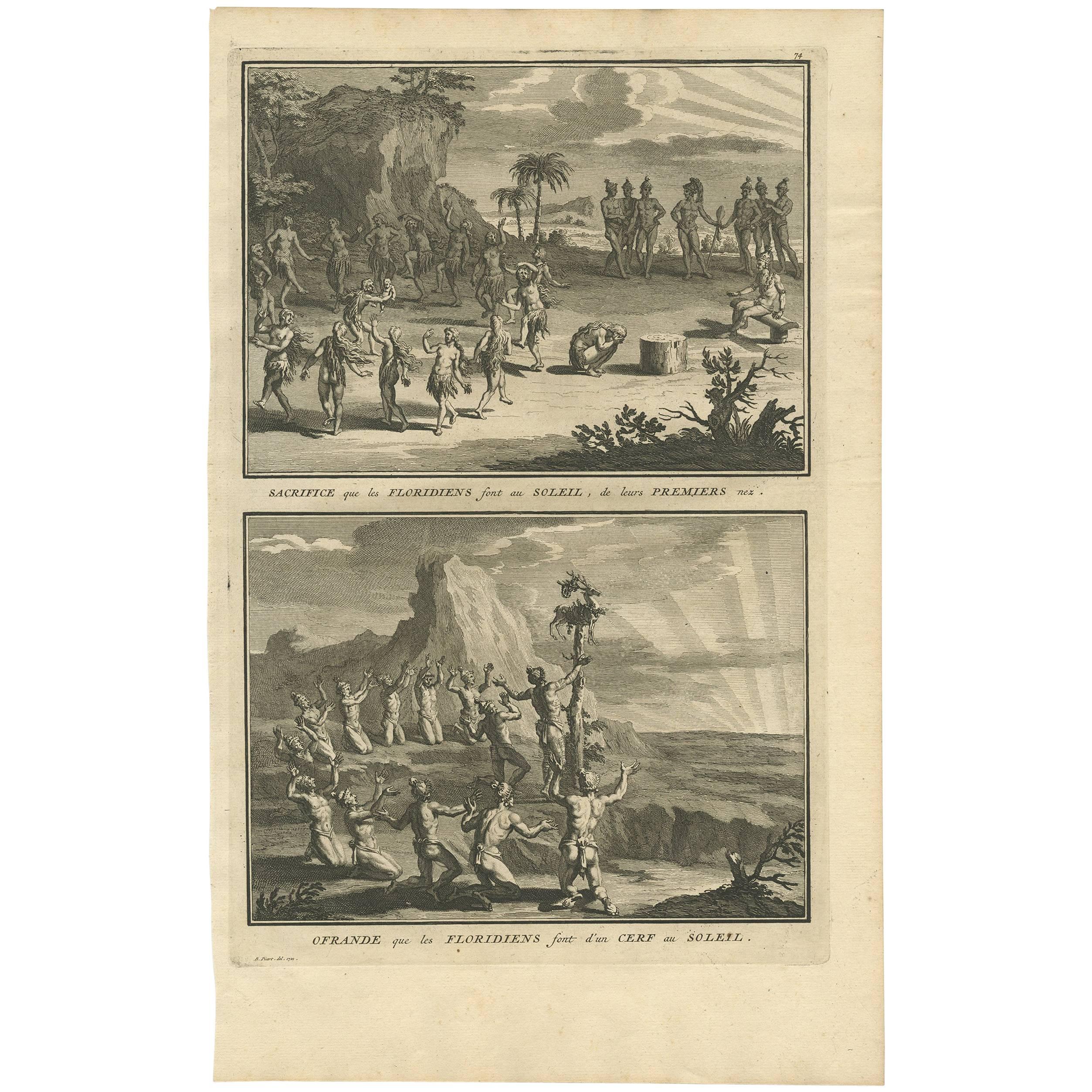
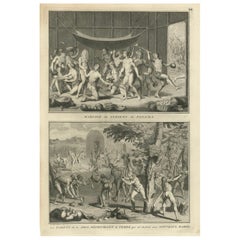
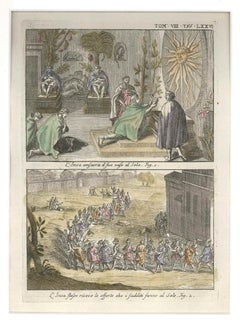
Title: Sun Worship Rituals of the Floridians Depicted in Sacrificial and Offering Ceremonies Description: This dramatic 18th-century copperplate engraving presents two related ritua...

Category

Antique 1730s Prints

Materials

Paper

Rituals of the Sun: Sacrifice and Feast in Honor of Solar Deities, circa 1740

Rituals of the Sun: Sacrifice and Feast in Honor of Solar Deities, circa 1740

Located in Langweer, NL

This is an original copperplate engraving on vellin-type paper, dating from a French edition of 1727-1738 of the monumental work "Cérémonies et Coutumes Religieuses..." by A. Moubach...

Category

Antique 1740s Prints

Materials

Paper

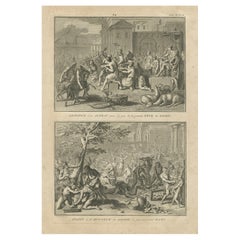
Mexican Penitence and Human Sacrifice – 1734 Engraving of Aztec Religious Rites

Mexican Penitence and Human Sacrifice – 1734 Engraving of Aztec Religious Rites

Located in Langweer, NL

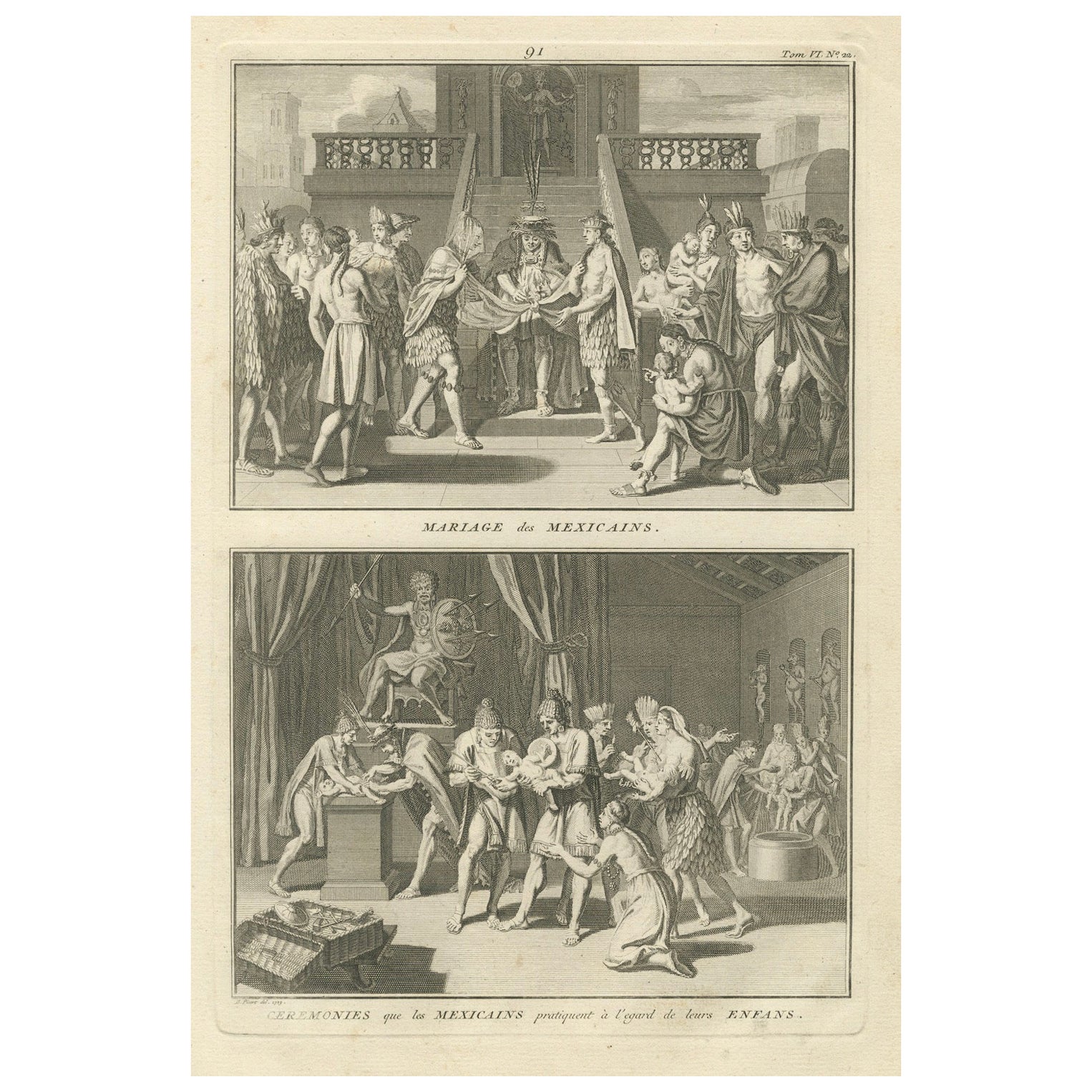
Mexican Penitence and Human Sacrifice – 1734 Engraving of Aztec Religious Rites Description: This dramatic 1734 copperplate engraving illustrates two imagined rituals from ancient M...

Category

Antique 1730s Prints

Materials

Paper

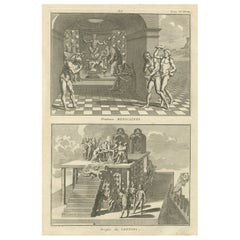
Quetzalcoatl Worship and Hunting Deity – Rare 1734 Engraving of Aztec Rituals

Quetzalcoatl Worship and Hunting Deity – Rare 1734 Engraving of Aztec Rituals

Located in Langweer, NL

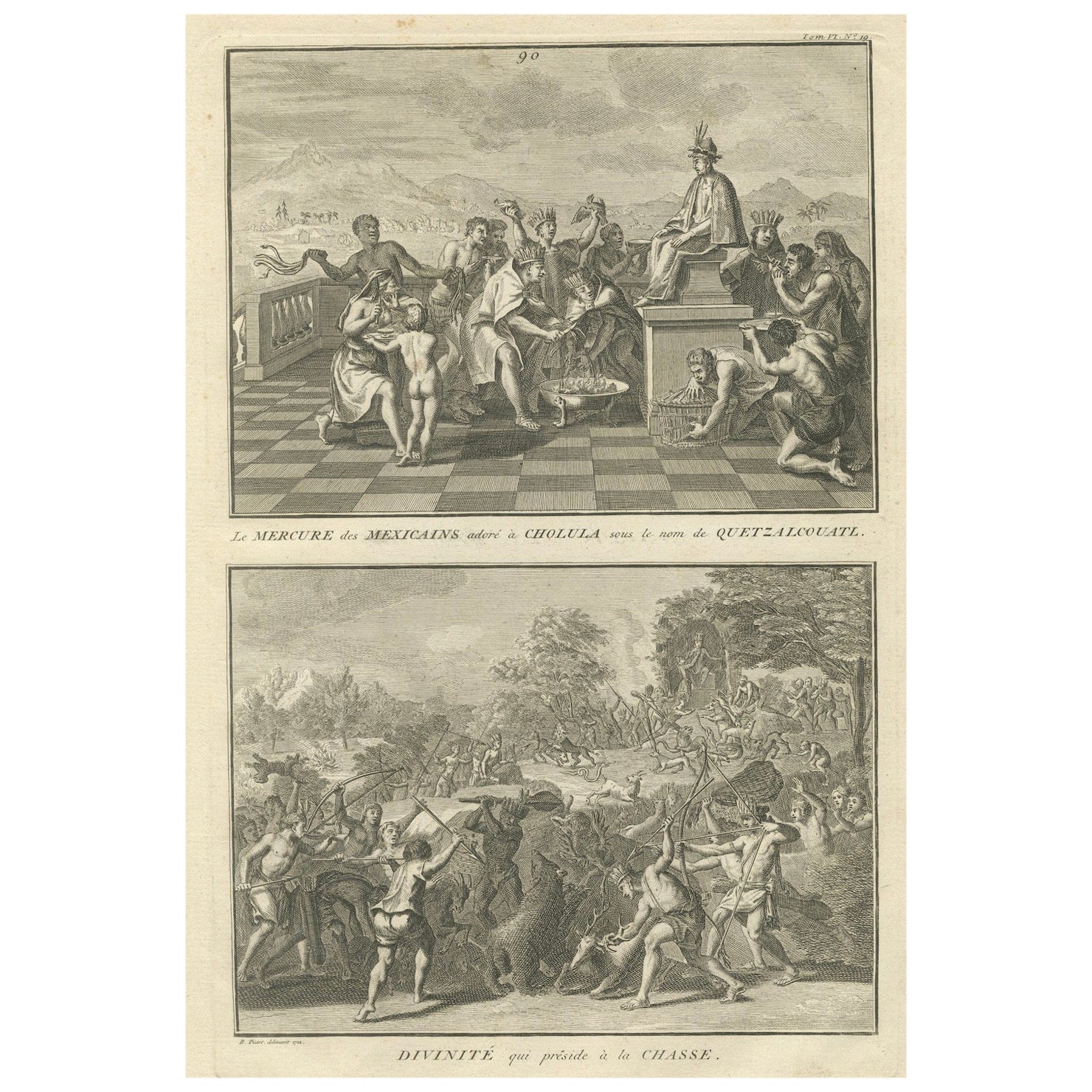
Quetzalcoatl Worship and Hunting Deity – Rare 1734 Engraving of Aztec Rituals This finely detailed copperplate engraving from 1734 presents two theatrical interpretations of religio...

Category

Antique 1730s Prints

Materials

Paper

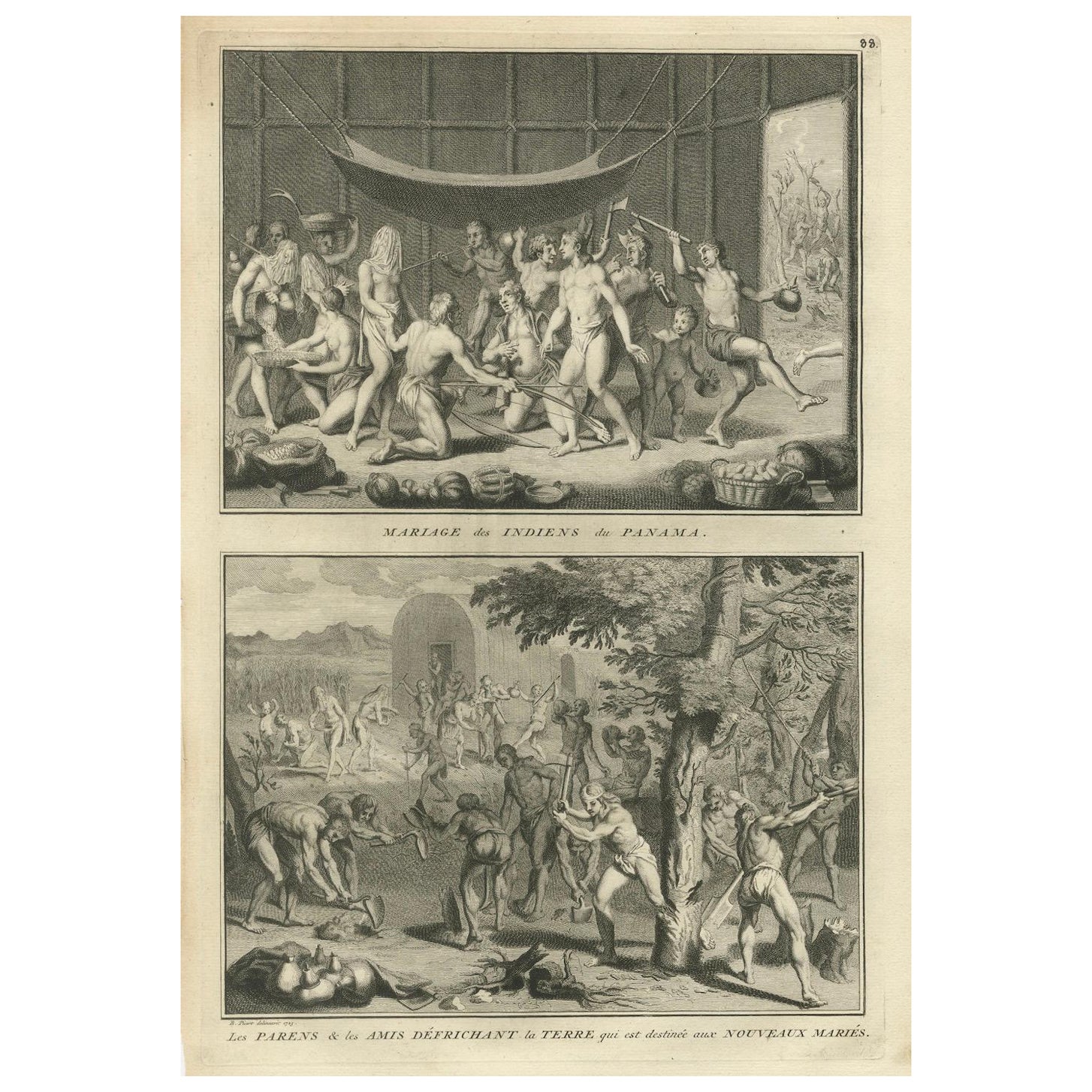
Marriage of the Indians of Panama and Land Clearing for the Newlyweds, 1734

Marriage of the Indians of Panama and Land Clearing for the Newlyweds, 1734

Located in Langweer, NL

Title: Marriage of the Indians of Panama and Land Clearing for the Newlyweds Description: This detailed 18th-century copper engraving illustrates two important social customs among ...

Category

Antique 1730s Prints

Materials

Paper

18th Century Ethnological Engravings of Peruvians and Ecuadorians

18th Century Ethnological Engravings of Peruvians and Ecuadorians

Located in Langweer, NL

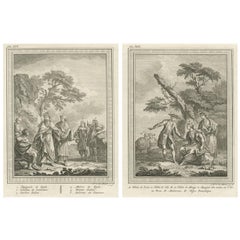
Title: 18th Century Ethnological Engravings of Peruvians and Ecuadorians Description: These two 18th-century engravings, printed in 1756, are detailed depictions of the social and cultural life in Peru and Ecuador during the colonial era. Created by Quentin-Pierre Chedel (1705–1762), they are part of Histoire générale des voyages by Antoine François Prévost, a monumental collection that documented the world's exploration and cultural encounters. First Engraving (Residents of Peru): This print illustrates the residents of Lima, Peru, highlighting the various social classes and ethnic groups present in the region during the colonial period. The detailed engraving captures: A. Femme de Lima en Habit de Ville – A woman from Lima in formal city dress, representing the elite of society. B. Femme en Habit de Ménage – A woman in household dress, typical of a middle or upper-class domestic attire. C. Espagnol vêtu comme on l’est au Pérou – A Spanish man dressed as one would in Peru, showing the influence of Spanish colonial fashion on local attire. D. Mulatresse – A woman of mixed African and European descent, reflecting the diverse ethnic makeup of colonial Peru. E. Nègre Domestique – A domestic servant of African descent, showcasing the role of enslaved individuals in colonial households. The scene is set in a lush, natural landscape, with attention to the differences in social standing and attire. Second Engraving (Residents of Quito, Ecuador): The second engraving, although similar in style, depicts residents of Quito, Ecuador, and provides an ethnological view of the city’s diverse inhabitants. The composition shows: 1. Espagnole de Quito – A Spanish woman of high status, dressed elegantly, representing the colonial upper class in Quito. 2. Indienne de Distinction – An Indigenous woman of notable status, likely representing the local nobility or important community figures. 3. Barbier Indien – An Indigenous barber, reflecting the occupational diversity and social roles of the Indigenous population in colonial society. 4. Métive de Quito – A Métis woman from Quito, showing the mixed-race population that emerged during the colonial era. 5. Paysan Indien – An Indigenous farmer, indicating the essential role of agriculture and rural labor in the economy of colonial Ecuador. 6. Indienne du Commun – A common Indigenous woman, dressed in traditional attire, representing the majority of the Indigenous population. Like the first engraving, this print captures the varied ethnic and social dynamics in a colonial society, with figures placed in a landscape setting, emphasizing the connection between people and their environment. These engravings are not only artistic representations but also important historical records of colonial Latin America...

Category

Antique Mid-18th Century French Prints
Materials

Paper

You May Also Like

Original Antique Print after Jan Luyken, Amsterdam, Genesis VI, 1724

Original Antique Print after Jan Luyken, Amsterdam, Genesis VI, 1724

Located in St Annes, Lancashire

Wonderful copper-plate engraving after Jan Luyken Published by Marten Schagen, Amsterdam. 1724 Text on verso The measurement given is the paper size.

Category

Antique 1720s Dutch Renaissance Prints

Materials

Paper

Original Antique Print after Jan Luyken, Amsterdam, Genesis XV, 1724

Original Antique Print after Jan Luyken, Amsterdam, Genesis XV, 1724

Located in St Annes, Lancashire

Wonderful copper-plate engraving after Jan Luyken Published by Marten Schagen, Amsterdam. 1724 Text on verso The measurement given is the paper size.

Category

Antique 1720s Dutch Renaissance Prints

Materials

Paper

Original Antique Print After Jan Luyken, Amsterdam, Genesis IX, 1724

Original Antique Print After Jan Luyken, Amsterdam, Genesis IX, 1724

Located in St Annes, Lancashire

Wonderful copper-plate engraving after Jan Luyken Published by Marten Schagen, Amsterdam. 1724 Text on verso The measurement given is the paper size.

Category

Antique 1720s Dutch Renaissance Prints

Materials

Paper