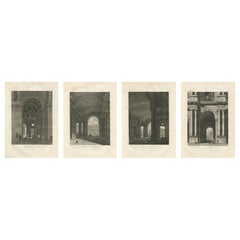
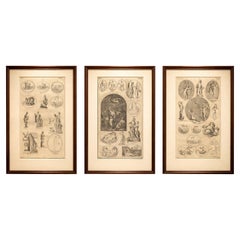
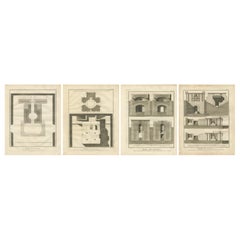
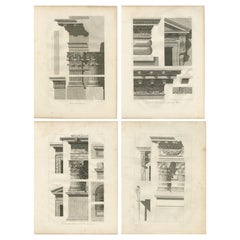
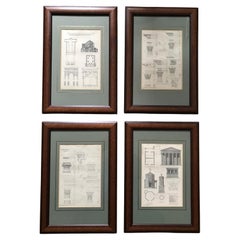
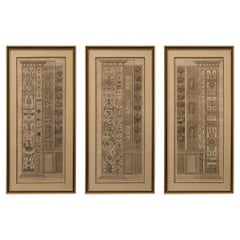
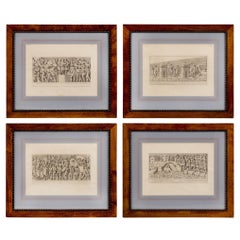
Antique Civil Engineering & Construction Engravings, Set of 3, c.1800
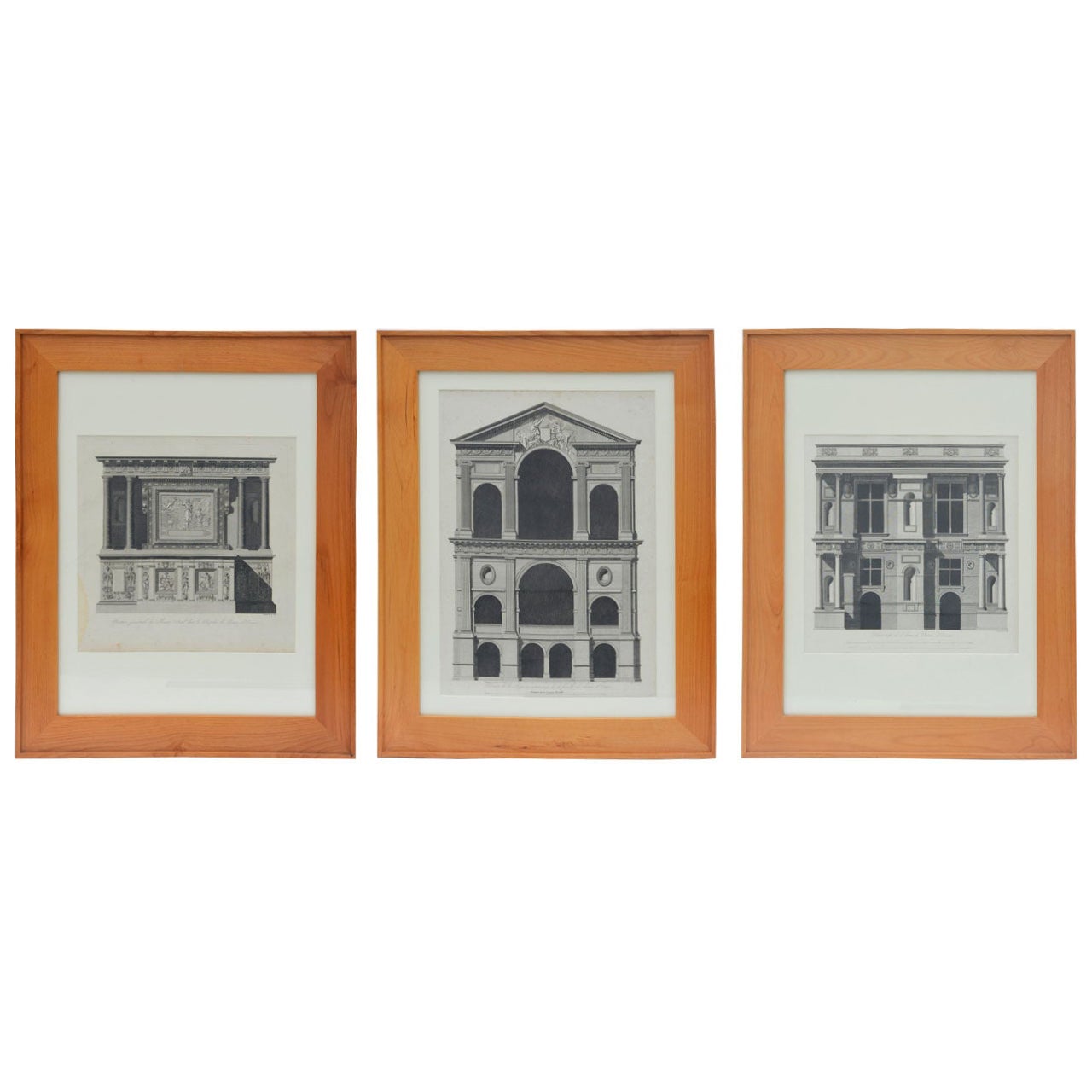
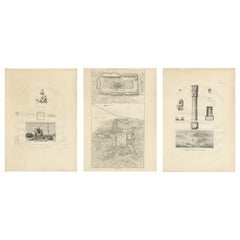
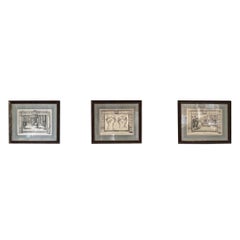
This set of three large-format engravings presents an extensive visual survey of late eighteenth- and early nineteenth-century civil engineering, construction techniques, and mechanical apparatus. The plates originate from Karl Friedrich von Wiebeking’s authoritative treatise Allgemeine auf Geschichte und Erfahrung gegründete theoretisch-practische Wasserbaukunst, published in Darmstadt between 1798 and 1807, one of the most important European works on hydraulic and structural engineering of its period.
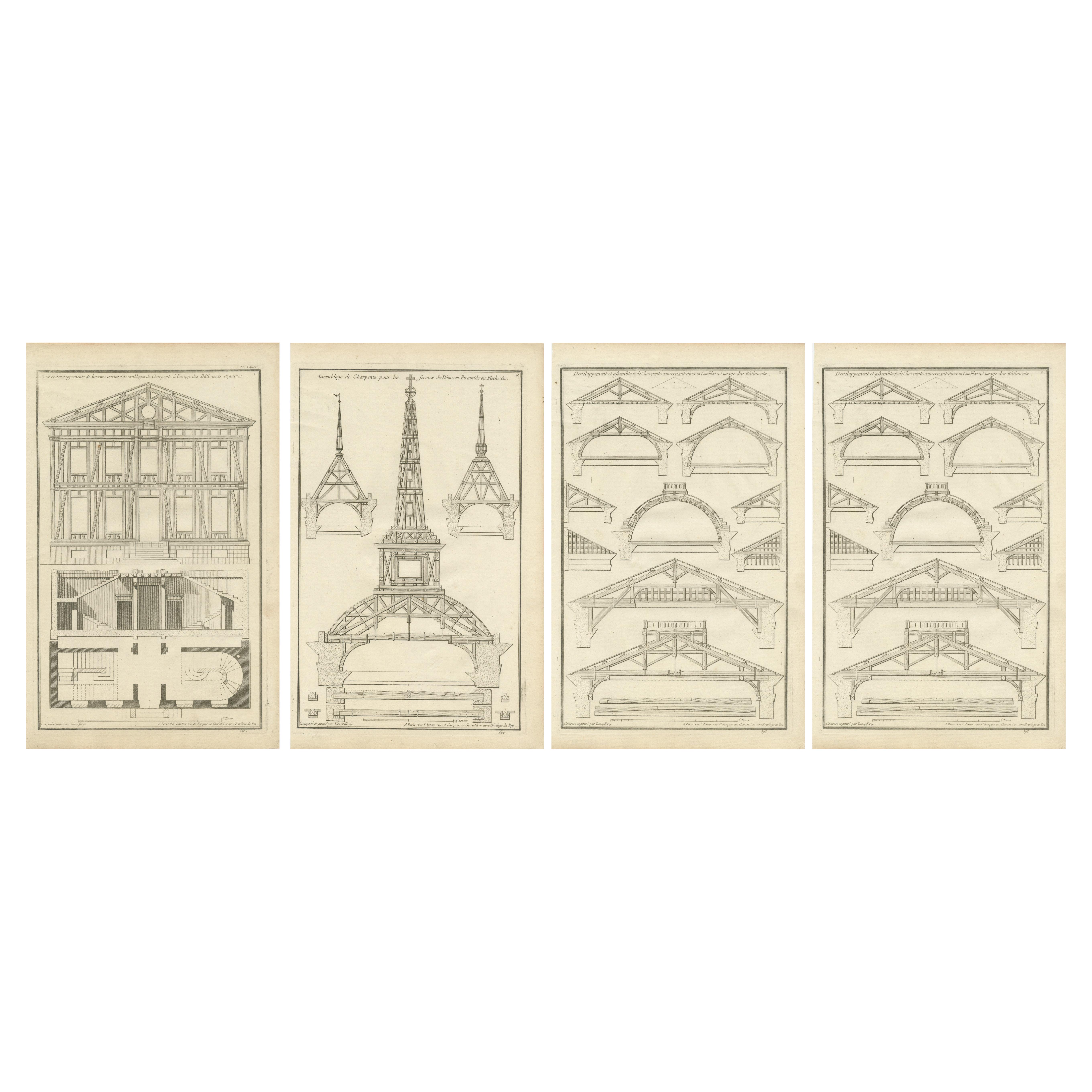
The engravings illustrate a wide range of construction systems, including piling methods, timber frameworks, lifting devices, hoisting mechanisms, scaffolding structures, and early mechanical tools used in large-scale infrastructure projects. Shown are detailed elevations, plans, and sectional views of temporary works and permanent structures, offering insight into how bridges, foundations, embankments, and maritime installations were engineered before the industrial standardization of the later nineteenth century.
Executed with exceptional technical clarity, these plates were intended as professional reference material for engineers, architects, and surveyors. The dense yet carefully organized compositions reflect the analytical approach of Enlightenment-era engineering, combining empirical observation with systematic design. Beyond their documentary importance, the engravings possess strong visual rhythm through repeated geometric forms, making them particularly appealing for display in design-led interiors.
Unified by subject, scale, and period, the three sheets form a coherent and visually striking ensemble. Displayed together, they convey both the ambition and ingenuity of early modern engineering, appealing equally to collectors of scientific prints and to interior designers seeking authentic industrial imagery with intellectual depth.
Each sheet measures approximately 51 × 71 cm. Offered as a complete set of three.
Condition:
Consistent across the set, with light age-related toning and minor handling wear typical for engravings of this period. Plate impressions are clear, with no major losses or restorations noted.
Framing tips:
For optimal presentation, the three prints should be framed with a visible white border or mat separating each sheet. This spacing preserves the individual integrity of each engraving while allowing the set to read as a unified triptych. Natural walnut, ebonized wood, or muted antique black frames combined with off-white or light parchment mats work especially well, enhancing the engraved detail without overwhelming the compositions.
Technique: engraving
Maker: Karl Friedrich von Wiebeking, Germany, Darmstadt, 1798–1807