Want more images or videos?
Request additional images or videos from the seller
1 of 8

Giovanni & Luigi Pichler 1790 Oval Intaglio Carved In Amber Mounted in 18Kt Ring

$19,750
£14,928.23
€17,371.46
CA$27,860.82
A$28,097.84
CHF 16,357.50
MX$341,965
NOK 187,466.85
SEK 193,718.95
DKK 129,855.54

About the Item

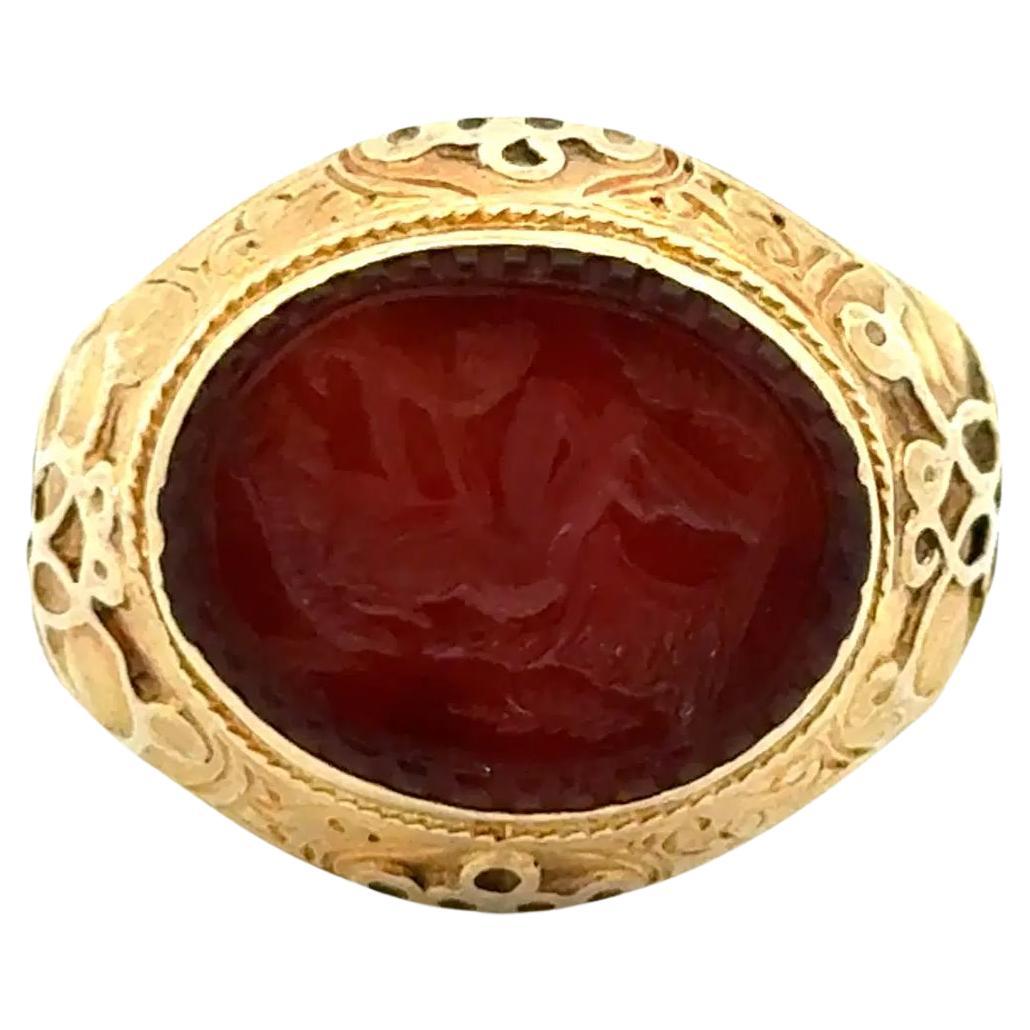
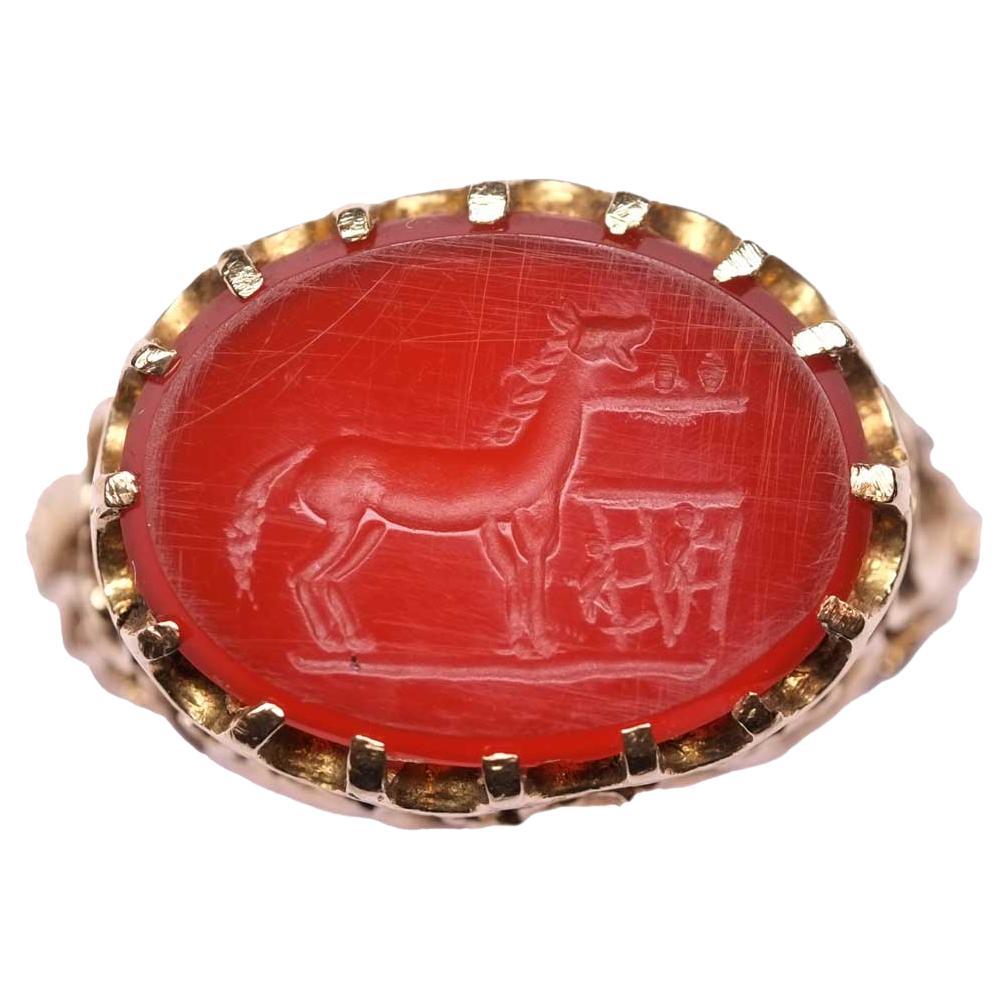
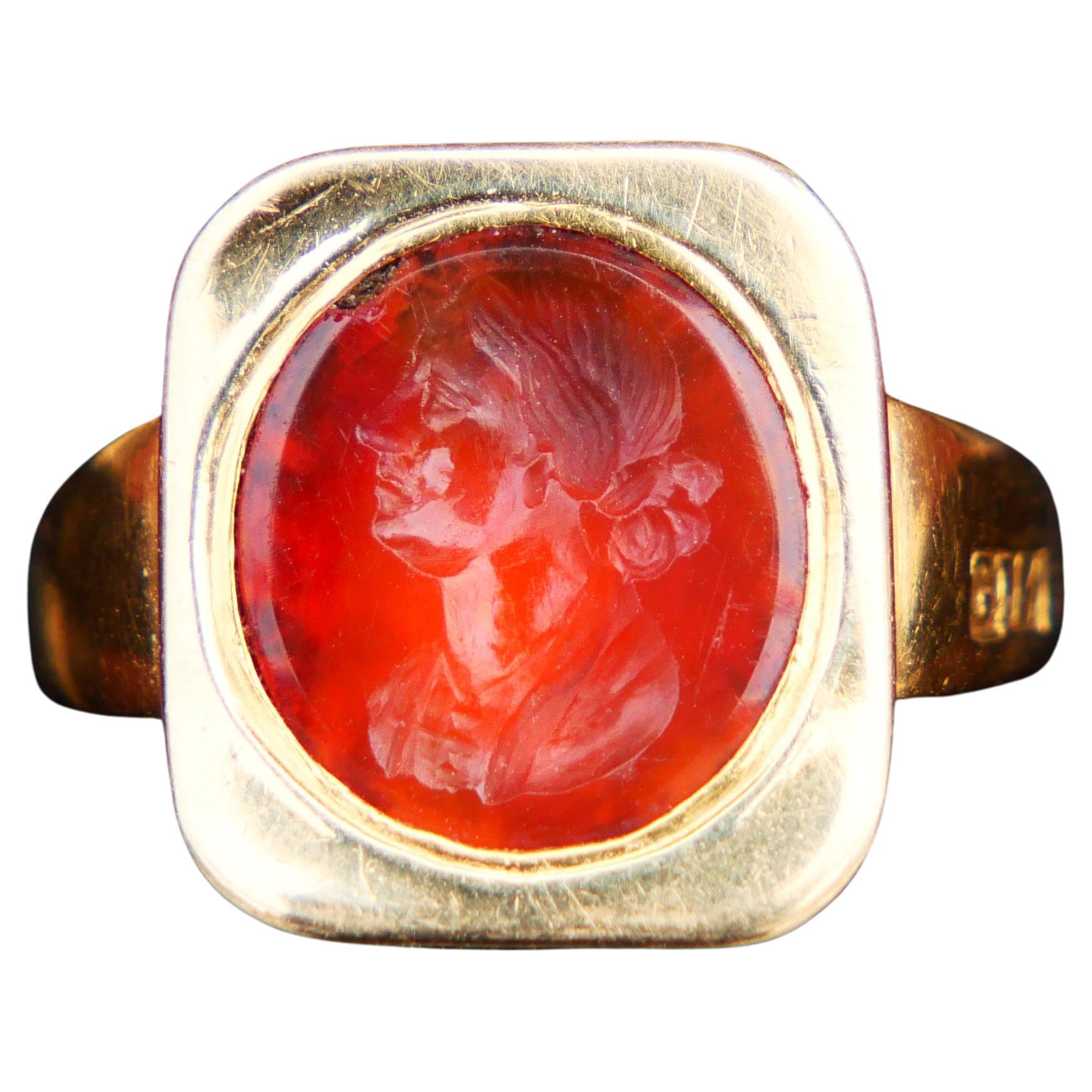
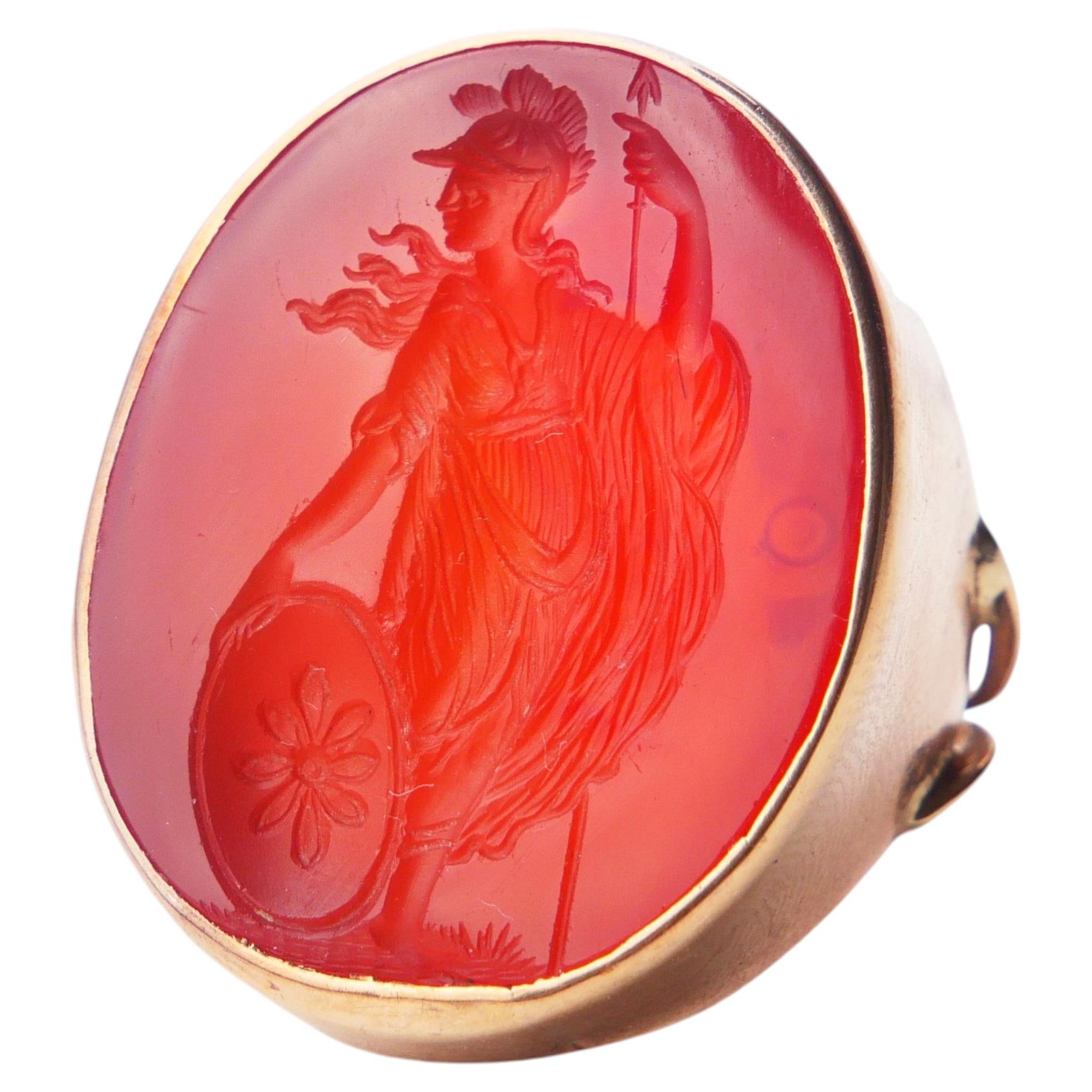
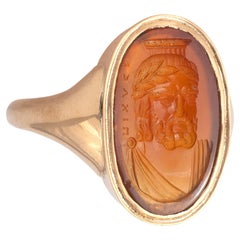
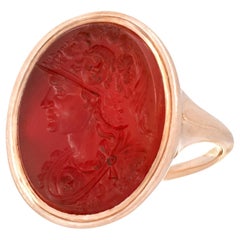
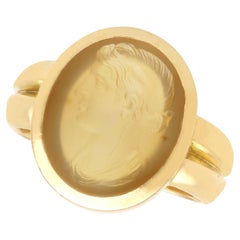
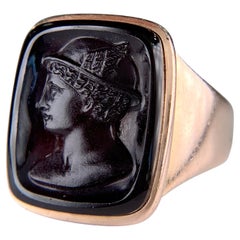
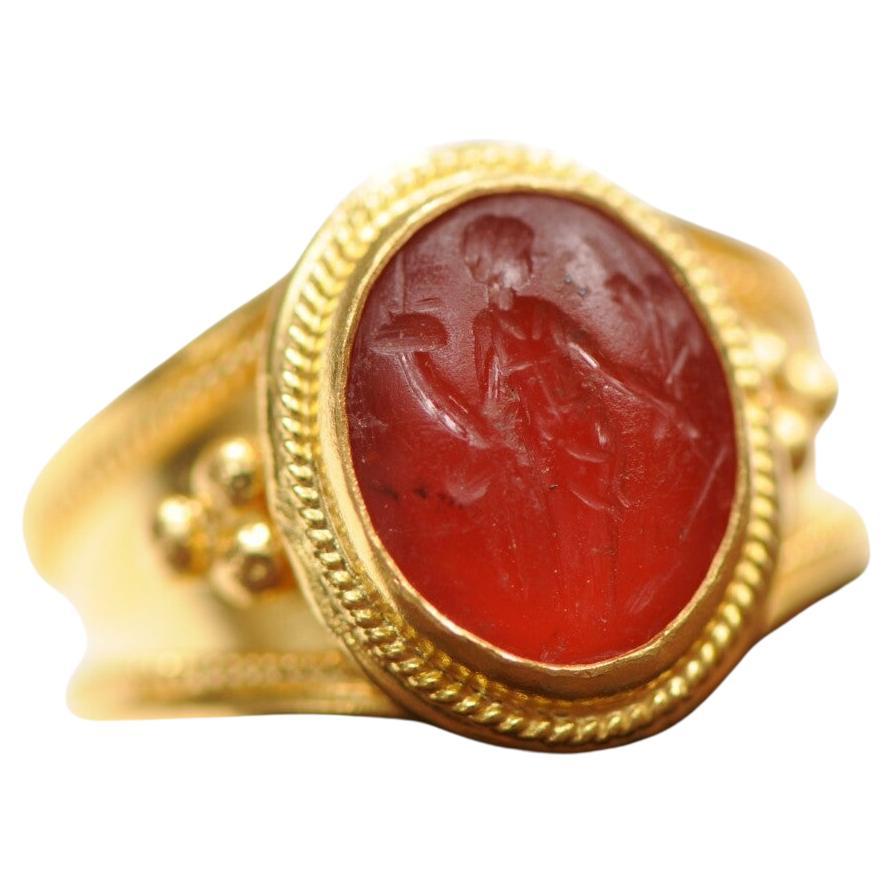
Important carved intaglio ring by Giovanni or Luigi Pichler (1773-1854). Fabulous and extremely rare intaglio seal piece, created in Europe by the Pichler's Atelier in the late 18th century, circa 1790-1800. It was carved in an oval cabochon cut shape, from a single piece of natural translucent Amber of about 10 carats. Mounted in an early 19th Century neo-classic ring crafted in solid 18 karats white gold. The flanks and borders of the ring's setting are decorated, with organics motifs characteristics from the period. The seal depicts the profile of the naked portrait of the Roman goddess Venus, (Aphrodite) facing to the right, with a bow and decorations in the hair. Is signed at the lower left, Pichler in Greek (ΠΙΧΛΕΡ), for Giovanni or Luigi Pichler (1773-1854). In Roman mythology, Venus was the goddess of love, sex, beauty, and fertility. She was the Roman counterpart to the Greek goddess Aphrodite. However, Roman Venus had many abilities beyond the Greek Aphrodite; she was a goddess of victory and fertility. This ring Have a total weight of 7.1 Grams and the actual size is 5.25, sizeable. The top view measure are 21 mm by 25.6 mm (0.82 by 1.01 Inches). Anton Pichler [Pikler] (Austria 1697-1779 Rome) Was the patriarch of the Pichler (ΠΙΧΛΕΡ) empire. He was an Austrian-German gemcutter who migrated to Naples, and then to Rome in 1743, where he was known as Antonio and gained great fame for the precision-beauty of his craft. Antonio trained his son Giovanni Pichler (1734-1791) as a worthy successor. Then in 1773 after he was past 75 Antonio fathered another son, Luigi-39 years the junior of Giovanni, his half-brother. Luigi Pichler was still a small child when Antonio died, but loyal Giovanni saw him raised as another worthy successor and accomplished artist. Luigi then carried forward the family business of classically-inspired luxury gem-cutting in Rome until his retirement in 1850, more than 100 years after his own father had founded the Pichler house. Giovanni Pichler (Naples 1734-1791 Rome) was born in Naples Italy and trained by his father Antonio Pichler in the art of gem engraving in Rome. In 1769 he was appointed gem engraver to Emperor Joseph II in Vienna. Pichler's fame rapidly increased and he became a favorite of Grand Tourists. He also trained a number of the most famous engravers of the next generation including Filippo Rega and Antonio Berini. Upon his death in 1791 his workshop was inherited by his half brother Luigi Pichler. He went on to work for the Habsburg Imperial family in Vienna and so impressed the French court jeweler François-Régnault Nitot that the latter tried to persuade him to move to Paris. Luigi received many distinctions later in life including a diploma from the Academy of St Luke and membership of the Academy in Venice, as well as, in 1839, Knight's Cross of the Order of St Gregory the Great and, in 1842, of the Order of St Sylvester. He cut, after 15 years, a Hercules in Combat with the Nemean lions, a generally admired piece. His gems, both recessed and embossed, are of outstanding clarity and sharpness and he was one of the most sought-after engravers of his age, leaving him with a prolific 379 pieces to his name. He also worked in pastel painting. In 1790 he produced a catalogue of 200 examples of his work. Luigi Pichler (Rome 1773-1854 Rome), was a member of the celebrated family of German-Italian gem engravers, studied under his father Anton Pichler and his elder half-brother Giovanni. Towards the end of the 18th century, he visited Austria where he attracted wide foreign patronage and in 1808 was presented to Emperor Francis I in Vienna. In 1818 he was appointed Professor of Gem Engraving at Akademie der Bildenden Künste in Vienna, a post he held until 1850 before retiring to Rome. He was known for his contemporary portraits and "his preferred medium was intaglio distinguished by exquisite polish and often executed in gemstones rather than the more usual hardstones" (Grove Dictionary of Art). Like all members of his family and according to common practice of the day, he signed his work in various ways, including his name, last name (ΠΙΧΛΕΡ) and initials in Greek and Roman letters. He turned back to Rome in 1850, where he died in 1854. About the signature of this piece, we are citing as a reference, a text from the catalogue of the Hull Grundy Gift (Gere et al 1984) no 834: This form of signature was used by both Giovanni and his half-brother Luigi. The style of the intaglio suggests a late eighteenth-century date, and an attribution to a late work by Giovanni, is consistent with other gems from his hand, but Luigi was taught by his half-brother and took over his unfinished work in 1791. Dalton says of Giovanni: “.... they can be very much alike ... when ... Luigi Pichler copied one of Giovanni's gems and signed in the same way as his brother, it is difficult to be sure which of the two was actually the artist.” Rollett (1874) lists only two intaglios of this subject, both as by Giovanni (no's 54 & 55), so it seems safe to assume that this gem was cut by him. An account of Giovanni's life was published in Rome the year after his death (see de Rossi 1792). (Charlotte Gere). Chronology of the Pichler's signatures: Giovanni Pichler (1734-1791) ΠΙΧΛΕΡ Luigi Pichler (1773-1854) Λ.ΠΙΧΛΕΡ (note the addition of the L in Greek). Literature: Dr. Hermann. Rollett, “Die Drei Meister der Gemmoglyptc, Antonio, Giovanni und Luigi Pichler”, Vienna, W. Braumüller 1874, page 65, No 133. for an almost identical piece. Duffield Osbourne “Engraved Gems” H. Holt & company,1912 Plate XXXI number 4, for similar examples. Related Bibliography: Dr. Hermann. Rollett, “Die Drei Meister der Gemmoglyptik: Antonio, Giovanni and Luigi Pichler” Vienna, W. Braumüller, 1874. For his biography. R. Distelberger, “Luigi Pichler' in 'Österrechisches Biographisches Lexikon”, Vol 36, Vienna 1979. For similar pieces. L. Forrer, "Biographical Dictionary of Medallists", Volume VIII, Spinks & Son, London 1930, Pp-126-127. For Inventories. Gabriella Tassinari, “Lettere di una celebre famiglia di incisori di pietre dure : i pichler”. article 2005. Gabriela Tassinari, "I ritratti dei viaggiatori del Grand Tour sugli intaglio ed i cammei di Giovanni Pichler", in Bollettino del Centro Interuniversitario di ricerche sul viaggio in Italia; 26:1 (2005), Pp. 11-79. Lippold, Gemmen und Kameen des Altertums und der Neuzeit, Stuttgart, 1922, pl. CXXVII, no. 7; B. Baumgärtel,Angelica Kaufmann (1741-1807), exh. cat. Kunstmuseum, Dusseldorf; Haus der Kunst, Munich; Bündner Kunstmuseum, Chur, 1998, pp. 338-9. L. Bignamini, C. Hornsby, Digging And Dealing In Eighteenth-Century Rome (2010), Pp 316-317. Seidmann, "The Grand Tourist's favourite souvenirs: cameos and intaglios", in RSA Journal (1996), Pp. 63-66. Catalogo di impronti cavati da gemme incise dal Cavaliere Giovanni Pichler ... (1790). Collections: The British Museum, London, UK. The Victoria & Albert Museum, London UK. The Corning Museum of Glass, New York, NY. The Walters Art Museum, Baltimore, MD. The Hermitage Museum, St Petersburg Russia. The Metropolitan Museum of Art, New York, USA. Note: The plaster cast impression of this gem engraving can be found in, Duffield Osbourne, “Engraved Gems”, H. Holt and company,1912 Plate XXXI number 4. Note: The carving of this piece in natural Amber, it is a great discovery of the work done by the Pichler family, this is the only known piece carved in this material. It should be noted that Amber is a very difficult one to work in low reliefs due to the fragility of the material. Note: An engraved gem, frequently referred to as an intaglio, is a small and usually semi-precious gemstones that has been carved, in the western tradition normally with images or inscriptions only on one face. The engraving of gemstones was a major luxury art form in the ancient world, and an important one in some later periods. This is an extremely rare piece, it is in great condition and the intaglio carving are perfect. INVENTORY REF: R0000CNNB/.1682
  • Creator:
    Luigi Pichler
  • Ring Size:
    5.25 US, Resizable
  • Metal:
  • Stone:
    Amber
  • Stone Cut:
  • Weight:
    7.15 g
  • Style:
  • Place of Origin:
  • Period:
    1790-1799
  • Date of Manufacture:
    1790
  • Condition:
    Wear consistent with age and use. An extremely rare piece in excellent condition.
  • Seller Location:
    Miami, FL
  • Reference Number:
    Seller: R0000CNNB/.16821stDibs: LU2690215468742

More From This Seller

View All
INTAGLIO 1900 Antique Signet Ring In 14Kt Yellow Gold With Carved Brown Agate

INTAGLIO 1900 Antique Signet Ring In 14Kt Yellow Gold With Carved Brown Agate

Located in Miami, FL

An antique intaglio signet ring. This is a gorgeous antique signet ring, created in England during the Edwardian period, back in the 1900. The ring has been crafted with smooth line...

Category

Antique Early 1900s English Edwardian Signet Rings

Materials

Agate, Gold, Yellow Gold, 14k Gold

AMERICAN 1925 Art-Deco Cocktail Ring In 14Kt With Chinoiserie Carved Carnelian

AMERICAN 1925 Art-Deco Cocktail Ring In 14Kt With Chinoiserie Carved Carnelian

Located in Miami, FL

An enameled art deco cocktail ring with chinoiserie carnelian. This is a beautiful and colorful cocktail ring created in America during the Art Deco period, circa 1925-1930. The pie...

Category

Vintage 1920s American Art Deco Cocktail Rings

Materials

Carnelian, Gold, Yellow Gold, Enamel, 14k Gold

Victorian 1870 Operculum Carved Shell Memento Ring In 14Kt Yellow And Rose Gold

Victorian 1870 Operculum Carved Shell Memento Ring In 14Kt Yellow And Rose Gold

Located in Miami, FL

Victorian ring with carved operculum shell An extremely rare piece, created in England during the high Victorian era (1837-1901), back in the 1870. This is a very unusual memento carved cameo ring, carefully crafted with an oval shape in solid yellow and rose gold of 14 karats with polished finish. It is mount with a high relief cameo style masterfully carved with impeccable and precise details. Operculum Shell: Mount on top in a bezel setting, with 1 round cabochon cut (23 x 18 x 10 mm) of a natural operculum shell. It is carved in high relief, with the portrait of a bearded man facing to the left, Weight: 9.63 Grams, (6.17 Dwt). Size: 4.5 and may be resized on request. Measurements: 26 mm by 21 mm (1.02 x 0.83 Inches) and raise 10 mm over the finger. Hallmarks: No marks as usual. Was electronically tested for 14 karats gold. Victorian Jewelry This era was one of the most influenced and influential periods of antique jewelry. This period is defined by the British monarch, in this case, Alexandrina Victoria, the Queen of the United Kingdom of Great Britain and Ireland, as well as the Empress of India, years 1837-1901. There are 3 sub-periods within this era. First, the early, Romantic period, which is soaked in traditions, natural motifs in gold and silver, clear stones only being worn during the day and colored gems by night. The second being the Grand or mourning period, which coincides with the death of Queen Victoria's husband, Prince Albert the consort, who died in December of 1861. This period included large, dark, somber, dramatic jewelry, with a lot of black onyx, jet wood, amethyst, garnet and gold. This lasted until 1880's, when the aesthetic period of jewelry began. The Late or third stage of the Victorian period, use more complex and feminine motifs, returning to the natural, including many floral and celestial designs, with more decadent gemstones, lasting until the turn of the century. The Victorian era of jewelry includes many movements found in other countries, including revivals such as the Etruscan the Roman and the Egyptian as well as the Art Nouveau, Liberty style and Arts and Crafts design movements which lead into the beginning of the twentieth century. Operculum Shell Jewelry First of all these unusual black and brown shells have a cat’s-eye appearance and were common used in Victorian jewelry. Operculum is Latin for “lid” or “cover” and is a unique type of freshwater snail shell. Widely popular in the Victorian era, operculum jewelry...

Category

Antique 1870s English Victorian Dome Rings

Materials

Natural Pearl, Gold, 14k Gold, 15k Gold, Rose Gold, Yellow Gold

Austrian 1870 Vienna Carved Agate Cameo of Heba in 18kt Yellow Gold with Enamel

Austrian 1870 Vienna Carved Agate Cameo of Heba in 18kt Yellow Gold with Enamel

Located in Miami, FL

An Austrian carved agate cameo of Heba. This piece feature a fabulous three-dimensional cameo piece, carved from a two layered natural agate, with gradations of colors; from translucent orange brown to frosted white. The quality of the carving is exceptional, with intricate thorough details. for example, the ear and the incised lines of the hair are magnificent. The carving depicts, the naked...

Category

Antique 1870s Austrian Neoclassical Brooches

Materials

Agate, Gold, 18k Gold, Yellow Gold, Enamel

AMERICAN 1920 Art-Deco Enameled Cocktail Ring In 14Kt Gold With Carnelian

AMERICAN 1920 Art-Deco Enameled Cocktail Ring In 14Kt Gold With Carnelian

Located in Miami, FL

An enameled art deco cocktail ring with carnelian. This is a beautiful and colorful cocktail ring created in America during the Art Deco period, circa 1920–1925. The piece has been ...

Category

Vintage 1920s American Art Deco Cocktail Rings

Materials

Carnelian, Gold, Yellow Gold, Enamel, 14k Gold

JONES & WOODLAND CO. 1930 Art Deco Signet Ring In 14Kt Yellow Gold & Bloodstone

JONES & WOODLAND CO. 1930 Art Deco Signet Ring In 14Kt Yellow Gold & Bloodstone

Located in Miami, FL

A large signet ring designed by Jones & Woodland Co. This is a beautiful and elegant signet ring created by the American jewelry company of Jones & Woodland Co., back in the 1930. T...

Category

Vintage 1930s American Art Deco Signet Rings

Materials

Gold, Yellow Gold, 14k Gold

You May Also Like

Intaglio Ring on Carnelian Signed Luigi Pichler, Rome, Italy, circa 1810's

Intaglio Ring on Carnelian Signed Luigi Pichler, Rome, Italy, circa 1810's

Located in Firenze, IT

Luigi Pichler (1773-1854) Period: 1810’s circa, Roma. Size of the intaglio: 19 mm. Ring Size: 7 Weight: 11.52 gr. Intaglio with Zeus Serapis signed: PICHLER in Greek in reverse...

Category

Antique 1810s Italian Neoclassical Signet Rings

Materials

Carnelian, 22k Gold, Yellow Gold

Victorian Classical Intaglio Ring

Victorian Classical Intaglio Ring

Located in Litchfield, CT

Circa 1890s, 14k. This classic seal-style ring is set with an exceptional intaglio-cut carnelian with a highly detailed depiction of the God Ares. Well made in fourteen-karat yellow ...

Category

Antique 1890s Victorian Fashion Rings

Materials

Carnelian, 14k Gold, Yellow Gold

Antique George III Hardstone and 18k Yellow Gold Intaglio Ring (1811)

Antique George III Hardstone and 18k Yellow Gold Intaglio Ring (1811)

Located in Jesmond, Newcastle Upon Tyne

A stunning, fine and impressive antique hardstone and 18 karat yellow gold intaglio ring; part of our Georgian jewelry collection. This exceptional, fine and impressive ring has been crafted in 18k yellow gold. The substantial antique gold ring setting displays a stunning oval hardstone, ornamented with a carved intaglio. The intaglio bears a figural profile, featuring wavy, tied back hair. The surrounding setting is plain and unembellished, melding with the incurved shaped ring shoulders and blending seamlessly with the ring shank. This antique gent’s ring is hallmarked to the interior of the shank with the maker's mark (T.H), the gold guarantee mark (crown), the 18k gold mark (18), the Birmingham Assay Office mark (anchor) and the date letter for 1811 (n). This Georgian intaglio ring in yellow gold combines finely carved artistry with historical depth, making it a meaningful choice for birthdays or anniversaries. Its warmth and craftsmanship appeal to those who value heritage and sentiment. Images do not always reflect the true color and brilliance of gemstones and diamonds. The video however provides a truer representation of the actual color and showcases each stone. Condition This substantial antique Georgian ring is excellent quality, set with a hand carved hardstone intaglio. The ring is a superior gauge of gold and is in exceptional condition. The hallmarks to the interior of the shank of this gold intaglio ring are struck deeply due to the superior gauge of gold. Reflections in photographs may detract from the true representation of this fine example of antique intaglio jewelry...

Category

Antique 1810s English Signet Rings

Materials

Yellow Gold

Antique Intaglio Signet Ring Carnelian solid 20K Gold Ø US8 / 3.7gr

Antique Intaglio Signet Ring Carnelian solid 20K Gold Ø US8 / 3.7gr

Located in SE

Signet intaglio Ring featuring natural Carnelian stone with naturalistic and symbolic intaglio of a middle aged Woman - Wife , Mother or Sister measuring 10 mm x 5 mm . The body of t...

Category

Antique Early 1900s Swedish Art Nouveau Signet Rings

Materials

Carnelian, 18k Gold

Castellani Ancient 7th Century Carnelian Emperor Intaglio 18kt Gold Ring

Castellani Ancient 7th Century Carnelian Emperor Intaglio 18kt Gold Ring

By Castellani

Located in New York, NY

The 7th century Roman intaglio is set into the Castellani® Artemis designed ring. The intaglio is set under the bezel, as jewellers did intaglio and cameo rings 2000 years ago. The g...

Category

21st Century and Contemporary American Etruscan Revival Signet Rings

Materials

Carnelian, Gold, 18k Gold