1960s Art

to
3,588
8,321
4,819
3,562
2,367
1,768
Overall Width
to
Overall Height
to
7,578
21,482
164,950
235,959
2,063
2,308
4,972
6,480
5,858
15,295
20,999
26,143
18,902
14,084
5,380
7,494
2,151
1,767
1,546
770
619
489
312
111
84
54
19
3
1
11,530
7,129
1,781
10,236
5,439
4,144
2,768
1,913
1,883
1,778
1,613
1,501
1,469
1,211
1,192
905
647
646
617
617
581
525
504
5,000
3,802
3,447
2,343
2,158
3,541
602
562
338
300
3,004
7,860
12,544
8,150
Period: 1960s
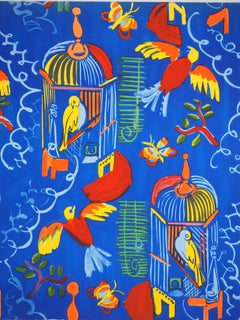
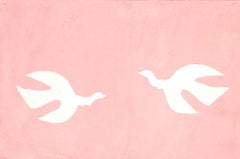
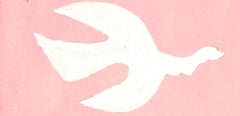
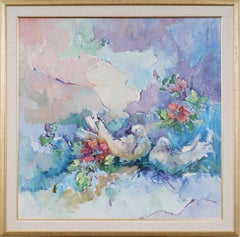
Colorful Birds on Blue Background - Orignal Lithograph

Colorful Birds on Blue Background - Orignal Lithograph

By Raoul Dufy

Located in Paris, IDF

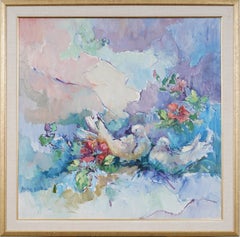
Raoul DUFY Colorful Birds on Blue Background, 1965 Lithograph (Mourlot workshop) Unsigned On vellum 30 x 24 cm (c. 11.8 x 9.4 in) INFORMATION : Posthumous published lithograph pub...

Category

Abstract Geometric 1960s Art

Materials

Lithograph

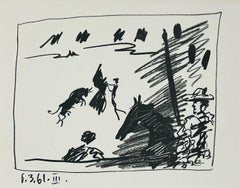
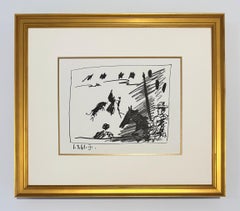
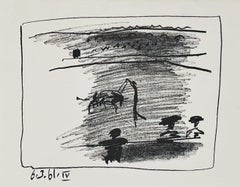
Jeu de la Cape (III), from A Los Toros Avec Picasso

Jeu de la Cape (III), from A Los Toros Avec Picasso

By Pablo Picasso

Located in Washington, DC

Artist: Pablo Picasso Title: Jeu de la Cape (III) Portfolio: A Los Toros Avec Picasso Medium: Transfer lithograph Date: 1961 Edition: Unnumbered Frame Size: 17 1/4" x 19 3/4" Sheet S...

Category

Abstract 1960s Art

Materials

Lithograph

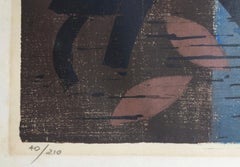
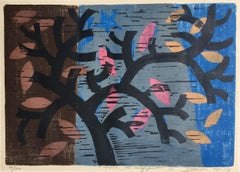
Tree at Night
Tree at Night

Tree at Night

By Werner Drewes

Located in Santa Monica, CA

WERNER DREWES (German-American 1899-1985) TREE AT NIGHT, 1964 (Rose 241) Color woodcut Signed titled, dated and numbered 40 /210 all in pencil below image. Image 11 1/8 x 15 7/8 inc...

Category

Abstract Expressionist 1960s Art

Materials

Woodcut

original lithograph

original lithograph

By Andre Minaux

Located in Henderson, NV

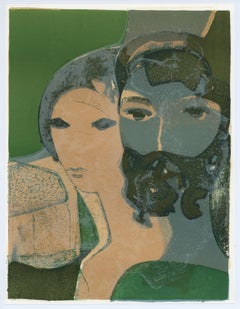
Medium: original lithograph. Printed on Arjomari paper in 1969 at the Mourlot Freres atelier and published by Editions Richelieu in a limited edition of 2400 for the L'Odyssee portfo...

Category

1960s Art

Materials

Lithograph

Ballet - printed in 1969

Ballet - printed in 1969

By (after) Marc Chagall

Located in Henderson, NV

Medium: offset lithograph (after the watercolor). Printed in 1969 at the Mourlot Freres atelier for the "Marc Chagall: dessins et aquarelles pour le Ballet" book. Sheet size: 13 3/4 ...

Category

1960s Art

Materials

Offset

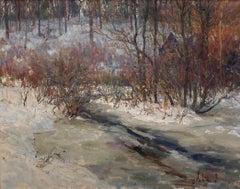
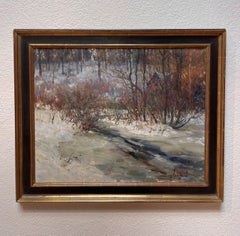
"Frozen Brook" by Richard Schmid, Winter Landscape, Oil painting

"Frozen Brook" by Richard Schmid, Winter Landscape, Oil painting

Located in Denver, CO

Richard Schmid's (US based) "Frozen Brook" is an original, handmade oil painting that depicts a winter landscape. Artist Biography: Throughout his career, which saw fifty one-man s...

Category

Impressionist 1960s Art

Materials

Canvas, Oil

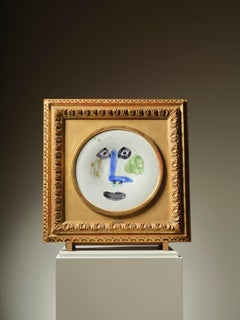
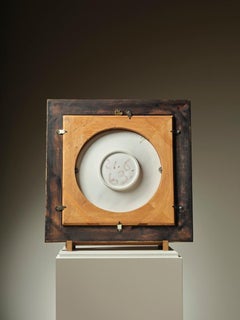
Visage (Nez à Angle Droit)

Visage (Nez à Angle Droit)

By Pablo Picasso

Located in PARIS, FR

An authenticated work Dated June 21, 1963, this unique painted and glazed ceramic comes with a certificate of authenticity from Claude Ruiz Picasso (2019). A dated work Inscribed Ju...

Category

Modern 1960s Art

Materials

Ceramic

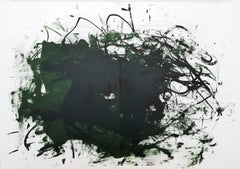
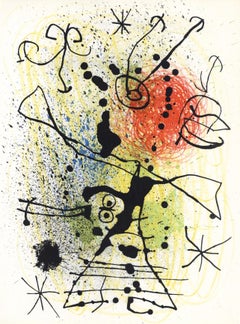
original lithograph

original lithograph

By Joan Miró

Located in Henderson, NV

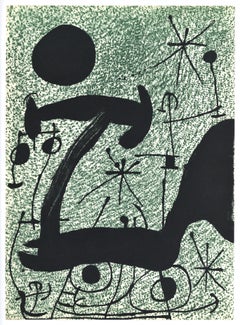
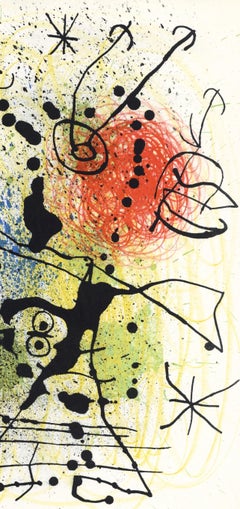
Medium: original lithograph. Catalogue reference: Mourlot 508. Printed in 1967 for the art revue Derriere le Miroir (issue number 164-165 -- L'Oiseau Solaire, L'Oiseau Lunaire, Etinc...

Category

Abstract 1960s Art

Materials

Lithograph

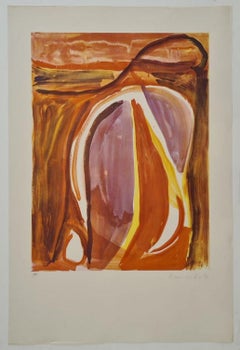
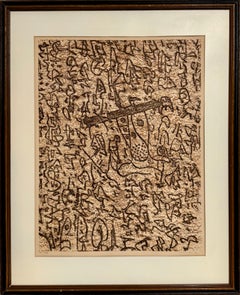
No title

No title

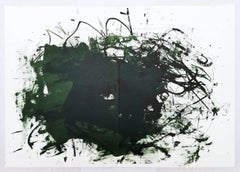
By Bram Van Velde

Located in Paris, FR

Lithograph, 1966 Handsigned by the artist in pencil and numbered 31/80 Printer : Fratelli Pozzo Catalog : Mason-Putman 36 94.00 cm. x 62.50 cm. 37.01 in. x 24.61 in. (paper) 66.50 c...

Category

Abstract 1960s Art

Materials

Lithograph

Joan Miro, The Huntress, from Derriere le Miroir, 1965

Joan Miro, The Huntress, from Derriere le Miroir, 1965

By Joan Miró

Located in Southampton, NY

This exquisite lithograph by Joan Miro (1893–1983), titled La chasseresse (The Huntress), originates from the December 1965 folio Derriere le Miroir, No. 155, published by Maeght Edi...

Category

Surrealist 1960s Art

Materials

Lithograph

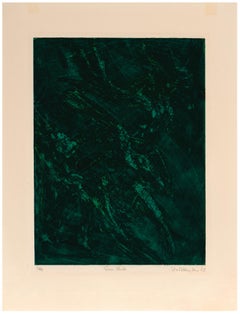
'Green Shade' — Mid-century Modernism, Abstract Expressionism, Atelier 17

'Green Shade' — Mid-century Modernism, Abstract Expressionism, Atelier 17

By Stanley William Hayter

Located in Myrtle Beach, SC

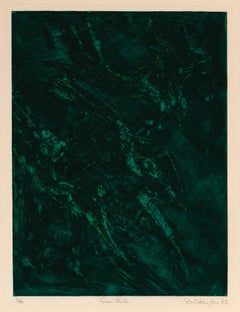
Stanley William Hayter, 'Green Shade', color etching and scraper, 1963, edition 50, (only 39 printed), B&M 278. Signed, titled, dated, and numbered '1/50' in pencil. A superb, richly-inked, luminous impression, with fresh, vivid colors, on Barcham Green textured cream wove paper; the full sheet with margins (2 3/16 to 3 1/4 inches), in excellent condition. Printed: intaglio black-green, contact lumogen yellow, soft roller phthalo green. Scarce. Image size 15 7/16 x 11 5/8 inches (392 x 295 mm); sheet size 21 1/8 x 16 inches (537 x 406 mm). Matted to museum standards (unframed). Collection: The British Museum ABOUT THE ARTIST Stanley William Hayter (1901-1988) was a British painter and printmaker associated in the 1930s with Surrealism and from 1940 onward with Abstract Expressionism. Regarded as one of the most significant printmakers of the 20th century, Hayter founded the legendary Atelier 17...

Category

Abstract Expressionist 1960s Art

Materials

Etching

original lithograph

original lithograph

Located in Henderson, NV

Medium: original lithograph. Printed in Paris in 1967 by Clot, Bramsen et Georges and issued in an edition of 2500 for "Les Temps Situationistes" (The Situationist Times -- a radical...

Category

1960s Art

Materials

Lithograph

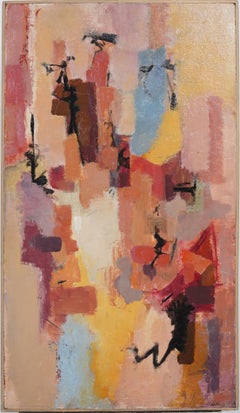
Vintage American Modernist Framed Abstract Expressionist MCM Oil Painting

Vintage American Modernist Framed Abstract Expressionist MCM Oil Painting

Located in Buffalo, NY

Vintage American modernist abstract oil painting. Oil on board. Framed. Provenance from a Sag Harbor, NY collection. Handsomely framed in minimal molding. Excellent condition, rea...

Category

Modern 1960s Art

Materials

Oil

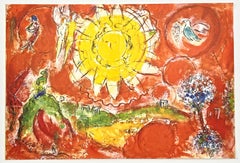
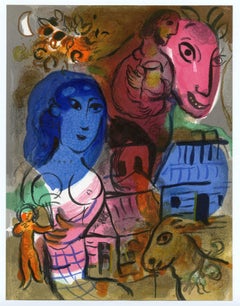
XXe Siecle-Hommage a Marc Chagall

XXe Siecle-Hommage a Marc Chagall

By Marc Chagall

Located in Fairlawn, OH

XXe Siecle-Hommage a Marc Chagall Color lithograph, 1969 Unsigned as issued by XXe Siecle From: XXe Siecle, Volume, Special Issue Marc Chagall Published by G. di San Lazzaro for A. M...

Category

French School 1960s Art

Materials

Lithograph

Mid-Century French Abstract Expressionist Oil on Canvas.

Mid-Century French Abstract Expressionist Oil on Canvas.

Located in Cotignac, FR

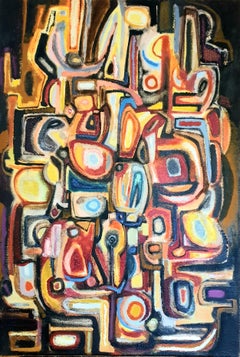
A large mid-century French abstract expressionist oil and acrylic on canvas by Jean-Louis Ladislas. Signed and dated 69 to the reverse. Presented in a slim baton wood frame. A highl...

Category

Abstract Expressionist 1960s Art

Materials

Canvas, Oil, Acrylic

"Jeune fille brune" original lithograph

"Jeune fille brune" original lithograph

By Andre Minaux

Located in Henderson, NV

Medium: original lithograph. Printed in Paris in 1962 by the atelier of Fernand Mourlot. Size: 10 x 7 inches (253 x 175 mm). There is text on verso, as published. Not signed.

Category

1960s Art

Materials

Lithograph

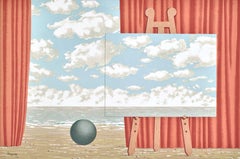
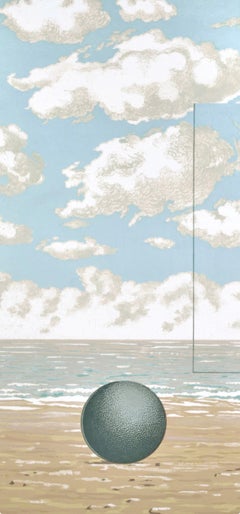
Rene Magritte, The Beautiful Captive, 1968 (after)

Rene Magritte, The Beautiful Captive, 1968 (after)

By René Magritte

Located in Southampton, NY

This exquisite lithograph after Rene Magritte (1898–1967), titled La Belle Captive (The Beautiful Captive), from the folio Les Enfants Trouves de Magritte (The Found Children of Magritte), 1968, originates from the edition published by A.C. Mazo et Cie, Paris, and printed by Mourlot Freres, Paris, on November 20, 1968. The work embodies Magrittes sustained inquiry into semiotics and visual epistemology, translating his characteristic strategies of displacement, symbolic inversion, and conceptual ambiguity into an image that operates as both a poetic metaphor and a philosophical proposition concerning the instability of meaning. Executed as a lithograph on grand velin dArches paper, this work measures 17.5 x 23.5 inches (44.5 x 59.7 cm). Signed in the plate by the artist; hand signed by Fernand Mourlot, Editeur. The edition exemplifies the technical mastery of the Mourlot atelier. Artwork Details: Artist: After Rene Magritte (1898–1967) Title: La Belle Captive (The Beautiful Captive), from the folio Les Enfants Trouves de Magritte (The Found Children of Magritte) Medium: Lithograph on grand velin dArches paper Dimensions: 17.5 x 23.5 inches (44.5 x 59.7 cm) Inscription: Signed in the plate by the artist; hand signed by Fernand Mourlot, Editeur Date: 1968 Publisher: A.C. Mazo et Cie, Paris Printer: Mourlot Freres, Paris Catalogue Raisonne: Magritte, Rene, et al. Rene Magritte: Catalogue Raisonne, Vol. 3. Menil Foundation; Philip Wilson Publishers; Distributed in the USA and Canada by Rizzoli International, 1992, nos. 791–792 and 1056; vol. 5, p. 218, Bibliography entry 68.28. Condition: Well preserved, consistent with age and medium Provenance: From the folio Les Enfants Trouves de Magritte, 1968 Notes: Excerpted from the folio (translated from French), Finished printing in Paris on November 20, 1968, on the presses of Mourlot, for the lithographs. The unpublished text by Louis Scutenaire was composed in Elzevir Casion corps 28 and printed by Fequet et Baudier, typographers. The unpublished compositions numbered from I to IV were specially made by Rene Magritte for this album. The compositions of the Enchanted Domain, are the renderings of the eight paintings of the mural of the Casino de Knokke. They were printed with the benevolent authorization of Mr. Gustave J. Nellens. Justification of the draw, this album was taken from CCCL examples on grand velin dArches numbered from I to CCCL, plus a few examples for collaborators and assistants. About the Publication: Les Enfants Trouves de Magritte (The Found Children of Magritte), published in 1968 by A.C. Mazo et Cie, Paris, represents one of the most significant late life print projects devoted to Rene Magrittes work. Conceived as both a literary and visual tribute, the folio pairs texts by the Belgian writer Louis Scutenaire, Magrittes close friend and fellow Surrealist, with lithographic interpretations produced at the Mourlot atelier, the premier lithographic workshop of twentieth century France. The album includes compositions by Magritte alongside lithographic renderings of the celebrated Enchanted Domain mural from the Casino de Knokke, printed with the authorization of Gustave J. Nellens, who commissioned the original mural. Issued in a single edition of CCCL examples on grand velin dArches, the folio stands as a testament to the collaboration between artist, writer, publisher, and master printer, and remains one of the most culturally important Surrealist print albums of the post war era. About the Artist: Rene Magritte (1898–1967) was a Belgian Surrealist painter whose visionary, intellectual, and poetic imagery redefined twentieth century art and forever changed how the world perceives reality and illusion. Celebrated for his calm precision and thought provoking juxtapositions of ordinary objects in extraordinary contexts, Magritte used painting as a philosophical tool, transforming the everyday into visual paradoxes that challenged the boundaries between what is seen and what is known. Born in Lessines, Belgium, and trained at the Academie Royale des Beaux Arts in Brussels, he absorbed early influences from Cubism, Futurism, and Symbolism before embracing Surrealism, where he found his true voice. In Paris, he became part of the avant garde circle that included Pablo Picasso, Alexander Calder, Alberto Giacometti, Salvador Dali, Joan Miro, Wassily Kandinsky, Marcel Duchamp, and Man Ray—all artists whose radical ideas helped him forge his distinctive synthesis of logic and mystery. Unlike Dalis dream...

Category

Surrealist 1960s Art

Materials

Lithograph

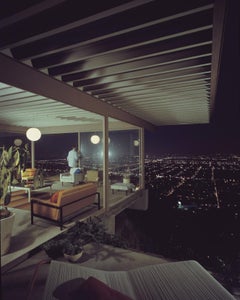
Case Study House 22, Playboy, 1960

Case Study House 22, Playboy, 1960

By Julius Shulman

Located in New York, NY

Julius Shulman Case Study House #22. Playboy 1960 C print Paper size: 20.5″ x 41.5″ (52.07 cm. x 104.14 cm.) Print size: 19″ x 40″ (48.26 cm. x 101.6 cm.) Shulman's studio stamp and...

Category

Modern 1960s Art

Materials

C Print

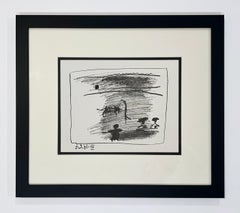
Les Banderilles (IV), from A Los Toros Avec Picasso

Les Banderilles (IV), from A Los Toros Avec Picasso

By Pablo Picasso

Located in Washington, DC

Artist: Pablo Picasso Title: Les Banderilles (IV) Portfolio: A Los Toros Avec Picasso Medium: Transfer lithograph Date: 1961 Edition: Unnumbered Frame Size: 18 1/4" x 20 3/4" Sheet ...

Category

Abstract 1960s Art

Materials

Lithograph

Max Ernst Dada Surrealist Hand Signed Lithograph Poster for a Jewish Museum

Max Ernst Dada Surrealist Hand Signed Lithograph Poster for a Jewish Museum

By Max Ernst

Located in Surfside, FL

Max Ernst (German, American, 1891-1976) Color lithograph Titled, "Poster For The Jewish Museum" 1966 Hand signed lower right Hand numbered HC I/XVII Dimensions: 34.75 x 28.5 sight 25 X 19.25 Max Ernst (German 1891 – 1976) was a German-born painter, sculptor, printmaker, graphic artist, and poet. A prolific artist, Ernst was a primary pioneer of the Dada movement and surrealism in Europe. He had no formal artistic training, but his experimental attitude toward the making of art resulted in his invention of frottage—a technique that uses pencil rubbings of textured objects and relief surfaces to create images—and grattage, an analogous technique in which paint is scraped across canvas to reveal the imprints of the objects placed beneath. Max Ernst showed for the first time in 1912 at the Galerie Feldman in Cologne. At the Sonderbund exhibition of that year in Cologne he saw the work of Paul Cezanne, Edvard Munch, Pablo Picasso, Paul Gauguin and Vincent van Gogh. In 1913 he met Guillaume Apollinaire and Robert Delaunay and traveled to Paris. Ernst participated that same year in the Erste deutsche Herbstsalon. In 1914 he met Jean Arp in Cologne who was to become a lifelong friend. In 1921 Ernst exhibited at the Galerie au Sans Pareil in Paris. He was involved in Surrealist activities in the early 1920s with Paul Eluard and André Breton. His work was exhibited that year together with that of the Das Junge Rheinland group, at Galerie Feldman in Cologne, and then in several group exhibitions in 1913. In his paintings of this period, Ernst adopted an ironic style that juxtaposed grotesque elements alongside Cubist and Expressionist motifs. Ernst fought in world war I. Several German Expressionist painters died in action during the war, among them August Macke and Franz Marc. In 1918, Ernst was demobilised and returned to Cologne. He soon married art history student Luise Straus, of Jewish ancestry, whom he had met in 1914. In 1919, he visited Paul Klee in Munich and studied paintings by Giorgio de Chirico. In the same year, inspired by de Chirico and mail-order catalogues, teaching-aide manuals and similar sources, he produced his first collage works (notably Fiat modes, a portfolio of lithographs), a technique which later dominated his artistic pursuits. Also in 1919, Ernst, social activist Johannes Theodor Baargeld and several colleagues founded the Cologne Dada group. In 1919–20, Ernst and Baargeld published various short-lived magazines such as Der Strom, die Schammade and organised Dada exhibitions. Ernst and Luise's son Ulrich Jimmy Ernst was born on 24 June 1920; he later would also become a painter. In 1921, he met Paul Éluard, who became a lifelong friend. Éluard bought two of Ernst's paintings (Celebes and Oedipus Rex) and selected six collages to illustrate his poetry collection Répétitions. A year later the two collaborated on Les malheurs des immortels and then with André Breton, whom Ernst met in 1921, on the magazine Littérature. Ernst developed a fascination with birds which was prevalent in his work. His alter ego in paintings, which he called Loplop, was a bird. He suggested that this alter-ego was an extension of himself stemming from an early confusion of birds and humans. In 1927, he married Marie-Berthe Aurenche and it is thought his relationship with her may have inspired the erotic subject matter of The Kiss and other works of that year. He collaborated with Joan Miro on designs for Sergei Diaghilev Ballet that same year. The following year the artist collaborated with Salvador Dali and the Surrealist Luis Bunuel on the film L'Age d'or. His first American show was held at the Julien Levy Gallery, New York, in 1932. In 1936 Ernst was represented in Fantastic Art, Dada, Surrealism at the Museum of Modern Art in New York. Ernst began to sculpt in 1934 and spent time with Alberto Giacometti. In 1938, the American heiress and artistic patron Peggy Guggenheim acquired a number of Max Ernst's works, which she displayed in her new gallery in London. Ernst and Guggenheim were married from 1942 to 1946. In September 1939, the outbreak of World War II caused Ernst, being German, to be interned as an "undesirable foreigner" in Camp des Milles, near Aix-en-Provence, along with fellow surrealist, Hans Bellmer, who had recently emigrated to Paris. He had been living with his lover and fellow surrealist painter, Leonora Carrington who, not knowing whether he would return, saw no option but to sell their house to repay their debts and leave for Spain. Thanks to the intercession of Paul Éluard and other friends, including the journalist Varian Fry, he was released a few weeks later. Soon after the German occupation of France, he was arrested again, this time by the Gestapo, but managed to escape to America with the help of Fry and Peggy Guggenheim, a member of a wealthy American art collecting family. Ernst and Peggy Guggenheim arrived in the United States in 1941 and were married at the end of the year. Along with other artists and friends (Marcel Duchamp and Marc Chagall) who had fled from the war and lived in New York City, Ernst helped inspire the development of abstract expressionism. His marriage to Guggenheim did not last. In October 1946 he married American surrealist painter Dorothea Tanning in a double ceremony with Man Ray and Juliet P. Browner in Beverly Hills, California. The couple made their home in Sedona, Arizona from 1946 to 1953. He and Tanning hosted intellectuals and European artists such as Henri Cartier-Bresson and Yves Tanguy. Sedona proved an inspiration for the artists and for Ernst, who compiled his book Beyond Painting and completed his sculptural masterpiece Capricorn while living in Sedona. As a result of the book and its publicity, Ernst began to achieve financial success. From the 1950s he lived mainly in France. In 1954 he was awarded the Grand Prize for painting at the Venice Biennale. In 2005, "Max Ernst: A Retrospective" opened at the Metropolitan Museum of Art. Contemporary artist tapestries have had their true believers. He produced a tapestry for Gloria Ross...

Category

Surrealist 1960s Art
Materials

Lithograph

Untitled Composition III (Gestural Abstraction, Lyrical, Tachisme, ~36% OFF)

Untitled Composition III (Gestural Abstraction, Lyrical, Tachisme, ~36% OFF)

Located in Kansas City, MO

Otto Greis Untitled Composition III Original Silkscreen on Fine Vellum Year: 1960 Sheet Size: 7.6 × 5.625 inches (19.30 × 14.29 cm) Mat Size: 10.6 × 8.125 inches (26.92 × 20.64 cm) F...

Category

Abstract Expressionist 1960s Art
Materials

Vellum, Screen

Vintage Impressionist Tuscan Country House Landscape  Painting

Vintage Impressionist Tuscan Country House Landscape Painting

Located in Douglas Manor, NY

#5-2752b Tuscan Country House Landscape, a country scene painting , oil on artist board displayed in a gilt-silver wood frame, signed lower left by Wane. Image size 17 H x 12.5 W

Category

1960s Art
Materials

Oil

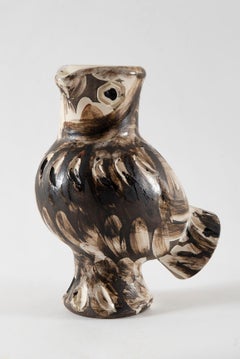
Chouette (A.R.604)
Chouette (A.R.604)

Chouette (A.R.604)

By Pablo Picasso

Located in PARIS, FR

• Picasso began working with ceramics in 1946 at the Madoura workshop in Vallauris, marking the beginning of an important and highly productive chapter in his career. What initially ...

Category

Modern 1960s Art
Materials

Ceramic

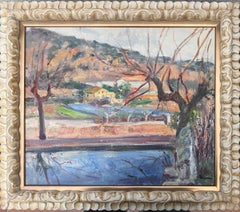
Simó Busom, Catalan Mediterranean Landscape with River, Signed Mid-Century oil

Simó Busom, Catalan Mediterranean Landscape with River, Signed Mid-Century oil

By Simó Busom Grau

Located in Sitges, Barcelona

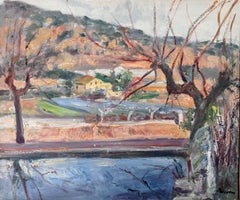
This mid-century oil on canvas by Catalan painter Simó Busom i Grau presents a vibrant Mediterranean landscape with river and house, painted in an expressive postwar Spanish style associated with the Barcelona school. Artist: Simó Busom i Grau (Barcelona, 1927–2020) Title: Mediterranean Landscape with River and House Date: Mid-20th Century (circa 1950s–1960s) Medium: Oil on canvas Canvas size: 46 x 55 cm (18.1 x 21.6 in) Framed size: 59 x 68 cm (23.2 x 26.8 in) Signature: Signed lower right Condition: Good overall condition. Stable paint layer. Frame: Decorative frame included, ready to hang Location: Sitges, Spain Style: Spanish Postwar Landscape / Mediterranean Modern A refined example of postwar Catalan landscape painting, this original oil by Simó Busom i Grau captures the Mediterranean atmosphere through confident brushwork and luminous color transitions. The composition centers around a warm yellow house set against rolling terrain and flowing water. Gestural trees structure the foreground, creating depth and movement while framing the landscape. The artist’s handling of paint is energetic yet controlled, with visible impasto and layered color planes that enhance texture and spatial presence. The palette moves between cool river blues and sunlit earth tones, reflecting the light and tonal vibration characteristic of mid-20th century Spanish painting. The result is a work that balances decorative appeal with painterly authenticity. Compact in size yet visually dynamic, it functions beautifully in residential interiors or curated collections of European mid-century art. The painting is signed and offered with decorative frame, ready to hang. Simó Busom i Grau (Barcelona, 1927–2020) was a Catalan painter trained at the Acadèmia Baixas in Barcelona. He developed a career closely linked to the city’s artistic circuit, exhibiting regularly in Barcelona and Madrid and maintaining connections with the historic Sala Parés. His work focused primarily on Mediterranean and urban landscapes, characterized by expressive brushwork, structural clarity and a luminous color palette rooted in modern Catalan tradition. Catalan landscape painting Spanish mid century oil Mediterranean river landscape Barcelona school painting Simó Busom signed oil Postwar Spanish art European mid century painting...

Category

Modern 1960s Art
Materials

Oil