1 of 9

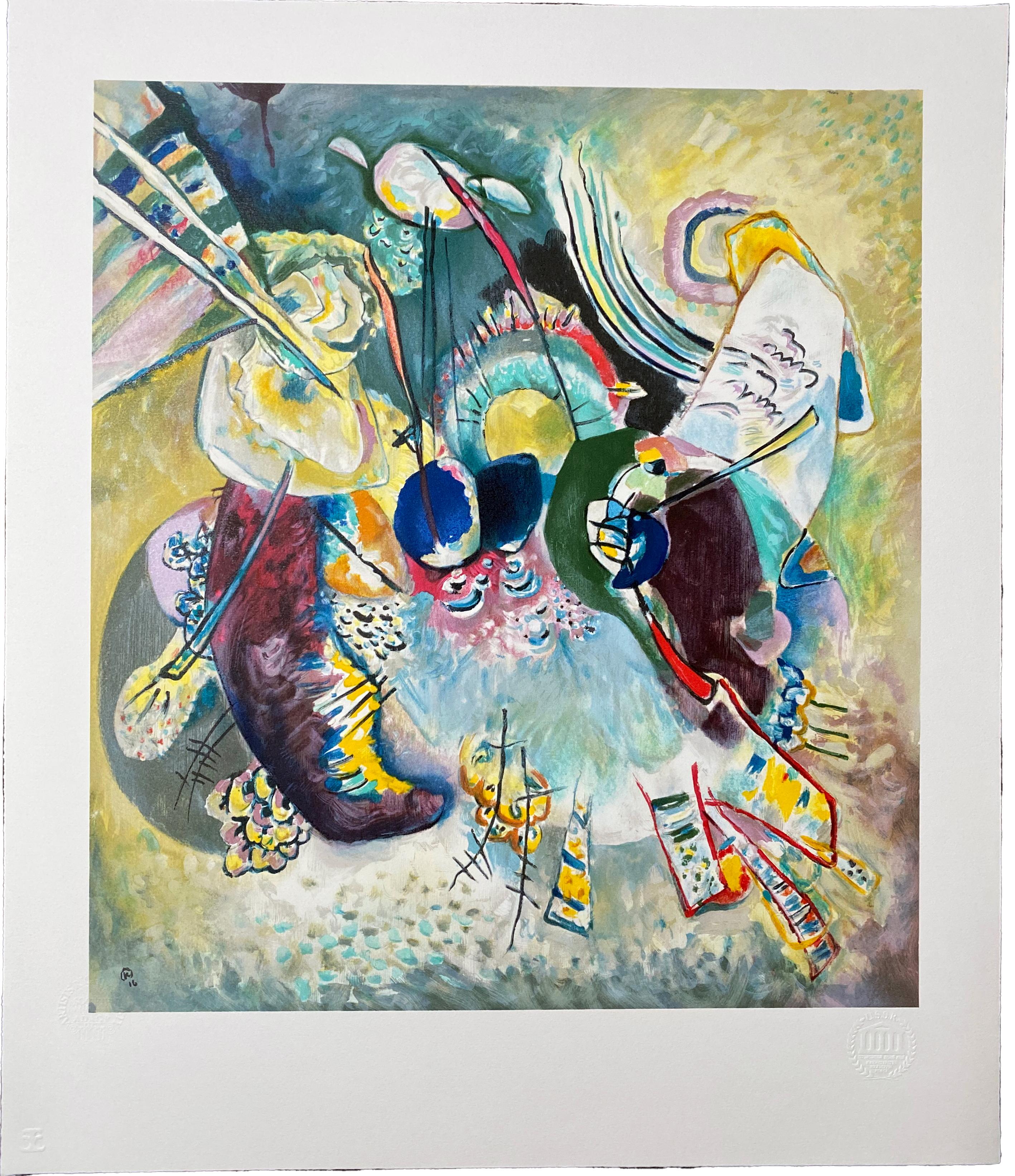
Wassily Kandinsky, Untitled, from Derriere le Miroir, 1953 (after)

1953

$1,996
$2,49520% Off
£1,492.50
£1,865.6320% Off
€1,743.15
€2,178.9420% Off
CA$2,804.38
CA$3,505.4720% Off
A$2,840.69
A$3,550.3620% Off
CHF 1,631.06
CHF 2,039.5020% Off
MX$34,442.47
MX$43,052.7120% Off
NOK 18,926.39
NOK 23,657.9920% Off
SEK 19,264.89
SEK 24,081.1220% Off
DKK 13,031.92
DKK 16,289.9020% Off

Follow Wassily Kandinsky Prints and Multiples to receive alerts when new items arrive

About the Item

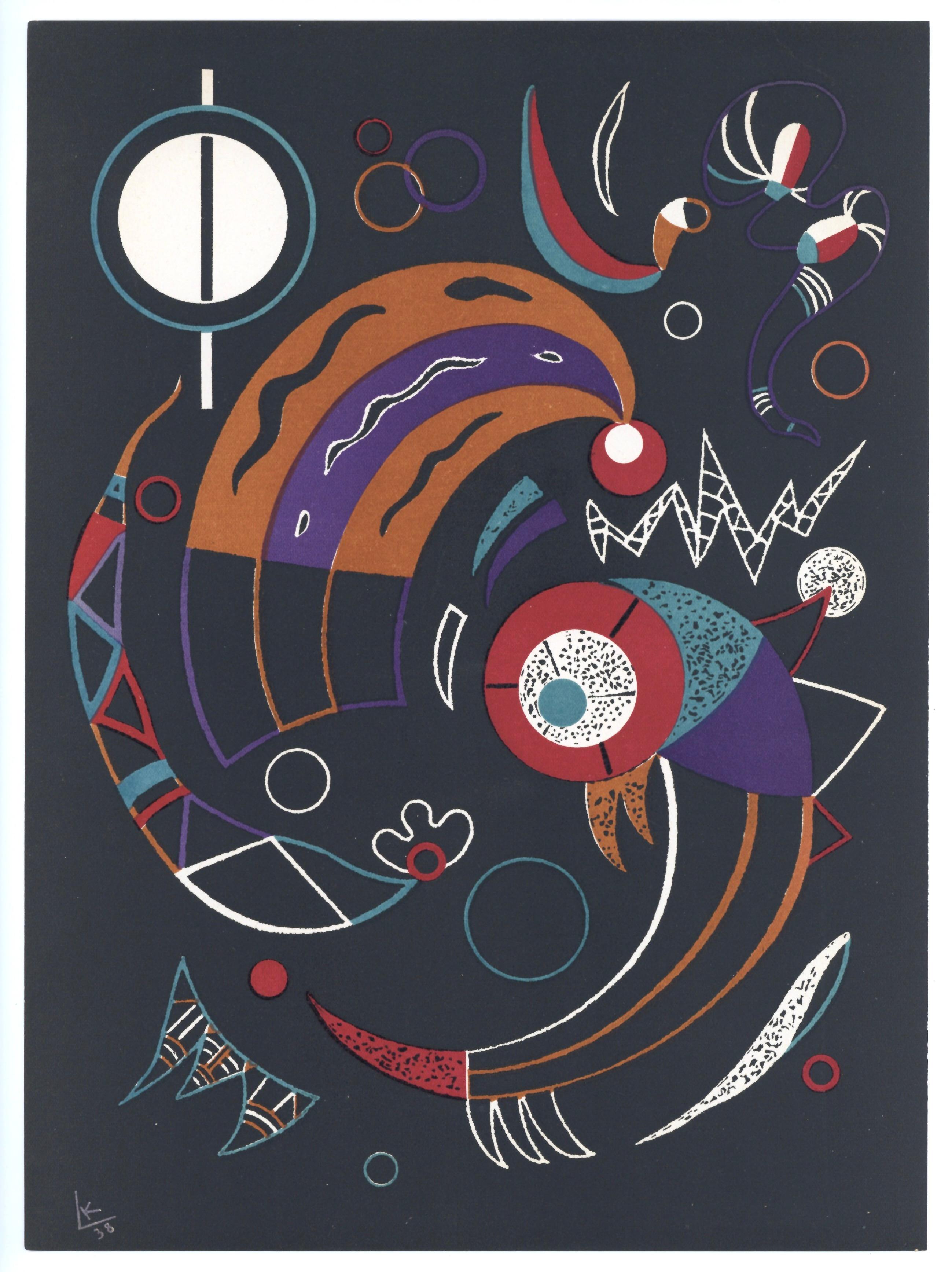
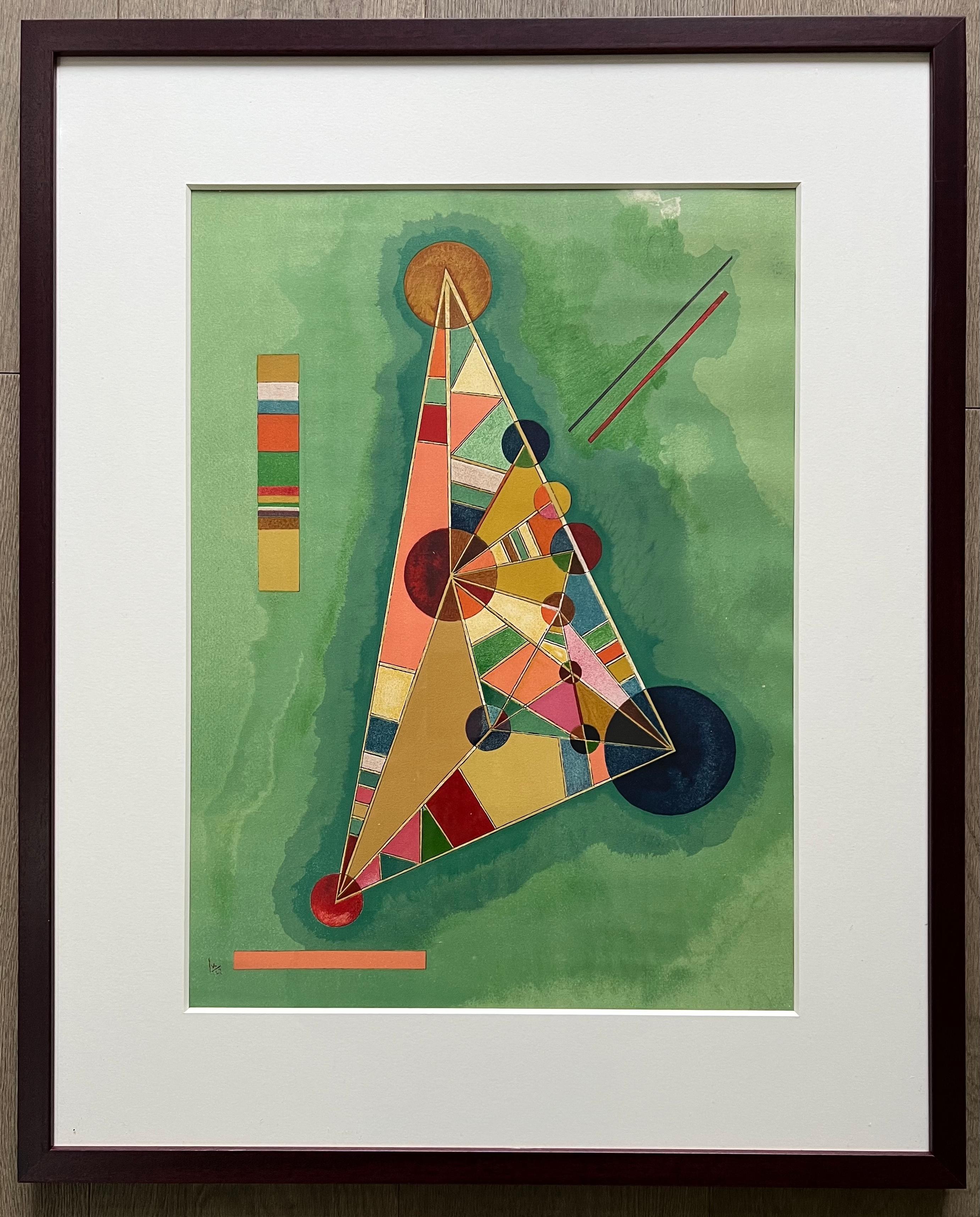
This exquisite lithograph after Wassily Kandinsky (1866–1944), titled Sans Titre (Untitled), originates from the 1953 folio Derriere le Miroir, Nos. 60–61, published by Maeght Editeur, Paris, under the direction of Aime Maeght, and printed by Mourlot Freres, Paris. This plate pays homage to the artist’s groundbreaking geometric abstraction and his profound influence on postwar modernism. Through precise form and rhythmic structure, Sans Titre captures the musicality and spiritual dynamism that defined Kandinsky’s mature visual language, balancing intuitive movement with mathematical harmony. Executed on velin paper, this lithograph measures 15 x 22 inches (38.1 x 55.9 cm), with centerfold, as issued. Signed in the plate and unnumbered, as issued. The edition reflects the exceptional quality and craftsmanship of the Maeght and Mourlot collaborations, honoring Kandinsky’s legacy in fine art printing. Artwork Details: Artist: After Wassily Kandinsky (1866–1944) Title: Sans Titre (Untitled), from Derriere le Miroir, Nos. 60–61, 1953 Medium: Lithograph on velin paper Dimensions: 15 x 22 inches (38.1 x 55.9 cm), with centerfold, as issued Inscription: Signed in the plate and unnumbered, as issued Date: 1953 Publisher: Maeght Editeur, Paris Printer: Mourlot Freres, Paris Condition: Well preserved, consistent with age and medium Provenance: From the 1953 folio Derriere le Miroir, Nos. 60–61, published by Maeght Editeur, Paris About the Publication: Derriere le Miroir (translated as "Behind the Mirror") was an iconic French art periodical published from 1946 to 1982 by Maeght Editeur, one of the most influential art publishers of the 20th century. Founded by Aime Maeght in Paris, the publication was conceived as a visual and literary collaboration between leading modern artists, poets, and critics. Each issue functioned as both an exhibition catalogue and a work of art in itself—featuring original lithographs printed directly from the artists' stones or plates, alongside essays, poems, and critical commentary. Over the course of 36 years, Derriere le Miroir produced more than 250 issues and showcased an extraordinary roster of artists including Henri Matisse, Marc Chagall, Joan Miro, Georges Braque, Alexander Calder, Fernand Leger, Pierre Bonnard, Alberto Giacometti, Eduardo Chillida, Ellsworth Kelly, Francis Bacon, Paul Rebeyrolle, Claude Garache, Antoni Tapies, Bram van Velde, Pierre Alechinsky, Pol Bury, Shusaku Arakawa, and Gerard Titus-Carmel. Printed in the ateliers of Mourlot, Arte, and Imprimerie Moderne du Lion, the periodical set new standards for quality in color lithography, combining fine art printing with elegant typography and poetic text. Beyond its visual brilliance, Derriere le Miroir also became a cultural chronicle of postwar European modernism. Each issue coincided with exhibitions held at Galerie Maeght, providing a collectible and widely accessible record of groundbreaking shows. Its integration of image, text, and philosophy created a dialogue between art and literature that elevated the modern art book to new aesthetic heights. Today, Derriere le Miroir remains one of the most sought-after and historically significant art publications, prized by collectors and scholars alike for its craftsmanship, influence, and its role in defining the visual language of 20th-century modernism. The Maeght Foundation in Saint-Paul-de-Vence continues to honor this legacy through exhibitions and archival preservation of the series, affirming Derriere le Miroir's enduring place in the history of modern art and fine art publishing. About the Artist: Wassily Kandinsky (1866–1944) was a Russian-born painter, theorist, and pioneer of abstract art whose revolutionary vision transformed 20th-century modernism. Regarded as one of the first artists to create purely nonobjective paintings, Kandinsky sought to express inner emotion and spirituality through color, rhythm, and form, believing that art could evoke the same universal harmony as music. His groundbreaking theories on abstraction and the “spiritual in art” shaped the foundation of modern aesthetics and influenced generations of artists worldwide. Closely associated with the Bauhaus movement, he developed a dynamic visual language that combined geometry and lyricism, bridging intuition and intellect. Kandinsky’s legacy resonates alongside the innovations of Pablo Picasso, Henri Matisse, Alexander Calder, Georges Braque, Marc Chagall, Alberto Giacometti, Salvador Dali, Joan Miro, Marcel Duchamp, and Man Ray—artists who, like him, redefined the possibilities of modern art. His works are represented in the world’s leading museums, including MoMA, the Guggenheim, the Centre Pompidou, and the Tate, and remain among the most coveted by collectors globally. The highest price ever paid for a Wassily Kandinsky artwork is approximately $45.6 million USD, achieved in 2017 at Christie’s London for Bild mit weissen Linien (Painting with White Lines) (1913). Wassily Kandinsky Sans Titre, Kandinsky Derriere le Miroir, Kandinsky Maeght Editeur Paris, Kandinsky Mourlot Freres, Kandinsky 1953 edition, Kandinsky lithograph, Kandinsky abstraction, Kandinsky collectible lithograph, Kandinsky modernist, Kandinsky Maeght Paris publication.
  • Creation Year:
    1953
  • Dimensions:
    Height: 15 in (38.1 cm)Width: 22 in (55.88 cm)
  • Medium:
  • Movement & Style:
  • After:
    Wassily Kandinsky (1866 - 1944, Russian)
  • Period:
  • Condition:
  • Gallery Location:
    Southampton, NY
  • Reference Number:
    1stDibs: LU1465217609662

You May Also Like

Small Worlds X - German Expressionism Russian

Small Worlds X - German Expressionism Russian

By Wassily Kandinsky

Located in London, GB

This original drypoint is hand signed in pencil by the artist “Kandinsky” at the lower right margin. It is also monogrammed and dated in the plate “VK 22” at the lower left image. It...

Category

1920s Expressionist Abstract Prints

Materials

Drypoint

Kandinsky, Abstract Composition, c. 1935, Posthmous 1st edition, Roethel 24B

Kandinsky, Abstract Composition, c. 1935, Posthmous 1st edition, Roethel 24B

By Wassily Kandinsky

Located in Fairlawn, OH

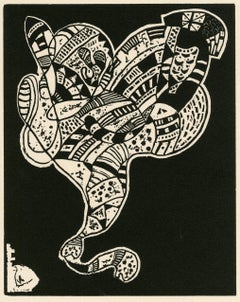
Composition Woodcut, c. 1935, printed 1966 Signed in the block lower left (see photo) This is the first printing of this image. Created in 1935, it was never printed during Kandinsky's lifetime. It is a POSTHUMOUS printing. Published by Gualtieri di San Lazzaro, Éditions XXe Siècle, Paris Issued in XXe Siècle, nouvelle série, no. 27, December 1966, Centenaire de Kandinsky Unsigned and unnumbered, as issued Edition commonly reported as approximately 2,000 Condition: Excellent Image size: 9 1/8 x 10 15/16 inches Reference: Roethel 24b Created in 1935 but apparently left unprinted during Kandinsky’s lifetime, Composition was first issued posthumously in December 1966 in the Kandinsky centenary number of the Parisian art review XXe Siècle. The woodcut was printed from Kandinsky’s original block rather than reproduced photographically. It is therefore properly described as an original, posthumously printed woodcut—not as a reproductive print “after” Kandinsky. Contemporary documentation identifies the composition as having been cut by the artist in 1935 and first published by Éditions XXe Siècle in 1966. Publication details and dimensions The print belongs to Kandinsky’s final period, begun after the closing of the Bauhaus and his move from Germany to Neuilly-sur-Seine, near Paris, in 1933. Its vocabulary differs markedly from the romantic landscapes, horsemen and apocalyptic subjects of his early Munich woodcuts. The forms are now self-contained and biomorphic: circles, hooks, floating linear elements and irregular organic silhouettes coexist within an open field. Although nonrepresentational, they suggest minute organisms, astronomical bodies or signs belonging to an invented visual language. The black-and-white medium gives the image unusual clarity. Solid forms function like sustained musical tones, while thin lines, dots and isolated marks provide accents and intervals. Areas of untouched paper are equally active, allowing the components to float without conventional gravity or horizon. Kandinsky organizes these elements through visual tension rather than perspective: large and small, dense and open, curved and angular forms establish a rhythmic equilibrium across the sheet. The woodcut process was fundamental to Kandinsky’s development. Its demand for simplification encouraged him to reduce images to essential contrasts of shape, line and ground. Nearly two-thirds of his approximately two hundred prints were made between 1900 and 1911, and his increasingly abstract woodcuts for Klänge played a decisive role in his movement away from representation. MoMA’s Kandinsky printmaking overview In this late composition, Kandinsky returned to the medium with the more refined geometry and organic imagery of his Paris years. The circumstances of the 1966 publication are integral to the work’s history. XXe Siècle, directed by the Italian-born critic and publisher Gualtieri di San Lazzaro, regularly included original prints by major modern artists. Issue no. 27, entitled Centenaire de Kandinsky, commemorated the hundredth anniversary of Kandinsky’s birth. It contained two original Kandinsky woodcuts...

Category

1930s Abstract Abstract Prints

Materials

Woodcut

Composition 1916

Composition 1916

By (after) Wassily Kandinsky

Located in Rochester Hills, MI

Wassily Kandinsky - Composition 1916 Lithograph in colors on Arches paper, 1990 Paper size 24" x 28" inches Image size 20" x 22" inches Stamped signature (16) Blindstamps of the Russ...

Category

Early 1900s Abstract Expressionist Abstract Prints

Materials

Lithograph

Musee National d'Art Moderne (after) Wassily Kandinsky - Abstract

Musee National d'Art Moderne (after) Wassily Kandinsky - Abstract

By Wassily Kandinsky

Located in New York, NY

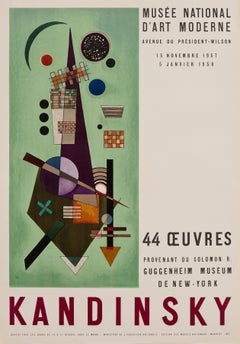
This rare lithographic poster was printed in 1957 at the Atelier Mourlot in Paris. It was created to promote an exhibition of artworks by Kandinsky, on loan from the Guggenheim Museu...

Category

1950s Abstract Geometric More Prints

Materials

Lithograph

Musee National d'Art Moderne (after) Wassily Kandinsky - Abstract

Musee National d'Art Moderne (after) Wassily Kandinsky - Abstract

By Wassily Kandinsky

Located in New York, NY

This rare lithographic poster was printed in 1957 at the Atelier Mourlot in Paris. It was created to promote an exhibition of artworks by Kandinsky, on loan from the Guggenheim Museum to the National Museum of Modern in Paris. Certificate of Provenance: Each individual work of art carefully curated by Mourlot Editions comes with a Certificate of Provenance, signed, dated, stamped, and numbered by Eric Mourlot. This certificate guarantees the origin and authenticity of your personal lithograph. About the Artist: Kandinsky was a painter and art theorist, one of the first creators of pure abstraction in modern painting. After successful avant-garde exhibitions, he founded the influential Munich group Der Blaue...

Category

1950s Abstract Geometric More Prints

Materials

Lithograph

Plate 12

Plate 12

By Wassily Kandinsky

Located in Fairlawn, OH

Plate 12 From: 10 Origi, 1942 Signed in the block with the artist's initials lower left (printed) From: 10 Origin Not from the First edition 100, published by Allianz-Verlag, Zurich,...

Category

1970s Expressionist Abstract Prints

Materials

Woodcut