Old Masters Prints and Multiples

OLD MASTERS

Encompassing centuries of change in Europe between 1300 and 1800, from booms of prosperity to bloody revolutions, Old Masters describes a wide range of artists. The informal term was derived from the title of an artist who trained in a guild long enough to become a master, such as Leonardo da Vinci, who studied in a Florence painters’ guild. However, Old Masters paintings, prints and other art is now used to refer to work made by any artist with a high level of skill in painting, drawing, sculpture or printmaking who worked during this era.

The 15th century’s expansive trade and commerce spread culture across borders. A vibrant period of art emerged, bolstered by studies of anatomy and nature that influenced a new visual realism. From Raphael and Michelangelo in the Renaissance to Rembrandt van Rijn and Johannes Vermeer in the Dutch Golden Age, artists expressed emotion, naturalism, color and light in new ways. El Greco and Paolo Veronese were leaders in the dramatic style of Mannerism, while Caravaggio and Peter Paul Rubens demonstrated the movement and meticulous detail of Baroque art.

Historically, most attention was concentrated on male artists, but recent research and exhibitions have elevated the impactful work of women such as Rachel Ruysch and Artemisia Gentileschi. In late-18th-century France, female artists like Adélaïde Labille-Guiard and Élisabeth Vigée Le Brun were prominent names. Nevertheless, access to the academies and guilds was highly restricted for women, and even those able to establish practices were expected to adhere to portraits and still lifes rather than the grand history paintings being created by men.

Find a collection of Old Masters prints, paintings, drawings and watercolors and other art on 1stDibs.

to
130
2,014
558
71
29
15
Overall Width
to
Overall Height
to
20,798
19,861
10,658
6,061
5,290
1,632
1,608
1,452
944
893
505
387
187
94
93
86
83
61
2,113
539
28
20
2
1
3
1
12
1
1,818
1,229
1,095
362
1,736
863
679
569
491
483
309
267
184
145
143
138
135
96
91
85
74
71
69
61
2,294
330
186
151
64
115
2,047
2,108
572
Style: Old Masters
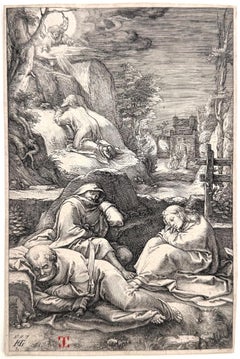
Agony in the Garden (Christ on the Mount of Olives); Plate 2 from The Passion

Agony in the Garden (Christ on the Mount of Olives); Plate 2 from The Passion

By Hendrick Goltzius

Located in Middletown, NY

Celebrated for the "sfumato" effect that Goltzius achieved through engraving alone, the incredibly fine lines in this work create the illusion of soft, glowing light and atmospheric ...

Category

16th Century Old Masters Prints and Multiples

Materials

Laid Paper, Engraving

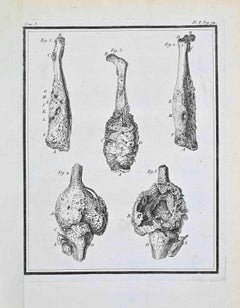
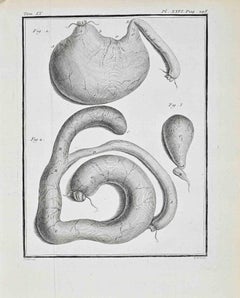
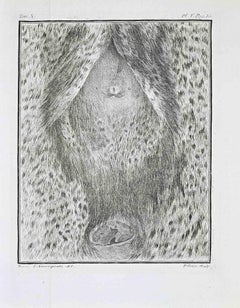
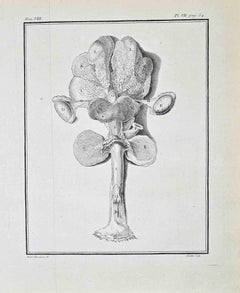
Central Nervous and Reproductive Systems..- Etching by Buvée d’Amérique - 1771

Central Nervous and Reproductive Systems..- Etching by Buvée d’Amérique - 1771

By Buvée d’Amérique

Located in Roma, IT

Tome VIII – Plate VII, p. 54 from Buffon's Histoire Naturelle, Générale et Particulière. Fine 18th-century copperplate engraving from the 1771 edition of Buffon’s celebrated Histoir...

Category

1770s Old Masters Prints and Multiples

Materials

Etching

Fishermen resting by a riverbank

Fishermen resting by a riverbank

By Pu Qùa

Located in Middletown, NY

Copperplate stipple engraving with hand coloring in watercolor, 17 1/2 x 10 1/4 inches (445 x 260 mm), the full sheet, full margins. In very good condition with some minor, light sta...

Category

Late 18th Century Old Masters Prints and Multiples

Materials

Watercolor, Handmade Paper, Engraving

Porto Vecchio, Corsica

Porto Vecchio, Corsica

By Israel Silvestre

Located in Middletown, NY

Paris: Israël Henriet, c1680. Etching with engraving on cream laid paper, laid down to a cream laid paper matrix, 3 1/8 x 7 1/8 inches (78 x 180 mm), the full sheet with thread marg...

Category

17th Century Old Masters Prints and Multiples

Materials

Handmade Paper, Laid Paper, Etching, Engraving

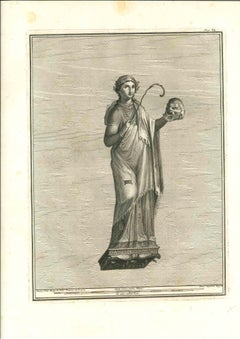
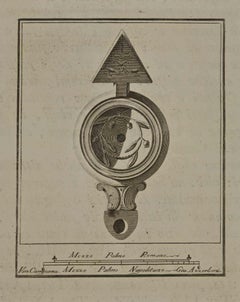
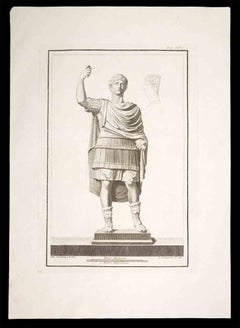
Ancient Roman Statue - Original Etching on Paper - 18th Century

Ancient Roman Statue - Original Etching on Paper - 18th Century

Located in Roma, IT

Ancient Roman Statue, from the series "Antiquities of Herculaneum", is an original etching on paper realized by F. Campana in the 18th century. Signed on the plate, on the lower rig...

Category

18th Century Old Masters Prints and Multiples

Materials

Paper, Etching

Il tempio del Sole

Il tempio del Sole

By Israel Silvestre

Located in Middletown, NY

Etching on hand made cream laid paper, 2 7/8 x 6 1/4 inches (72 x158 mm), 1/4 inch margins. In very good condition with minor edge wear. Adhered with adhesive along the left top shee...

Category

Early 17th Century Old Masters Prints and Multiples

Materials

Handmade Paper, Laid Paper, Etching

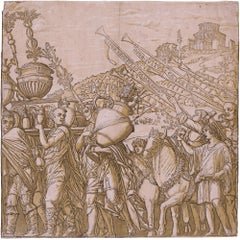
The Triumph of Caesar: Plate IV

The Triumph of Caesar: Plate IV

By Andrea Mantegna

Located in Middletown, NY

Andreani, Andrea (Italian, about 1558–1610), after Andrea Mantegna (Italian, 1431-1506) Chiaroscuro woodcut in colors printed from four blocks on laid paper in dark brown, grey, and...

Category

16th Century Old Masters Prints and Multiples

Materials

Ink, Handmade Paper, Laid Paper, Woodcut

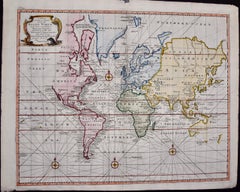
Map of the World: An Original 18th Century Hand-colored Map by E. Bowen

Map of the World: An Original 18th Century Hand-colored Map by E. Bowen

By Emanuel Bowen 1

Located in Alamo, CA

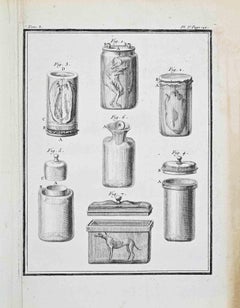
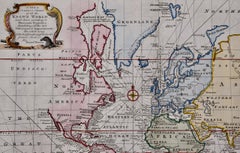
This is an original 18th century hand-colored map entitled "A New & Correct Chart of All The Known World Laid down according to Mercator's Projection" by Emanuel Bowen. It was published in 1744 in London in John Harris's "Navigantium atque Itinerantium Bibliotheca" or "A Complete Collection of Voyages and Travels". This highly detailed and colorful map depicts the world. as it was known in the mid 18th century. A majority of the northern and central portions of Canada and America are left blank due to the purity of knowledge at the time this map was published. The map is embellished with four Compass Roses in the lower left, lower center, lower right and center, along with many rhumb lines. There a is a decorative title cartouche in the upper left. This colorful, attractive, historical and interesting 1744 map presents the entire world on Mercator's projection as it was understood in the middle part of the 18th century, before the landmark explorations of Captain’s Cook, Vancouver, Wilkes and others. It is an example of a nautical chart, a type of map that was designed specifically for use by mariners. The map is centered on the equator and includes both the Eastern and Western Hemispheres. The continents of North America, South America, Europe, Africa, and Asia are depicted, as well as various islands in the Atlantic, Pacific, and Indian Oceans. The map is laid out according to the Mercator projection, a type of cylindrical map projection that was developed in the 16th century by Flemish cartographer Gerardus Mercator. This projection has the advantage of preserving angles and shapes, making it useful for navigation. The map presents a paucity of inland detail, particularly for the Americas, but major cities, geographical landmarks, and regions are included. Ocean currents and Tradewinds are identified, as well as the magnetic declination lines or magnetic variance, which refers to the difference between true north and compass north. The continents are color coded, enhancing the beauty of this map. The three compass roses indicate the directions of the cardinal points. The depiction of the western coast of America, the Pacific and Australia are interesting. There was very little exploration of Australia between the navigations of William Damper in 1699 and Tobias Furneaux in 1773. Most of the maps detail relies on the 17th century Dutch expeditions to Australia's western coast, by Abel Tasman and William Janszoon. Van Diemen's Land (Tasmania) and New Guinea appear connected to the Australian continent. New Zealand appears as a single landmass. North of New Zealand there is a landmass labelled 'Ter d' St. Esprit' which probably represents the New Hebrides Islands. This map precedes the accurate exploration of the South Pacific and east coast of Australia by Captain James Cook later in the 18th century. The map includes ‘Drakes' Port,' the site where Sir Francis Drake supposedly landed in 1579 during his 1579 circumnavigation of the globe. Here he claimed territory for England, restocked, and repaired his vessels. Drake named the region New Albion. The exact location of Drake's Port is a cartographic mystery. Drake's Harbor is believed to be in the region of San Francisco Bay, Bodega Bay, San Pablo Bay...

Category

Mid-18th Century Old Masters Prints and Multiples
Materials

Engraving

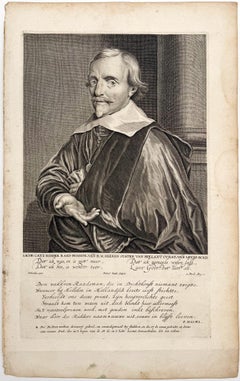
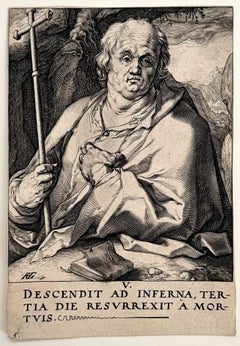
Portrait of Jacob Cats, poet – engraved by Michiel Nöel Natalis

Portrait of Jacob Cats, poet – engraved by Michiel Nöel Natalis

Located in Middletown, NY

Amsterdam: Francois Halma, circa 1700. Engraving on laid paper, 13 x 7 3/4 inches (350 x 197 mm); sheet 15 3/4 x 9 3/4 inches (400 x 248 mm), full margins. In very good condition wi...

Category

Early 18th Century Old Masters Prints and Multiples
Materials

Laid Paper, Engraving

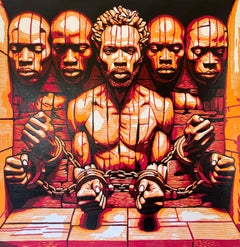
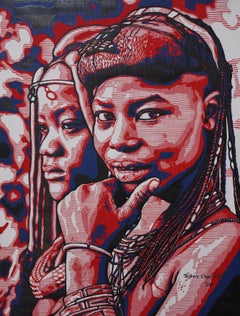
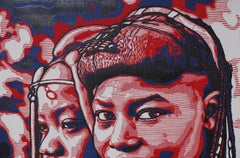
Indelible Scar - 21st Century, Contemporary, Figurative, Africa, People, Linocut

Indelible Scar - 21st Century, Contemporary, Figurative, Africa, People, Linocut

By Tosin Oyeniyi

Located in Ibadan, Oyo

Shipping Procedure Unmounted artwork Ships in a well-protected tube from Nigeria Accompanied by a Certificate of Authenticity. About Artist Tosin Oyeniyi is an intrinsically talente...

Category

21st Century and Contemporary Old Masters Prints and Multiples

Materials

Canvas, Linocut

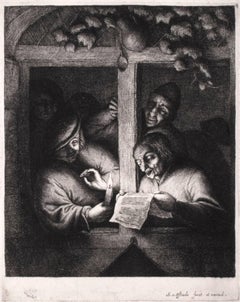
The Singers

The Singers

By Adriaen van Ostade

Located in Chicago, IL

The Singers (4th State), 1667 Etching printed with tone 240 x 190 mm.; 9 1/2 x 7 1/2 inches Provenance: W. Benoni White (Lugt 2592) Karl Herweg (not in Lugt) References: Godefroy 19 IV/VII Hollstein 19 IV/VII Pelletier, Georgia Museum of Art, 1994: nos. 46 and 47 Notes: A very fine impression of the rare 4th state (of seven) of this major Van Ostade. Godefroy illustrates differences between this 4th state and the following 5th state. In the latter state, there are several “escaped lines”, going obliquely from left to right, directly above the central post. These lines are not visible in the 4th state. Ostade was one of the most important of the printmakers within the Rembrandt circle. His prints, avoiding religious subjects, depicted beggars, peasants and artisans. Combining great artistic sensitivity with thorough mastery of the medium of etching, Ostade etchings present a unique artistic panorama of life in seventeenth-century Holland. Pelletier (S. William Pelletier, Adrian Van Ostade...

Category

17th Century Old Masters Prints and Multiples

Materials

Etching

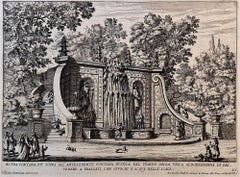
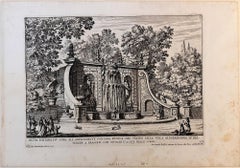
Fountains of Rome
Fountains of Rome

Fountains of Rome

By Giovan Battista Falda

Located in Middletown, NY

A charming scene with romping dogs and spectators watching the cascading water play a trick on an unsuspecting man who is sprayed as he descends the steps, ...

Category

Early 17th Century Old Masters Prints and Multiples
Materials

Laid Paper, Engraving, Etching

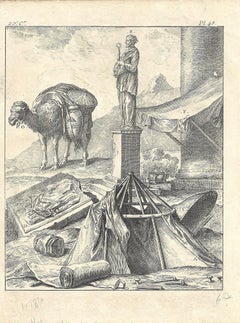
A Hebrew nomadic camp – English School, 18th century

A Hebrew nomadic camp – English School, 18th century

Located in Middletown, NY

Engraving on light weight laid paper with an small indiscernible, alphabetic watermark, 9 x 7 1/2 (230 x 188 mm); sheet 11 1/4 x 8 1/2 inches (284 x 215 mm), wide margins. In very go...

Category

18th Century Old Masters Prints and Multiples
Materials

Ink, Handmade Paper, Laid Paper, Woodcut

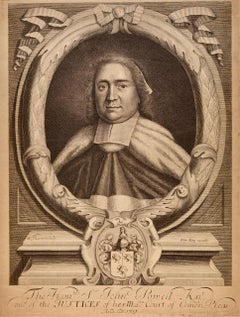
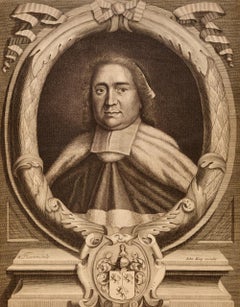
Sir. John Powell, Knight: Early 18th C. Engraved Portrait After William Sherwin

Sir. John Powell, Knight: Early 18th C. Engraved Portrait After William Sherwin

Located in Alamo, CA

This is an early 18th century portrait of Sir John Powell entitled "The Honorable Sr. John Powell, Knight. one of the Justices of her Majesties' Court of Common Pleas. Ano. D 1711". It was engraved and published by John King in London in 1711, after an earlier work by William Sherwin. The engraving depicts a bust length portrait of Powell wearing an elaborate fir-trimmed robe and collar. The portrait is encompassed in an ornate oval frame, sitting on a pedestal with an impressive coat-of-arms below. This engraved portrait is printed on laid, chain-linked watermarked cream-colored paper The sheet measures 15.25" high and 11.38" wide. It is adhered to an archival thick card at the upper corners, There is a 1/8" tear at the lower edge of the sheet, but the print is otherwise in very good condition. This engraving is held by museums and institutions, including the British Museum and the Harvard University Art Museum. Sir John Powell (1632-1696) was an English lawyer and judge who served as a justice of the King's Bench from 1683 until his death. He was born in Glamorganshire, Wales, and studied at Jesus College, Oxford, before being called to the bar at the Middle Temple in 1656. Powell was known for his staunch support of the monarchy and the Church of England, and he played a prominent role in the trial of the Whig leader Lord William Russell in 1683, which resulted in Russell's execution for his alleged involvement in a plot to assassinate King Charles II. Powell was also involved in the trials of several other prominent Whig politicians, including Algernon Sidney and Titus Oates. In addition to his work as a judge, Powell was also a member of Parliament for various constituencies throughout his career, and he served as Solicitor General and Attorney General for Wales under King James II. However, he opposed James's efforts to promote Catholicism and supported the Glorious Revolution of 1688, which led to James's overthrow and the installation of William and Mary as joint monarchs. Powell was known for his intellectual rigor and his legal expertise, and he authored several influential legal treatises during his lifetime. He was widely respected by his peers and by the legal community as a whole, and his legacy as a jurist and judge continues to be celebrated today. William Sherwin (1645-1709) was an English engraver who worked during the late 17th and early 18th centuries. He was born in Chesterfield, Derbyshire, and is known for his high-quality engravings of various subjects, including portraits, landscapes, and architectural views. Sherwin was trained as an engraver and worked as an apprentice to the renowned engraver Robert White. After completing his training, he went on to establish his own studio in London, where he produced a significant body of work over the course of his career. One of Sherwin's most famous works is his engraving of the portrait of John Locke...

Category

Early 18th Century Old Masters Prints and Multiples
Materials

Engraving

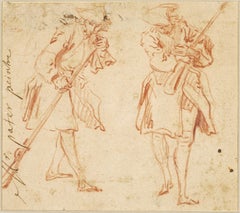
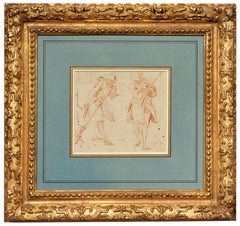
Two military studies, a preparatory red chalk drawing by Jean-Baptiste Pater

Two military studies, a preparatory red chalk drawing by Jean-Baptiste Pater

By Jean-Baptiste Pater

Located in PARIS, FR

As Florence Ingersoll-Smouse wrote in 1921 in her book devoted to Jean-Baptiste Pater, "a painter of the Fête galante, Pater is interesting both by his intimacy with Watteau, to whom many of his works are still attributed, and by his own value as an artist.” This sanguine, full of life and spontaneity, is typical of the preparatory studies made by the painter to be used later in the composition of his paintings. 1. Jean-Baptiste Pater, pupil and disciple of Antoine Watteau Antoine Pater, Jean-Baptiste's father, belonged to the petty bourgeoisie of Valenciennes where he worked as a merchant-sculptor. His brother Jacques was a local painter who was probably involved in his nephew's training. Born on December 29, 1695, Jean-Baptiste Pater was first trained with Jean-Baptiste Guider, a local painter whose death in 1711 was probably the reason for Jean-Baptiste’s departure alongside Watteau, who was visiting Valenciennes. Watteau's difficult character led to their separation in 1713. Back in Valenciennes, Jean-Baptiste Pater encountered difficulties with the powerful Corporation of Saint-Luke (to which he refused to belong) which forced him to return to Paris in 1718. He reconciled with Watteau shortly before his death (on July 18th 1721), inherited the commissions that Watteau had been unable to fulfil and completed some of his paintings. Pater was accepted by the Académie Royale in 1725 but did not produce his reception painting The soldier’s revels until three years later. Throughout his brief career (he died at the age of forty on July 25th 1736), he mainly had a clientele of amateurs and received only one royal commission, shortly before his death. 2. Description of the drawing and related artworks Pater had adopted his master Watteau's method of composition. His study drawings were carefully glued in a notebook and were used to animate his compositions. His paintings sometimes suffer from a somewhat artificial composition, since the figures seem to be pasted one next to the other. This point has also been made about Watteau’s. The theme of military scenes (which was at the time included in the genre of Fêtes galantes!) was one of Pater’s favourite subjects. Together with the Bathing Women...

Category

1720s Old Masters Prints and Multiples
Materials

Chalk

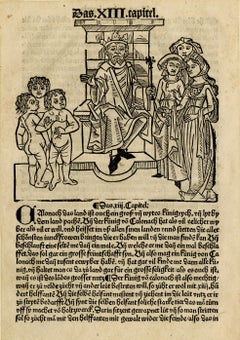
Untitled (King seated on his throne, with ladies and children)

Untitled (King seated on his throne, with ladies and children)

Located in Fairlawn, OH

Untitled (King seated on his throne, with ladies and children) From: The Travels of Sir John Mandeville, printed by Johannes Prüss Woodcut on 15th century laid paper, 1488 Unsigned (...

Category

15th Century and Earlier Old Masters Prints and Multiples
Materials

Woodcut

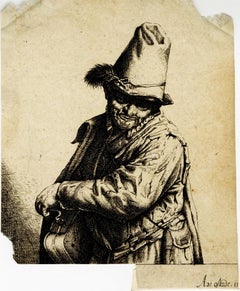
The Organ Grinder
The Organ Grinder

The Organ Grinder

By Adriaen van Ostade

Located in Middletown, NY

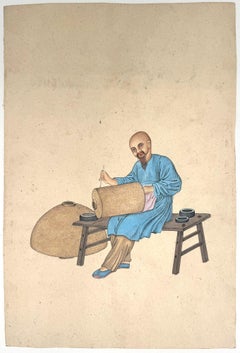
Etching on cream laid paper with a large heraldic watermark which is partially trimmed, 4 3/16 x 3 5/8 inches (105 x 84 mm), margins trimmed but preserving the signature in the lower...

Category

17th Century Old Masters Prints and Multiples
Materials

Etching

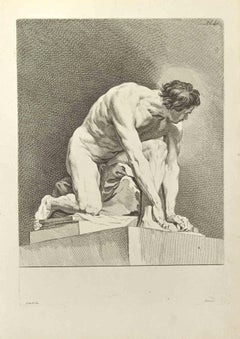
Posing Man - Etching by Nicholas Cochin - 1755

Posing Man - Etching by Nicholas Cochin - 1755

By Nicholas Cochin

Located in Roma, IT

Posing Man is an etching realized by Nicholas Cochin in 1755. Good conditions with foxing on the margins. Signed in the plate. The etching was realized for the anatomy study “JOMB...

Category

18th Century Old Masters Prints and Multiples
Materials

Etching

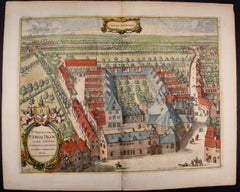
Cartusia Bruxellensis Monastery in Brussels: A 17th C. Hand-colored Engraving

Cartusia Bruxellensis Monastery in Brussels: A 17th C. Hand-colored Engraving

By Lucas Vorsterman the Younger

Located in Alamo, CA

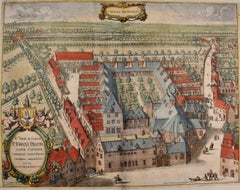
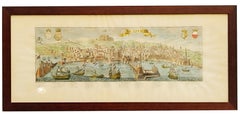
This is a 17th century hand-colored copperplate engraving entitled "Cartusia Bruxellensis" by Lucas Vorsterman, the Younger, after a drawing by Jacob van Werden or Jacques van Weerden, published in 1659 in Antonius Sanderus' book 'Chorographia sacra Brabantiae sive celebrium aliquot in ea provincia ecclesiarum et coenobiorum descriptio . . . Brussel' (A sacred chorography of Brabant, or a description of several famous churches and convents in that province). It also appeared in other publications by Sanderus. In the 17th century, Brussels was within the Duchy of Brabant. This engraving depicts a bird's-eye view of the Scheut Carthusian Monastery in Brussels. Scheut is a district of Anderlecht, a municipality of Brussels, Belgium. The monastery housed monks, who took a vow of silence, in 20 rooms. There is a central courtyard with trees and shrubs. Monks are depicted strolling along its pathways. The cells for the friars are in the middle the cloister. There are people along the streets in the foreground and to the right of the large, imposing monastery. Some are on horseback, others are walking. In the lower right, what appears to be a dog pulls a small cart containing barrels, possibly of beer or wine. Districts and neighborhoods are labelled in the background, including Scheut, Anderlecht and Ransfort. A very ornate cartouche in the lower left contains Latin and the artist's attribution. Another decorative cartouche in the upper central area contains the title. This beautifully hand-colored and detailed engraving is printed on laid, chain-linked paper with wide, full margins. The sheet measures 17.25" high and 21.25" wide. It has Latin text on the verso. It has a central vertical fold, as issued, which is reinforced on the verso. Two small spots in the lower margin may actually represent drops of watercolor paint used to color the engraving. It is otherwise in very good condition. Antonius Sanderus (1586-1664) was a Flemish Catholic cleric and historian. He was born "Antoon Sanders", but Latinized his name like many writers and scholars of his time. He was the author of several books, including 'Chorographia Sacra Brabantiae', which was illustrated with this engraving. Lucas Vorsterman the Younger (1624-between 1666 & 1676) was a Flemish Baroque engraver and draughtsman. He produced engravings after the work of contemporary painters and for books by Antwerp publishers. Jacob van Werden or Jacques van Weerden (active 1643-1669), was a Flemish draughtsman, cartographer, military engineer and archer who was active in the Habsburg Netherlands. His drawings were used as designs for prints executed by various printmakers. He worked on maps, topographical views, historical scenes, portraits and book illustrations. He had a career as a military engineer and a member of the guard of the Spanish King. He advised on various military engineering projects and was an engineer of the Spanish army...

Category

Mid-17th Century Old Masters Prints and Multiples
Materials

Engraving

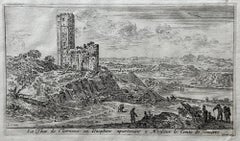
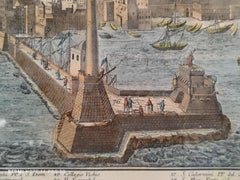
Le Tour de Clermont en Dauphine apartenant a Monsieur de Tonnerre

Le Tour de Clermont en Dauphine apartenant a Monsieur de Tonnerre

By Israel Silvestre

Located in Middletown, NY

Etching and engraving on handmade cream laid paper, 3 7/8 x 6 7/8 inches (97 x 173 mm), full margins. In good condition, consistent with age. Several small notations in pencil in t...

Category

18th Century Old Masters Prints and Multiples
Materials

Handmade Paper, Laid Paper, Engraving, Etching

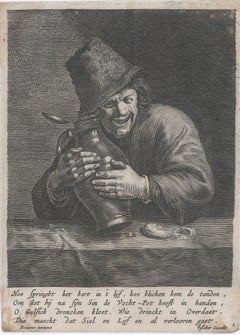
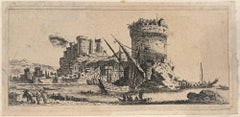
To Drink in Excess

To Drink in Excess

By Cornelis Visscher

Located in Middletown, NY

Etching on cream laid paper, full margins. Trimmed at the plate mark. Scattered light caramel colored areas of discoloration in the sheet corners, light skinning on the verso at the ...

Category

Mid-17th Century Old Masters Prints and Multiples
Materials

Laid Paper, Etching

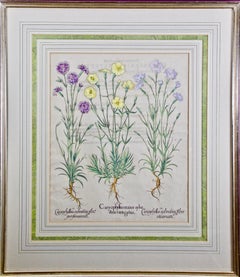
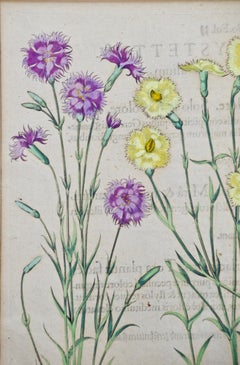
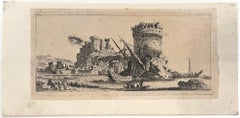
Besler Hand Colored Botanical Engraving of Wood Pink & Cottage Pink Flowers

Besler Hand Colored Botanical Engraving of Wood Pink & Cottage Pink Flowers

By Basilius Besler 1

Located in Alamo, CA

A 17th century hand-colored copper plate engraving entitled "Caryophyllus Maior Sylve Strisvarie Gatus" (Wood Pink & Cottage Pink Flowers) from Basilius Besler's landmark work, Hortus Eystettensis (Garden at Eichstatt), first published in 1613 in Eichstatt, Germany near Nuremberg and later in 1640 and 1713. This engraving is presented in a silver and gold-colored wood frame with a green edge and three elaborate cream-colored French mats...

Category

17th Century Old Masters Prints and Multiples
Materials

Engraving

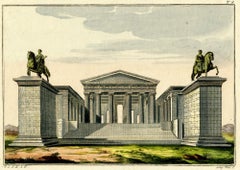
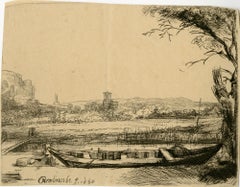
Reconstruction of the citadel, or acropolis, of Athens

Reconstruction of the citadel, or acropolis, of Athens

Located in Middletown, NY

Engraving with hand coloring on H & I Honig watermarked laid paper, 7 1/2 x 10 1/2 inches (191 x 262 mm); sheet 9 1/4 x 13 1/4 inches (235 x 332 mm), full margins. In good condition ...

Category

Early 19th Century Old Masters Prints and Multiples
Materials

Ink, Handmade Paper

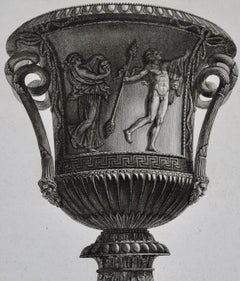
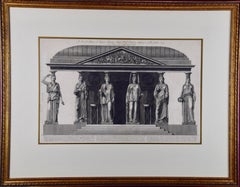
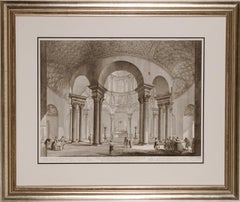
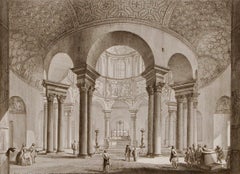
Ancient Roman Architecture: Framed Original 18th C. Etching by G. Piranesi

Ancient Roman Architecture: Framed Original 18th C. Etching by G. Piranesi

By Giovanni Battista Piranesi

Located in Alamo, CA

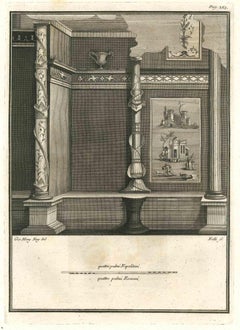
"A sua Eccellenza il Signor Henry Hope Cav. Scozzese Amatore delle Belle Arti from "Vasi, Candelabri, Cippi, Sarcofagi, Tripodi, Lucerne, Ed Ornamenti Antichi", (Vases, candelabra, grave stones, sarcophagi, tripods, lamps, and ancient ornaments) is an etching by Giovanni Battista Piranesi, published in 1778. It depicts stone caryatids...

Category

1770s Old Masters Prints and Multiples
Materials

Etching

Iwoye (Perception 2) - 21st Century, Contemporary Figurative, Africa Linocut

Iwoye (Perception 2) - 21st Century, Contemporary Figurative, Africa Linocut

By Tosin Oyeniyi

Located in Ibadan, Oyo

Shipping Procedure Unmounted artwork Ships in a well-protected tube from Nigeria Accompanied by a Certificate of Authenticity. About Artist Tosin Oyeniyi is an intrinsically talente...

Category

21st Century and Contemporary Old Masters Prints and Multiples
Materials

Canvas, Linocut

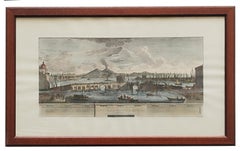
VEDUTA DI PONTE NUOVO, Antonio Cardon - Print on paper with frame, modern

VEDUTA DI PONTE NUOVO, Antonio Cardon - Print on paper with frame, modern

Located in Napoli, IT

Hand-colored print of the engraving by Antoine Alexandre Joseph Cardon of the original painting by Gabriele Ricciardelli. Edizioni Pontevecchio. Lily logo and a brush with the words...

Category

1970s Old Masters Prints and Multiples
Materials

Color

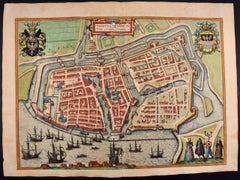
View of Emden, Germany: A 16th Century Hand-colored Map by Braun & Hogenberg

View of Emden, Germany: A 16th Century Hand-colored Map by Braun & Hogenberg

By Franz Hogenberg

Located in Alamo, CA

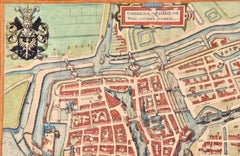
This is a 16th century original hand-colored copperplate engraved map of a bird's-eye View of Embden, Germany entitled " Emuda, vulgo Embden vrbs Frisia orientalis primaria" by Georg Braun & Franz Hogenberg, in volume II of their famous city atlas "Civitates Orbis Terrarum", published in Cologne, Germany in 1575. This is a beautifully colored and detailed map of Emden, a seaport in northwestern Germany, along the Ems River and perhaps portions of over Dollart Bay, near the border with the Netherland. The map depicts a bird's-eye view of the city from the southwest, as well as a view of the harbor and an extensive system of canals. Numerous ships of various sizes, as well as two rowboats containing numerous occupants are seen in the main waterway in the foreground and additional boats line two canals in the center of the city. Two men and two women are shown on a hill in the foreground on the right, dressed in the 16th century style of nobility. Two ornate crests are included in each corner. A title strap-work cartouche is in the upper center with the title in Latin. The crest on the right including Engelke up de Muer (The Little Angel on the Wall) was granted by Emperor Maximilian I in 1495. This is an English translation of an excerpt of Braun's description of Embden: "In Emden, the capital of East Frisia, rich merchants live in very fine houses. The city has a broad and well-situated harbour, which in my opinion is unique in Holland. Frisia and the whole of the Netherlands, for the ships can anchor here right under the city walls. They have also extended the harbour as far as the New Town, so that up to 400 ships can now find shelter here when the sea is rough." The emphasis on the harbor and waterways within the city highlights the importance of Emden's place as a seaport at this time. Embden developed from a Dutch/Flemish trading settlement in the 7th-8th centuries into a city as late as late 14th century. In 1494 it was granted staple rights, and in 1536 the harbour was extended. In the mid-16th century Emden's port was thought to have the most ships in Europe. Its population then was about 5,000, rising to 15,000 by the end of the 16th century. The Ems River flowed directly under the city walls, but its course was changed in the 17th century by the construction of a canal. Emden has canals within its city limits, a typical feature of Dutch towns, which also enabled the extension of the harbor. In 1744 Emden was annexed by Prussia and is now part of Germany. It was captured by French forces in 1757 during the Seven Years' War, but recaptured by Anglo-German forces in 1758. During the Napoleonic French era, Emden and the surrounding lands of East Frisia were part of the short-lived Kingdom of Holland. References:Van der Krogt 4, 1230, State 2; Taschen, Braun and Hogenberg...

Category

16th Century Old Masters Prints and Multiples
Materials

Engraving

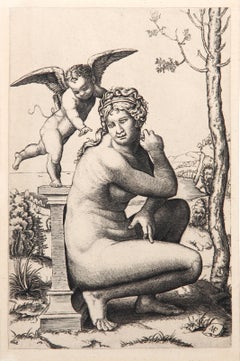
Venus Accroupie, Heliogravure by Marcantonio Raimondi

Venus Accroupie, Heliogravure by Marcantonio Raimondi

By Marcantonio Raimondi

Located in Long Island City, NY

Marcantonio Raimondi, After by Amand Durand, Italian (1480 - 1534) - Venus Accroupie, Year: 1875, Medium: Heliogravure, Size: 9.25 x 6 in. (23.5 x 15.24 cm), Printer: Amand Durand...

Category

1870s Old Masters Prints and Multiples
Materials

Etching

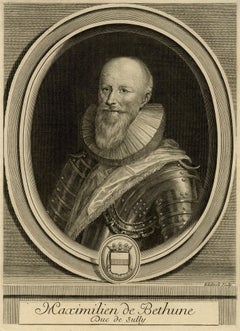
Maximilien de Bethune, Duc de Sully

Maximilien de Bethune, Duc de Sully

By (After) Frans Pourbus the Younger

Located in Middletown, NY

A portrait of Maximilien de Bethune, Duc de Sully, the Ambassador from Henry IV of France to James I of England; by Gerard Edelinck, after Franz Pourbus the Younger Etching on fine ...

Category

Late 17th Century Old Masters Prints and Multiples
Materials

Laid Paper, Etching

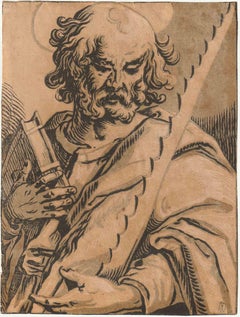
Saint Simon, from Christ and the Apostles

Saint Simon, from Christ and the Apostles

By Ludolf Ludwig Businck

Located in Middletown, NY

Chiaroscuro woodcut on cream laid paper, printed from three blocks in black, olive-green, and yellow ochre, 8 3/16 x 6 1/4 inches (207 x 157 mm), thread margins. Some scattered light discoloration throughout, lightly backed with laid paper, however the sheet retains translucence when viewed through raking light. Trimmed at or near the margin. Archivally sound small repaired corner tear, upper right, with a very minor (1/4 inch) vertical edge split in the center top margin, above the figure's head. All condition issues are consistent with age, and present an exceptionally good example of this truly remarkable work. With the collector's stamp of Friedrich August II, King of Saxony, last King of Poland (1797-1854), Dresden, on the right corner, recto (Lugt 971). This work likely appeared in a well-known posthumous sale of Friedrich August II's private collection, which was handled by C.G. Boerner, and took place in Leipzig, on May 7-9, 1928, presumably this print was presented as lot 1551. [Stechow 16] Ludolph Busïnck was born at Hann, Germany around 1590. By about 1620 he was actively working as a printmaker in Paris, collaborating with publisher and celebrated cartographer Melchoir Tavernier. Busïnck may have studied printmaking in the Netherlands, evidenced by the influence of Dutch printmaker Hendrick Goltzius we see in the bold woodcuts he produced in France. Busïnck was the first printmaker to create chiaroscuro woodcuts in France, a technique originated by German artist Hans Burgkmair...

Category

Early 17th Century Old Masters Prints and Multiples
Materials

Woodcut

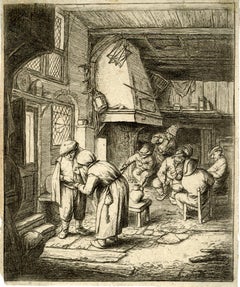
The Peasant Settling His Debt

The Peasant Settling His Debt

By Adriaen van Ostade

Located in Middletown, NY

Etching on thin, cream laid paper 4 x 3 5/8 inches (100 x 90 mm), with narrow margins, trimmed inside the platemark. Adhesive residue at the top right and left corners, and archival ...

Category

17th Century Old Masters Prints and Multiples
Materials

Etching

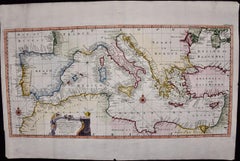
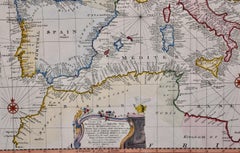
Mediterranean and Adriatic Seas: Original 18th Century Hand-colored Map by Bowen

Mediterranean and Adriatic Seas: Original 18th Century Hand-colored Map by Bowen

By Emanuel Bowen 1

Located in Alamo, CA

This is an original 18th century hand-colored map entitled "An Accurate Chart of The Mediterranean and Adriatic Sea's; with the Archipelago & Part of the Black Sea. Exhibiting all th...

Category

Mid-18th Century Old Masters Prints and Multiples
Materials

Engraving

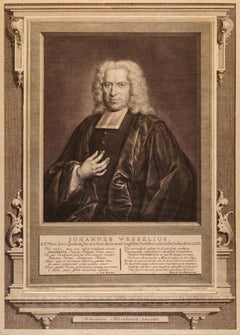
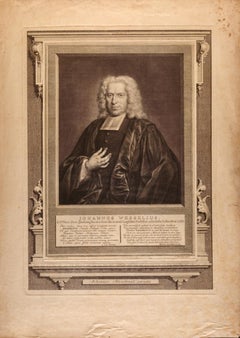
Johannes Wesselius Portrait: An 18th Century Engraving/Etching by Houbraken

Johannes Wesselius Portrait: An 18th Century Engraving/Etching by Houbraken

By Jacobus Houbraken

Located in Alamo, CA

This is an 18th century engraved and etched portrait of Johannes Wesselius by Jacobus Houbraken after a painting by Jan Maurits Quinkhard. It depicts a half-height image of Wesselius...

Category

Mid-18th Century Old Masters Prints and Multiples
Materials

Engraving, Etching

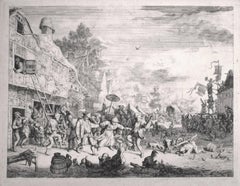
The Large Village Fair

The Large Village Fair

By Cornelis Dusart

Located in Chicago, IL

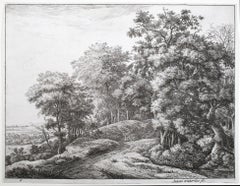
The Large Village Fair, 1685 Etching 268 x 377 mm.; 10 1/2 x 13 1/4 inches Watermark: Arms of Amsterdam Provenance: H. Freiherr von und zu Aufsess (Lugt 2749) M. Menge (Lugt 1893a). References: Hollstein 16 Notes: A fine, early impression (before spots on the sky) of one of Dusart’s most powerful and fanciful works. Concerning the provenances of this etching: Hans von und zu Aufsess (1801-1872) was a great book lover and also a major collector of Old Master prints. He was one of the founders, in 1852, of the Germanisches Museum in Nürnberg and was that museum’s director until 1862. Mas Menge (died in 1945) was a famous violinist and also a major collector of Old Master prints and drawings.

Category

17th Century Old Masters Prints and Multiples
Materials

Etching

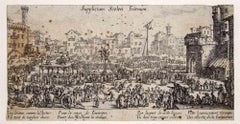
Supplicium sceleri Fraenum - Etching by Jacques Callot - 1624/34

Supplicium sceleri Fraenum - Etching by Jacques Callot - 1624/34

By Jacques Callot

Located in Roma, IT

Supplicium sceleri Fraenum (Les Supplices) is an original Etching realized by Jacques Callot in 1624/34. Lettered with name of etcher (bottom right), title and four columns of French verses: 'Voy, lecteur, comme la Justice... Des effectz de la forfaicture'. Good condition included a cream colored cardboard passpartout (40x60 cm). Jacques Callot (1592 – 1635) was a baroque printmaker and draftsman from the Duchy of Lorraine (an independent state on the north-eastern border of France, southwestern border of Germany and overlapping the southern Netherlands). He is an important person in the development of the old master print...

Category

1660s Old Masters Prints and Multiples
Materials

Etching

Old Masters prints and multiples for sale on 1stDibs.
Find a wide variety of authentic Old Masters prints and multiples available for sale on 1stDibs. Works in this style were very popular during the 21st Century and Contemporary, but contemporary artists have continued to produce works inspired by this movement. If you’re looking to add prints and multiples created in this style to introduce contrast in an otherwise neutral space in your home, the works available on 1stDibs include elements of yellow, orange, blue and other colors. Many Pop art paintings were created by popular artists on 1stDibs, including Charles Amand Durand, Giuseppe Vasi, Thomas Holloway, and Vincenzo Campana. Frequently made by artists working with Etching, and Engraving and other materials, all of these pieces for sale are unique and have attracted attention over the years. Not every interior allows for large Old Masters prints and multiples, so small editions measuring 1.58 inches across are also available. Prices for prints and multiples made by famous or emerging artists can differ depending on medium, time period and other attributes. On 1stDibs, the price for these items starts at $11 and tops out at $350,000, while the average work sells for $333.