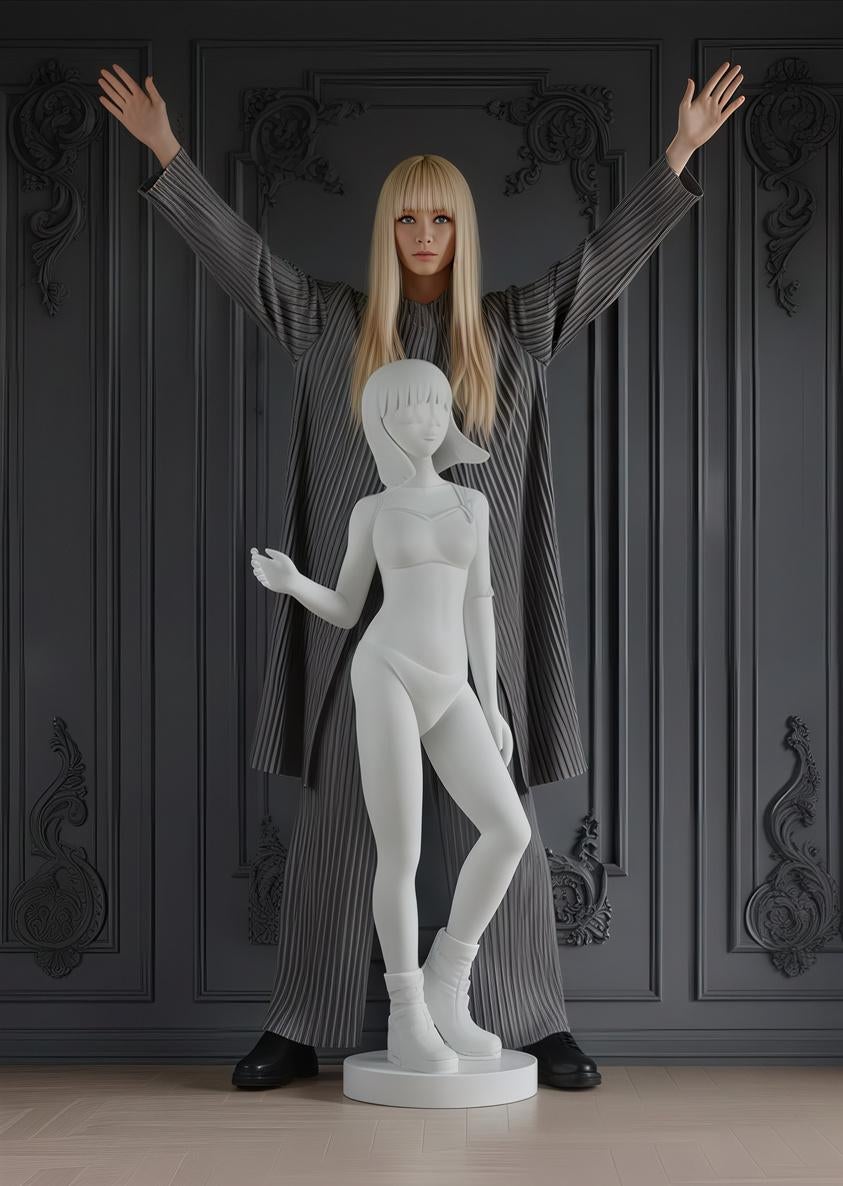
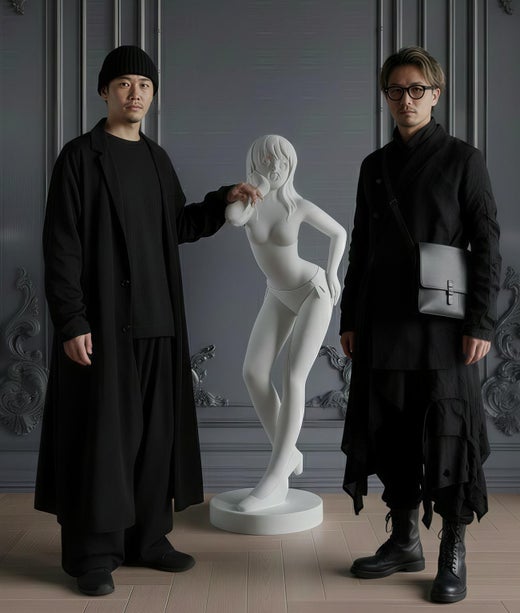
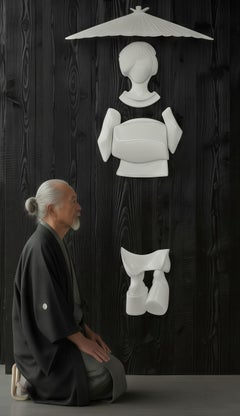
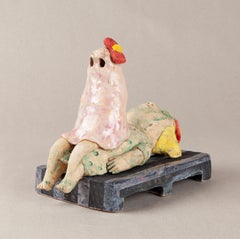
Shuya 5: Ethereal Temptations and Sculpted Desires is a white marble sculpture by Japanese Neo-Pop artist Aya Toshikawa, created as part of her sculptural series Sensual Marble Elegance: Quintet of Alluring Dolls.
Within this quintet, Shuya 5 introduces a more introspective and withheld presence, shifting the focus from outward display to inner tension.
The manga-inspired figure is rendered in a compact, slightly twisted stance, suggesting containment rather than openness.
Unlike classical contrapposto, the posture here appears inwardly directed, as if the body folds gently into itself.
This subtle torsion generates a quiet sense of desire held in suspension.
The white marble surface amplifies this restraint, transforming softness into permanence and emotion into form.
Shuya’s gesture avoids theatricality, favoring nuance and sculptural economy.
The absence of facial expression directs attention toward the body as a site of silent articulation.
Sensuality emerges through compression, through what is suggested rather than revealed.
In this work, Toshikawa explores desire as an internal force, sculpted but never released.
The figure appears timeless, detached from narrative or identity, functioning as an abstracted feminine archetype.
Within Sensual Marble Elegance, Shuya 5 occupies a position of tension and introspection, contrasting with more balanced or expressive sculptures in the series.
The transformation of manga-derived imagery into marble underscores the artist’s dialogue between contemporary pop culture and classical sculptural language.
The work questions how intimacy and emotion survive when translated into a medium associated with monumentality and permanence.
As a major member of the Japanese art collective CrazyNoodles, founded by Nippon Neo-Pop icon Hiro Ando, Aya Toshikawa situates this sculpture within a broader Neo-Pop reflection on form, desire, and endurance.
Through its restrained posture, refined carving, and psychological subtlety, Shuya 5: Ethereal Temptations and Sculpted Desires stands as a highly collectible work.
It is particularly suited for collectors of contemporary Japanese art, Neo-Pop, and sculpture engaging with themes of interiority, tension, and sculpted emotion.
LITERATURE ABOUT THE SERIE “Sensual Marble Elegance : Quintet of Alluring Dolls”
With Sensual Marble Elegance: Quintet of Alluring Dolls, Aya Toshikawa undertakes a decisive conceptual shift within her practice. Known for her painted manga dolls set against saturated kawaii universes, the artist here turns to white marble, a material historically associated with classical Western sculpture, permanence, and idealized form. This choice is neither decorative nor technical; it is the conceptual core of the series.
The manga doll, a recurring figure in Toshikawa’s work, occupies an ambiguous position within contemporary Japanese society. It embodies innocence and desire simultaneously, functioning as a standardized image shaped by idol culture, animation, and the mass circulation of visual fantasy. Deprived of individuality, the doll becomes a cultural avatar—an idealized projection rather than a lived identity—reflecting the pressures placed on young Japanese women to conform to contradictory ideals of purity, desirability, and self-control.
By translating this figure into white marble, Toshikawa subjects pop imagery to a process of suspension and transformation. Marble, the material of memory, monument, and duration, stands in direct opposition to the digital, ephemeral, and endlessly reproducible origins of manga imagery. Where painting suggests immediacy and visual seduction, sculpture imposes silence, weight, and time. The viewer is no longer invited to consume the image, but to contemplate it.
The whiteness of the marble plays a crucial symbolic role. Stripped of color—so central to kawaii aesthetics—the figures are reduced to posture, proportion, and internal tension. Sensuality no longer resides on the surface but emerges from sculpted restraint: a subtle torsion, a contained gesture, a body held in equilibrium or compression. Desire is not displayed; it is internalized.
Across the quintet, Toshikawa offers a nuanced reflection on femininity in contemporary Japan. The figures are neither submissive nor overtly provocative. Instead, they appear caught in a liminal state, poised between autonomy and codification. Their elegance is controlled, their allure muted, mirroring a society in which young women navigate rigid visual and behavioral expectations while maintaining an appearance of calm and composure.
The psychology of Aya Toshikawa’s practice is revealed precisely through this restraint. Rather than adopting a confrontational or activist stance, she chooses transformation as critique. Her gesture is archaeological: extracting a pop figure from its media flow and fixing it in a material associated with eternity. Marble becomes a critical tool, exposing the fragility of contemporary fantasies once they are removed from the circuits of rapid consumption.
As a major member of the Japanese art collective CrazyNoodles, founded by Neo-Pop icon Hiro Ando, Toshikawa remains firmly anchored in the Nippon Neo-Pop movement while subtly redefining its boundaries. Sensual Marble Elegance does not celebrate pop surfaces; it subjects them to time.
The quintet ultimately reads as a frozen mythology of the present: five silent figures born from manga culture, transformed into marble idols. They do not narrate stories; they pose a question—what becomes of our collective fantasies when they are no longer consumed, but preserved, contemplated, and remembered