Art Nouveau

1,303 Results
to
210
745
252
156
88
176
Overall Width
to
Overall Height
to
1
567
757
92
208
95
86
73
7
8
17
10
12
15
119,806
64,122
56,953
29,119
14,521
9,705
6,845
6,219
4,193
3,179
2,531
2,375
2,124
580
927
244
19
922
643
330
295
277
178
178
169
156
117
98
94
80
67
66
59
55
50
47
47
661
217
207
139
122
84
35
33
29
29
274
237
704
643
Style: Art Nouveau
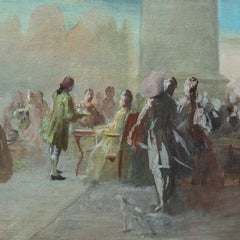
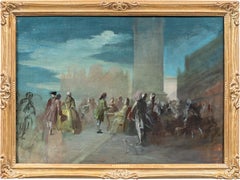
Venetian genre painter - 20th century Carnival scene in Venice, St. Mark

Venetian genre painter - 20th century Carnival scene in Venice, St. Mark

Located in Varmo, IT

Venetian painter (early 20th century) - Carnival in Venice, Piazza San Marco. 40.5 x 55 cm (without frame), 46.5 x 62 cm (with frame). Oil on canvas, in carved and gilded woode...

Category

Early 20th Century Art Nouveau

Materials

Canvas, Oil

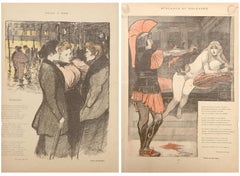
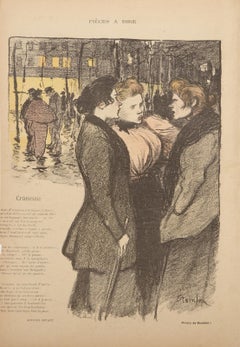
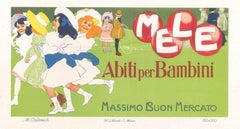
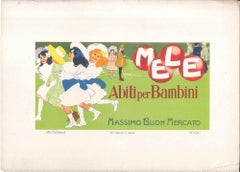
Femmes conversant dans la Rue, Art Nouveau Litho by Theophile Alexandre Steinlen

Femmes conversant dans la Rue, Art Nouveau Litho by Theophile Alexandre Steinlen

By Théophile Alexandre Steinlen

Located in Long Island City, NY

Theophile Alexandre Steinlen, French/Swiss (1859 - 1923) - Femmes conversant dans la Rue, Medium: Double Sided Lithograph, Size: 15 x 10.25 in. (38.1 x 26.04 cm), Description: From ...

Category

Early 20th Century Art Nouveau

Materials

Lithograph

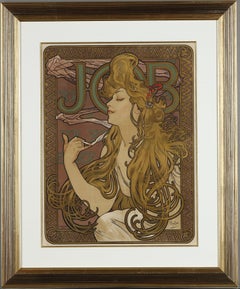
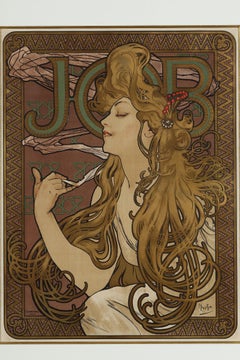
Job
Job

Job

By Alphonse Mucha

Located in PARIS, FR

Job by Alfons MUCHA (1860-1939) Original lithograph Signed " Mucha " at the lower part of the plate. printed by " F. Champenois, Paris " France 1896 measurements of the lithograph...

Category

1890s Art Nouveau

Materials

Paper

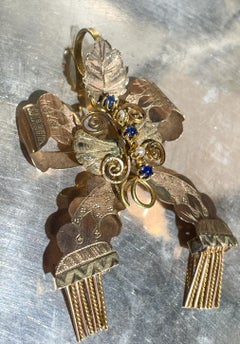
XIX century.
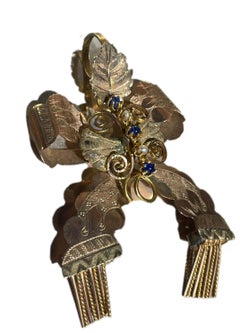
A jeweled bow with tassels, in low gold.
Neapolitan area.
XIX century.
A jeweled bow with tassels, in low gold.
Neapolitan area.

XIX century. A jeweled bow with tassels, in low gold. Neapolitan area.

Located in Firenze, IT

XIX century. A jeweled bow with tassels, in low gold. Neapolitan area. The jewel is a pendant, with a ring positioned on the back that allows you to pass a necklace even of a not sma...

Category

Late 19th Century Art Nouveau

Materials

Gold

The Coronation - Original Lithograph by F. Bac - 1922

The Coronation - Original Lithograph by F. Bac - 1922

By Ferdinand Bac 1

Located in Roma, IT

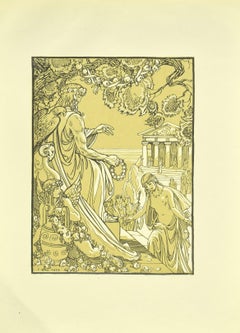
The Coronation is an original modern artwork realized by Ferdinand Bac (1859 - 1952) in the 1920s. Original Lithograph on ivory paper.Image dimensions: 19 x 14 cm. Signed and dated on plate on the lower right corner: F. Bac 1922. Excellent conditions. The Coronation is an excellent Liberty Style artwork realized by the French artist Ferdinand Bac in the Second decade of the XX Century. The work depicts a female figure bent over a man seated on a throne who is offering her a crown of flowers. The scene is enriched by the other characters that are carrying vases full of flowers. This work has been realized the French artist Ferdinand Bac (1859 - 1952). Ferdinand-Sigismond Bach, known as Ferdinand Bac was a French cartoonist, artist and writer, son of an illegitimate nephew of the Emperor Napoleon. As a young man, he mixed in the fashionable world of Paris of the Belle Époque, and was known for his caricatures, which appeared in popular journals. He also traveled widely in Europe and the Mediterranean. In his fifties, he began a career as a landscape gardener. He attended Adolphe Thiers, Gambetta, Richard Wagner, Victor Hugo, Taine, Villiers de L'Isle-Adam, Paul Verlaine, Maurice Barrès, Barbey d'Aurevilly, Alphonse Daudet, Guy de Maupassant, Verdi, Gounod, Pierre de Nolhac, and many more other famous people of the time. He established himself as one of the first cartoonists and caricaturists of his time, as famous as Albert Robida...

Category

1920s Art Nouveau

Materials

Lithograph

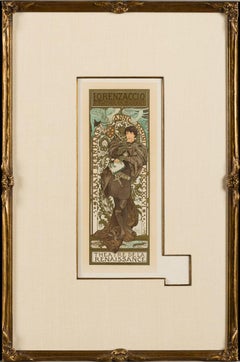
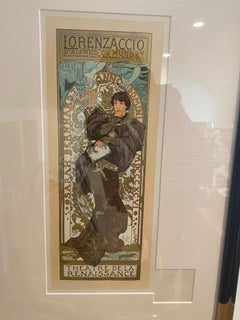
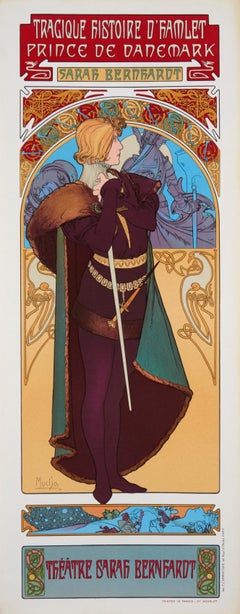
"Lorenzaccio" by Alphonse Mucha from Les Maitres de l'Affiche

"Lorenzaccio" by Alphonse Mucha from Les Maitres de l'Affiche

By Alphonse Mucha

Located in Hinsdale, IL

Alphonse Mucha "Lorenzaccio, a play in five acts and an epilogue by Alfred de Museet" Plate #114 Image Size: 15" x 11" 1896 Alphonse Mucha was born in Southern Moravia on July 24, 1860. At the age of seventeen the artist left his home, to work as a painter of stage decorations...

Category

1890s Art Nouveau

Materials

Lithograph

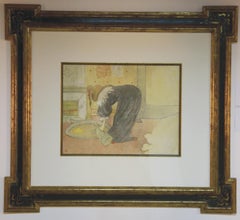
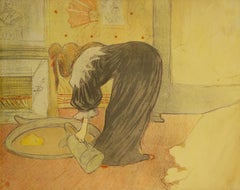
"Femme au Tub" from "Elles" by Toulouse-Lautrec

"Femme au Tub" from "Elles" by Toulouse-Lautrec

By Henri de Toulouse-Lautrec

Located in Hinsdale, IL

TOULOUSE-LAUTREC, HENRI DE (1864-1901) "FEMME AU TUB" (Woman with Tub) From the series, “Elles”, c. 1896 Wittrock 159, Adhemar 204 From the edition of 100; per Wittrock Original color crayon brush and splatter lithograph, five colors, printed on wove paper Printed without margins to deckled edge of paper Bearing Artist’s Monogram Stamp...

Category

1890s Art Nouveau

Materials

Crayon, Lithograph

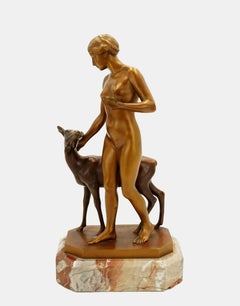
Forest idyll / - Soulmate -

Forest idyll / - Soulmate -

By Rudolf Kaesbach

Located in Berlin, DE

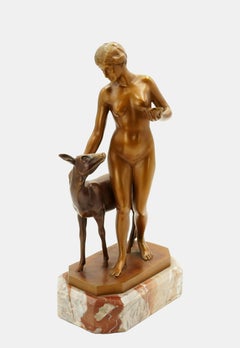
Rudolf Kaesbach (1873 Gladbach - 1955 Berlin), Forest idyll, around 1915. Bronze, gold and golden brown patina, with cast plinth, mounted on a marble base (5 cm high), total height 36 cm, dimensions of the bronze: 31 cm (height) x 17 cm (length) x 12 cm (width). Weight 4,6 kg, signed on the plinth "R.[udolf] KAESBACH". - a few rubbed areas, overall in excellent condition for its age - Soulmate - The bronze sculpture depicts a young woman in an intimate exchange with a deer that accompanies her. The animal pauses to turn toward her, while the nude beauty slows her pace to look into the deer's eyes and tenderly caress it with her hand. The woman and the deer are in inner harmony. Even though her lips remain motionless, she speaks the language of the animal with which she is deeply connected. The golden patina, which contrasts with the more naturalistic coloring of the deer, gives the young woman the appearance of a saint, even if she cannot be identified as such. At the same time, she evokes memories of Diana, the goddess of the hunt, or a nymph. But she lacks the ferocity. In her innocent naivety, she is more like a vestal virgin, who is not at home in the solitude of the forest. And yet, the young beauty, moving unclothed in the heart of nature, looks like a priestess with her hair tied up and a carefully carried bowl on her way to a sacred grove. In order to open up the above-mentioned associations, Kaesbach deliberately designed the female figure in such a way that she cannot be identified as a specific person. He has created an allegory of natural femininity, characteristic of Art Nouveau, in which the deer is far more than a companion animal. It displays the same gracefulness as the young woman, and the inner resemblance between the two makes the deer appear as her other self. In animal terms, it embodies her inner being, which also gives the deer an allegorical character. About the artist Rudolf Kaesbach studied sculpture at the Hanau Academy and worked in a bronze foundry in Paris in 1900. In order to work as an independent artist, he opened a workshop in Düsseldorf, where he cast bronzes from models he designed. In 1902 he made his debut at the German National Art Exhibition in Düsseldorf. The following year Kaesbach went to the academy in Brussels. There he was inspired by contemporary Belgian sculpture, especially the work of Constantin Meunier. He moved to Berlin, where he opened a studio in the villa district of Grunewald and devoted himself to life-size marble sculptures and the design of bronzes. From 1911, he regularly presented his works at the major art exhibitions in Berlin, as well as in Düsseldorf and Malmö. Between 1936 and 1939, he also created models for the Rosenthal porcelain factory. From 1939 to 1944, Kaesbach was represented at the major German art exhibitions in Munich. GERMAN VERSION Rudolf Kaesbach (1873 Gladbach - 1955 Berlin), Waldidyll, um 1915. Gold und goldbraun patinierte Bronze mit gegossener Plinthe, auf einem Marmorsockel montiert (5 cm Höhe), Gesamthöhe 36 cm, Maße der Bronze: 31 cm (Höhe) x 17 cm (Länge) x 12 cm (Breite). Gewicht 4,6 kg, auf der Plinthe mit „R.[udolf] KAESBACH“ signiert. - vereinzele beriebene Stellen, insgesamt in einem altersgemäß ausgezeichneten Zustand - Seelenverwandtschaft - Die Bronzeplastik veranschaulicht eine junge Frau im innigen Austausch mit einem sie begleitenden Reh. Das Tier hält inne, um sich zu ihr hochzuwenden, während die nackte Schönheit ihren Schritt verlangsamt, um dem Reh ebenfalls in die Augen zu schauen und es zärtlich mit der Hand zu liebkosen. Die Frau und das Reh sind in einem inneren Gleichklang. Auch wenn ihre Lippen unbewegt bleiben, spricht sie die Sprache des Tieres, mit dem sie auf eine tief empfundene Weise verbunden ist. Die im Kontrast zur naturalistischeren Einfärbung des Rehs aufstrahlende goldfarbene Patina lässt die junge Frau wie eine Heilige erscheinen, auch wenn sich nicht als Heilige identifizierbar ist. Zugleich ruft sie Erinnerungen an die Jagdgöttin Diana oder eine Nymphe hervor. Dafür fehlt ihr allerdings die Wildheit. In ihrer unschuldigen Naivität gemahnt sie vielmehr an eine Vestalin, die freilich nicht in der Waldeinsamkeit zu Hause ist. Und doch wirkt die sich unbekleidet im Herzen der Natur bewegende junge Schönheit wie eine Priesterin, die sich mit hochgebundenem Haar und der vorsichtig getragenen Schale und dem Wege zu einem Heiligen Hain befindet. Um die gennannten Assoziationen zu eröffnen, hat Kaesbach die Frauenfigur bewusst so gestaltet, dass sie nicht als konkrete Person identifizierbar ist. Damit hat er eine für den Jugendstil charakteristische Allegorie natürlicher Weiblichkeit geschaffen, bei der das Reh weit mehr als ein Begleittier ist. Es weist dieselbe grazile Anmut wie die junge Frau auf und der innere Gleichklag der beiden lässt das Reh als ihr anderen Ich erscheinen. Es verkörpert – ins Animalische übertragen - ihr inneres Wesen, wodurch auch dem Reh ein allegorischer Charakter zukommt. zum Künstler Rudolf Kaesbach studierte an der Akademie Hanau Bildhauerei und war im Jahr 1900 in einer Pariser Bronzegießerei tätig. Um sich als eigenständiger Künstler betätigen zu können, eröffnete er in Düsseldorf eine Werkstatt, in der er Bronzen nach selbstentworfenen Modellen goss. 1902 debütierte er auf der Deutschen Nationalen Kunstaustellung in Düsseldorf. Im Folgejahr ging Kaesbach an die Akademie nach Brüssel. Dort wurde er von der zeitgenössischen belgischen Bildhauerei, insbesondere vom Werk Constantin Meuniers, inspiriert. Zurückgekehrt zog er nach Berlin, wo er im Villenviertel Grunewald ein Atelier eröffnete und sich neben dem Entwurf für Bronzen der lebensgroßen Marmorbildhauerei widmete. Ab 1911 präsentierte er seine Werke regelmäßig auf den Großen Berliner Kunstausstellungen, aber auch in Düsseldorf und Malmö. Zwischen 1936 und 1939 fertigte er zudem Modelle für die Porzellan-Manufaktur Rosenthal an. Von 1939 bis 1944 war...

Category

1910s Art Nouveau
Materials

Bronze

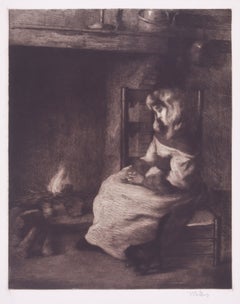
L'Angellus
L'Angellus

L'Angellus

By Alfredo Müller

Located in Fairlawn, OH

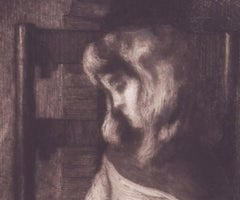
L'Angellus Etching, engraving and acquatint on Arches paper, 1902 Signed lower right by the artist (see photo) This is a first state impression printed in a brown/black ink, one of ...

Category

Early 1900s Art Nouveau

Materials

Etching

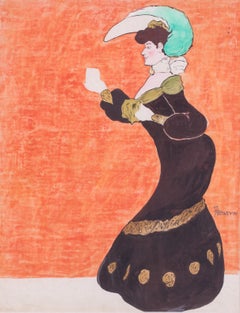
Original French 19th Century watercolour painting of lady with orange background

Original French 19th Century watercolour painting of lady with orange background

Located in Petworth, West Sussex

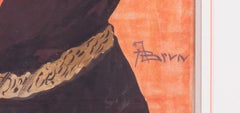
A Brun (French, circa 1900) Raising a glass Pencil, watercolour and gouache on canvas Signed ‘A Brun’ (lower right) 20.1/2 x 15.3/4in. (52 x 40 cm.)

Category

Early 20th Century Art Nouveau

Materials

Canvas, Watercolor, Gouache, Pencil

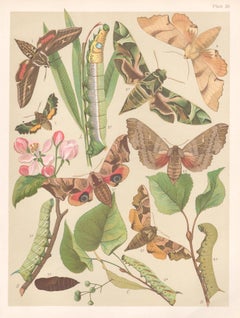
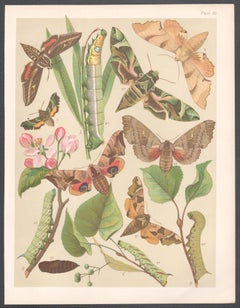
Hawk Moths, English antique natural history Lepidoptera chromolithograph print

Hawk Moths, English antique natural history Lepidoptera chromolithograph print

Located in Melbourne, Victoria

English hawk moth chromolithograph, circa 1900. Plate number top right. From an English series of illustrations of butterflies and moths. Butterflies / moths are numbered and there i...

Category

Early 1900s Art Nouveau

Materials

Lithograph

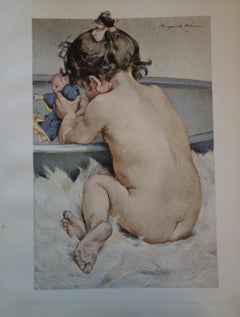
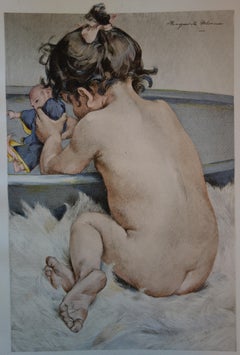
Young Girl Playing with a Doll - Original Lithograph 1899

Young Girl Playing with a Doll - Original Lithograph 1899

Located in Paris, IDF

Marguerite DELORME (1876-1946) Young Girl Playing with a Doll, 1899 Original lithograph (Champenois workshop) Printed signature in the plate On vellum, 40 x 31 cm (c. 16 x 12 in) I...

Category

1890s Art Nouveau

Materials

Lithograph

Summer Forest Landscape, 1915 / - The Forest Walk -

Summer Forest Landscape, 1915 / - The Forest Walk -

Located in Berlin, DE

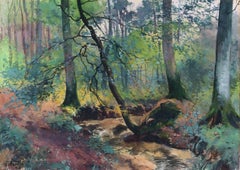
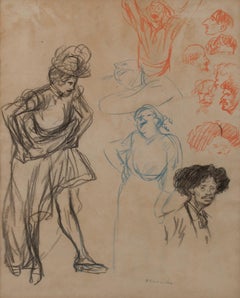
Stanislas Warnie (1879-1958), Summer Forest Landscape, 1915. Watercolor, 31.5 cm x 45 cm (passepartout), 50.5 cm x 63.5 cm (frame), signed "S. Warnie" at lower left and dated "1915"....

Category

1910s Art Nouveau
Materials

Watercolor

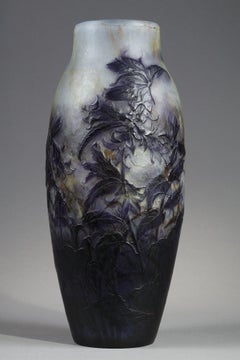
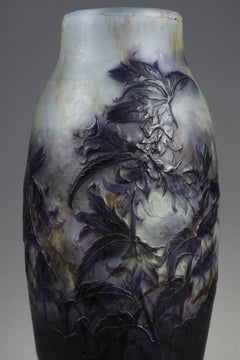
"Bellflowers" Vase
"Bellflowers" Vase

"Bellflowers" Vase

By Émile Gallé

Located in PARIS, FR

"Bellflowers" Vase by Émile GALLE (1846-1904) A very rare shell-shaped vase, double-layered blown glass with powder and silver foil inclusions. Wheel-carved cameo decoration ornate...

Category

Early 20th Century Art Nouveau

Materials

Blown Glass

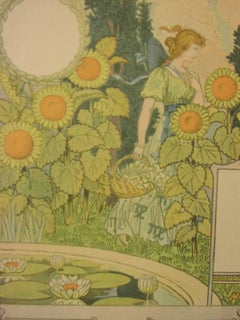
Belle Jardinaire
Belle Jardinaire

Belle Jardinaire

By Eugène Grasset

Located in New York, NY

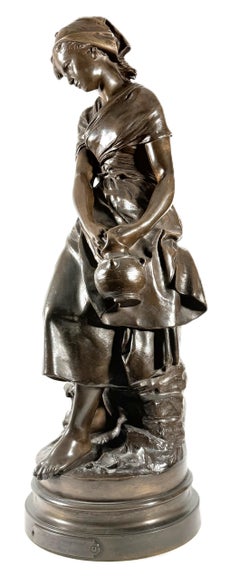
Grasset, Eugene."Belle Jardinaire," Proof for the calendar "Belle Jardinaire" 1896. On China paper produced for the month of August, 12 7/8 x 9 7/8"

Category

1890s Art Nouveau
Materials

Lithograph

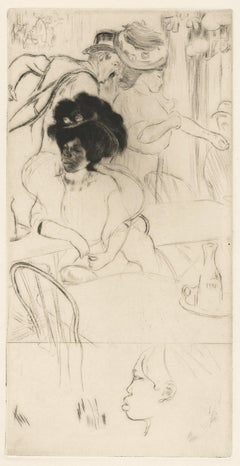
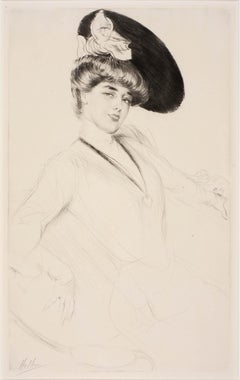
Miss Taylor
Miss Taylor

Miss Taylor

By Paul César Helleu

Located in Fairlawn, OH

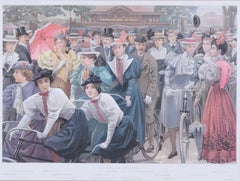
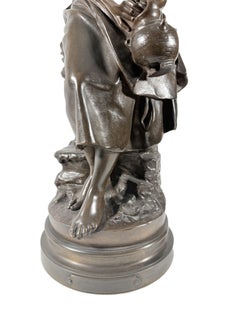
Miss Taylor Drypoint, c. 1900 Signed in pencil lower left (see photo) Small edition, about 10 Very rich impression, full of burr Condition: Excellent Image size: 21-1/4 x 13-1/4" She...

Category

Early 1900s Art Nouveau
Materials

Drypoint

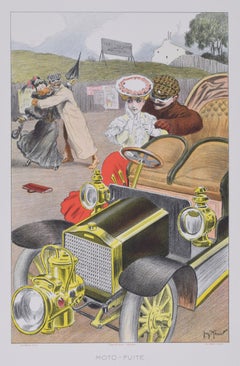
Moto-Fuite
Moto-Fuite

Moto-Fuite

By Georges Meunier

Located in Fairlawn, OH

Moto-Fuite Color lithograph, c. 1902 Signed in the stone lower right (see photo) Published by Edmund Sagot (1857-1917), Paris Printed by Atelier Chaix, Paris Large edition with titl...

Category

Early 1900s Art Nouveau
Materials

Lithograph

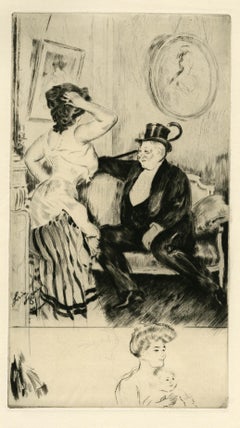
En passant (Passing by)

En passant (Passing by)

By Louis Legrand

Located in Fairlawn, OH

En passant (Passing by) Drypoint, 1909 Unsigned (as issued in the deluxe portfolio) From the album "Les Bars" (8 plates plus cover illustration) Edition: 30, this state with remarque Published by Gustav Pellet, Paris A very rich impression wwith burr Condition: Excellent Image/Plate size: 9 7/8 x 6 3/8 inches Reference: Arwas 391a (remarque) Exteens 277 i/II IFF 148 (portfolio) Louis Auguste Mathieu Legrand (29 September 1863 – 1951) was a French artist, known especially for his aquatint engravings, which were sometimes erotic. He was awarded the Légion d'honneur for his work in 1906. Life Legrand was born in the city of Dijon in the east of France. He worked as a bank clerk before deciding to study art part-time at Dijon's Ecole des Beaux-Arts. He won the Devosge prize at the school in 1883.[2] In 1884 Legrand studied engraving under the Belgian printmaker Félicien Rops. Legrand's artworks include etchings, graphic art and paintings. His paintings featured Parisian social life. Many were of prostitutes, dancers and bar scenes, which featured a sense of eroticism. According to the Hope Gallery, "Louis Legrand is simply one of France's finest early twentieth century masters of etching." His black and white etchings especially provide a sense of decadence; they have been compared to those of Henri de Toulouse-Lautrec, though his drawings of the Moulin Rouge, the can-can dance and the young women of Montmartre preceded Toulouse-Lautrec's paintings of similar scenes. He made over three hundred prints of the night life of Paris. They demonstrate "his remarkable powers of observation and are executed with great skill, delicacy, and an ironic sense of humor that pervades them all." Two of his satirical artworks caused him to be tried for obscenity. The first, "Prostitution" was a symbolic drawing which depicted a naked girl being grasped by a dark monster which had the face of an old woman and claws on its hands; the second, "Naturalism", showed the French novelist Émile Zola minutely studying the thighs of a woman with a magnifying glass. Defended by his friend the lawyer Eugène Rodrigues-Henriques (1853–1928), he was found not guilty in the lower court, but was convicted in the appeal court and then given a short prison sentence for refusing to pay his fine. Legrand was made famous by his colour illustrations for Gil Blas magazine's coverage of the can-can, with text by Rodrigues (who wrote under the pseudonym Erastene Ramiro). It was a tremendous success, with the exceptional quantity of 60,000 copies of the magazine being printed and instantly sold out in 1891. In 1892, at the instigation of the publishing house Dentu, Legrand made a set of etchings of his Gil Blas illustrations. The etchings were published in a book, Le Cours de Danse Fin de Siecle (The End of the Century Dance Classes). Legrand took a holiday in Brittany, which inspired him to engrave a set of fourteen lithographs of simple country life called Au Cap de la Chevre (On Goat Promontory). It was published by Gustave Pellet who became a close friend of Legrand's. Pellet eventually published a total of 300 etchings by Legrand, who was his first artist; he also published Toulouse-Lautrec and Félicien Rops among others. He did not only work in graphics; he exhibited paintings at the Paris salon of the Société Nationale des Beaux-Arts starting in 1902. In 1906 he was made a chevalier of the Légion d'honneur. Legrand died in obscurity in 1951. A retrospective exhibition was held at the Félicien Rops museum in Namur, Belgium in 2006 to celebrate his graphic art. The art collector Victor Arwas published a catalogue raisonné for the occasion. Books illustrated de Maupassant, Guy: Cinq Contes Parisiens, 1905. Poe, Edgar Alan: Quinze Histoires d'Edgar Poe...

Category

Early 1900s Art Nouveau
Materials

Drypoint

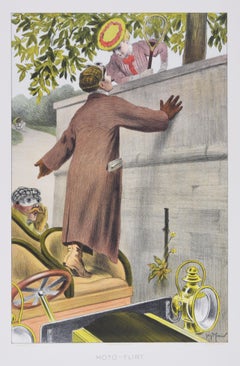
Moto-Flirt
Moto-Flirt

Moto-Flirt

By Georges Meunier

Located in Fairlawn, OH

Moto-Flirt Color lithograph, c. 1902 Signed in the stone lower right (see photo) Published by Edmund Sagot (1857-1917), Paris Printed by Atelier Chaix, Paris Large edition with title...

Category

Early 1900s Art Nouveau
Materials

Lithograph

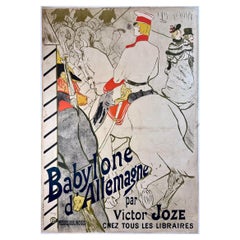
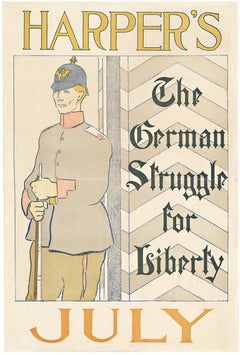
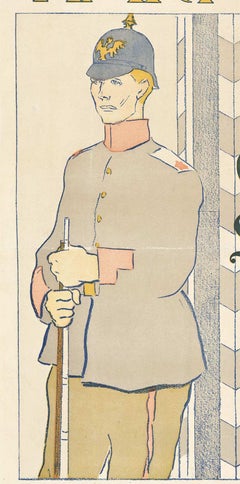
Harper's July,  The German Struggle for Liberty original art nouveau poster

Harper's July, The German Struggle for Liberty original art nouveau poster

By Edward Penfield

Located in Spokane, WA

Original Harper's July vintage poster; The German Struggle for Liberty. Original turn of the century lithograph by Edward Penfield. Size: 14 1/8" x 21 18" Penfield created this poster to publicize Bigelow’s lengthy history of the Germanic people, serialized in the Monthly as “the first popular interpretation ever given to the rehabilitation of Germany through the uprising of the German people against the Napoleanic invasion.” July’s number began the series, which was published by Harper and Brothers as a two-volume set in 1896. Harper's June 1895 HARPER’S The German Struggle for Liberty JULY [Poster for Harper’s New Monthly Magazine, Jul 1895]. German soldier at the guardhouse. Four-color lithograph: grey, blue, yellow, and red. New York: Harper & Brothers, published Jun 1895. The magazine Harper's, issue of July, confronts the problems of The German Struggle for Liberty. Shown a German soldier in a helmet and armed with a rifle stands tall, and yet an uneasiness appears on his face. At a closer look, one will notice that not only does the soldier grasp his rifle in support, but in despair. This Harper's July is an Original Vintage Poster; it is not a reproduction. This poster is conservation mounted, linen backed. An restored fold mark across the middle of the image keeps this image from being rated higher (for an original 1895 poster).

Category

1890s Art Nouveau
Materials

Lithograph

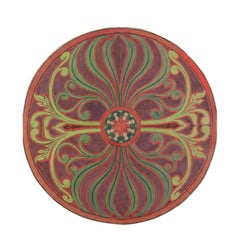
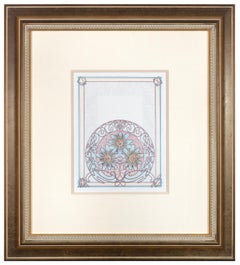
Untitled Art Nouveau Rondelle
Untitled Art Nouveau Rondelle
Located in Fairlawn, OH

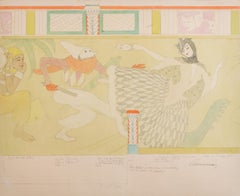
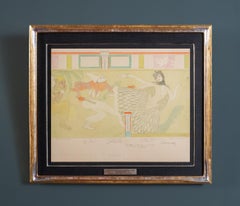
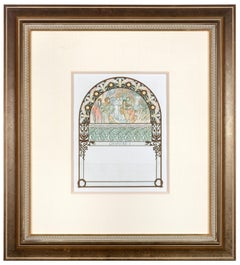
Unknown Artist, France, late 19th century Anonymous c. 1900 Rondelle on antique laid paper Ink, Watercolor and or Gouache Unsigned An Art Nouveau preliminary design for a decorative ...
Category

Early 1900s Art Nouveau
Materials

Ink, Watercolor, Pigment

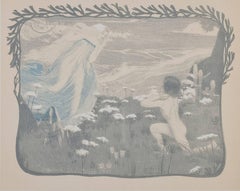
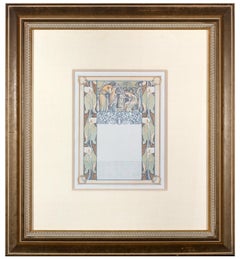
"H. L'Illusion (L'Estampe Moderne I), " Color Lithograph

"H. L'Illusion (L'Estampe Moderne I), " Color Lithograph

By Henri Bellery-Desfontaines

Located in Milwaukee, WI

"H. L'Illusion (L'Estampe Moderne I)" is an original color lithograph by Henri Bellery-Desfontaines. This piece depicts a nude child before a dream-like woman in a blue translucent robe. This piece was published in the French Art Nouveau publication L'Estampe Moderne. Signed in plate. 15 3/4" x 12" art Henri Bellery-Desfontaines , born with Paris in 1867 and dead the October 6th 1909, is a French Noveau artist Jack-of-All- Trades, who produced tables, illustrations, posters, lithographies, drawings of carpet, pieces of furniture and banknotes, and even dabbled with decoration & architecture. In the 1900s, Paris was the perfect place for a group of young artists influenced by artistic currents like neogothic style or symbolism. Most of them started as painters and they switched later to decorative arts, attracted by the idea of an ever-present art, a lifeless art, a total art. Henri Bellery-Desfontaines was a member of this group and he started as as painter in Pierre-Victor Galland’s atelier. He entrusted him the decorative motifs which would frame Panthéon de Paris' drawings: Maillot, Bonnat, Humbert and specially Jean-Paul Laurens, who proposed him to join his atelier in l’École des Beaux-Arts de Paris. With him, he decorated l'Hôtel de Ville de Paris or Le Salon Lobau, Henri Bellery-Desfontaines is thought to have Luc-Olivier Merson (1846-1920) as a teacher. During his years as a student, he started to illustrate magazines and books of tales and in 1895, Bellery-Desfontaines opted rapidly for illustration, probably due to financial problems, and he participated in magazines such as L’Image, L’Estampe Moderne or L’Almanach des Bibliophiles. This year, the Salon des Artistes Français hosted one of his design of tapestry. From 1900 on, he gradually evolved toward an ambitious decorative artist, making tapestries and furniture for rich leaders and patrons. Bellery-Desfontaines was an important artist of his epoch, and he took part in numerous events like Bal de...
Category

1890s Art Nouveau
Materials

Lithograph

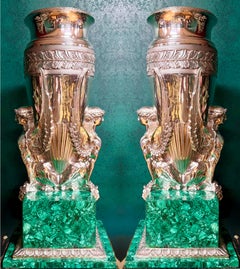
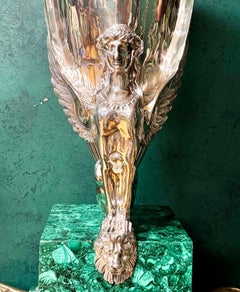
Silver Plated Urn on Malachite Base

Silver Plated Urn on Malachite Base

Located in Los Angeles, CA

An impressive neoclassical Silver Plated urn, featuring both a classical female mask and a lion-mask terminal, sculpturally integrated into a dramatic vertical form with a winged fem...

Category

19th Century Art Nouveau
Materials

Silver

Art Nouveau art for sale on 1stDibs.
Find a wide variety of authentic art Nouveau available for sale on 1stDibs. Works in this style were very popular during the 21st Century and Contemporary, but contemporary artists have continued to produce works inspired by this movement. If you’re looking to add art created in this style to introduce contrast in an otherwise neutral space in your home, the works available on 1stDibs include elements of yellow, orange, blue, green and other colors. Many Pop art paintings were created by popular artists on 1stDibs, including Alphonse Mucha, Jules Chéret, Henri de Toulouse-Lautrec, and Adolphe Willette. Frequently made by artists working with Lithograph, and Paper and other materials, all of these pieces for sale are unique and have attracted attention over the years. Not every interior allows for large Art Nouveau, so small editions measuring 1.58 inches across are also available. Prices for art made by famous or emerging artists can differ depending on medium, time period and other attributes. On 1stDibs, the price for these items starts at $1 and tops out at $198,500, while the average work sells for $1,683.