Alfred Stevens Art

1823-1906
Alfred Émile Léopold Stevens (1823–1906) was a celebrated Belgian painter renowned for his depictions of elegant modern women, often inspired by 17th-century Dutch genre painting. Born in Brussels to a family immersed in the arts, he studied at the Académie Royale des Beaux-Arts and the École des Beaux-Arts in Paris. Stevens first gained recognition for his social realist works portraying the struggles of the poor but later found greater success with his detailed portrayals of fashionable Parisian life. His work earned him numerous accolades, including the Legion of Honor, and he became a key figure in the Parisian art scene, socializing with artists like Édouard Manet and Edgar Degas. Despite financial troubles later in life, Stevens continued to paint and teach, mentoring artists such as Sarah Bernhardt and William Merritt Chase. His later works included seascapes influenced by Impressionism, and he collaborated on the monumental "Panorama du Siècle." He received significant honors during his lifetime, including a major retrospective at the École des Beaux-Arts in 1900. Stevens passed away in Paris in 1906, leaving behind a legacy as one of the leading painters of his era.
to
1
Overall Width
to
Overall Height
to
1
1
1
1
11,047
2,852
2,494
1,431
1
Artist: Alfred Stevens
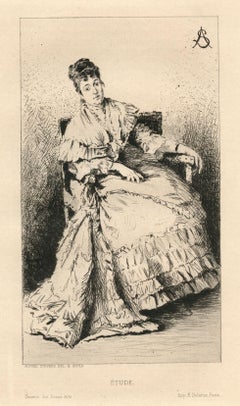
"Etude" original etching

"Etude" original etching

By Alfred Stevens

Located in Henderson, NV

Medium: original etching. Published in 1878 by Gazette des Beaux Arts. Catalogue reference Sanchez & Seydoux 1878-5. Image size: 7 x 4 1/8 inches (180 x 104 mm) on cream laid paper. ...

Category

1870s Alfred Stevens Art

Materials

Etching

Related Items
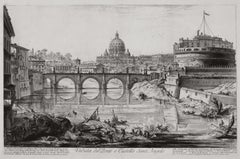
The Ponte and Castel S. Angelo (Veduta del Ponte e Castello Sant' Angelo)

The Ponte and Castel S. Angelo (Veduta del Ponte e Castello Sant' Angelo)

By Giovanni Battista Piranesi

Located in Fairlawn, OH

The Ponte and Castel S. Angelo Veduta del Ponte e Castello Sant' Angelo Etching, 1754 Signed in the plate lower right above the caption From: Vedute di Roma A proper Roman printing w...

Category

1750s Old Masters Alfred Stevens Art

Materials

Etching

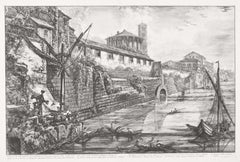
View of the Ancient Structure built by Tarquinius Superbus called the Bel Lido

View of the Ancient Structure built by Tarquinius Superbus called the Bel Lido

By Giovanni Battista Piranesi

Located in Fairlawn, OH

View of the Ancient Structure built by Tarquinius Superbus called the Bel Lido, and like others built by Marcus Agrippa in the time of Augustus when he cleaned all the sewers leading...

Category

1750s Old Masters Alfred Stevens Art

Materials

Etching

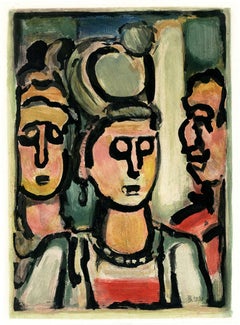
Trio
Trio

Georges RouaultTrio, 1938

$3,500

H 11.5 in W 8.25 in

Trio

By Georges Rouault

Located in Fairlawn, OH

Trio Color aquatint, 1938 Edition 250 printed on Montval wove paper with Maillol watermark From: Les Fleurs de Mal III (12 color aquatints) Published by Ambrose Vollard, 1940, Paris ...

Category

1930s French School Alfred Stevens Art

Materials

Aquatint

Plate V, Le Cocu Magnifique

Plate V, Le Cocu Magnifique

By Pablo Picasso

Located in Fairlawn, OH

Plate V, Le Cocu Magnifique Etching, 1968 Unsigned From the unsigned edition of 200 impressions printed on Rives BFK paper There is also a signed edition of 30 impressions The set of...

Category

1960s Modern Alfred Stevens Art

Materials

Etching

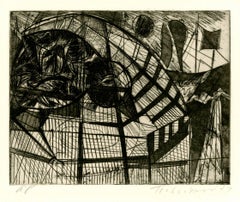
Surrealist Composition with Bird in Profile

Surrealist Composition with Bird in Profile

By Nahum Tschacbasov

Located in Fairlawn, OH

Engraving, aquatint and mixed intaglio Signed, dated and annotated "AP" References And Exhibitions: Tschacbasov was a Russian/Amiercan artist who was widely exhibited and collecte...

Category

1940s Surrealist Alfred Stevens Art

Materials

Engraving, Aquatint, Intaglio

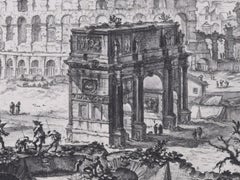
The Arch of Constantine and the Colosseum

The Arch of Constantine and the Colosseum

By Giovanni Battista Piranesi

Located in Fairlawn, OH

The Arch of Constantine and the Colosseum Vedute dell' Arco di Costantino, e dell' Anfiteatro Flavio il Colosseo From: "Vedute di Roma" (Roman Views), part II An early Paris edition,...

Category

1760s Old Masters Alfred Stevens Art

Materials

Etching

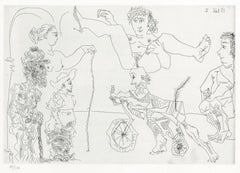
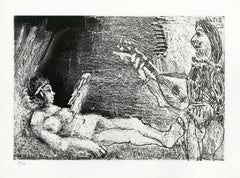
Plate X, Le Cocu Magnifique

Pablo PicassoPlate X, Le Cocu Magnifique

$3,500

H 11.13 in W 14.88 in

Plate X, Le Cocu Magnifique

By Pablo Picasso

Located in Fairlawn, OH

Plate X, Le Cocu Magnifique Etching & aquatint, 1968 Unsigned Edition: From the unsigned edition of 200 impressions printed on Rives BFK paper There is also a signed edition of 30 im...

Category

1960s French School Alfred Stevens Art

Materials

Etching, Aquatint

S. Paolo Fuori Le Mura  (Vedute della Basilica di S. Paolo fuor della mura)

S. Paolo Fuori Le Mura (Vedute della Basilica di S. Paolo fuor della mura)

By Giovanni Battista Piranesi

Located in Fairlawn, OH

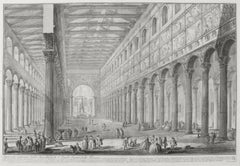
S. Paolo Fuori Le Mura (Vedute della Basilica di S. Paolo fuor della mura) Etching, 1748 From: Vedute di Roma, Plate 8 An early Roman printing, published by Bouchard e Gravier Watermark: Fleur de Lys in a double circle Signed in the plate Condition: Small margins as are common with Bouchard published impressions. Centerfold (as usual) Rich impression with good contrasts Plate/Image size: 15 7/8 x 24 1/8 inches Sheet size: 17 3/8 x 24 3/4 inches Reference: Focillon 723 Wilton-Ely 138 Hind 6 ii/VI, Bouchard e Gravier printing, before the price and numbers in later states This image is Piranesi’s second interior scene from the Vedute di Roma. The first interior is a less complex composition of the Interior of St. Peters which lacks the challenging perspective that the artist masters in this image. The Papal Basilica of St. Paul Outside the Walls...

Category

1740s Old Masters Alfred Stevens Art

Materials

Etching

Camera sepolcrale
Camera sepolcrale

Camera sepolcrale

By Giovanni Battista Piranesi

Located in Fairlawn, OH

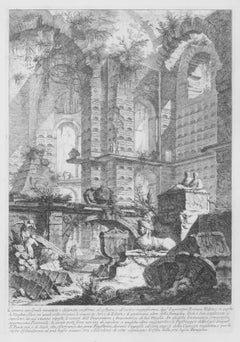
Camera sepolcrale Etching 1743 Signed in the bottom left corner From: Prima Parte, 1743 Second edition: 1750-1778 Watermark: R 37-39 A lifetime impression printed during Piranesi’s life, before the plates are moved to Paris by his sons in the 1790’s Condition: Excellent Image size: 14 5/8 x 9 3/4 inches Reference: Robison 20 iii/V Piranesi In Rome: Prima Parte di Architetture e Prospettive "Although Piranesi studied architecture in Venice, he never was able to find work in the field other than a few jobs involving remodeling in Rome. While Piranesi was struggling to support his architectural endeavors upon his arrival in Rome in 1740, he spent a short period of time in the studio of master painter Giovanni Battista Tiepolo (1696-1770) in addition to his apprenticeship with Giuseppe Vasi. The first production of Piranesi’s early years in Rome and a culmination of his training under Vasi, Tiepolo, and his uncle, was the Prima Parte di Architetture e Prospettive (1743). The Prima Parte was a collection of twelve etchings of imaginary temples, palaces, ruins, and a prison. During this time, Piranesi was still developing the unique style of etching he is known for today, and as such the Prima Parte differs significantly in technique compared to later works. In the Frontispiece of the Prima Parte, Piranesi’s lines are definite and exact with very little flow to them, designed in the form of traditional etching. The detail is immaculate, and yet perspective of the piece is oddly simple and familiar to the viewer. Piranesi’s technique employs miniscule markings and lines, intricately woven together to create a stippling effect. The Prima Parte, described as “rigid” by art historian Jonathan Scott, came to be seen as a stark contrast to his later sketches, which were much lighter and freer. Influenced by the style of Tiepolo, which epitomized the lightness and brightness of the Rococo period, Piranesi adopted some of the more painterly techniques of the masters he apprenticed under. Piranesi made the medium of etching appear as though it was a sketch or a painting, hence a “freer” and more fluid design in his later works. For example, the frontispiece of the Prima Parte read as an etching to Piranesi’s audience, but in his later vedute, the style of etching almost appears to be made of brushstrokes. Moreover, at the same time Piranesi was working on the Prima Parte, he aided the artist Giambattista Nolli. There is a small section of Nolli’s map...

Category

1740s Old Masters Alfred Stevens Art

Materials

Etching

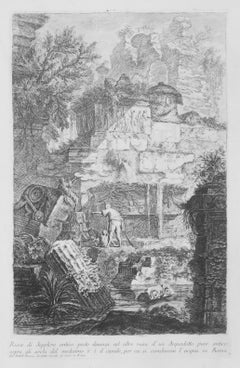
Ruine di Sepolcro antico

Ruine di Sepolcro antico

By Giovanni Battista Piranesi

Located in Fairlawn, OH

Ruine di Sepolcro antico Etching, 1743 Signed in the plate bottomleft in the caaption plate From: Prima Parte, 1743 Second edition: 1750-1778 Watermark: R 37-39 A lifetime impression printed during Piranesi’s life, before the plates are moved to Paris by his sons in the 1790’s Coniditon: Excellent/Very good Image size: 14 5/8 x 9 3/4 inches Reference: Robison 17 iii/V Piranesi In Rome: Prima Parte di Architetture e Prospettive "Although Piranesi studied architecture in Venice, he never was able to find work in the field other than a few jobs involving remodeling in Rome. While Piranesi was struggling to support his architectural endeavors upon his arrival in Rome in 1740, he spent a short period of time in the studio of master painter Giovanni Battista Tiepolo (1696-1770) in addition to his apprenticeship with Giuseppe Vasi. The first production of Piranesi’s early years in Rome and a culmination of his training under Vasi, Tiepolo, and his uncle, was the Prima Parte di Architetture e Prospettive (1743). The Prima Parte was a collection of twelve etchings of imaginary temples, palaces, ruins, and a prison. During this time, Piranesi was still developing the unique style of etching he is known for today, and as such the Prima Parte differs significantly in technique compared to later works. In the Frontispiece of the Prima Parte, Piranesi’s lines are definite and exact with very little flow to them, designed in the form of traditional etching. The detail is immaculate, and yet perspective of the piece is oddly simple and familiar to the viewer. Piranesi’s technique employs miniscule markings and lines, intricately woven together to create a stippling effect. The Prima Parte, described as “rigid” by art historian Jonathan Scott, came to be seen as a stark contrast to his later sketches, which were much lighter and freer. Influenced by the style of Tiepolo, which epitomized the lightness and brightness of the Rococo period, Piranesi adopted some of the more painterly techniques of the masters he apprenticed under. Piranesi made the medium of etching appear as though it was a sketch or a painting, hence a “freer” and more fluid design in his later works. For example, the frontispiece of the Prima Parte read as an etching to Piranesi’s audience, but in his later vedute, the style of etching almost appears to be made of brushstrokes. Moreover, at the same time Piranesi was working on the Prima Parte, he aided the artist Giambattista Nolli. There is a small section of Nolli’s map...

Category

1740s Old Masters Alfred Stevens Art

Materials

Etching

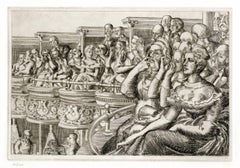
Grand Tier and the Met

Grand Tier and the Met

By Reginald Marsh

Located in Fairlawn, OH

Grand Tier at the Met Etching, 1939 From: Reginald Marsh, Thirty Etchings and Engravings Published by the Whitney Museum of American Art, 1969 Unsigned (as usual for the Whitney edit...

Category

1930s American Modern Alfred Stevens Art

Materials

Etching

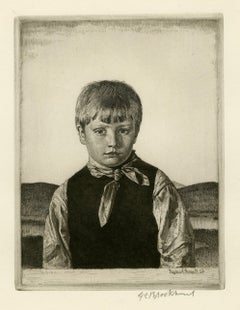
Amberley Boy, No. 2
Amberley Boy, No. 2

Amberley Boy, No. 2

By Gerald Leslie Brockhurst

Located in Fairlawn, OH

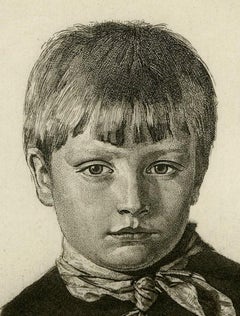
Amberley Boy, No. 2 Etching with stipple, 1928 Signed in pencil lower right (see photo) Signed in the plate in reverse (see photo) Provenance inscription in pencil verso A proof outs...

Category

1920s English School Alfred Stevens Art

Materials

Etching

Previously Available Items
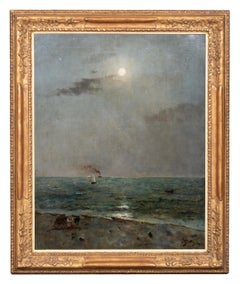
'Moonlight on the Sea' by Alfred Stevens ( Brussels 1823 – 1906 Paris )

'Moonlight on the Sea' by Alfred Stevens ( Brussels 1823 – 1906 Paris )

By Alfred Stevens

Located in Knokke, BE

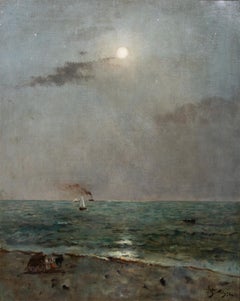
Alfred Stevens Brussels 1823 – 1906 Paris Belgian Painter 'Moonlight on the Sea' Signature: signed lower right and dated 1892 ‘A Stevens 92' Medium: oil on canvas Dimensions: image size 81 x 65 cm, frame size 97,5 x 81,5 cm Provenance: Collection M. Klein, 1900 Galerie Petit, Paris, 18 June 1926, no. 22 Private collection, Europe De Vuyst, Belgium, 1998 Galerie Kupperman, Amsterdam Private collection, The Netherlands Exhibitions: Exposition of the Works of Alfred Stevens, Palais des Beaux-Arts, Brussels, 1928 Retrospective Alfred Stevens, École des Beaux-Arts, Paris, 1900, no. 100 Literature: A. Stevens, Mercatorfonds, Brussels, p. 100 Alfred Stevens, François Boucher, Ed. Rieder, Paris, 1930, illustrated on p. 36 Documentation by Mrs. Christiane Lefebvre, 1998 Biography: Alfred Émile Léopold Stevens (11 May 1823 – 24 August 1906) was a prominent Belgian painter renowned for his depictions of elegant modern women. His works, characterized by a realistic style and meticulous attention to detail, reveal the influence of 17th-century Dutch genre painting. While he initially gained attention for his social realist portrayal of the hardships faced by impoverished vagrants, he later achieved great critical and popular success with his portrayals of upper-middle class Parisian life. Notably, he often used the same models repeatedly, with some of them being identified in the infamous Book of the Courtesans, a confidential surveillance file maintained by the Paris vice squad, as noted by author Summer Brennan. Stevens was born in Brussels, into a family deeply connected with the visual arts. His older brother Joseph (1816–1892) and his son Léopold (1866–1935) were both painters, while his other brother Arthur (1825–1899) was an art dealer and critic. His father, a veteran of the Napoleonic wars under the army of William I of the Netherlands, was an art collector with a notable collection of watercolors by Eugène Delacroix and other esteemed artists. Stevens’s upbringing was influenced by the environment of Café de l’Amitié, run by his maternal grandparents in Brussels, which served as a meeting place for prominent figures from the political, literary, and artistic spheres. Following the death of his father in 1837, Stevens left middle school to enroll at the Académie Royale des Beaux-Arts in Brussels. There, he came under the tutelage of François Navez, a Neo-Classical painter and former student of Jacques-Louis David, who was both the director of the academy and an old acquaintance of Stevens’s grandfather. Following a traditional curriculum, he initially drew from casts of classical sculptures and later transitioned to drawing from live models. In 1843, Stevens journeyed to Paris to join his already established brother, Joseph. He gained admission to the École des Beaux-Arts, the preeminent art school in Paris, although claims of him being a student of the director, Jean Auguste Dominique Ingres, are likely unfounded. One of his early works, The Pardon or Absolution (Hermitage, St. Petersburg), signed and dated 1849, showcased his mastery of a conventional naturalistic style influenced by 17th-century Dutch genre painting. Stevens’s work was first publicly exhibited in 1851, when three of his paintings were featured at the Brussels Salon. He received a third-class medal at the Paris Salon in 1853, followed by a second-class medal at the Universal Exposition in Paris in 1855. His painting Ce qu’on appelle le vagabondage [What is called vagrancy] (Musée d’Orsay, Paris) garnered attention from Napoleon III, leading to a change in policy regarding the use of soldiers to remove the poor from the streets. Two other paintings displayed at the Salon in Antwerp in the same year, Chez soi or At Home and The Painter and his Model, introduced subjects from “la vie moderne” that became characteristic of his oeuvre: elegant young women dressed in contemporary fashion and artists in their studios. In 1857, Stevens made his first significant sale to a private collector when Consolation was purchased for a rumored 6,000 francs by the Berlin collector and dealer Ravéné. He and his brother also became part of the artistic milieu in Paris, frequenting salons hosted by Princess Mathilde and popular cafes, where they mingled with the likes of the Goncourt brothers, Théophile Gautier, and Alexandre Dumas. Stevens married Fanny Juliette Albertine Marie Hortense Blanc (1836-1891), a member of a wealthy Belgian family and a long-time acquaintance of the Stevens family, in 1858. The wedding was witnessed by the renowned painter Eugène Delacroix. The couple had four children: Leopold, Jean, Catherine, and Pierre. Stevens depicted his wife in numerous portraits, including Regrets and Memories. After her passing, he expressed enduring grief at her loss. During the 1860s, Stevens rose...

Category

Late 19th Century Impressionist Alfred Stevens Art
Materials

Canvas, Oil

Alfred Stevens art for sale on 1stDibs.

Find a wide variety of authentic Alfred Stevens art available for sale on 1stDibs. You can also browse by medium to find art by Alfred Stevens in bronze, canvas, etching and more. Much of the original work by this artist or collective was created during the 19th century and is mostly associated with the modern style. Not every interior allows for large Alfred Stevens art, so small editions measuring 3 inches across are available. Customers who are interested in this artist might also find the work of Frank Henry Mason, Leonard Richmond, and Johan Barthold Jongkind. Alfred Stevens art prices can differ depending upon medium, time period and other attributes. On 1stDibs, the price for these items starts at $100 and tops out at $21,679, while the average work can sell for $1,258.

Artists Similar to Alfred Stevens