Elsie Driggs Art

to
1
2
1
Overall Width
to
Overall Height
to
3
1
1
1
2
1
1
1
1
3
2
2
2
1
3
11,047
2,850
2,494
1,431
2
3
Artist: Elsie Driggs
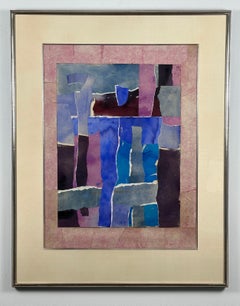
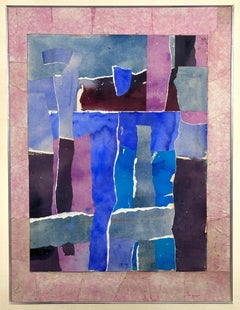
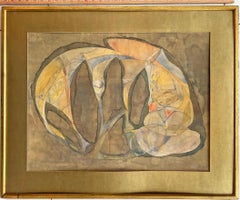
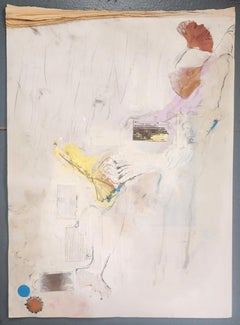
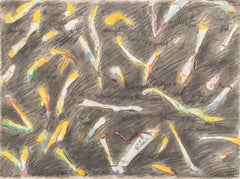
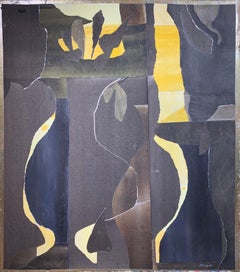
Waterfall (abstract expressionist landscape collage)

Waterfall (abstract expressionist landscape collage)

By Elsie Driggs

Located in Wilton Manors, FL

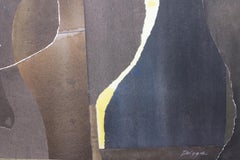
Elsie B. (Gatch) Driggs (1898-1992) – Waterfall, 1960. Mixed media collage, signed lower right and on verso. Artwork measures 22 x 30 inches. Framed measurement: 31.5 x 40 inches. ...

Category

Mid-20th Century Abstract Expressionist Elsie Driggs Art

Materials

Paper, Watercolor

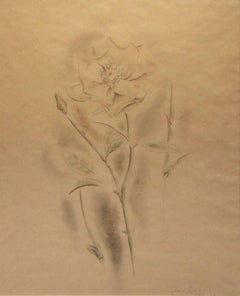
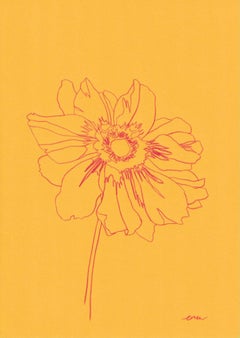
Rose

Rose

By Elsie Driggs

Located in New York, NY

Colored pencil on vellum Signed, l.r. This drawing is offered by ClampArt, located in New York City. Elsie Driggs (1898-1992), was an American painter known for her contributions to...

Category

1920s Other Art Style Elsie Driggs Art

Materials

Vellum, Color Pencil

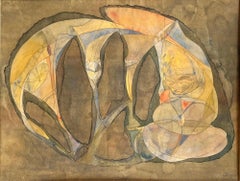
Pre-War Abstraction - Modernism - Tan Bronze Tope - Nonrepresentational

Pre-War Abstraction - Modernism - Tan Bronze Tope - Nonrepresentational

By Elsie Driggs

Located in Miami, FL

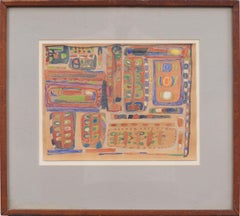
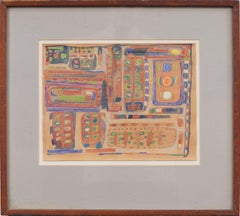
Pioneering female abstract artist Elsie Driggs paints stylized abstract organic forms in a warm palette of orange browns and tope. She merges abstraction with some figuration. A structured face composed of lines and tone emerges from an orange background. It's 1939, and even though Driggs is not well known, she is preceding many of the marquee names of abstraction by a decade. Although under the radar, this is a major work and is titled on the back stretcher is " Egyptian Gothic." It features the artist's inventiveness with her fine pencil lines incorporated in flat washes of color and collage elements. Signed lower right and inscribed on frame verso with title, artist and the date of 1939. Provenance, Christie's, Freemans. Framed under glass.. Elsie Driggs (1898 – July 12, 1992 in New York City) was an American painter known for her contributions to Precisionism, America's one indigenous modern-art movement before Abstract Expressionism, and for her later floral and figurative watercolors, pastels, and oils. She was the only female participant in the Precisionist movement, which in the 1920s and 1930s took a Cubist-inspired approach to painting the skyscrapers and factories that had come to define the new American landscape. Her works are in the collection of the Whitney Museum of American Art, the Houston Museum of the Fine Arts, the Fine Arts Museums of San Francisco, the James A. Michener Art Museum in Pennsylvania, and the Columbus Museum of Art, among others. She was married to the American abstract artist Lee Gatch. Career Born in Hartford, Connecticut, Driggs grew up in New Rochelle, a suburb of New York City, in a family that was supportive of her artistic interests. After a summer spent painting with her sister in New Mexico in her late teens, she felt she had found her life's calling. At twenty, she enrolled in classes at the Art Students League of New York, where she studied under George Luks and Maurice Sterne, both of whom were charismatic, inspirational figures in her early life. She also attended the evening criticism classes held at the home of painter John Sloan. Driggs spent fourteen months in Europe from late 1922 to early 1924, drawing and studying Italian art. There she met Leo Stein, first in Paris and later in Florence, who became an important intellectual influence, and who urged her to study Cézanne. He also introduced her to the works of Piero della Francesca, the Renaissance artist for whom she felt throughout her life the greatest admiration.[1] Driggs eventually settled in New York City, where she found representation with the progressive Charles Daniel Gallery.[2] (Advised that the old-fashioned and misogynistic Daniel would be unlikely to take on a woman artist, she signed the works she left for his consideration simply "Driggs" and waited to meet him in person until he had expressed his eagerness to include her in his gallery.)[3] In sympathy with those artists Daniel represented who were part of the burgeoning Precisionist movement, such as Charles Demuth, Charles Sheeler, George Ault, Niles Spencer, and Preston Dickinson, she too painted "the modern landscape of factories, bridges, and skyscrapers with geometric precision and almost abstract spareness."Impressionism and academic or Ashcan realism represented the past, in Driggs' view, and she intended to be resolutely modern. She was an attractive and engaging woman, but her demeanor belied a strong ambition and a clear sense of what it would take to make her mark in the New York art world. Driggs was part of the pre-eminent first group of Precisionist painters, including Demuth and Sheeler, who exhibited at the Daniel Gallery in the 1920s. Although a later group of Precisionist painters, including Louis Lozowick, Ralston Crawford and others, came on the American Art scene during the 1930s, Driggs felt that the style came to an end with the 1929 stock market crash.[5] In 1926 she painted her most famous work, Pittsburgh, a dark and brooding picture now in the permanent collection of the Whitney Museum of American Art, which depicts the gargantuan smokestacks of the Jones & Laughlin steel mills in Pittsburgh. Its focus is an overpowering mass of black and gray smokestacks, thick piping, and crisscrossing wires with only clouds of smoke to relieve the severity of the image, yet it was an image in which she found an ironic beauty. She called the picture "my El Greco" and expressed surprise that viewers in later years interpreted the painting as a work of social criticism. Like the other Precisionists (e.g., Demuth, Charles Sheeler, Louis Lozowick, Stefan Hirsch), she was concerned with applying modernist techniques to renderings of the new industrial and urban landscape, not in commenting on potential dangers the overly mechanized modern world of 1920s America might present. If anything, Precisionism, like Futurism, was a celebration of man-made energy and technology. One year later, she painted Blast Furnaces, in a similar vein. As noted above, Piero della Francesca's mural depicting "The Story of the True Cross" in Arezzo, with its tubular, static and frozen forms was the major influence on Driggs' "Pittsburgh" (it may have been the major influence for "Blast Furnaces" as well).[7] After Pittsburgh, Driggs' most acclaimed work was probably Queensborough Bridge...

Category

1930s Elsie Driggs Art

Materials

Paper, Watercolor, Pencil

Related Items
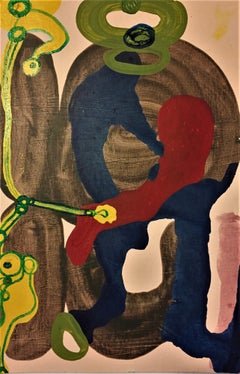
Basement Systems

Kory TwaddleBasement Systems, 2019

$1,150

H 18 in W 12 in D 0.2 in

Basement Systems

By Kory Twaddle

Located in Kansas City, MO

Artist : Kory Twaddle Title : Basement Systems Materials : Acrylic, tempera, gouache, and glitter glue on cardboard drawing pad back Date : 2019 Dimensions : 18 x 12 x .2 in. Kory ...

Category

2010s Abstract Expressionist Elsie Driggs Art

Materials

Paint, Paper, Conté, Charcoal, India Ink, Acrylic, Tempera, Watercolor, ...

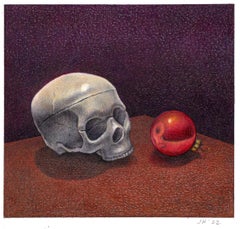
Skull and Ornament - Vanitas, Still Life, Color Pencil Drawing,  Framed

Skull and Ornament - Vanitas, Still Life, Color Pencil Drawing, Framed

By John Hrehov

Located in Chicago, IL

Drawings of skulls are often called vanitas, which often contain collections of objects symbolic of the inevitability of death and the transience and vanity of earthly achievements and pleasures; it exhorts the viewer to consider mortality and to repent. This still life vanitas drawing is matted with a heavy white mat and framed in a bronze toned wooden frame measuring 15.75 x 16.25 inches. John Hrehov Skull and Ornament colored pencil on paper 7h x 8w in 17.78h x 20.32w cm JHR006 John Hrehov Education 1985 MFA-Painting, University of Illinois at Urbana-Champaign 1981 BFA-Painting, Cleveland Institute of Art, Cleveland, OH. Solo Exhibitions 2017 John Hrehov, Paintings and Drawings. Tom Thomas...

Category

2010s Surrealist Elsie Driggs Art

Materials

Archival Paper, Color Pencil

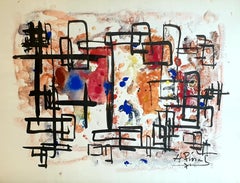
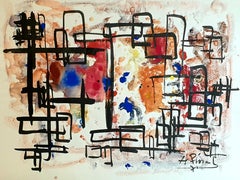
1970s Abstract Expressionist Belgian Gouache on Paper.

1970s Abstract Expressionist Belgian Gouache on Paper.

By André Pierard

Located in Cotignac, FR

1970s abstract expressionist gouache on paper by Belgian artist André Pierard painted in Provence in the south of France. A highly colourful and energetic abstract painting. The st...

Category

1970s Abstract Expressionist Elsie Driggs Art

Materials

Paper, Gouache

Autumn Biogram of the Nelson

Autumn Biogram of the Nelson

By Kory Twaddle

Located in Kansas City, MO

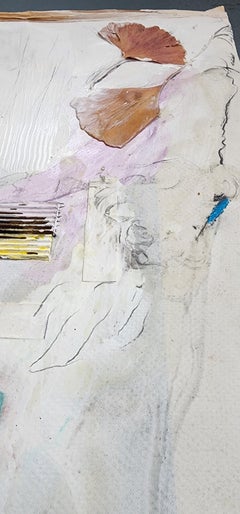
Artist : Kory Twaddle "Autumn Biogram of the Nelson" Newsprint, graphite, conté crayon pastel, charcoal, beeswax, cardboard, paper, gingko leaves, stickers, and Mixed Media on drawi...

Category

2010s Abstract Elsie Driggs Art

Materials

Paint, Paper, Conté, Charcoal, India Ink, Acrylic, Tempera, Watercolor, ...

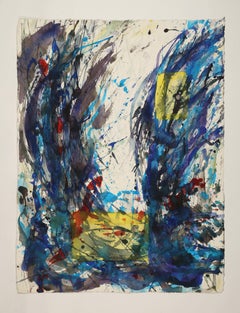
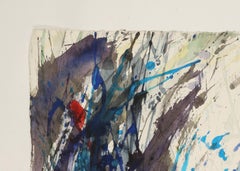
Abstract Watercolor Painting, 'Design for Sculpture', C. 1995 by David Ruth

Abstract Watercolor Painting, 'Design for Sculpture', C. 1995 by David Ruth

By David Ruth

Located in Oakland, CA

This is a contemporary abstract watercolor painting by artist David Ruth. This series of paintings often feature bright colors and vibrant layouts that draw the viewer in. They are c...

Category

1990s Abstract Expressionist Elsie Driggs Art

Materials

Paper, Watercolor

Abstract Composition

Abstract Composition

By Elfi Schuselka

Located in Astoria, NY

Elfi Schuselka (Austrian, b. 1940), Abstract Composition, Mixed Media on Paper with three-dimensional collage elements, signed in pencil lower right, unframed. 23" H x 30" W. Provena...

Category

Late 20th Century Contemporary Elsie Driggs Art

Materials

Paper, Mixed Media, Watercolor, Pencil, Graphite

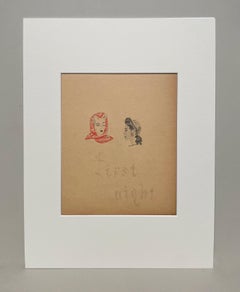
A Stylish, Vintage 1940s Woman's Fashion Design Study, Hat & Scarf, First Night

A Stylish, Vintage 1940s Woman's Fashion Design Study, Hat & Scarf, First Night

Located in Chicago, IL

A stylish, vintage, 1940s fashion study featuring an elegant design for women's scarf & hat. Inscribed "First Night", which in the 1940s may refer to either New Year's Eve celeb...

Category

1940s American Modern Elsie Driggs Art

Materials

Paper, Pencil, Color Pencil

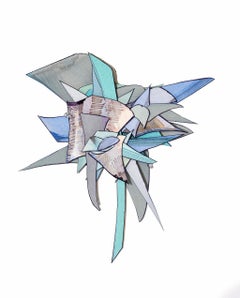
Flushing #2
Flushing #2

Selena BeaudryFlushing #2, 2023

$4,500

H 31 in W 31 in

Flushing #2

Located in Westport, CT

Selena Beaudry’s work is created by marking and cutting up drawings. This has led the artist to rediscovering her visual language. Her work consists of...

Category

2010s Abstract Elsie Driggs Art

Materials

Linen, Paper, Acrylic, Gouache, Color Pencil

Linda Turner, Art Meditation 18, Collage, Pattern and Decoration, Automatism

Linda Turner, Art Meditation 18, Collage, Pattern and Decoration, Automatism

By Linda Turner

Located in Darien, CT

Linda Turner, raised both in NYC and Northern Virginia, resides in Brooklyn, NY. She achieved a BFA in Surface Design/Textile Design from the Fashion Inst...

Category

2010s Abstract Geometric Elsie Driggs Art

Materials

Archival Ink, Watercolor, Gouache, Archival Paper, Pencil, Color Pencil

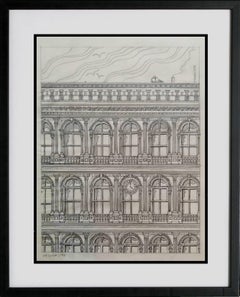
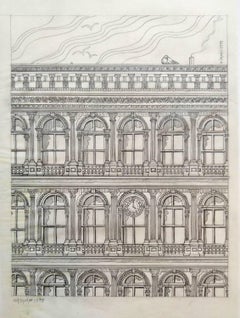
Haughwout building at Broadway and Broome, original pencil on vellum

Haughwout building at Broadway and Broome, original pencil on vellum

By David Edward Byrd

Located in Southampton, NY

The drawings and paintings of David Edward Byrd are legendary. If you were producing a Broadway play or top Rock and Roll concert in the 1970's, David Byrd was the artist you wanted to create the imagery. He created for Broadway the classic art for, Godspell, Follies and Jesus Christ Superstar to mention only a few. For the Rock and Roll industry David created all of the iconic artwork for the Fillmore East including their classic and highly valued posters and programs. The Who's "Tommy" art was David's as was The Rolling Stones 1969 World tour artwork, and the 1969 Jimi Hendrix American concert tour, along with the very first version of the art for the original 1969 Woodstock Music Festival poster...

Category

1970s Realist Elsie Driggs Art

Materials

Vellum, Pencil

Previously Available Items
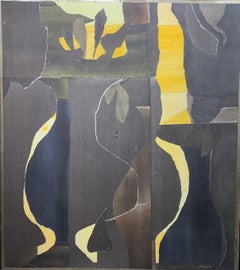
Three Black Vases (abstract expressionist still life)

Three Black Vases (abstract expressionist still life)

By Elsie Driggs

Located in Wilton Manors, FL

Elsie B. (Gatch) Driggs (1898-1992) – Three Black Vases, 1960. Mixed media collage, SLR. Abstract piece with ribbons of light breaking through darkness. 34.5″h x 31″w. Unframed. Collage is glued down to a backing that has warped just slightly. It could easily be glued down flat by conservator/framer. Discarded frame edge revealed title and date. Original frame and glass were damaged and required removal. Biography: Birth place: Hartford, CT Death place: NYC Addresses: Lambertville, NJ, c.1935-68; NYC, 1968-92 Profession: Painter Studied: ASL, 1918-21 with John Sloan and G. Luks; also with Maurice Sterne, Rome, 1922 Exhibited: Soc. Indep. Artists, 1922, 1931; WMAA, 1926-36; “35 Under 35,” MoMA, 1930 (opening show); Provincetown AA, 1930s; “A Mile of Art,” Munic. Art Exhib., R.C.A. Bldg, 1934; Rehn Gal., NYC; Daniel Gal., NYC; Am. Soc. PS&G; AIC, 1939; Baltimore Mus. Art, 1953; MMA, 1954; “The Precisionists,” WMAA, 1963; Martin Diamond Gal., NYC, 1980 (retrospective), 1982; NJ State Mus., 1980 (retrospective; traveled to the Phillips Collection) Member: Am. Soc. PS&G. Work: WMAA; Baltimore Mus. Art; Yale Univ. Art Gal.; Phillips Mem Gal; Montclair AM; Sheldon Mem. Gallery, Lincoln, NE. Commissions: animal cartoons and W. African gold weights for WPA, Harlem House, NYC, 1934; Post Offices in La Salle, Huntsville & Rayville, LA, 1935; Indian Village, private commission, New York, 1938. Comments: A Precisionist painter, she was one of the early women modernists. She married the painter Lee Gatch in 1935. Positions: WPA artist; asst., MMA, 1923. Teaching: instructor, 1945-48. Born in Hartford, Connecticut, Driggs grew up in New Rochelle, a suburb of New York City, in a family that was supportive of her artistic interests. After a summer spent painting with her sister in New Mexico in her late teens, she felt she had found her life’s calling. At twenty, she enrolled in classes at the Art Students League of New York, where she studied under George Luks and Maurice Sterne, both of whom were charismatic, inspirational figures in her early life. She also attended the evening criticism classes held at the home of painter John Sloan. Driggs spent fourteen months in Europe from late 1922 to early 1924, drawing and studying Italian art. There she met Leo Stein, first in Paris and later in Florence, who became an important intellectual influence, and who urged her to study Cézanne. He also introduced her to the works of Piero della Francesca, the Renaissance artist for whom she felt throughout her life the greatest admiration.[1] Driggs eventually settled in New York City, where she found representation with the progressive Charles Daniel Gallery.[2] (Advised that the old-fashioned and misogynistic Daniel would be unlikely to take on a woman artist, she signed the works she left for his consideration simply “Driggs” and waited to meet him in person until he had expressed his eagerness to include her in his gallery.)[3] In sympathy with those artists Daniel represented who were part of the burgeoning Precisionist movement, such as Charles Demuth, Charles Sheeler, George Ault, Niles Spencer, and Preston Dickinson, she too painted “the modern landscape of factories, bridges, and skyscrapers with geometric precision and almost abstract spareness.”[4] Impressionism and academic or Ashcan realism represented the past, in Driggs’ view, and she intended to be resolutely modern. She was an attractive and engaging woman, but her demeanor belied a strong ambition and a clear sense of what it would take to make her mark in the New York art world. However, Driggs was part of the pre-eminent first group of Precisionist painters, including Demuth and Sheeler, who exhibited at the Daniel Gallery in the 1920s. A later group of Precisionist painters, including Louis Lozowick, Ralston Crawford and others, came on the American Art scene during the 1930s. Driggs, herself, felt that the style came to an end with the 1929 stock market crash.[5] In 1926 she painted her most famous work, Pittsburgh, a dark and brooding picture now in the permanent collection of the Whitney Museum of American Art, which depicts the gargantuan smokestacks of the Jones & Laughlin steel mills in Pittsburgh. Its focus is an overpowering mass of black and gray smokestacks, thick piping, and crisscrossing wires with only clouds of smoke to relieve the severity of the image, yet it was an image in which she found an ironic beauty. She called the picture “my El Greco” and expressed surprise that viewers in later years interpreted the painting as a work of social criticism.[6] Like the other Precisionists (e.g., Demuth, Charles Sheeler, Louis Lozowick, Stefan Hirsch), she was concerned with applying modernist techniques to renderings of the new industrial and urban landscape, not in commenting on potential dangers the overly mechanized modern world of 1920s America might present. If anything, Precisionism, like Futurism, was a celebration of man-made energy and technology. One year later, she painted Blast Furnaces, in a similar vein. As noted above, Piero della Francesca’s mural depicting “The Story of the True Cross” in Arezzo, with its tubular, static and frozen forms was the major influence on Driggs’ “Pittsburg” (it may have been the major influence for “Blast Furnaces” as well).[7] After Pittsburgh, Driggs’ most acclaimed work was probably Queensborough Bridge (1927), now in the collection of the Montclair Art Museum, depicting shafts of light as rigid Futurist-style “lines of force” sweeping through the massive verticals of the East River bridge, a structure she had studied from her apartment window on Second Avenue. With this painting, art critic Forbes Watson wrote, ‘Miss Driggs waves goodbye to her old master Maurice Sterne and embraces for the moment the age of machinery.”[8] However, Driggs’ use of “ray lines” (slender black lines that criss-cross the canvas, recall Precisionist works by Charles Demuth, and particularly his “My Egypt” (also from 1927).[9] Although Driggs and Demuth exhibited at the Daniel Gallery, they never met. In 1929 Charles Daniel gave Driggs a one-woman show, which included one of her sleekest and most compelling paintings, Aeroplane, now in the collection of the Houston Museum of the Fine Arts. The inspiration for the painting came from Driggs’ first experience flying in 1928, when she traveled from Cleveland to Detroit by air.[10] (“Elsie Driggs, following the spirit of the age, has gone up in the air,” commented an Art News reviewer.[11] Actually, Driggs went to Detroit to make studies from the Ford Motor Company’s River Rouge...

Category

Mid-20th Century Abstract Expressionist Elsie Driggs Art

Materials

Paper, Ink, Watercolor
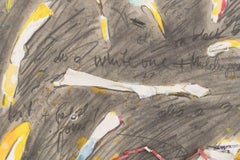
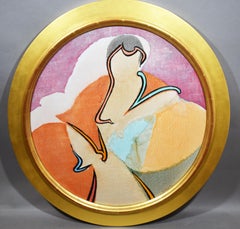
Antique American Female Modernist Abstract Portrait Oil Painting, Elsie Driggs

Antique American Female Modernist Abstract Portrait Oil Painting, Elsie Driggs

By Elsie Driggs

Located in Buffalo, NY

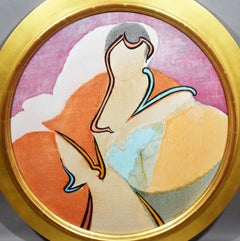
Modernist abstract portrait painting by Elsie B (Gatch) Driggs (1898 - 1992). Oil on canvas, circa 1945. Unsigned.. Displayed in a modernist frame. Image size, 23.5"L x 23.5"H.

Category

1930s Modern Elsie Driggs Art

Materials

Canvas, Oil

Untitled (abstract expressionist collage painting)

Untitled (abstract expressionist collage painting)

By Elsie Driggs

Located in Wilton Manors, FL

Elsie B. (Gatch) Driggs (1898-1992) – Untitled, c.1950. Mixed media collage, SLR. Painted and torn paper affixed to illustration board. 34.5″h x 31″w and 38.5h x 35″w framed. Excellent condition with no damage or fading. Signed lower right. Vintage solid chestnut wood frame repainted black. Archival materials, UV filter glass. Biography: Birth place: Hartford, CT Death place: NYC Addresses: Lambertville, NJ, c.1935-68; NYC, 1968-92 Profession: Painter Studied: ASL, 1918-21 with John Sloan and G. Luks; also with Maurice Sterne, Rome, 1922 Exhibited: Soc. Indep. Artists, 1922, 1931; WMAA, 1926-36; “35 Under 35,” MoMA, 1930 (opening show); Provincetown AA, 1930s; “A Mile of Art,” Munic. Art Exhib., R.C.A. Bldg, 1934; Rehn Gal., NYC; Daniel Gal., NYC; Am. Soc. PS&G; AIC, 1939; Baltimore Mus. Art, 1953; MMA, 1954; “The Precisionists,” WMAA, 1963; Martin Diamond Gal., NYC, 1980 (retrospective), 1982; NJ State Mus., 1980 (retrospective; traveled to the Phillips Collection) Member: Am. Soc. PS&G. Work: WMAA; Baltimore Mus. Art; Yale Univ. Art Gal.; Phillips Mem Gal; Montclair AM; Sheldon Mem. Gallery, Lincoln, NE. Commissions: animal cartoons and W. African gold weights for WPA, Harlem House, NYC, 1934; Post Offices in La Salle, Huntsville & Rayville, LA, 1935; Indian Village, private commission, New York, 1938. Comments: A Precisionist painter, she was one of the early women modernists. She married the painter Lee Gatch in 1935. Positions: WPA artist; asst., MMA, 1923. Teaching: instructor, 1945-48. Born in Hartford, Connecticut, Driggs grew up in New Rochelle, a suburb of New York City, in a family that was supportive of her artistic interests. After a summer spent painting with her sister in New Mexico in her late teens, she felt she had found her life’s calling. At twenty, she enrolled in classes at the Art Students League of New York, where she studied under George Luks and Maurice Sterne, both of whom were charismatic, inspirational figures in her early life. She also attended the evening criticism classes held at the home of painter John Sloan. Driggs spent fourteen months in Europe from late 1922 to early 1924, drawing and studying Italian art. There she met Leo Stein, first in Paris and later in Florence, who became an important intellectual influence, and who urged her to study Cézanne. He also introduced her to the works of Piero della Francesca, the Renaissance artist for whom she felt throughout her life the greatest admiration.[1] Driggs eventually settled in New York City, where she found representation with the progressive Charles Daniel Gallery.[2] (Advised that the old-fashioned and misogynistic Daniel would be unlikely to take on a woman artist, she signed the works she left for his consideration simply “Driggs” and waited to meet him in person until he had expressed his eagerness to include her in his gallery.)[3] In sympathy with those artists Daniel represented who were part of the burgeoning Precisionist movement, such as Charles Demuth, Charles Sheeler, George Ault, Niles Spencer, and Preston Dickinson, she too painted “the modern landscape of factories, bridges, and skyscrapers with geometric precision and almost abstract spareness.”[4] Impressionism and academic or Ashcan realism represented the past, in Driggs’ view, and she intended to be resolutely modern. She was an attractive and engaging woman, but her demeanor belied a strong ambition and a clear sense of what it would take to make her mark in the New York art world. However, Driggs was part of the pre-eminent first group of Precisionist painters, including Demuth and Sheeler, who exhibited at the Daniel Gallery in the 1920s. A later group of Precisionist painters, including Louis Lozowick, Ralston Crawford and others, came on the American Art scene during the 1930s. Driggs, herself, felt that the style came to an end with the 1929 stock market crash.[5] In 1926 she painted her most famous work, Pittsburgh, a dark and brooding picture now in the permanent collection of the Whitney Museum of American Art, which depicts the gargantuan smokestacks of the Jones & Laughlin steel mills in Pittsburgh. Its focus is an overpowering mass of black and gray smokestacks, thick piping, and crisscrossing wires with only clouds of smoke to relieve the severity of the image, yet it was an image in which she found an ironic beauty. She called the picture “my El Greco” and expressed surprise that viewers in later years interpreted the painting as a work of social criticism.[6] Like the other Precisionists (e.g., Demuth, Charles Sheeler, Louis Lozowick, Stefan Hirsch), she was concerned with applying modernist techniques to renderings of the new industrial and urban landscape, not in commenting on potential dangers the overly mechanized modern world of 1920s America might present. If anything, Precisionism, like Futurism, was a celebration of man-made energy and technology. One year later, she painted Blast Furnaces, in a similar vein. As noted above, Piero della Francesca’s mural depicting “The Story of the True Cross” in Arezzo, with its tubular, static and frozen forms was the major influence on Driggs’ “Pittsburg” (it may have been the major influence for “Blast Furnaces” as well).[7] After Pittsburgh, Driggs’ most acclaimed work was probably Queensborough Bridge (1927), now in the collection of the Montclair Art Museum, depicting shafts of light as rigid Futurist-style “lines of force” sweeping through the massive verticals of the East River bridge, a structure she had studied from her apartment window on Second Avenue. With this painting, art critic Forbes Watson wrote, ‘Miss Driggs waves goodbye to her old master Maurice Sterne and embraces for the moment the age of machinery.”[8] However, Driggs’ use of “ray lines” (slender black lines that criss-cross the canvas, recall Precisionist works by Charles Demuth, and particularly his “My Egypt” (also from 1927).[9] Although Driggs and Demuth exhibited at the Daniel Gallery, they never met. In 1929 Charles Daniel gave Driggs a one-woman show, which included one of her sleekest and most compelling paintings, Aeroplane, now in the collection of the Houston Museum of the Fine Arts. The inspiration for the painting came from Driggs’ first experience flying in 1928, when she traveled from Cleveland to Detroit by air.[10] (“Elsie Driggs, following the spirit of the age, has gone up in the air,” commented an Art News reviewer.[11] Actually, Driggs went to Detroit to make studies from the Ford Motor Company’s River Rouge...

Category

Mid-20th Century Abstract Expressionist Elsie Driggs Art

Materials

Paper, Ink, Watercolor
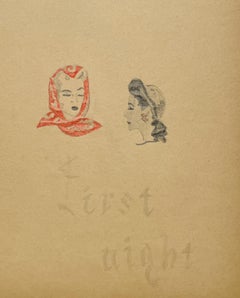
Elsie Driggs art for sale on 1stDibs.

Find a wide variety of authentic Elsie Driggs art available for sale on 1stDibs. You can also browse by medium to find art by Elsie Driggs in paper, pencil, color pencil and more. Not every interior allows for large Elsie Driggs art, so small editions measuring 24 inches across are available. Customers who are interested in this artist might also find the work of Jan Matulka, Leon Kelly, and Abraham Walkowitz. Elsie Driggs art prices can differ depending upon medium, time period and other attributes. On 1stDibs, the price for these items starts at $7,250 and tops out at $15,000, while the average work can sell for $11,125.