Alexander's Antiques

to
70
641
280
173
151
98
90
80
77
75
68
66
62
46
44
31
29
27
23
18
17
14
14
12
12
9
9
8
7
7
6
6
6
6
5
5
5
4
4
4
3
3
3
2
2
1
1
1
1
1
1
1
1
1
89
27
19
14
8
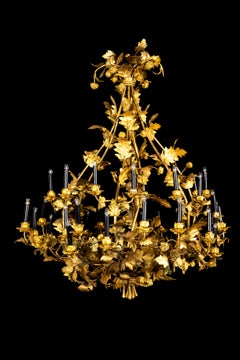
A 19th Century French Ormolu Multi-Arm Chandelier with Leaves and Flowers

A 19th Century French Ormolu Multi-Arm Chandelier with Leaves and Flowers

Located in New York, NY

A 19th Century French Ormolu Multi-Arm Chandelier with Leaves and Flowers. The bulbous body is made up of elongated ormolu bars with ormolu vines, leaves, and flowers branching off t...

Category

Antique 19th Century French Louis XVI Chandeliers and Pendants

Materials

Bronze

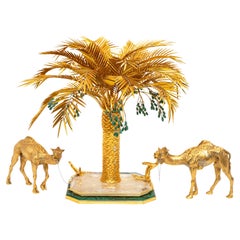
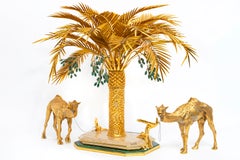
Asprey Orientalist Gilt Silver Palm Tree & Camel Centerpiece w/ Jade & Diamonds

Asprey Orientalist Gilt Silver Palm Tree & Camel Centerpiece w/ Jade & Diamonds

By Asprey International Limited

Located in New York, NY

A Magnificent and Quite Rare English Asprey Signed Orientalist Motif Masterpiece with Dessert Palm Tree and Parcel-Gilt Silver Camels having Diamond Eyes. Gorgeously constructed in ...

Category

20th Century English Other Animal Sculptures

Materials

Jade, Malachite, Rock Crystal, Vermeil, Silver

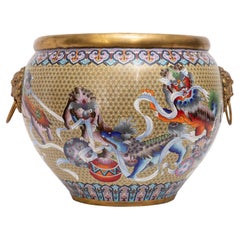
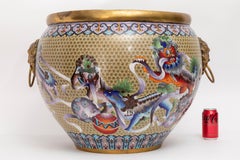
Chinese Bronze Cloisonné Foo Dog Jardinière, Lion Mask Handles: Republic Period

Chinese Bronze Cloisonné Foo Dog Jardinière, Lion Mask Handles: Republic Period

Located in New York, NY

A magnificent large Chinese bronze and cloisonné foo dog jardinière with Lion Mask Handles hails from the Republic period, circa 1950. Cloisonné enameled with meticulous care, the j...

Category

Mid-20th Century Chinese Metalwork

Materials

Bronze, Enamel

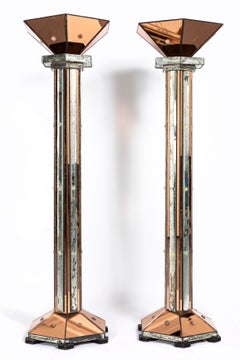
Pair of Art Deco 2-Colored Mirror Floor Lamps Attb. Maison Jansen

Pair of Art Deco 2-Colored Mirror Floor Lamps Attb. Maison Jansen

By Maison Jansen

Located in New York, NY

A Magnificent Pair of Art Deco Period/Mid-Century Two-Colored Mirrored Floor Lamps, Attributed to Maison Jansen. Each floor lamp is decorated with antique copper colored mirror as w...

Category

Vintage 1930s French Art Deco Floor Lamps

Materials

Glass, Mirror

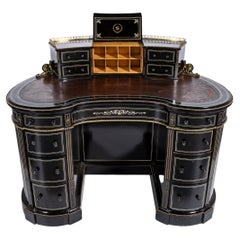
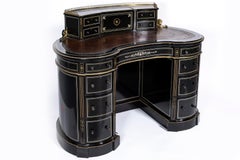
A 19th Century English Regency Kidney Form Black Ebony Desk

A 19th Century English Regency Kidney Form Black Ebony Desk

Located in New York, NY

A 19th Century English Regency Kidney Form Black Ebony Desk with Drawers and Ormolu Mounts. Beautifully hand-carved the entire desk is beautifully e...

Category

Antique 19th Century English Regency Desks and Writing Tables

Materials

Bronze

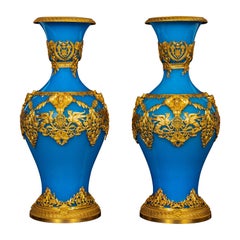
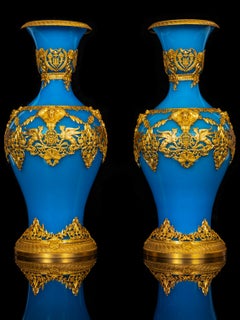
Pair of 19th Century Ormolu Mounted Baccarat Crystal Celeste Blue Opaline Vases

Pair of 19th Century Ormolu Mounted Baccarat Crystal Celeste Blue Opaline Vases

By Baccarat

Located in New York, NY

A Pair of 19th Century French Louis XVI Style Ormolu Mounted Baccarat Crystal Celeste Blue Opaline Vases. Each vase is of amphora form with a wide upper mouth that extends downwards ...

Category

Antique 1840s French Louis XVI Vases

Materials

Crystal, Ormolu

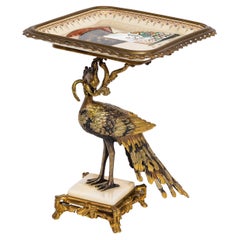
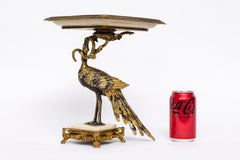
A French Japanism Orientalist Mixed-Metal Peacock Centerpiece/Tray, by E. Cornu

A French Japanism Orientalist Mixed-Metal Peacock Centerpiece/Tray, by E. Cornu

By Eugène Cornu

Located in New York, NY

A Marvelous and Quite Unusual French Japanism Orientalist Mixed-Metal Peacock-Form Centerpiece/Tray, by EUGENE CORNU. Made by Parisian sculptor Eugene Cornu. The bashful peacock bo...

Category

Antique 1880s French Japonisme Centerpieces

Materials

Bronze, Enamel, Ormolu, Silver Leaf

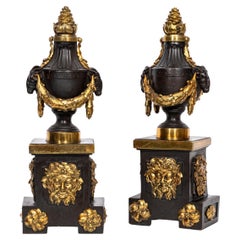
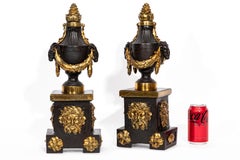
A Pair of English Regency Patinated and Ormolu Rams Head Andirons

A Pair of English Regency Patinated and Ormolu Rams Head Andirons

Located in New York, NY

A Pair of English Regency Period Patinated and Ormolu Rams Head Andirons. Each is beautifully patinated with a dark patina and further accented with ormolu fittings. The body is of...

Category

Antique 1810s English Regency Andirons

Materials

Bronze

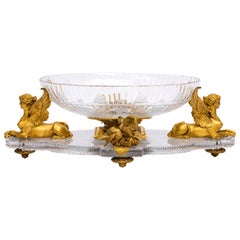
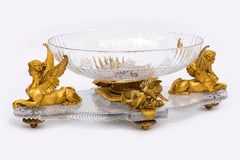
Hand-Diamond Cut Crystal & Ormolu Mounted Baccarat Centerpiece/Surtout de Table

Hand-Diamond Cut Crystal & Ormolu Mounted Baccarat Centerpiece/Surtout de Table

By Baccarat

Located in New York, NY

A magnificent museum quality French 19th century hand-diamond cut crystal and ormolu-mounted Baccarat centerpiece/surtout de table in the Louis XVI style. This is truly an exemplary ...

Category

Antique 1870s French Louis XVI Centerpieces

Materials

Crystal, Ormolu

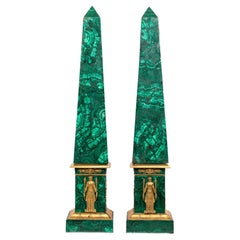
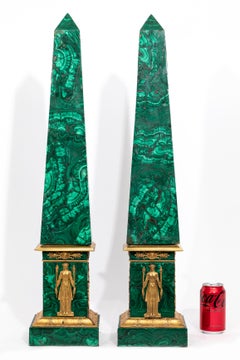
A Fine Pair of Russian Empire Period Malachite And Ormolu Obelisks, Early 1800's

A Fine Pair of Russian Empire Period Malachite And Ormolu Obelisks, Early 1800's

Located in New York, NY

A Monumental and Quite Rare Pair of 19th Century Russian Empire Ormolu Mounted Malachite Obelisks with Maiden Ormolu Mounts. Each obelisk is complete with four sides which terminate upwards to a triangular point. The bases are fitted with ormolu mounts which include hand-chased and hand-chiseled maidens holding flaming torches in either hand and on the other panel decoration of a vine with a winged bow. On top of the large ormolu mounts are smaller mounts which depict child masks in wings. Underneath and on top of the square base are ormolu mounts which depict acanthus leaves flourishing throughout with hand-chased and hand-chiseled fluted veins. The entire body of the obelisk is veneered with the most incredible and highest quality antique Russian malachite...

Category

Antique 1830s Russian Empire Obelisks

Materials

Malachite, Ormolu

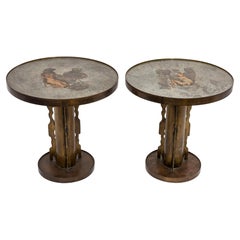
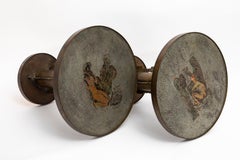
Philip & Kelvin Laverne, Pair of Bronze Etruscan Side Tables after Picasso

Philip & Kelvin Laverne, Pair of Bronze Etruscan Side Tables after Picasso

By Philip and Kelvin LaVerne

Located in New York, NY

A Magnificent Pair of Bronze Patinated Etruscan Side Tables after Picasso by Philip & Kelvin Laverne. These tables are part of the Etruscan Series, each featuring three dynamic flang...

Category

Vintage 1960s American Mid-Century Modern Side Tables

Materials

Bronze

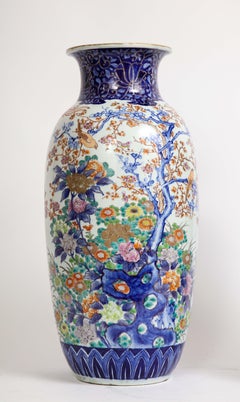
A Large Pair of 19th Century Meji Period Japanese Imari Porcelain Vases

A Large Pair of 19th Century Meji Period Japanese Imari Porcelain Vases

Located in New York, NY

Matching Large Japanese Imari Porcelain Vases. 1880 Meiji period. Introducing an exquisite pair of Japanese Imari porcelain vases from the Meiji period, circa 1880. Standing tall at...

Category

Antique 19th Century Vases

Materials

Gold

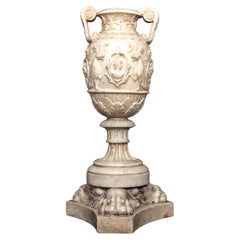
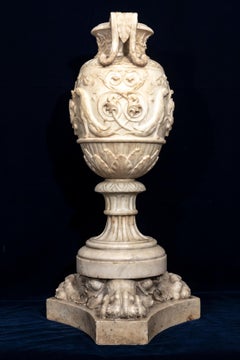
19th C. Italian Grand Tour Carrara Marble Double-Handled Urn on Lion's Paw Base

19th C. Italian Grand Tour Carrara Marble Double-Handled Urn on Lion's Paw Base

Located in New York, NY

A 19th Century Italian Grand Tour Hand-Carved and Hand-Polished Carrara Marble Double-Handled Urn on Lion's Paw Base. Intricately hand-carved with meticulous detail, the wide mouth ...

Category

Antique 1820s Italian Grand Tour Urns

Materials

Carrara Marble

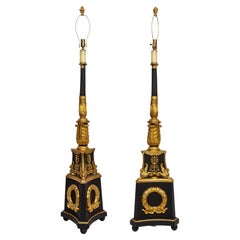
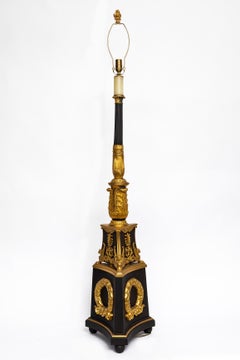
Pair of 19th C. French Ormolu & Patinated Bronze Torchieres/floor lamps

Pair of 19th C. French Ormolu & Patinated Bronze Torchieres/floor lamps

Located in New York, NY

An Incredible and Large Pair of 19th Century Empire Period French Ormolu and Patinated Bronze Mounted Torchieres. The patinated bronze base is decorated with hand-chassed and hand-c...

Category

Antique 1820s French Empire Floor Lamps

Materials

Bronze

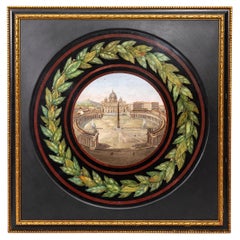
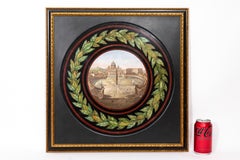
Large Antique Italian Micro Mosaic plaque of St. Peters Square, Rome mid 1800's

Large Antique Italian Micro Mosaic plaque of St. Peters Square, Rome mid 1800's

By Vatican Mosaic Studio

Located in New York, NY

A Very Large and Exceptionally Fine Quality Antique Italian Micro-Mosaic Plaque Depicting "The Saint Peter Square" in Rome. The center medallion surrounded by a beautiful Laurel Wreath in multiple shades of Green Mosaic amidst a black Belgium Marble border. The interior rounded subject depicts Saint Peter Square which is found in Rome, Italy. The entire center panel is made up of a captivating array of tesserae in a variety of shapes and colors, which create this stunning mosaic construct. When inspected from up-close, small rectangular tesserae are found in an assortment of colors, which include: white, green, blue, red, black, brown, orange etc. When the subject is seen from afar, a fantastic image of the entire Saint Peter Square can be viewed as if a painting has been created. The oil on canvas of this scene, by was sold in Christie's Auction for over $2,000,000 USD. The plaque rests in a custom ebonized and gilt square frame. This can be used as a decorative object on the wall to serve as a painting, or, be converted to a table-top by mounting it on a table stand. Rome, Circa: 1850 Giovanni Paolo Panini (Piacenza 1691-1765 Rome), View of Saint Peter's Square, Rome. From Christie's Auction: Giovanni Paolo Panini arrived in Rome in 1711, painting capricci and architectural pieces in a vigorous if slightly eccentric style, and by 1719, when he was admitted to the Academy of St. Luke and the virtuosi al Pantheon, he was a rising star in the Roman art world. From around 1719-1726 he was much in demand for decorative frescoes, including quadratura, ornament and landscape and other genres, often in collaboration with figure or flower painters. During this period he worked for Cardinal Patrizi at Villa Patrizi, Cardinal Annibale Albani at Palazzo Albani (now del Drago) alle Quattro Fontane, Livio de Carolis at Palazzo de Carolis, Cardinal Alberoni at Palazzo Alberoni, Innocent XIII Conti in the Quirinal and in the library of S. Croce in Gerusalemme. In 1724 he married Caterina Gosset, the sister-in-law of Nicolas Vleughels, the director of the French Academy in Rome, to which he was admitted in 1732, and as a result he was much patronized by the French. During the 1720s he developed his figure style away from the awkwardness of his early works into one that concentrated on groups of stylishly-dressed aristocrats and skillfully modelled bystanders, sibyls and pseudo-antique figures. These he noted down in drawings (such as a sketchbook in the British Museum) that he drew upon to populate his paintings. He also began to receive commissions to design and record temporary festivals, often for French ambassadors to Rome. By the beginning of the 1730s Panini was developing a distinctive subgenre of the capriccio in which recognizable monuments are placed in imaginary topographical relationships, which were well-received in the classicizing era of Clement XII Corsini. In 1732 he was one of the panel of judges for the competition instituted by Clement for the Lateran façade, and in the following year painted an impressive View of Piazza del Quirinale for the pope. At about this time he was developing his best-known topographical subjects, interior views of St Peter's and the Pantheon, which were much in demand, to judge by the number of extant versions extending into the 1750s. By about 1734 he was beginning to attract the attention of English patrons, who ordered sets of Roman views, such as those at Marble Hill House (1738) and Castle Howard. In 1736, through Filippo Juvarra, he received important commissions from Philip V of Spain for scenes of the life of Christ in the Chinoiserie room at La Granja in Spain (1736). From as early as the 1720s he had been producing some vedute (view-paintings), initially based on prototypes by Gaspar van Wittel, and he developed the genre in subsequent decades in works that would include impressive panoramic views of the Forum or Palatine, although his staple genre was the capriccio rather than the veduta. He also expanded his repertory of church interiors, adding such churches as S. Paolo fuori le Mura and S. Agnese in Piazza Navona, as well as church interiors recording special events. His son by his first marriage, Giuseppe (1718-1805), began to support him in architectural and festival design projects. By the 1740s Panini was at the peak of his powers, and evidently had a considerable workshop helping him meet demand, especially of capricci to be used as overdoors and other decorative installations. Giovanni Paolo was successful in elevating himself socially above the usual artisanal status of genre painters, and would sometimes include a self-portrait in paintings commissioned by the great and powerful. He also appears to have been successful financially, and owned a substantial palazzo in via Monserrato. He increasingly concentrated on important commissions, such as a view of the Lottery in Piazza Montecitorio (London, National Gallery, 1743-1744), the designs for the festival decorations for the birth of the Dauphin in Palazzo Farnese (Waddesdon Manor, 1751), or the view of an imaginary picture gallery housing the collection of Cardinal Valenti Gonzaga (Wadsworth Atheneum, 1749). In the mid-1750s he received an important series of commissions from the Duc de Choiseul, French ambassador to Rome and soon to become one of the most powerful men in France, that included his best-known compositions, Ancient Rome (Roma Antica) and Modern Rome (Roma Moderna). These large paintings, of which there are three sets (in Boston and Stuttgart, the Metropolitan Museum, and the Louvre) represent imaginary picture galleries based on the Valenti Gonzaga composition but hung with what purport to be Panini's own vedute of ancient and modern sites respectively (with corresponding pieces of sculpture). These paintings sum up the eighteenth-century canon of the greatest works of architecture and sculpture, and the equivalence between modern and ancient Rome. By this time Panini was being assisted by his son by his second marriage, Francesco (1748-1800), who was a skilled draughtsman and painter who continued his father's work after his death in 1765. The Farnborough Hall paintings The Piazza S. Pietro and the Campidoglio are important vedute by Panini painted in 1750 and originally installed, with other works by Panini and Canaletto, in the seat of the Holbech family, Farnborough Hall, Warwickshire (National Trust). Farnborough Hall had been inherited in 1717 by William Holbech (circa 1699-1771), who is documented on the Grand Tour in Florence, Rome and Venice from late 1732 until his return home at the end of April 1734 with his brother Hugh. Holbech is said to have gone on the Grand Tour to recover from a broken heart and to have spent a considerable time there prior to these documented appearances. During his time in Rome he acquired two Paninis, which were seen by an anonymous antiquary around 1746, who referred to various sculptures "all brought from Rome with two pictures, one of the Rotunda, and the other of diverse buildings by Panino" (British Library, Add. MS 6230, pp. 31-32). The Rotunda (the Pantheon) is a painting now in a private collection in New York, and is signed and dated 1734. The Diverse Buildings, which was probably one of Panini's capricci, has not been identified. On his Grand Tour Holbech seems also to have acquired two Canalettos, although they are not mentioned by the antiquary, who may only have had eyes for things Roman. In about 1746-1747, Holbech remodelled the house by creating a Saloon, now the dining room, at the back of the house. This room, the entrance hall, the staircase, library and closet were stuccoed by William Perritt of York, and a bill for this work dated 14 November 1750 survives (or survived until recently; G. Beard, Decorative Plasterwork in Great Britain, London, 1975, p. 233). The two Canalettos acquired on the Grand Tour were installed in the Saloon, together with two new works commissioned from Canaletto, who was then in England and working nearby at Warwick Castle in 1748. The two Paninis acquired on the Grand Tour may have been installed in the Library, as Alastair Laing assumes (op. cit.), while three new works commissioned from Panini in Rome were placed in the Hall and Saloon: the Piazza S. Pietro for the overmantel in the Hall (fig. 1), the Campidoglio as the overmantel in the Saloon (fig. 2), and an Interior of St Peter's (now in Detroit) (fig. 3) on the adjacent wall facing the windows. Two of the Canalettos flanked the Campidoglio, while the others were on the opposite wall. The Interior of St Peter's was therefore effectively the fifth member of the Canaletto set, distinct from the two overmantels. Holbech's installation of his Canalettos and Paninis in fixed stucco frames was unusual for England in 1750, and had probably been inspired by what he had seen on his Grand Tour in Northern Italy, where fixed stucco installations of canvases were common in the 1720s and 1730s (Cornforth, II, p. 51). The Campidoglio and the Interior of St Peter's are both signed and dated 1750, a date that corresponds to the payments for the stucco. The commission for the new Paninis would have been made through an agent, possibly the Roman dealer in antiquities Belisario Amidei from whom some of the antique busts in the Hall were acquired in 1745, who was also a picture dealer; or perhaps the painter Pietro Berton, who on 7 December 1750 shipped a Panini to England. The paintings were sold to Savile Gallery in 1929 and replaced by copies by one Mohammed Ayoub. The four Canalettos were exhibited at Savile Gallery in 1930 and entered the London art trade, finding their way at various times to Augsburg, Melbourne, Ottawa and a private collection. The Paninis seem to have been resold immediately to Knoedler & Co. in New York. When the stucco was removed from the library by Holbech's great-grandson, another William Holbech, shortly after his succession in 1812, the Interior of the Pantheon and the Diverse Buildings may have been taken down. Although there is no record of either painting being at Farnborough subsequently, the Interior of the Pantheon at least must have remained there, since it appeared at Knoedler's in 1930 at about the same time as the other Paninis, and was presumably acquired at the same time from the same source. The Campidoglio was a rare subject for Panini: this is the only known extant version, apart from fictive versions in the Metropolitan Museum (1757) (figs. 4) and Louvre (1759) versions of his Roma Moderna composition (but not in the first Boston version of 1757). Probably Holbech insisted on the choice of subject in order to represent the centre of Rome's civic administration to complement the religious one of St Peter's. The Campidoglio may have been of interest to English patrons because it represented the seat of a form of government they were more comfortable with than the papacy. For example, Canaletto painted the subject, together with English subjects, for Thomas Hollis, 'the most bigoted of all Republicans' in 1755, who may have wanted to 'represent London as the heir to the legacy of Ancient Rome and Renaissance Italy' (see Michael Liversidge and Jane Farrington, eds., Canaletto and England, exhibition catalogue, Birmingham Museums and Art Gallery, London, 1993, p. 25). Canaletto also painted the subject for Sir Richard Neave, Ist Baronet (1731-1814) of Dagnam Park, Essex, at the end of his English stay or shortly afterwards (i.e. 1755-1766) (sold, Sotheby's, London, 10 July 2002, lot 8). Like Holbech, Neave mixed Venetian and Roman subjects, but his Roman subjects steer clear of St Peter's: the others were the Piazza del Quirinale and Piazza Navona. While Holbech had gone to both Venice and Rome and commissioned views of both cities, Rome sets the keynote for his decoration: antique busts line the Hall, and its religious and civic centres are the overmantels in the Hall and Saloon respectively. The Piazza S. Pietro The Piazza S. Pietro shows the piazza much as it appears today, apart from the absence of Valadier's late eighteenth-century clocks on the towers. Bernini's colonnade (1656-1667), both ends of which are visible, reaches out its arms to embrace the viewer. In the center of the piazza is the obelisk moved by Sixtus V in 1586 from the left side of the church where it had formed part of the Circus of Nero. On either side are two fountains, the one on the right by Carlo Maderno (1613) and the one on the left created to match it by Carlo Fontana in 1677. Beyond is the rectangular forecourt to the church, the piazza retta, leading to the façade by Maderno, completed in 1610, and the dome by Michelangelo, Giacomo della Porta and Domenico Fontana. To the right of the façade the roof of the Sistine Chapel is just visible, followed by the Cortile di S. Damaso, the palace of the Swiss Guards and the palace of Paul V. A Cardinal is being driven in a carriage across the piazza at the right in the direction of the Borgo Nuovo and Ponte S. Angelo with his blue-liveried retinue and subsidiary carriages. Unlike the later versions of the subject that depict the Duke de Choiseul, there seems to be no intent to portray any particular cardinal: the procession of a cardinal here is presented simply as characteristic activity within the piazza. Various groups of figures, including well-dressed women in brightly colored dresses, Swiss Guards, priests, gentlemen, idlers and a pilgrim are distributed around the piazza. In the foreground an imaginary heap of fallen masonry provides visual interest in an otherwise dead space. Panini painted the Piazza S. Pietro on a number of occasions, and his works falls into two types, one with the viewpoint shifted slightly to left of the axis, as in the Farnborough Hall version, and one with it shifted slightly to the right. The first type is based on a composition by Gaspar van Wittel, of which there are numerous versions from 1684 until 1721 (Fig. 9 van Wittel). The work by Panini that seems closest to Van Wittel and therefore probably the earliest is the version in the Circolo della Caccia, Rome, which has been dated to the second half of the 1730s, but is probably a decade or so earlier. Another, on the London art market in 2002-2009, and a version with workshop participation at Sotheby's, Milan (20 November 2007, lot 137) and currently on the art market in Rome, are closer to an important painting in Toledo (Arisi no. 308) that is signed and dated 1741 (fig. 6). Van Wittel employed a wide format (about 2:1), showed both of the end faces of the colonnade almost to their full extent, and introduced the theme of a heap of masonry to enliven the foreground. His choice of perspective implies a viewpoint located in the small piazza between the Borgo Nuovo and Borgo Vecchio, now the Piazza Pio XII at the top of the Via della Conciliazione. From this viewpoint a building at the left tended to interfere with the view of the end of the left arm, as can be seen from the Nolli map...

Category

Antique 1850s Italian Louis XVI Decorative Art
Materials

Glass

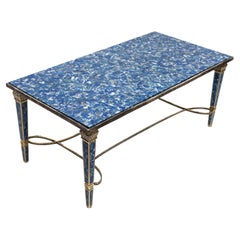
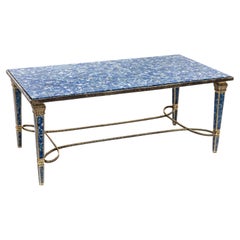
Louis XVI Style Silvered Bronze & Lapis Lazuli Coffee Table, Att. E.F Caldwell

Louis XVI Style Silvered Bronze & Lapis Lazuli Coffee Table, Att. E.F Caldwell

By Edward F. Caldwell & Co.

Located in New York, NY

A Magnificent Louis XVI Style Silvered Bronze and Lapis Lazuli Cocktail/Coffee Table, Attributed to E.F. Caldwell. This striking blue coffee table is made from the finest lapidary h...

Category

Antique Early 1900s American Louis XVI Coffee and Cocktail Tables

Materials

Lapis Lazuli, Bronze

Pair 19th C. French Signed Baccarat Opaline Double Overlay Blue-Cut-White Vases

Pair 19th C. French Signed Baccarat Opaline Double Overlay Blue-Cut-White Vases

By Baccarat

Located in New York, NY

A Highly Important, Monumental, and Rare Pair of 19th Century French Signed Baccarat Opaline Double Overlay Cobalt Blue Cut-To-White Opaline Vases with Hand-Enameled Floral Designs, ...

Category

Antique 1860s French Louis XVI Vases

Materials

Crystal

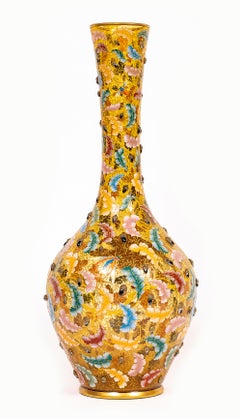
A Monumental 19th C. Moser Gilt and Enameled Yellow Crystal Parrot Vase

A Monumental 19th C. Moser Gilt and Enameled Yellow Crystal Parrot Vase

By Moser

Located in New York, NY

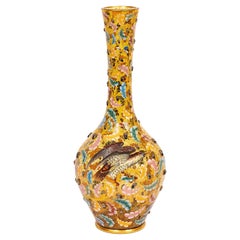
A Monumental 19th Century Moser Gilt and Enameled Yellow Crystal Parrot-Relief Vase. Of bottle vase form, in translucent amber/yellow crystal, decorated with trailing oak-boughs and ...

Category

Antique 1880s Czech Other Vases

Materials

Crystal

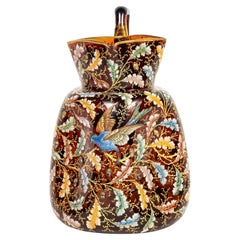
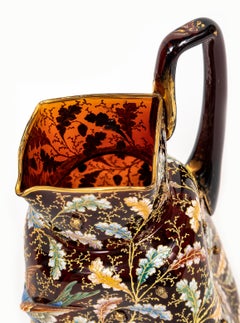
19th C. Moser Ruby Red Crystal Enameled Gilt Pitcher with Applied Enamel Parrot

19th C. Moser Ruby Red Crystal Enameled Gilt Pitcher with Applied Enamel Parrot

By Moser

Located in New York, NY

An Incredible 19th Century Moser Ruby Red Crystal Enameled Gilt Pitcher with Applied Enamel Parrot and Enameled and Gilt Surface Leaves. Of pinched quatrefoil form, in translucent a...

Category

Antique 1890s Czech Other Pitchers

Materials

Crystal

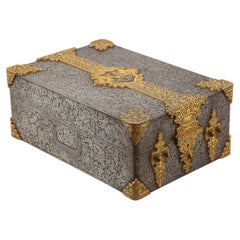
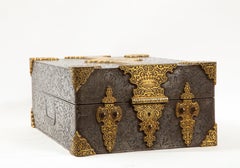
19th C. Gold, Damascene, Etched Steel Casket Box/Safe with Noble Coat of Arms

19th C. Gold, Damascene, Etched Steel Casket Box/Safe with Noble Coat of Arms

Located in New York, NY

An Incredible 19th Century Royal Casket Box/Safe with Coat of Arms, Made of Gold, Damascene, and Etched Steel. Charles Le Hon, a Belgian politician, lawyer and industrialist, served...

Category

Antique 1850s French Renaissance Revival Decorative Boxes

Materials

Gold, Steel

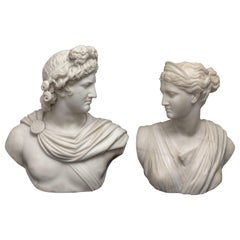
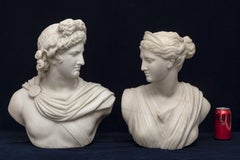
A Pair 19th Century Italian Hand-Carved Carrara Marble Busts of Apollo & Artemis

A Pair 19th Century Italian Hand-Carved Carrara Marble Busts of Apollo & Artemis

By Ferdinando Vichi

Located in New York, NY

An Outstanding Pair 19th Century Italian Hand-Carved Carrara Marble Busts of Apollo & Artemis, One Bust is Signed on the Back, "F Vichi". This pair of stunning marble busts, hand-car...

Category

Antique 1860s Italian Neoclassical Busts

Materials

Carrara Marble

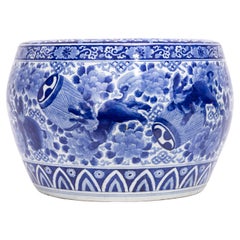
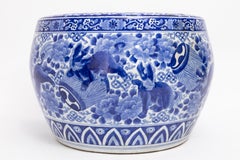
Japanese Meiji Period Blue & White Jardiniere with Shishi Dogs & Barrels: 1880

Japanese Meiji Period Blue & White Jardiniere with Shishi Dogs & Barrels: 1880

Located in New York, NY

Japanese Meiji Period Blue & White Jardiniere with Shishi Dogs & Barrels: 1880 This impressive Japanese porcelain jardiniere, hailing from the Meiji perio...

Category

Antique 19th Century Japanese Meiji Planters, Cachepots and Jardinières

Materials

Porcelain

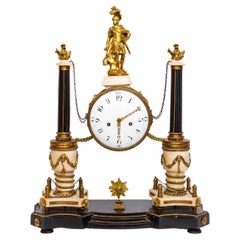
Large Louis XVI Period (18th Century) French Marble & Dore Bronze Portico Clock

Large Louis XVI Period (18th Century) French Marble & Dore Bronze Portico Clock

Located in New York, NY

A Magnificent and Large Louis XVI Period (18th Century) French portico clock, with a double marble column mount and adorned with gilded bronze chains. The pendulum takes the form of ...

Category

Antique Late 18th Century French Louis XVI Mantel Clocks

Materials

Marble, Bronze

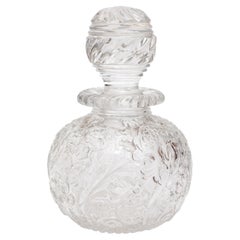
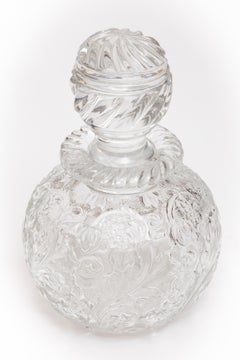
English Thomas Webb Rock Crystal Glass Hand-Carved Perfume Bottle, Circa 1880

English Thomas Webb Rock Crystal Glass Hand-Carved Perfume Bottle, Circa 1880

Located in New York, NY

English Thomas Webb Rock Crystal Glass Hand-Carved Perfume Bottle, Circa 1880 This marvelous hand-carved rock crystal glass perfume bottle, attributed to the Martelé technique of th...

Category

Antique 19th Century Bottles

Materials

Rock Crystal

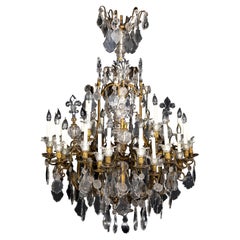
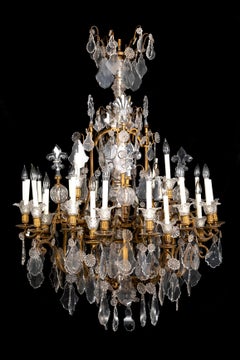
19th C French Ormolu Mtd. Multi-Arm Baccarat Crystal Chandelier, w/ Fleur de Lis

19th C French Ormolu Mtd. Multi-Arm Baccarat Crystal Chandelier, w/ Fleur de Lis

By Baccarat

Located in New York, NY

A Magnificent and Quite Large 19th Century French Ormolu Mounted Multi-Arm Baccarat Crystal Chandelier, with Fleur de Lis Crystal Prisms. The ormolu body is cast of the highest quality of mercury gilt bronze. The arms are spectacular and split up between multiple tiers. The central stem is made up of a thick ormolu pole which is decorated with Baccarat crystal hand-diamond cut stepped sections. Attached to the stem are the numerous ormolu arms which terminated to hand-chased and hand-chiseled ormolu bobeche's; inside each bobeche is a hand-diamond cut crystal candle holder which is similar to a lily flower. These crystals are each hand-diamond cut with a crystal prismic pattern. Hanging off each arm is an array of hand-diamond cut crystal prisms, each with a variable crystal style form and each hand-beveled. At the top of each prism is a cut-crystal flower, which beautifully completes the gorgeous arms. In the center of each bi-armed section is a small ormolu step which holds a cut-crystal beveled sphere and incredible and rare, cut-crystal, beveled Fleur de Lis. This symbol is highly important and symbolic to the Royal family of France for hundreds of years. Chandeliers of this size, quality, condition, and inclusive of Fleur de Lis are highly prized and rarely found in the market as Fleur de Lis based items were usually produced with noble reason. France, Circa: 1880 Baccarat is a French luxury crystal company that manufactures and sells high-end products. Founded in 1764 by artisans in Lorraine with the permission of King Louis XV, Baccarat is known for its craftsmanship, quality, and innovation. The company's products include lighting, tableware, decorative objects, fine jewelry, and custom flacons, and are designed to symbolize French artifacts...

Category

Antique 1880s French Louis XVI Chandeliers and Pendants

Materials

Crystal, Bronze

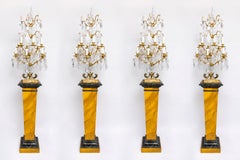
Two Pairs of Crystal Girandoles on Pedestals Atb. to Maison Jansen Paris

Two Pairs of Crystal Girandoles on Pedestals Atb. to Maison Jansen Paris

By Baccarat, Maison Jansen

Located in New York, NY

Four Monumental 20th Century Mid-Century French Baccarat Crystal Multi-Arm Girandoles on Faux Marble Hand-Painted Pedestals, attributed to Maison Jansen. Each girandole consists of ...

Category

Vintage 1920s French Louis XVI Candelabras

Materials

Crystal, Marble, Bronze

Pair of 19th Century French (attributed) Bacarrat Hand-Diamond Cut-Crystal Vases

Pair of 19th Century French (attributed) Bacarrat Hand-Diamond Cut-Crystal Vases

By Baccarat

Located in New York, NY

A Monumental Pair of 19th Century French (attributed) Bacarrat Hand-Diamond Cut-Crystal Vases of Superb Quality and Craftsmanship. The vases are of inverted baluster form, each vase transitions...

Category

Antique 19th Century French Louis XVI Vases

Materials

Crystal

A Japanese Meiji Period Blue and White Porcelain 5-Tier Presentation Box

A Japanese Meiji Period Blue and White Porcelain 5-Tier Presentation Box

Located in New York, NY

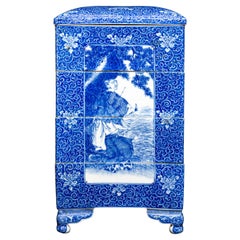
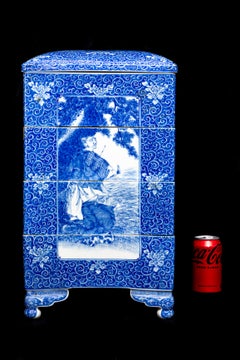
An Incredible and Quite Large Japanese Meiji Period Blue and White Porcelain Five-Tier Presentation Box and Cover. This magnificent piece was most probably made for a nobleman to pr...

Category

Antique 1890s Japanese Meiji Ceramics

Materials

Porcelain

English 19th C. Thomas Webb & Sons Double Handle Cameo Vase, Signed G. Woodall

English 19th C. Thomas Webb & Sons Double Handle Cameo Vase, Signed G. Woodall

By Thomas Webb & Sons, George Woodall

Located in New York, NY

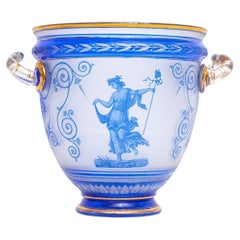
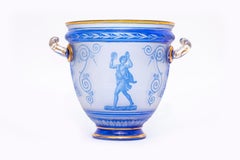
A Rare and Highly Important Antique English 19th Century Thomas Webb & Sons Blue Cut-to-Clear Double Handle Cameo Wine Cooler, Signed G. Woodall. Etched and Ccid Washed. This 19th ...

Category

Antique 1880s English Neoclassical Vases

Materials

Crystal

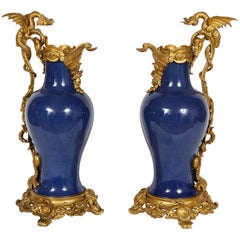
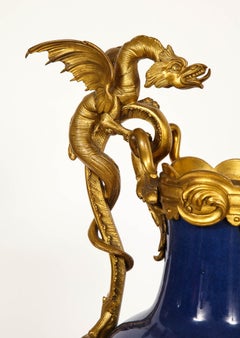
Pair of French "Bleu Poudre" Chinese Export Porcelain Ormolu-Mounted Vases

Pair of French "Bleu Poudre" Chinese Export Porcelain Ormolu-Mounted Vases

Located in New York, NY

Magnificent pair of antique French "bleu poudre" Chinese Export porcelain ormolu-mounted vases. This exceptional pair of Regence style bleu poudre porcelain vases are beautifully han...

Category

Antique Mid-19th Century French Régence Vases

Materials

Bronze

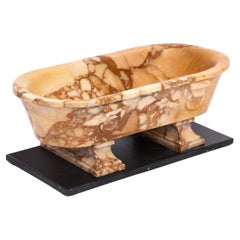
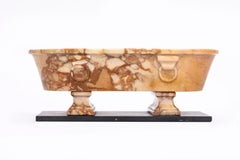
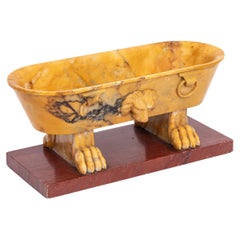
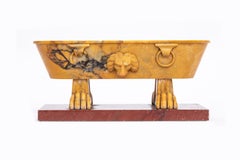
Antique 19th Century Italian Grand Tour Siena Marble Model of a Sarcophagus

Antique 19th Century Italian Grand Tour Siena Marble Model of a Sarcophagus

By Benedetto Boschetti

Located in New York, NY

A Magnificent Antique 19th Century Italian Grand Tour Hand-Carved Siena Marble Model of a Sarcophagus on a Black Marble Base. This gorgeous grand tour piece is modeled after the Fon...

Category

Antique 1840s Italian Grand Tour Planters, Cachepots and Jardinières

Materials

Marble, Siena Marble

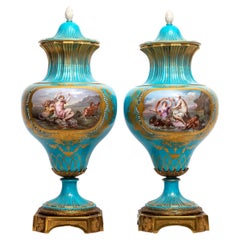
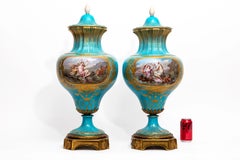
Pair French 19th C. Ormolu & Sevres Porcelain Celeste Blue Jeweled Covered Vases

Pair French 19th C. Ormolu & Sevres Porcelain Celeste Blue Jeweled Covered Vases

By Manufacture Nationale de Sèvres

Located in New York, NY

A Marvelous and Quite Large Pair of French 19th Century Ormolu Mounted Sevres Porcelain Jeweled Celeste Blue Ground Covered Vases with Four Main Panels. Each vase of baluster form w...

Category

Antique 1870s French Louis XVI Porcelain

Materials

Bronze

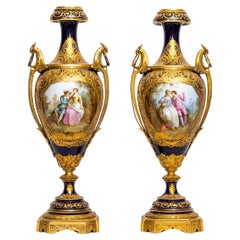
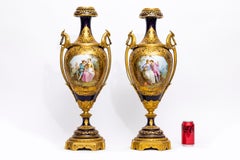
Pair 19th C French Dore Bronze Mounted Sevres Cobalt Blue Porcelain Ground Vases

Pair 19th C French Dore Bronze Mounted Sevres Cobalt Blue Porcelain Ground Vases

By Jean-Antoine Watteau

Located in New York, NY

An Incredible Pair of Large 19th Century Louis XVI Style French Dore Bronze Mounted Sevres Cobalt Blue Porcelain Ground Vases. This pair of vases showcase the exquisite ornamentation and detailed craftsmanship of French porcelain manufacturing. The vases are urn-shaped: featuring a bulbous vessel with a flared mount and neck. Dore bronze textured handles are attached to either side. The vessel itself is a deep cobalt blue, but it is heavily adorned with warm ormolu embellishment. Ormolu decoration frames the center of the vase’s frieze...

Category

Antique 19th Century French Louis XVI Porcelain

Materials

Bronze

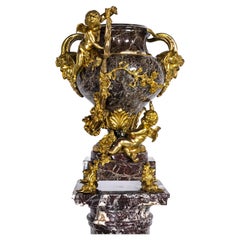
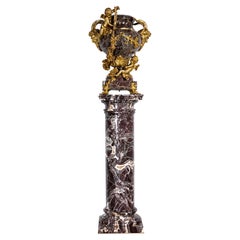
A 19th C. French Ormolu Mounted & Rouge Marble Figural Cupid Jardiniere, ROBERT

A 19th C. French Ormolu Mounted & Rouge Marble Figural Cupid Jardiniere, ROBERT

By Robert Freres, Susse Freres

Located in New York, NY

A Monumental and Exceptionally High Quality 19th Century French Ormolu Mounted and Rouge Marble Jardiniere, attributed to ROBERT FRÈRES. The urn is of baluster form with ormolu saty...

Category

Antique 1880s French Louis XVI Planters, Cachepots and Jardinières

Materials

Marble, Ormolu

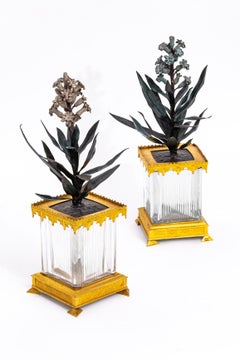
Pair Empire Period North European Ormolu, Cut-Glass, & Tôle-Peinte Cachepots

Pair Empire Period North European Ormolu, Cut-Glass, & Tôle-Peinte Cachepots

Located in New York, NY

An extremely rare and unusual Pair Of North European Ormolu, Cut-Glass, and Tôle-Peinte Potted Hyacinths/Cachepots, Possibly Baltic, Circa 1815-1825. Each Modeled As A Tôle-Peinte Sp...

Category

Antique Early 19th Century Baltic Empire Planters, Cachepots and Jardini...

Materials

Crystal, Ormolu, Tin

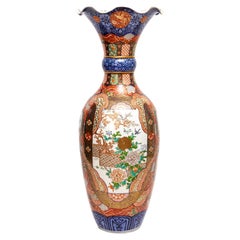
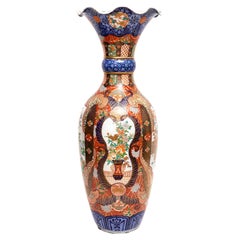
Very Large 19th Century Japanese Imari Porcelain Vase with Scalloped Top

Very Large 19th Century Japanese Imari Porcelain Vase with Scalloped Top

Located in New York, NY

A Very Large 19th Century Japanese Imari Porcelain Vase with Scalloped Top. The body of the vase is complete with two main cartouches and two smaller cartouches which flank the vase...

Category

Antique 1880s Japanese Japonisme Vases

Materials

Porcelain

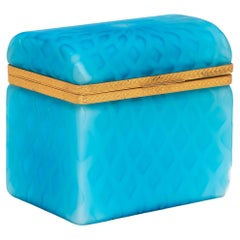
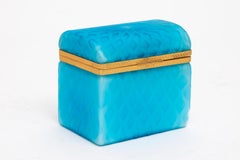
Blue over White Double Overlay Ormolu Mounted Cased Glass Rectangular Box

Blue over White Double Overlay Ormolu Mounted Cased Glass Rectangular Box

Located in New York, NY

A Beautiful Antique Blue over White Double Overlay Ormolu Mounted Cased Glass Rectangular Box. With a beautiful geometric design cased underneath the top blue layer, which protrudes ...

Category

20th Century French Mid-Century Modern Decorative Boxes

Materials

Ormolu

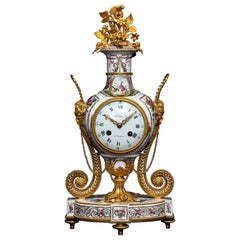
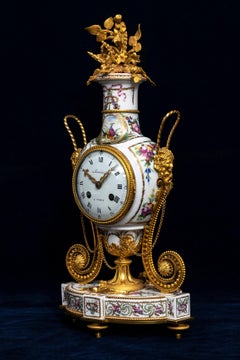
18 C. Louis XVI French Ormolu Mtd. Queen’s Manufacture Porcelain Clock, F. Godon

18 C. Louis XVI French Ormolu Mtd. Queen’s Manufacture Porcelain Clock, F. Godon

By François-Louis Godon

Located in New York, NY

An Incredible and Quite Rare 18th Century Louis XVI Period French Ormolu Mounted Queen’s Manufacture Porcelain Clock, known as the Marie-Antoinette Clock, The movement by François-L...

Category

Antique 1780s French Louis XVI Mantel Clocks

Materials

Bronze

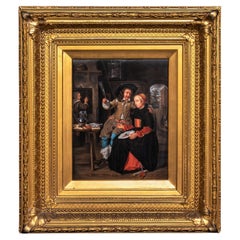
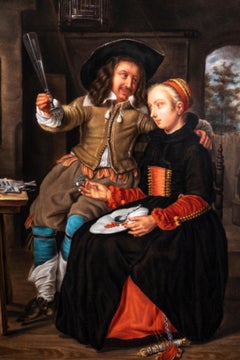
19th C. KPM Porcelain Plaque (Painting), Gabriel Metsu’s ‘Lovers at Breakfast"

19th C. KPM Porcelain Plaque (Painting), Gabriel Metsu’s ‘Lovers at Breakfast"

By Königliche Porzellan-Manufaktur (KPM)

Located in New York, NY

A Rare and Fine Quality Antique 19th Century KPM Painting on Porcelain Plaque after Gabriel Metsu’s ‘Lovers at Breakfast’ (Dated 1661), Metsu with his wife Isabella de Wolff in a Tav...

Category

Antique 1850s German Baroque Decorative Art
Materials

Porcelain, Giltwood

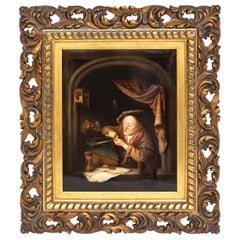
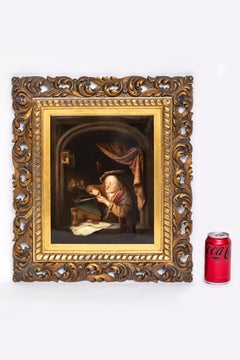
19th Century KPM Porcelain Plaque after Gerrit Dou, Titled "The Schoolmaster"

19th Century KPM Porcelain Plaque after Gerrit Dou, Titled "The Schoolmaster"

By Gerrit Dou

Located in New York, NY

An Incredible and Quite Rare 19th Century KPM Porcelain Plaque after Gerrit Dou (Student of Rembrandt, Titled "The Schoolmaster" c. 1671. The porcelain plaque is incredible with the...

Category

Antique 1850s German Baroque Paintings

Materials

Porcelain, Giltwood

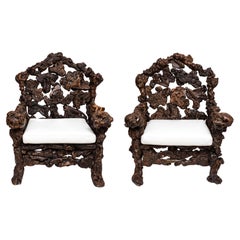
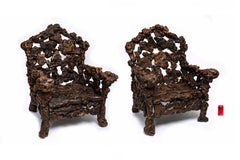
Large Pair of Hand-Carved 19th Century Chinese Rootwood Throne Chairs/Arm Chairs

Large Pair of Hand-Carved 19th Century Chinese Rootwood Throne Chairs/Arm Chairs

Located in New York, NY

A Magnificent and Quite Large Pair of Hand-Carved 19th Century Chinese Rootwood Throne Chair/Arm Chairs. According to an article posted by the MET Museum, rustic rootwood chairs such as these were meant to suggest Buddhist and Daoist figure’s lack of attachment to earthly luxuries. Instead of depicting deities and important religious icons on sumptuous thrones, rootwood chairs signified the relationship between humans and nature. Each chair is hand-carved from the finest rootwood and further lacquered creating a rich dark color on the exterior of the wood. The seating areas are finished with comfortable white cushions and they are ready to be used in any decor. A similarly designed rootwood table...

Category

Antique 1850s Chinese Chinese Export Furniture

Materials

Wood

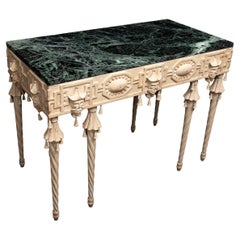
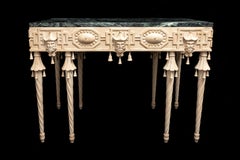
Chinoiserie White Painted Console Table with Pagodas, Brighton Pavilion

Chinoiserie White Painted Console Table with Pagodas, Brighton Pavilion

Located in New York, NY

A Fabulous Chinoiserie Style, Hand-Carved and Hand-Painted Rectangular Shaped Console Table/Side Table with Green Verde Antico Italian Marble Top. Inspired after models in the Famou...

Category

20th Century French Chinoiserie Console Tables

Materials

Marble

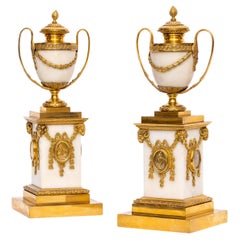
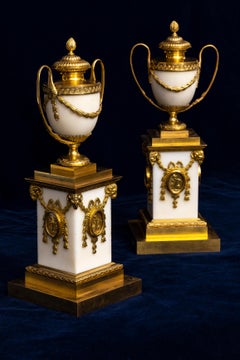
Pair 18th C. English Matthew Boulton Ormolu Mounted Carrara Marble Cassolettes

Pair 18th C. English Matthew Boulton Ormolu Mounted Carrara Marble Cassolettes

By Matthew Boulton and John Fothergill

Located in New York, NY

A Magnificent, Exceptionally Rare, Museum Quality Pair of 18th Century English Ormolu Mounted, Hand-Carved and Hand-Polished Carrara Marble Cassolettes, By Matthew Boulton. These beautiful ormolu-mounted white marble cassolettes are by Matthew Boulton (1728-1809) and John Fothergill (1730- circa 1782) published in their Pattern Book No. 1 (page 171, figure t) and reproduced in Sir Nicholas Goodison's Ormolu: The Work of Matthew Boulton (New York, 1974, page 383, figure 161). Josiah Wedgwood (1730-1795) was a close friend of Boulton's and his patterns are thought to be the source for the medallions used on the plinths of these. Boulton's medallions of classical figures are almost identical to the cameos and intaglios made by Wedgwood and his partner James Tassie. Molds for these examples can be found in the Wedgwood Collection at the Victoria & Albert Museum. All derive from the same classical source of Renaissance gems. Many gem collections in Europe were widely published at this time and Boulton's library contained A. F. Gori's Museum Florentinum (1731-1766), in which gems from the Medici collection were engraved. The subjects of the medallions on this pair are: Pomona, a Roman goddess of fruit trees, gardens, and orchards, and depicted carrying a basket on her head overloaded with fruit, tumbling to the ground, shown once on each vase. Hygeia, once on each, with an olive branch in her right hand, as seen in Tassie's reproduction of Valerio Belli's gem, and holding a snake in her left hand over an altar. This was produced by Wedgwood both as an intaglio and as a cameo. Venus & Cupid, only on one vase, showing Venus leaning against a column with a pike, and giving a helmet to Cupid. Aesclepius, Greek GD of medicine, only on one vase, depicted with a snake wrapped around his staff .The last medallion subject is either Diomedes or Perseus, shown once on each vase, depicted as a conquering hero. Boulton asked patrons to choose from a limited repertoire of motifs, and therefore each vase or pair of vases is adorned with their own combination. Boulton used nine medallion subjects on recorded vases of this type. PROVENANCE & COMPS Another pair of this model, with slightly less elaborate lids and finials, from a private collection are illustrated in Goodison's Matthew Boulton: ORMOLU, (page 379, figure 153). A further example is in a private New York collection. This pair, which was acquired from Hotspur in 1981, was formerly in the Collection of Marjorie Wiggin Prescott, sold Christie’s, New York, 31 January 1981, lot 76. The Prescott Collection was one of the most important English furniture collections of its time. The sale consisted mostly of late 17th and 18th century English furniture...

Category

Antique 1770s English George III Candlesticks

Materials

Crystal, Carrara Marble, Bronze

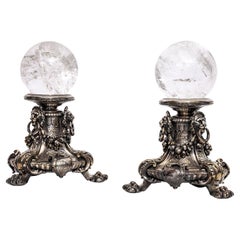
Pair French Silvered Bronze Lions Mask Plinths w/ Hand-Carved Rock Crystal Orbs

Pair French Silvered Bronze Lions Mask Plinths w/ Hand-Carved Rock Crystal Orbs

Located in New York, NY

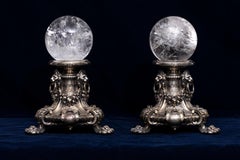
A Pair of Incredible French 19th Century Louis XVI Style Silvered Bronze Lions Mask Plinths with Hand-Carved and Hand-Polished Rock Crystal Orbs. Boasting sumptuous French Regency d...

Category

Antique 1890s French Louis XVI Desk Sets

Materials

Rock Crystal, Bronze

Pair 19th C. French Ormolu Mtd. Chinoiserie Baccarat Cut-Crystal Vases/Lamps

Pair 19th C. French Ormolu Mtd. Chinoiserie Baccarat Cut-Crystal Vases/Lamps

By Baccarat

Located in New York, NY

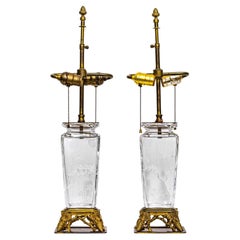
A Pair of 19th Century French Ormolu Mounted Chinoiserie/Japanism Baccarat Hand-Diamond Cut Engraved and Copper-Wheel Cut Crystal Vases, Later Turned to Lamps, Never Drilled, Electri...

Category

Antique 1880s French Japonisme Table Lamps

Materials

Crystal, Bronze

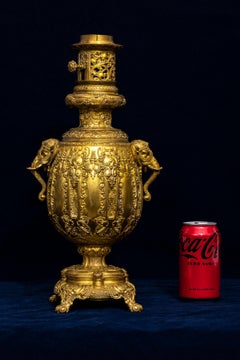
A 19th Century French Ormolu Elephant Handle Lamp, Signed F. Barbedienne

A 19th Century French Ormolu Elephant Handle Lamp, Signed F. Barbedienne

By Ferdinand Barbedienne

Located in New York, NY

A 19th Century French Ormolu Elephant Handle Lamp, Signed Barbedienne, Most Probably Commissioned for a Maharajah. This Louis XVI style dore bronze lamp is the quintessential display of French empire decorative opulence. Its exaggerated urn shape is meticulously cast with ormolu detailing that covers the entire surface of the lamp. On either side of the vase are two decorative handles, made out to be fancifully embellished elephant’s heads. The inclusion of elephants—which were introduced to French culture...

Category

Antique 1860s French Louis XVI Table Lamps

Materials

Bronze

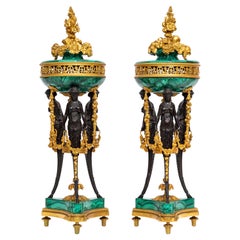
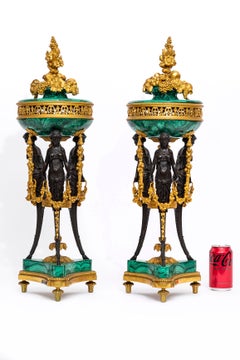
Pr. French Patinated & Ormolu Mounted Malachite Figural Pot-Pourris  H. Dasson

Pr. French Patinated & Ormolu Mounted Malachite Figural Pot-Pourris H. Dasson

By Henry Dasson

Located in New York, NY

A Large and Quite Magnificent Pair of Antique 19th Century French Patinated and Ormolu Mounted Malachite Figural Pot-Pourris/Covered Vases, Attributed to Henry Dasson. These brule-pa...

Category

Antique 1870s French Louis XVI Vases

Materials

Malachite, Bronze

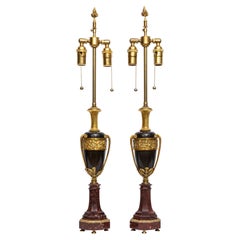
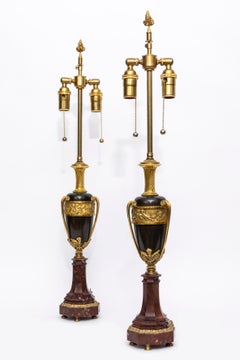
Pair of 18th C. French Louis XVI Period Patinated and Dore Bronze Vases/Lamps

Pair of 18th C. French Louis XVI Period Patinated and Dore Bronze Vases/Lamps

Located in New York, NY

An Incredible Pair of Antique French Louis XVI Period Patinated and Dore Bronze Vases Turned to Lamps on Rouge Marble Bases. The lamps feature an urn-shaped body with an intricate...

Category

Antique 18th Century French Louis XVI Table Lamps

Materials

Marble, Bronze

Antique 19th Century Italian Grand Tour Siena Marble Model of a Sarcophagus

Antique 19th Century Italian Grand Tour Siena Marble Model of a Sarcophagus

By Benedetto Boschetti

Located in New York, NY

A Magnificent Antique 19th Century Italian Grand Tour Siena Marble Model of a Sarcophagus on a Rouge Marble Base. This piece is modeled in the manner of Benedetto Boschetti, featuri...

Category

Antique Mid-19th Century Italian Grand Tour Planters, Cachepots and Jard...

Materials

Marble, Siena Marble

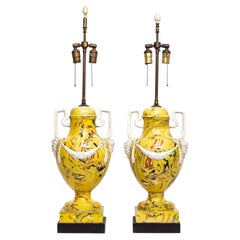
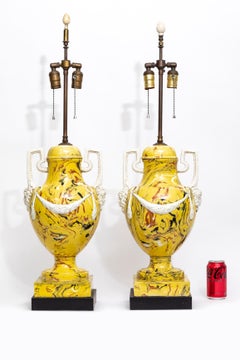
Pair of Italian Agateware Porcelain Lamps with Medusa Masks, Wreaths, & Handles

Pair of Italian Agateware Porcelain Lamps with Medusa Masks, Wreaths, & Handles

Located in New York, NY

A Magnificent Pair of Italian Agateware Porcelain Lamps with Medusa Masks, Wreaths, and Handles. The lamps are fashioned in the neoclassical style and feature a brightly-contrasted ...

Category

Antique Early 1900s Italian Neoclassical Table Lamps

Materials

Porcelain

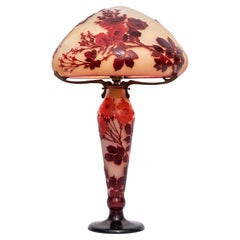
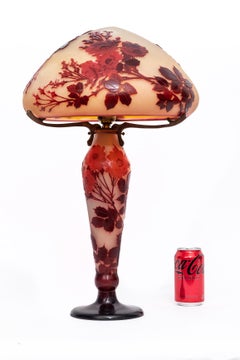
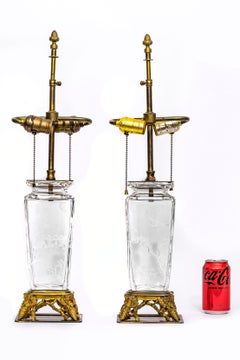
French Art Nouveau Lamp by Emile Galle Cameo Cut Glass in Red Sunset Colors
French Art Nouveau Lamp by Emile Galle Cameo Cut Glass in Red Sunset Colors
By Émile Gallé

Located in New York, NY

A Magnificent and Rare Antique French Galle Signed Cut-Cameo Lamp with Original Signed Galle Cut-Cameo Shade, in Red and Yellow Sunset Colors. This floral motif Galle lamp is made in the art nouveau style with two-toned deep red flowers on a base and shade. The sharp edges of the floral design, which is all hand-carved, complement the smooth round mushroom-shaped shade and base. The rounded shape and delicate hand-carved glass of multiple colors and hues is a signature of Galle lamps. They typically form a cap-like shade over the thin tourine base. Another important feature of the lamp is the rounded finish on the rim, the glass is smooth at the rim—a sign that the lamp is authentic. This lamp exudes the soft romanticism of Art Nouveau. Gallé was a prominent glassblower and one of the most influential figures in the French Art Nouveau movement. Specializing in floral glassware...
Category

Antique Early 1900s French Art Nouveau Table Lamps
Materials

Crystal, Bronze

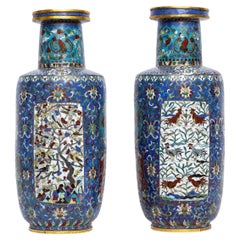
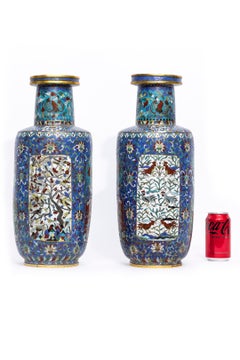
Pair Chinese 19th C. Qing Dynasty, Cloisonne Multi-Cartouche Vases from Museum

Pair Chinese 19th C. Qing Dynasty, Cloisonne Multi-Cartouche Vases from Museum

Located in New York, NY

A Gorgeous Pair of Antique Chinese 19th Century, Qing Dynasty, Cloisonne Multi-Cartouche Blue Ground Gu Form Vases. These vases feature a surface detailed with birds, plants, and cl...

Category

Antique 19th Century Chinese Qing Vases

Materials

Bronze

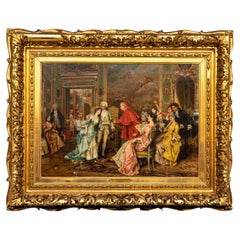
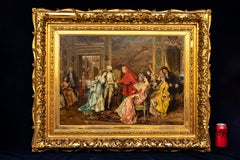
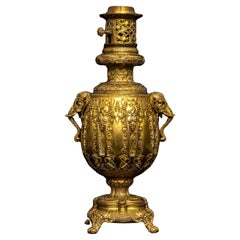
A 19th C. Italian Oil on Canvas "The Cardinal's Present" by Arturo Ricci

A 19th C. Italian Oil on Canvas "The Cardinal's Present" by Arturo Ricci

By Arturo Ricci

Located in New York, NY

A Marvelous 19th Century Italian Oil on Canvas titled "The Cardinal's Present" by Arturo Ricci. This oil on canvas is truly incredible and one of Ricci's best works of art. The sce...
Category

Antique 1880s Italian Louis XVI Paintings

Materials

Canvas, Wood

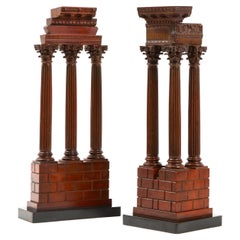
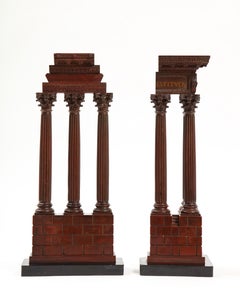
Pair Rouge Marble ‘Grand Tour’ Models of Ruins Celebrating the Corinthian Order

Pair Rouge Marble ‘Grand Tour’ Models of Ruins Celebrating the Corinthian Order

By Benedetto Boschetti

Located in New York, NY

A Large and Incredible Pair of Rouge Marble ‘Grand Tour’ Models of Ruins Celebrating the Corinthian Order, Most Probably Attributed To The Workshop Of Benedetto Boschetti. The fist ...

Category

Antique 1860s Italian Grand Tour Models and Miniatures

Materials

Marble