Want more images or videos?
Request additional images or videos from the seller
1 of 6

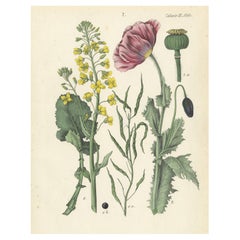
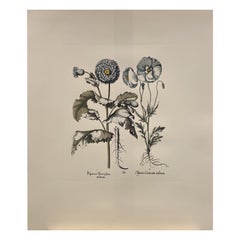
Botanical Print: Papaver and Hieracium Species from a Natural History Collection

$151.19
$188.9820% Off
£111.97
£139.9620% Off
€128VAT Included
€16020% Off
CA$210.39
CA$262.9820% Off
A$211.73
A$264.6620% Off
CHF 122.89
CHF 153.6120% Off
MX$2,571.18
MX$3,213.9720% Off
NOK 1,411.58
NOK 1,764.4820% Off
SEK 1,457.03
SEK 1,821.2820% Off
DKK 975.97
DKK 1,219.9720% Off

About the Item

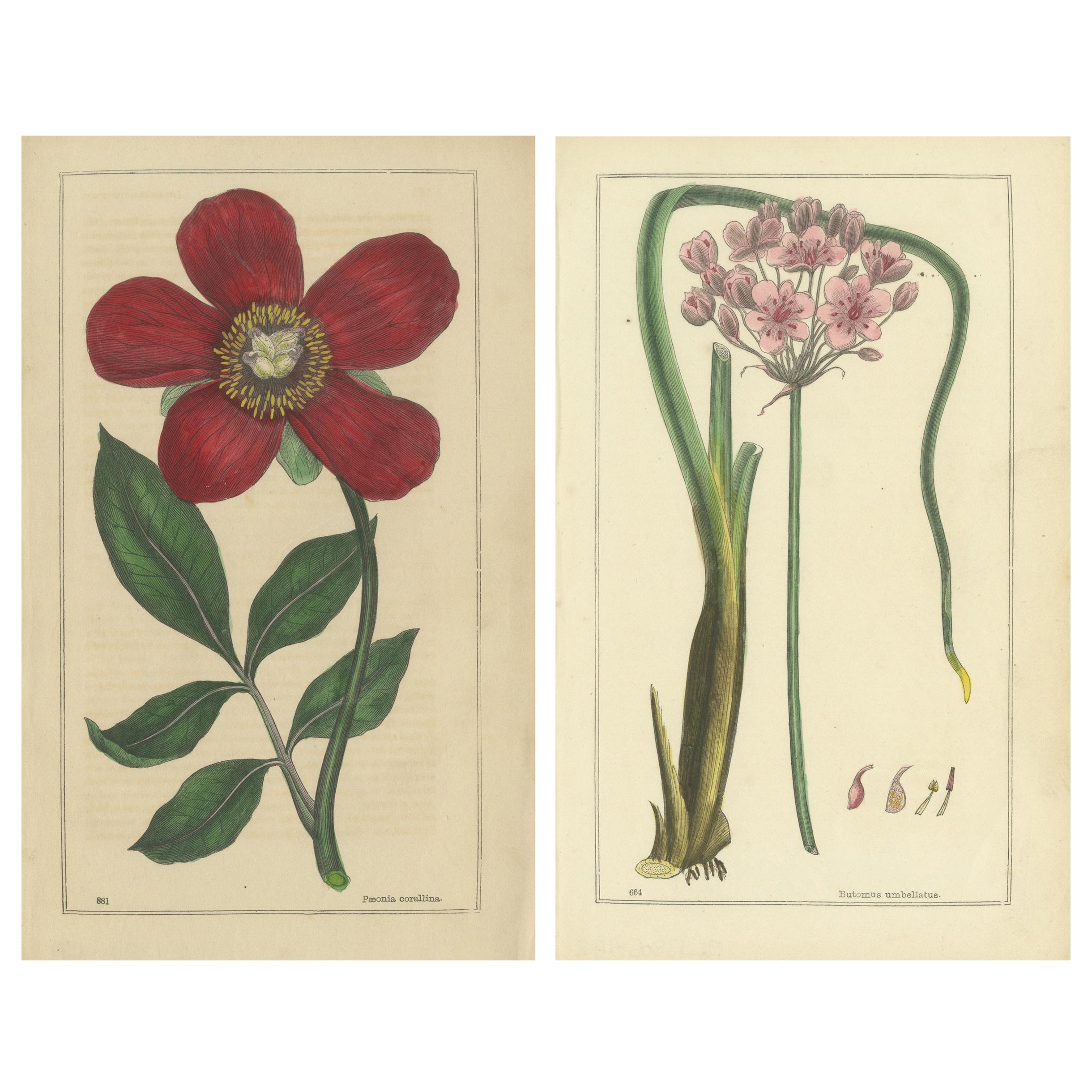
Botanical Engraving: 'Papaver' and 'Hieracium' Species from Early 19th-Century Natural History Collection This botanical engraving is a beautifully detailed plate showcasing two plants with remarkable precision and artistry, originating from a collection of early 19th-century botanical illustrations. Here's a detailed description: This fine botanical engraving features two distinct plants: 1. Figure 1: A member of the Papaver genus, resembling a poppy with its distinctive blue-tinged petals, seed pod, and finely dissected leaves. The detailed rendering of the root system highlights the plant's structure, offering both scientific and artistic appeal. 2. Figure 2: Likely a species of Hieracium (hawkweed), characterized by its bright yellow flowers and toothed leaves. The plant’s branching stems and buds are meticulously illustrated, emphasizing its natural elegance and botanical significance. This engraving exemplifies the neoclassical fascination with nature, where scientific accuracy blends seamlessly with artistic beauty. Published as part of a natural history portfolio, this plate served both educational and decorative purposes, appealing to botanists, naturalists, and art enthusiasts alike. Condition: Well-preserved with light foxing and minor discoloration, typical of engravings of this age. Colors remain vibrant, showcasing the plant’s natural hues. Advice on Presentation: 1. Framing: - Choose a simple frame, such as walnut or a light wood finish, to complement the botanical theme. - Use acid-free matting in a soft cream or pale green to highlight the natural tones of the engraving. 2. Display Ideas: - Hang in a grouping with similar botanical engravings for a curated gallery wall. - Place individually in a study, library, or conservatory to emphasize its scientific and artistic charm. 3. Conservation: - Protect the engraving with UV-filtering glass to preserve its vibrant colors. - Avoid direct sunlight and humid environments to maintain its condition. This engraving is a wonderful example of early botanical art, offering a timeless blend of scientific curiosity and aesthetic sophistication. Perfect for collectors, naturalists, or as a centerpiece in botanical-inspired decor. The *Papaver* genus, commonly known as poppy, includes several species with various uses in medicine, culinary applications, and ornamental gardening. Here are the main uses: ### Medicinal uses 1. Pain relief and sedation: The opium poppy (*Papaver somniferum*) is the source of opiates such as morphine, codeine, and thebaine, which are widely used in modern medicine to manage pain, induce sedation, and treat severe coughs. These alkaloids have been historically important and continue to be essential in pharmaceuticals. 2. Traditional medicine: In many cultures, poppy extracts and seeds have been used in folk remedies for insomnia, anxiety, and gastrointestinal issues. 3. Homeopathic uses: Certain poppy species are used in homeopathy to treat conditions such as respiratory distress, headaches, and sleep disorders. ### Culinary uses 1. Poppy seeds: The seeds of *Papaver somniferum* are edible and widely used in baking and cooking. They are found in breads, pastries, and desserts in many cuisines worldwide. Poppy seeds are a good source of dietary fiber, essential fatty acids, and minerals like calcium and magnesium. 2. Poppy seed oil: Extracted from the seeds, the oil is used in cooking, salad dressings, and as a carrier oil in cosmetics. ### Ornamental uses 1. Garden plants: Many species, such as the corn poppy (*Papaver rhoeas*) and the Oriental poppy (*Papaver orientale*), are cultivated for their vibrant and showy flowers. Poppies are popular in landscaping and hold symbolic meaning in various cultures, such as the remembrance poppy. ### Toxicity and caution While certain *Papaver* species are safe, others contain alkaloids that can be toxic if consumed improperly. The cultivation of opium poppy is regulated in many countries due to its potential for misuse.
  • Dimensions:
    Height: 9.06 in (23 cm)Width: 7.49 in (19 cm)Depth: 0.01 in (0.2 mm)
  • Materials and Techniques:
    Paper,Engraved
  • Period:
  • Date of Manufacture:
    1805
  • Condition:
    Condition: Well-preserved with light foxing and minor discoloration, typical of engravings of this age. Colors remain vibrant, showcasing the plant’s natural hues. Please study the images carefully.
  • Seller Location:
    Langweer, NL
  • Reference Number:
    Seller: BG-14000-371stDibs: LU3054342874962

More From This Seller

View All
Galbanum and Hungarian Gentian: Rare Medicinal Plants Illustrated, 1805

Galbanum and Hungarian Gentian: Rare Medicinal Plants Illustrated, 1805

Located in Langweer, NL

"Galbanum and Hungarian Gentian: Rare Medicinal Plants Illustrated, 1805" This stunning hand-colored copperplate engraving depicts two remarkable plants: the Galbanum (*Ferula galba...

Category

Antique Early 1800s Prints

Materials

Paper

1854 Hand-Colored Botanical Lithograph of Rapeseed and Poppy

1854 Hand-Colored Botanical Lithograph of Rapeseed and Poppy

Located in Langweer, NL

Hand-Colored Botanical Lithograph of Rapeseed and Poppy, Calwer, 1854 This stunning botanical lithograph is from Carl Georg Calwer’s *Deutschlands Technische Pflanzen* (1854), a d...

Category

Antique 1850s German Prints

Materials

Paper

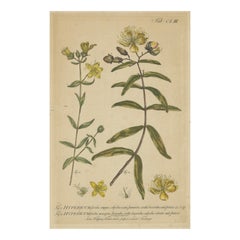
Exquisite 1755 St. John's Wort Botanical Engraving by Philip Miller

Exquisite 1755 St. John's Wort Botanical Engraving by Philip Miller

Located in Langweer, NL

A copper engraving of Hypericum plants, commonly known as St. John's Wort, from Philip Miller's influential work, *Figures of the Most Beautiful, Useful and Uncommon Plants Described...

Category

Antique 1750s Prints

Materials

Paper

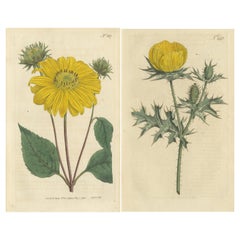
Set of 2 Antique Botany Prints - Prickly Poppy - Perennial Sunflower

Set of 2 Antique Botany Prints - Prickly Poppy - Perennial Sunflower

Located in Langweer, NL

Set of two antique botany prints. It shows the Mexican Argemone (or Prickly Poppy_ and the Many-Flowered or Perennial Sunflower. These prints originate from 'The Botanical Magazine; ...

Category

Antique Late 18th Century Prints

Materials

Paper

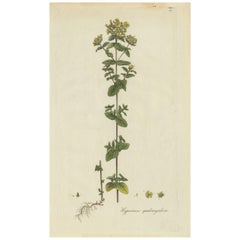
Antique Botany Print of a Species of St. Johnswort by Curtis, circa 1777

Antique Botany Print of a Species of St. Johnswort by Curtis, circa 1777

Located in Langweer, NL

Antique botany print titled 'Hypericum Quadrangulum'. Hand colored engraving of a species of St. Johnswort. This print originates from 'Flora Londinensis' by William Curtis.

Category

Antique Late 18th Century Prints

Materials

Paper

You May Also Like

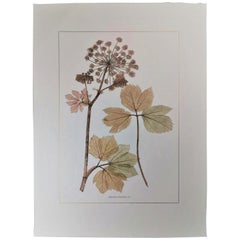
Italian Contemporary Hand Painted Botanical Print Representing Apiaceous Plants

Italian Contemporary Hand Painted Botanical Print Representing Apiaceous Plants

Located in Scandicci, Florence

Elegant hand-watercoloured print representing Imperatoria Ostruthium, a flowering plant belonging to the family Apiaceae, painted with notes of antique rose and light blue color shad...

Category

21st Century and Contemporary Italian Prints

Materials

Paper

Italian Contemporary Hand Painted Botanical Print  "VI° Feuilles de Fleurs"

Italian Contemporary Hand Painted Botanical Print "VI° Feuilles de Fleurs"

Located in Scandicci, Florence

Elegant hand-watercoloured print representing "VI° Feuilles de Fleurs" a collection "Dessines par Carl et Gre es par Roubillac". This botanical style print is available in 2 differe...

Category

21st Century and Contemporary Italian Wallpaper

Materials

Paper

Italian Contemporary Hand Painted Botanical Blue Print "Papaver" 4 of 10

Italian Contemporary Hand Painted Botanical Blue Print "Papaver" 4 of 10

Located in Scandicci, Florence

Print from the Collection Botanique Bulbacee representing Papaver, enriched with blue colors and nuances of watercolor. Another different Bulbacee flowers prints are available to cr...

Category

21st Century and Contemporary Italian Decorative Art

Materials

Paper

Early 19th Century Botanical Engraving by John Curtis

Early 19th Century Botanical Engraving by John Curtis

Located in Seaford, GB

Early 19th Century Botanical Engraving by John Curtis – Hand Coloured Natural History Plate An original early 19th-century hand-coloured botanical engraving from the celebrated natural history publications of John Curtis (1791–1862), one of Britain’s most respected botanical and entomological illustrators. This beautifully detailed plate illustrates a flowering plant in scientific profile, showing bloom structure, leaves, buds, and root system with precision typical of early Victorian natural history illustration. Curtis’s work bridges science and art — created for study, yet prized today for its elegance and balance. These engravings formed part of the golden age of British botanical publishing, when artists collaborated with engravers and colourists to produce plates that were both accurate and visually refined. Each impression was printed from an engraved plate and then carefully coloured by hand, meaning no two examples are ever exactly identical. The composition has the clarity collectors seek: • Central botanical specimen • Naturalistic colour palette • Fine line engraving • Period scientific titling This makes it ideal as a single framed piece or as part of a gallery wall of antique botanical studies. About John Curtis John Curtis was a leading figure in British natural history illustration. He is best known for British Entomology and botanical works that combined taxonomic accuracy with graceful composition. His engravings are held in major museum collections and remain highly collectible in the decorative arts market. Period Early 19th century, circa 1820–1840. Technique Copperplate engraving with original hand colouring on laid paper. Condition Good antique condition consistent with age. Light toning and minor handling marks may be present, as expected with early 19th-century works on paper. Please see the images. Why Collect Curtis Botanical Prints...

Category

Antique Early 19th Century British George III Prints

Materials

Paper

19th Century Watercolor Botanical Illustration for a Hortus Botanicus

19th Century Watercolor Botanical Illustration for a Hortus Botanicus

Located in South Paris, ME

This superb original botanical watercolor is from a manuscript entitled Hortus Botanicus which illustrated plants according to the Linnaean system and Willdenow’s revisions. The manu...

Category

Antique Early 18th Century Austrian Regency Paintings

Materials

Giltwood, Paint, Paper