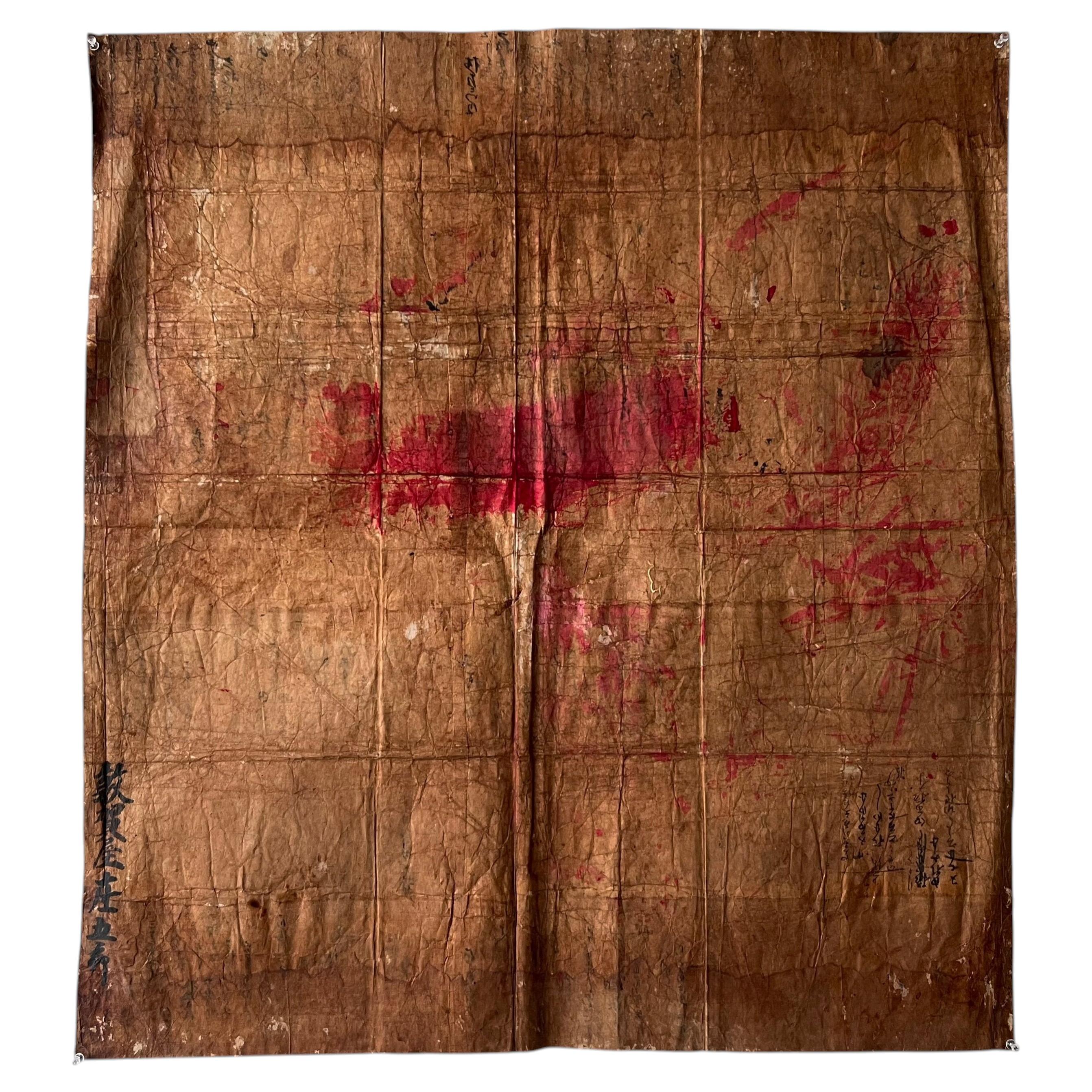
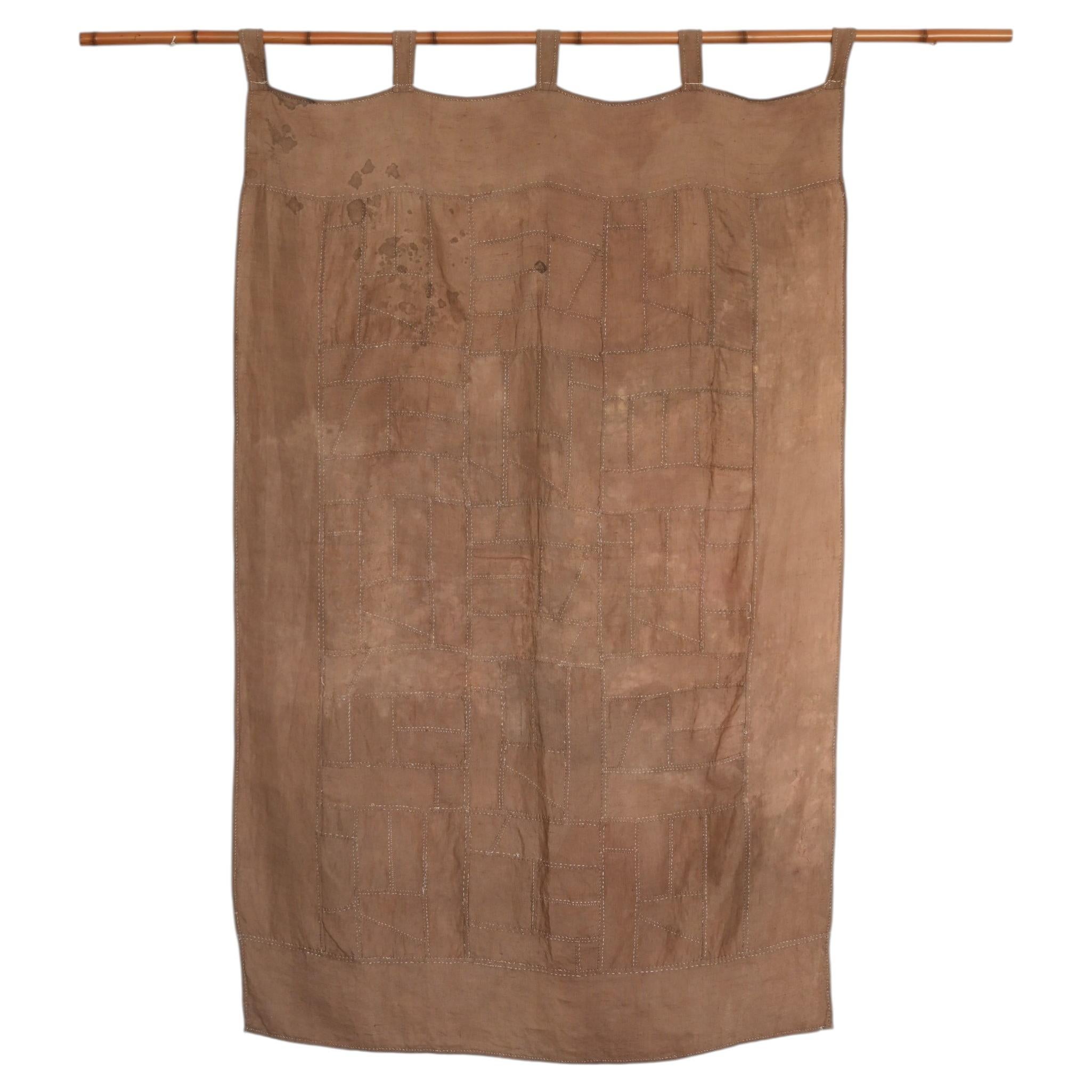
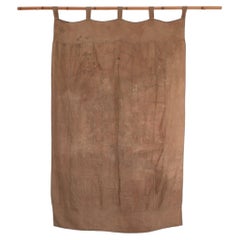
This large washi paper tapestry was created in Japan during the Meiji to Taisho period (late 19th to early 20th century). It is made of old washi paper (recycled scrap paper) and a bamboo pole fitted for hanging on the wall.
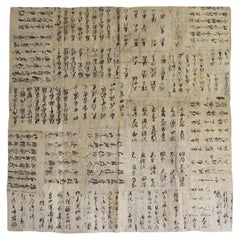
In Japan, at a time when paper was a precious resource, there was a deeply rooted culture of pasting together and reusing paper that had already served its original purpose rather than discarding it. This piece carries that culture strongly: numerous sheets of old paper have been carefully pieced together into one large surface. Looking closely at the characters that remain on the paper, some sections appear to be in the format of a purchase or stock ledger, suggesting that this was scrap paper once used as a notebook or working document in some kind of shop, rather than in a farmhouse. The dense brushstrokes, a mix of cursive and semi-cursive script, no longer read as information, and instead form an abstract rhythm and pattern that draws the eye. The natural coloring characteristic of washi paper, combined with the fading of age and the shadows along the pasted seams, gives the piece a depth reminiscent of contemporary art.
One of its defining features is that it has been fitted so it can be rolled onto a bamboo pole and hung on the wall. While similar recycled paper is often found without a bamboo pole, this piece is already finished as a ready-to-hang wall piece, making it easy to bring into a modern space right away. Please note that the bamboo pole shown in the photos is a replacement: the original old bamboo lacked sufficient strength, so it has been re-fitted with a newly prepared bamboo pole with an attractive dark brown tone.
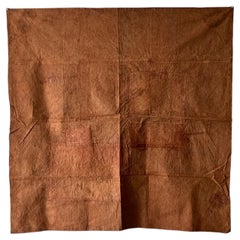
A washi paper tapestry of this size, in this condition, and already finished for wall hanging, is genuinely difficult to come across. We have handled similar pieces with what appears to be a similar origin before, but pieces with this much presence are rare, and we honestly cannot say when we might come across another. Simply hanging it on a wall transforms the impression of a space and gives it a commanding presence; it blends surprisingly well with minimalist interiors, traditional Japanese spaces, and international interiors alike. It pairs especially well with solid wood slab tables, well-worn old wooden furniture, iron-legged chairs, or exposed concrete spaces—settings that celebrate the character of raw materials—where its presence is only enhanced. Hung alone in a gallery-like space with generous negative space, it can anchor a room much like a painting. The color of the washi paper and the bleeding of the ink also differ between the front and back, so the impression changes completely depending on which side is displayed, offering a uniquely enjoyable way to experience this piece.
The paper itself has a solid thickness that gives a real sense of durability as a material, so it can be hung on the wall with peace of mind. As for condition, there is one small tear near the top, but there is no risk of it spreading further, and aside from that there is no notable damage—overall, this is a fairly good condition for this type of item. We wholeheartedly recommend this piece to anyone looking for a work with a quiet yet powerful presence that can become the centerpiece of a room.
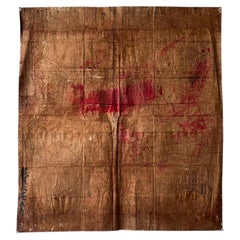
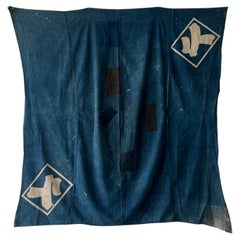
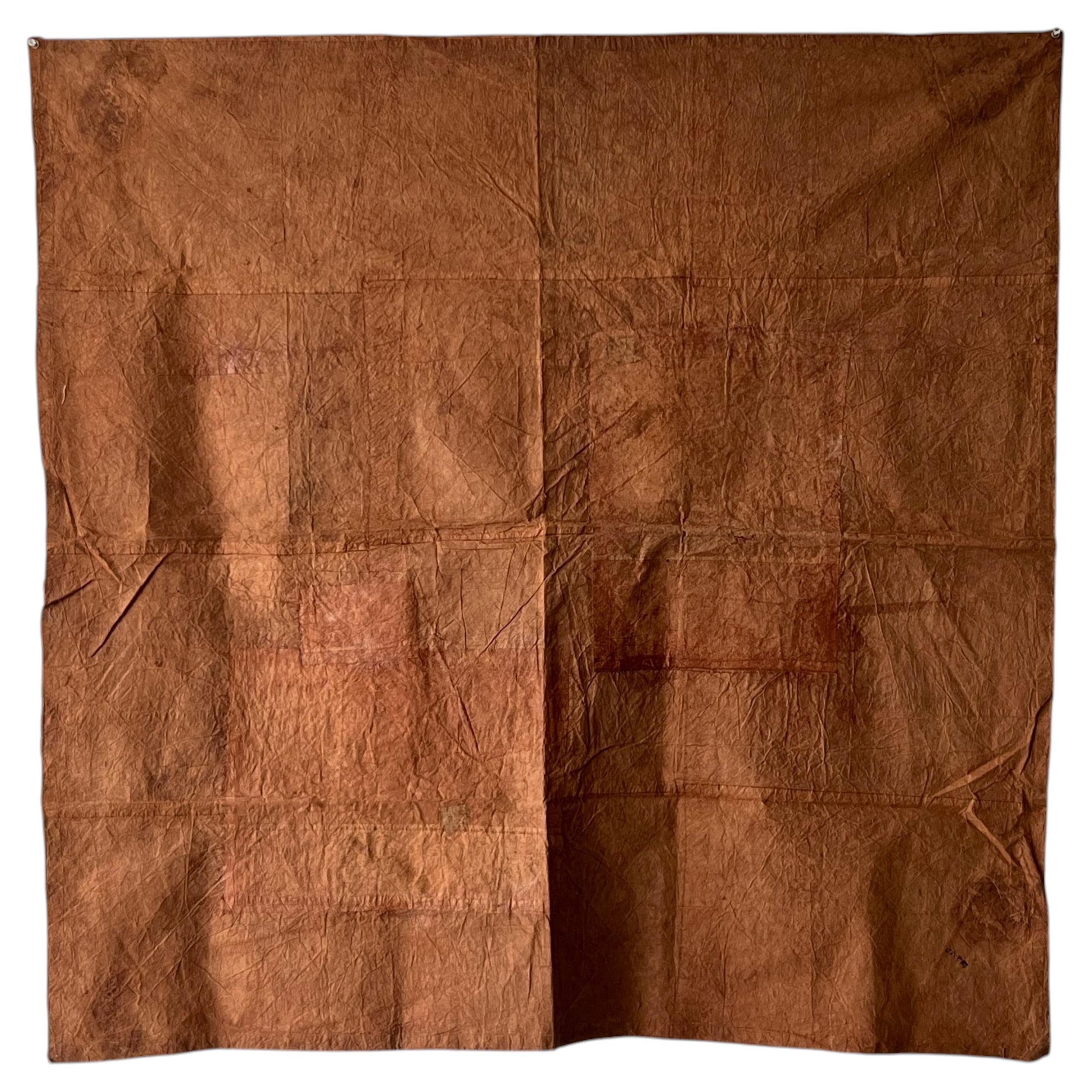
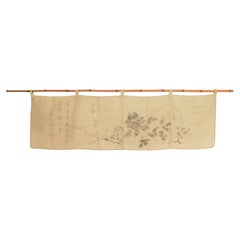
Note: The second photo is a display image created using generative AI. Please view it as a reference for how the product might be displayed.
Size: W201cm × D0.1cm × H173cm
Weight: 2.35kg
Item No.: OB343
[Our Social Role]
--------------------------------------------------------------------------------------------------------
We are a specialized team dealing in antiques and vintage items, comprised of stores based on three distinct brands. While focusing on Japanese items, we also offer a carefully curated selection of attractive goods from around the world—each evoking the culture and history of its country of origin.
Unlike the traditional Japanese antique furniture and art that have been appreciated overseas until now, we shine a light on the tools and furniture that were used for many years in ordinary Japanese homes and farmhouses. These objects have gained a unique charm over time, their beauty deepened by the history accumulated through daily life. In today's world, however, many of these precious items are discarded during home demolitions. We are committed to reassessing their value and passing them on to future generations.
Drawing from our extensive experience—having seen tens of thousands of items through direct purchases, markets, and auction houses—we carefully select and present only the most captivating pieces. This is something made possible only through the years of knowledge and expertise we have cultivated.
Rather than focusing on the widely known facets of Japanese art and culture, we highlight the subtle beauty born from the everyday life of common people. It is this rediscovered beauty, steeped in history, that we strive to share with the world.
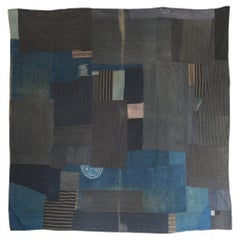
![Japanese antique large-format woven tapestry【saki-ori】 / Another [Boro]](https://a.1stdibscdn.com/japanese-antique-large-format-woven-tapestrysaki-ori-early-20th-century-for-sale/f_54872/f_496985221776397386962/f_49698522_1776397387284_bg_processed.jpg)
![Japanese antique large-format woven tapestry【saki-ori】 / Another [Boro]](https://a.1stdibscdn.com/japanese-antique-large-format-woven-tapestrysaki-ori-early-20th-century-for-sale/f_54872/f_496985221776397386962/f_49698522_1776397387284_bg_processed.jpg?width=240)