Want more images or videos?
Request additional images or videos from the seller
1 of 18

Japanese Antique "BORO" Edo period 1800s-1860s / Rag Abstract Art Wabi-Sabi

$2,800
£2,110.96
€2,457.22
CA$3,939.17
A$3,962.23
CHF 2,308.68
MX$48,273.95
NOK 26,551.33
SEK 27,236.34
DKK 18,366.09

About the Item

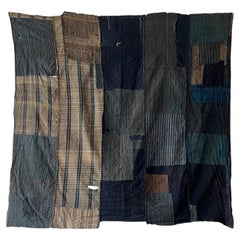
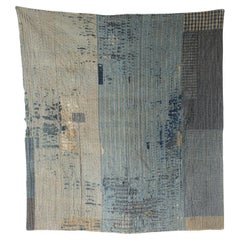
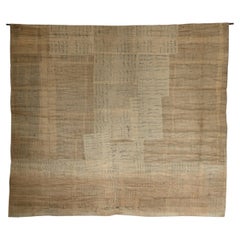
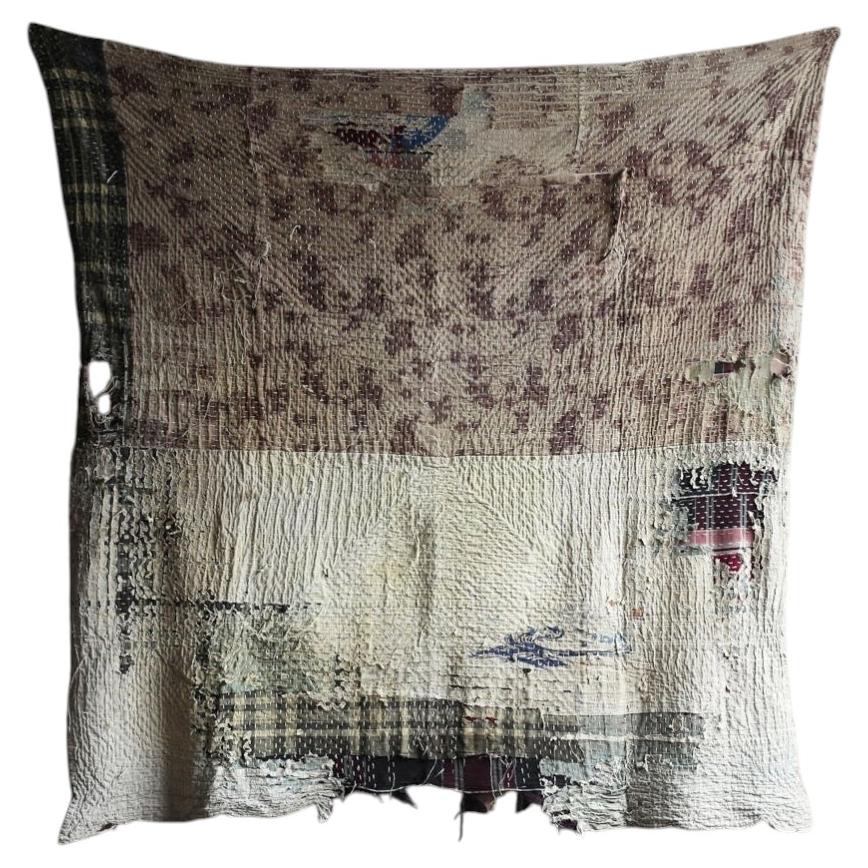
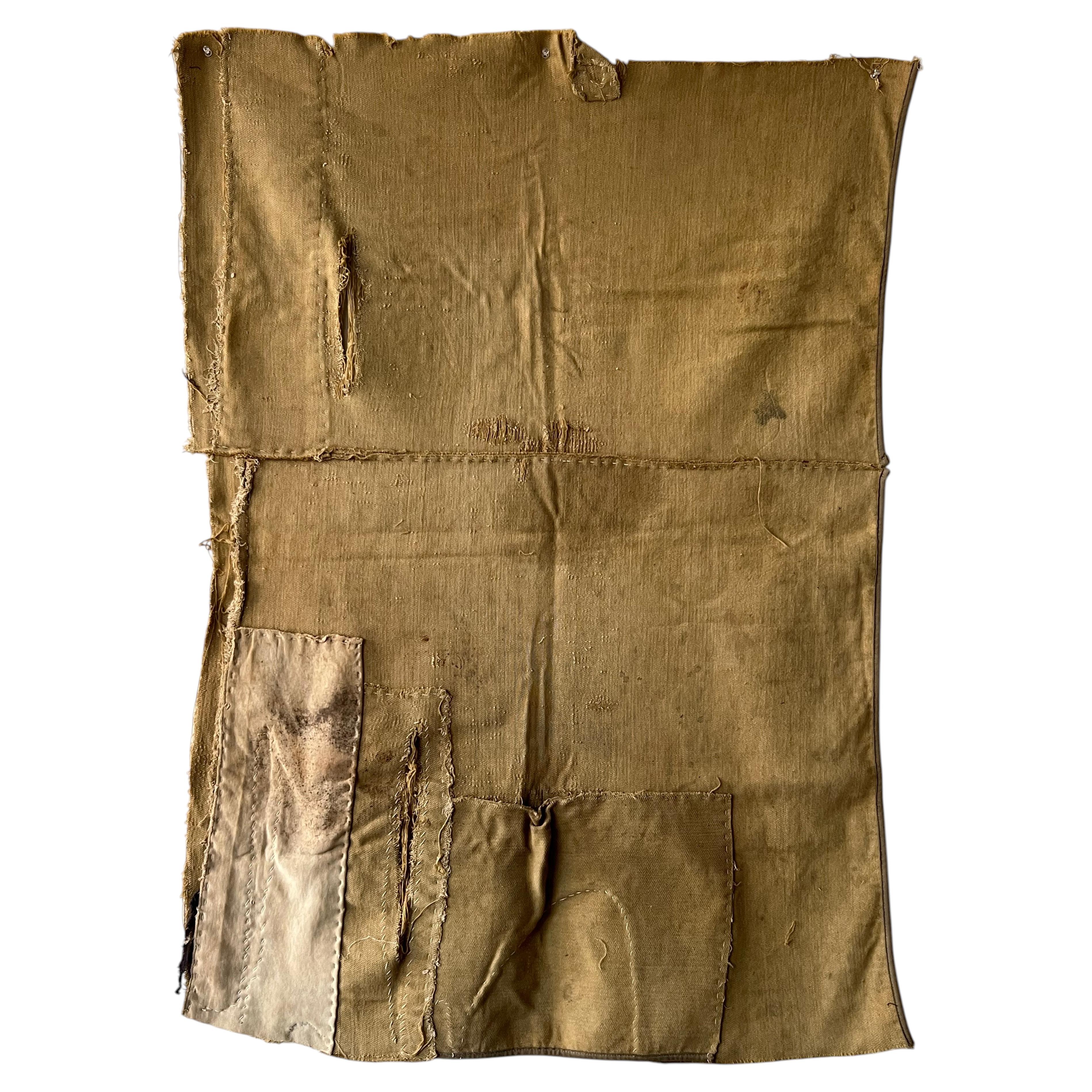
This is an old Japanese BORO textile, dating back to the Edo period (1800s–1860s). It is a rare cloth that has survived through a long span of time. The interplay of indigo and natural white—layered, patched, and worn through generations—is far more than a record of mending; it is a testament to how traces of daily life can transform into beauty. BORO represents a uniquely Japanese textile culture. BORO (rag cloth) refers to textiles that were repeatedly patched, stitched, and reinforced at a time when fabric was precious. Rather than discarding worn material, people repaired it with care—layering, sewing, and reusing it in daily life. This process embodies a deep respect for materials and the wisdom of a modest way of living. Today, the spontaneous visual harmony found in BORO is highly valued and reinterpreted around the world in art and design fields. This piece is remarkably large, measuring approximately 1620 mm × 1760 mm, and what is truly astonishing is its thickness—about 50 mm. In over twenty years as a buyer, I have never encountered a BORO of such substantial volume. This was originally used as a futon, with layers of cloth built up over time to survive harsh winters. Countless fabric fragments are stitched together, forming dimensional shadows and a presence so strong it draws the eye inward. The overall composition resembles an abstract painting. Deep indigo, light indigo, and natural cotton patches form an improvisational yet mysteriously cohesive rhythm. Simply hanging it on a wall transforms the atmosphere of the room. As an art piece, it stands out exceptionally and is highly recommended for collectors of textile art, folk craft, and those who appreciate wabi-sabi aesthetics. Tears, fraying threads, worn edges, and repeated repair marks are not flaws—they are a living record of time. They embody the wabi-sabi spirit, showing that beauty does not vanish even as materials age and decay. It has been washed and is ready for use. The piece will be folded and safely shipped from Japan. Folded size: approx. 870 mm × 400 mm × 200 mm. Weight: 10.5 kg _______________________ Our Philosophy Objects always tell the truth. All I can do is just to face with them sincerely and give them deep affection as much as I can. There is no boundary of nationalities and of eras in beauty. But I think now is the time we choose 'Japanese style' and it will be the best way to remind us of what we are losing today and to question us about an essence of beauty again. I hope that you can touch the memories which the objects here have, feel and think of something invisible but exists undoubtedly.
  • Similar to:
    Axel Vervoordt (Designer)
  • Dimensions:
    Height: 69.3 in (176 cm)Width: 63.78 in (162 cm)Depth: 1.97 in (5 cm)
  • Style:
    Edo (Of the Period)
  • Materials and Techniques:
  • Place of Origin:
  • Period:
  • Date of Manufacture:
    1800s-1860s
  • Condition:
    Wear consistent with age and use.
  • Seller Location:
    Chōsei District Nagara, JP
  • Reference Number:
    1stDibs: LU10403247909142

More From This Seller

View All
Japanese Antique Wabi-Sabi Copper Panel 1860s-1920s / Abstract Art

Japanese Antique Wabi-Sabi Copper Panel 1860s-1920s / Abstract Art

Located in Chōsei District Nagara, JP

This is an antique Japanese copper-clad panel, constructed from a wooden core covered with thin sheets of copper, each individually secured with numerous small rivets and nails. Its ...

Category

Antique Late 19th Century Japanese Meiji Antiquities

Materials

Copper
Japanese Antique Small Door Wall Decoration 1860s-1900s / Abstract Art Wabi Sabi

Japanese Antique Small Door Wall Decoration 1860s-1900s / Abstract Art Wabi Sabi

Located in Chōsei District Nagara, JP

This is an old small window frame made in Japan. It was originally used as a traditional Japanese mud wall fixture. It dates back to the Meiji period (1860s-1900s) and has been in us...

Category

Early 20th Century Japanese Meiji Decorative Art

Materials

Bamboo, Cedar

Japanese Antique Wooden Board Wall Decoration 1860s-1900s / Wabisabi

Japanese Antique Wooden Board Wall Decoration 1860s-1900s / Wabisabi

Located in Chōsei District Nagara, JP

This is an antique Japanese work board. Despite its simple form, it possesses a powerful presence, bringing a quiet tension and deep sense of depth to any space. It is estimated to ...

Category

Early 20th Century Japanese Meiji Decorative Art

Materials

Cedar

Japanese Antique Wooden Lattice Panel 1900s-1940s / Wall Art Wabisabi

Japanese Antique Wooden Lattice Panel 1900s-1940s / Wall Art Wabisabi

Located in Chōsei District Nagara, JP

This is an old Japanese panel featuring a lattice design. The delicate vertical slats are arranged in an orderly rhythm, presenting a quiet yet tense beauty. It is believed to have o...

Category

Mid-20th Century Japanese Showa Decorative Art

Materials

Cedar

Japanese Antique Iron Plate Door 1860s-1900s / Low Table Sofa Table Wabi Sabi

Japanese Antique Iron Plate Door 1860s-1900s / Low Table Sofa Table Wabi Sabi

Located in Chōsei District Nagara, JP

This is an iron plate sliding door made in Japan. It is a rare door made in the Meiji period (1860s-1900s), and the craftsmanship of the time still lives on today. The structure is m...

Category

Early 20th Century Japanese Meiji Doors and Gates

Materials

Iron

Japanese Antique Wooden Carved Buddha 14th-16th century / Statue Wabi-Sabi

Japanese Antique Wooden Carved Buddha 14th-16th century / Statue Wabi-Sabi

By Axel Vervoordt

Located in Chōsei District Nagara, JP

This is a very old Japanese wooden Buddhist sculpture. It is believed to date back to the Muromachi period (14th–16th century) and has quietly existed alongside people’s prayers for ...

Category

Antique 16th Century Japanese Primitive Sculptures and Carvings

Materials

Cedar

You May Also Like

"BORO" Japanese Antique Indigo cotton&ramie Patchwork / 19th century Wabi-Sabi

"BORO" Japanese Antique Indigo cotton&ramie Patchwork / 19th century Wabi-Sabi

Located in 足利市, JP

This extraordinary, large-scale Japanese antique Boro textile—dating from the late Edo (Bakumatsu) to the Meiji period (mid-to-late 19th century)—originated from Yamagata Prefecture ...

Category

Antique Mid-19th Century Japanese Edo Textiles

Materials

Cotton, Linen, Hemp, Natural Fiber

Japanese Antique Boro Textile 1900s-1940s / Abstract Art Wabi Sabi

Japanese Antique Boro Textile 1900s-1940s / Abstract Art Wabi Sabi

Located in Sammu-shi, Chiba

BORO A piece that has been used and repaired countless times over many years. The red-based side features a rich landscape that evokes the layers of time, with faded checkered patt...

Category

Early 20th Century Japanese Meiji Textiles

Materials

Fabric

Japanese Antique Boro Textile 1900s-1940s / Abstract Art Wabi Sabi

Japanese Antique Boro Textile 1900s-1940s / Abstract Art Wabi Sabi

Located in Sammu-shi, Chiba

BORO A piece imbued with a rich history, born from countless repairs and years of use. One side features delicate sashiko stitching over a faded, natural-colored fabric. The diffe...

Category

Early 20th Century Japanese Meiji Textiles

Materials

Fabric

Boro0 Japanese Antiques Primitive Art BORO Indigo-dyed patchwork Old Cloth

Boro0 Japanese Antiques Primitive Art BORO Indigo-dyed patchwork Old Cloth

Located in Niiza, JP

Material: cotton Width 1550 x Height 1700 x Depth 10 mm (about) weight 5 kg estimate Packaging (It will be rolled or folded and shipped in bubble wrap and cardboard.) 50cm x 50cm x...

Category

Antique Early 19th Century Japanese Textiles

Materials

Cotton

Antique Japanese Boro Cotton Patchwork Textile / Indigo-dyed fabric tapestry

Antique Japanese Boro Cotton Patchwork Textile / Indigo-dyed fabric tapestry

Located in Sammu-shi, Chiba

This is a Japanese boro (patched cotton textile) that was actually used in a farmhouse in Showa Village, in the Okuaizu region of Fukushima Prefecture. It is thought to date from the...

Category

Early 20th Century Japanese Taisho Textiles

Materials

Cotton

Antique Japanese washi paper tapestry /Meiji-Taisho period/ Wabi-sabi art piece

Antique Japanese washi paper tapestry /Meiji-Taisho period/ Wabi-sabi art piece

Located in Sammu-shi, Chiba

This large washi paper tapestry was created in Japan during the Meiji to Taisho period (late 19th to early 20th century). It is made of old washi paper (recycled scrap paper) and a b...

Category

Early 20th Century Japanese Taisho Tapestries

Materials

Bamboo, Paper