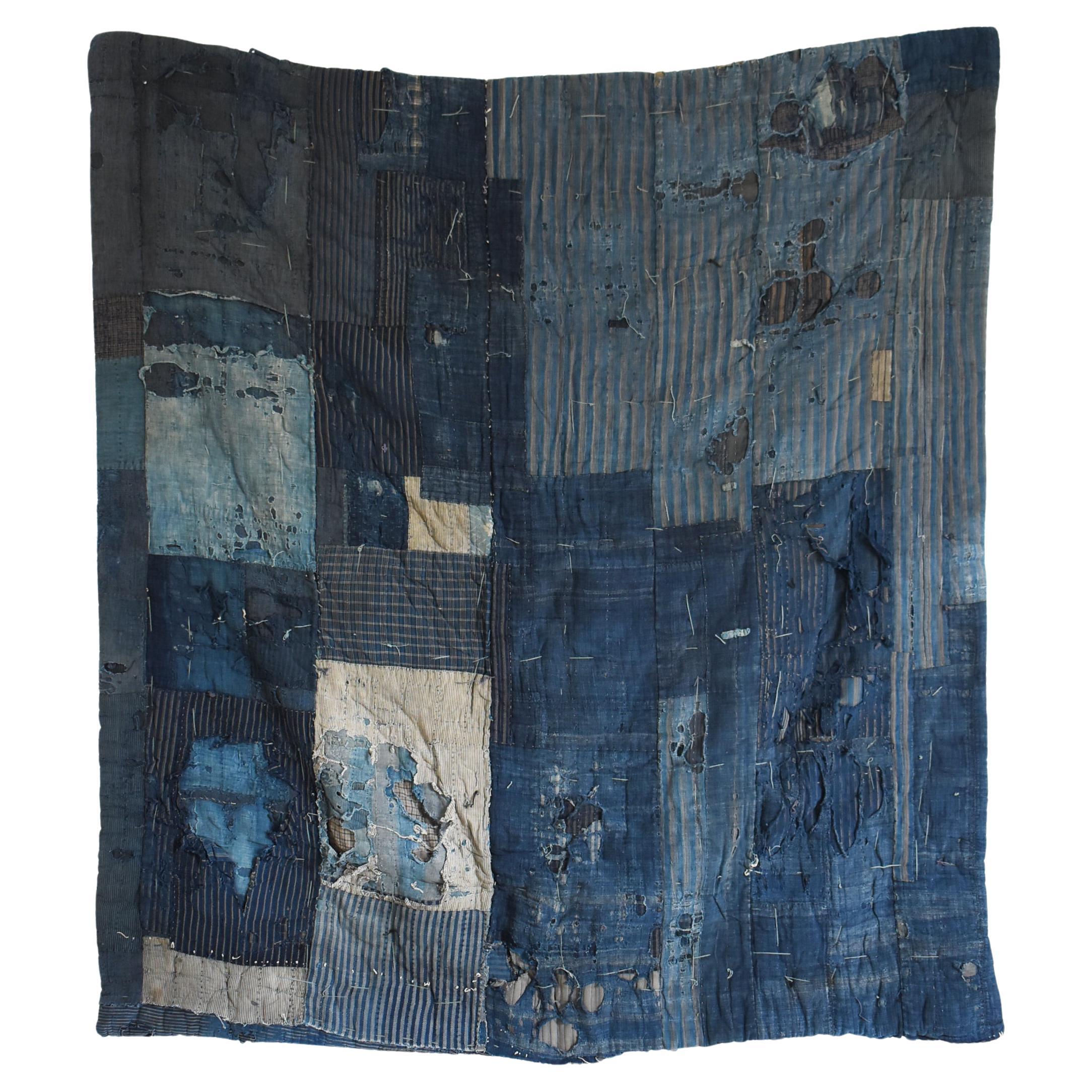
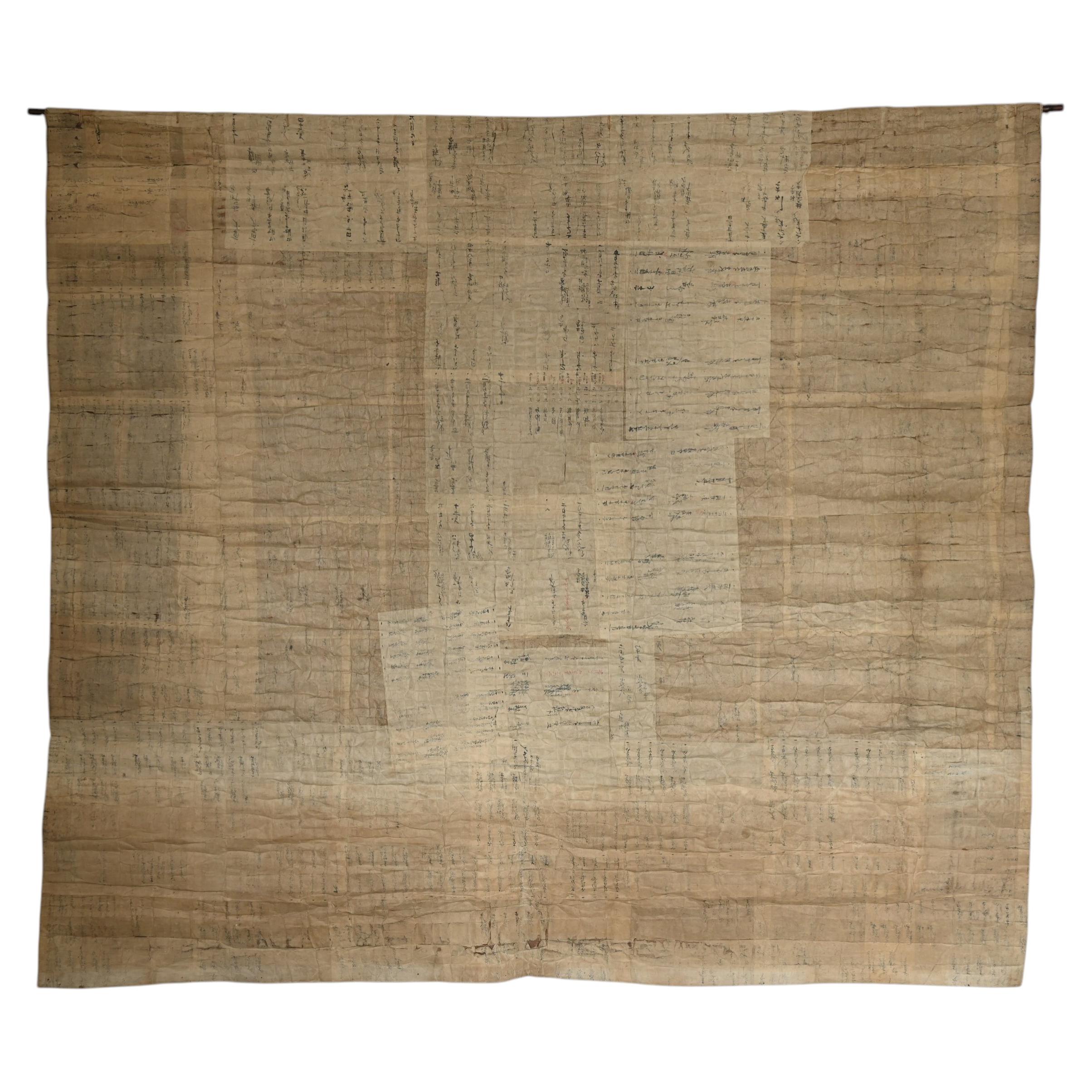
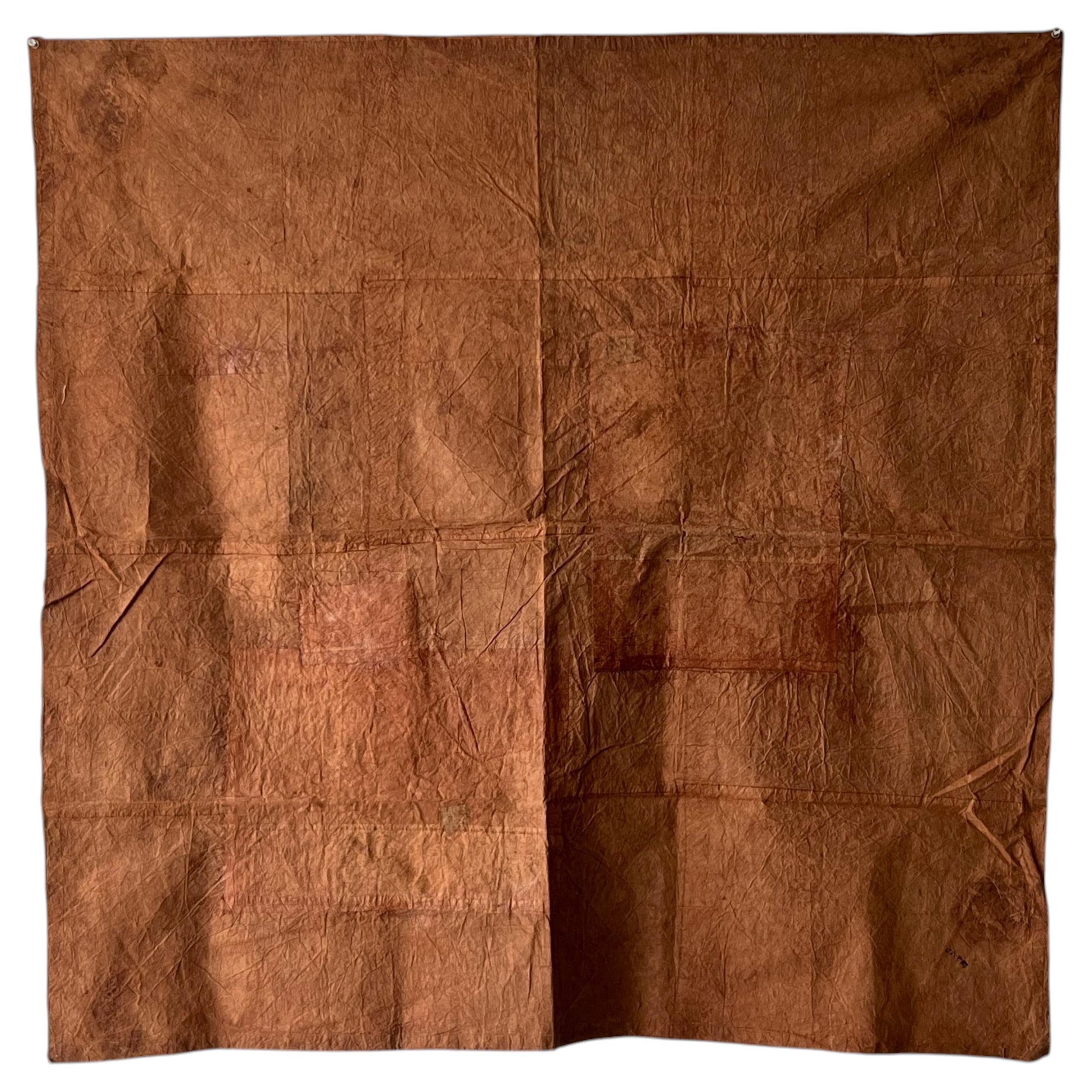
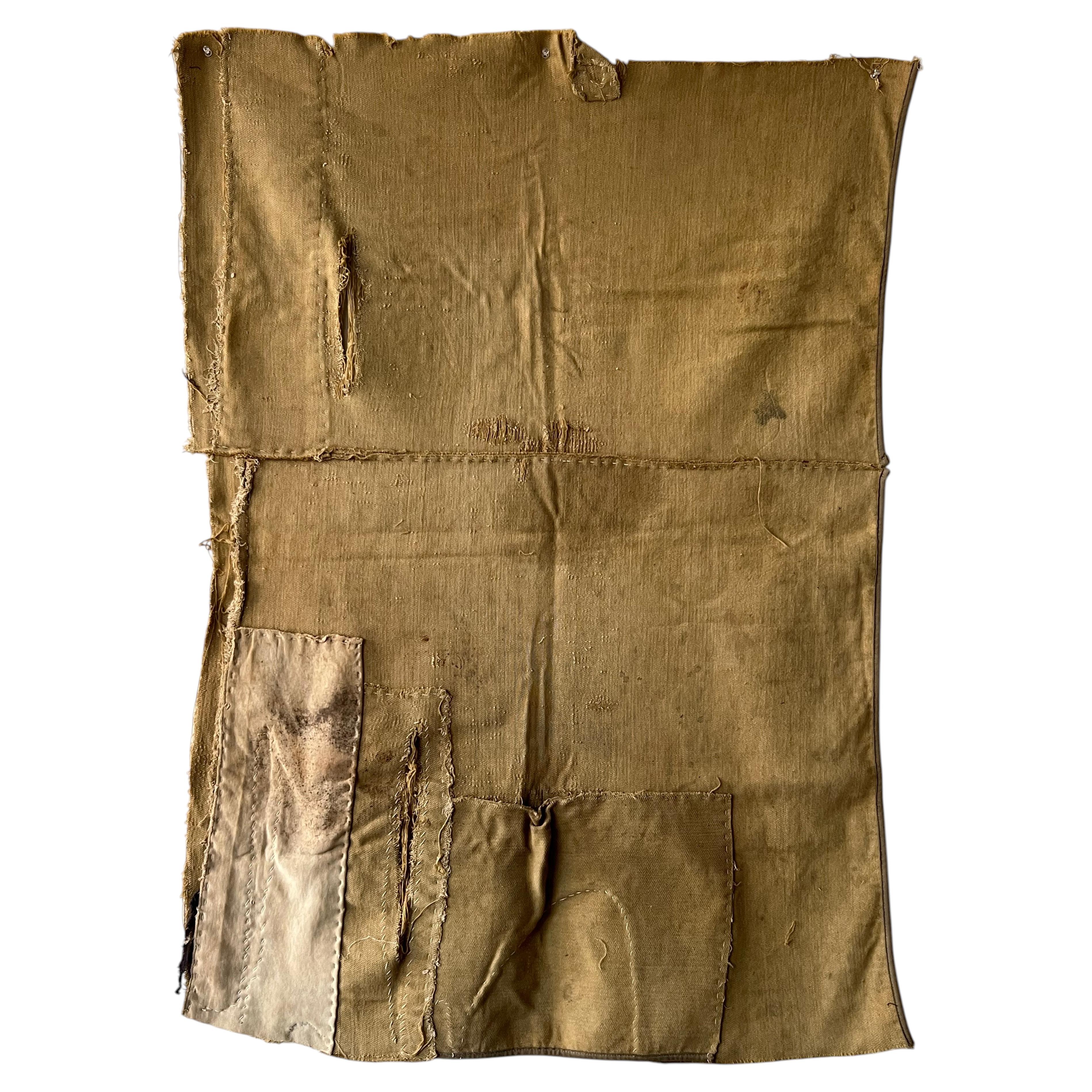
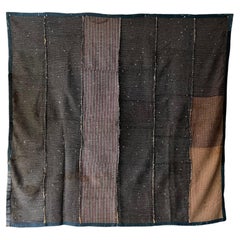
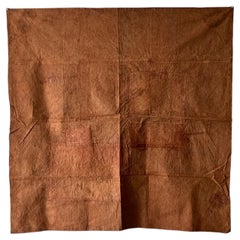
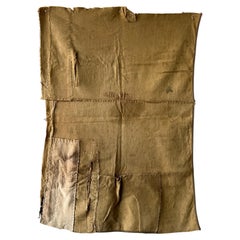
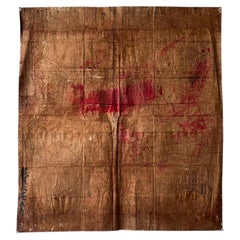
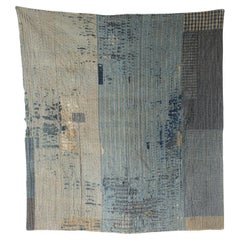
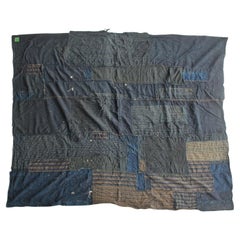
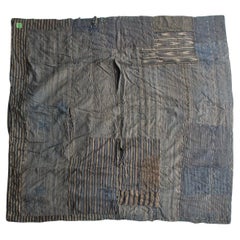
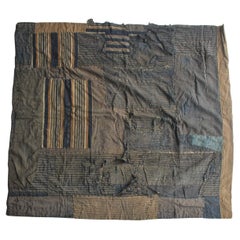
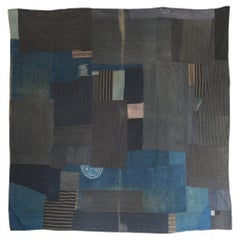
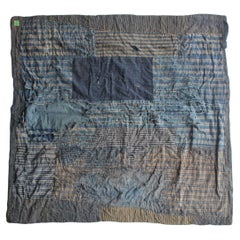
This extraordinary, large-scale Japanese antique Boro textile—dating from the late Edo (Bakumatsu) to the Meiji period (mid-to-late 19th century)—originated from Yamagata Prefecture in the Tohoku region of Northern Japan. Measuring an impressive 171 x 161 cm, this piece serves as a magnificent, museum-quality wall tapestry that bridges historical necessity with contemporary abstract art.
What sets this Boro apart is its incredible materiality and arresting visual rhythm. Woven from a blend of indigenous cotton and wild ramie (Choma), it tells the story of survival in Tohoku’s harsh winters during a period of immense historical transition. As visible in the ramie fibers retain a subtle, breathtaking metallic luster when they catch the light, creating a stark, poetic contrast with the deep indigo cotton.
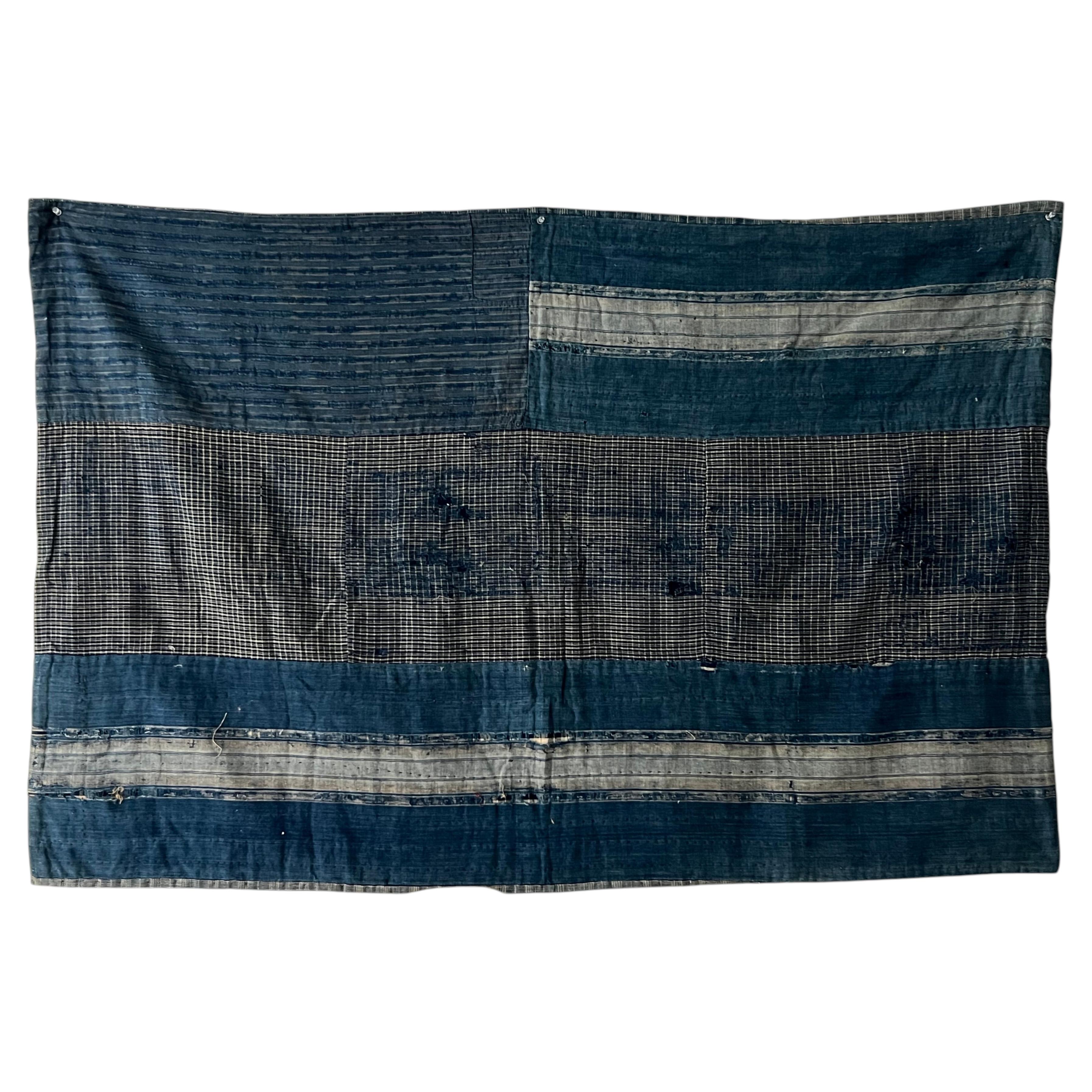
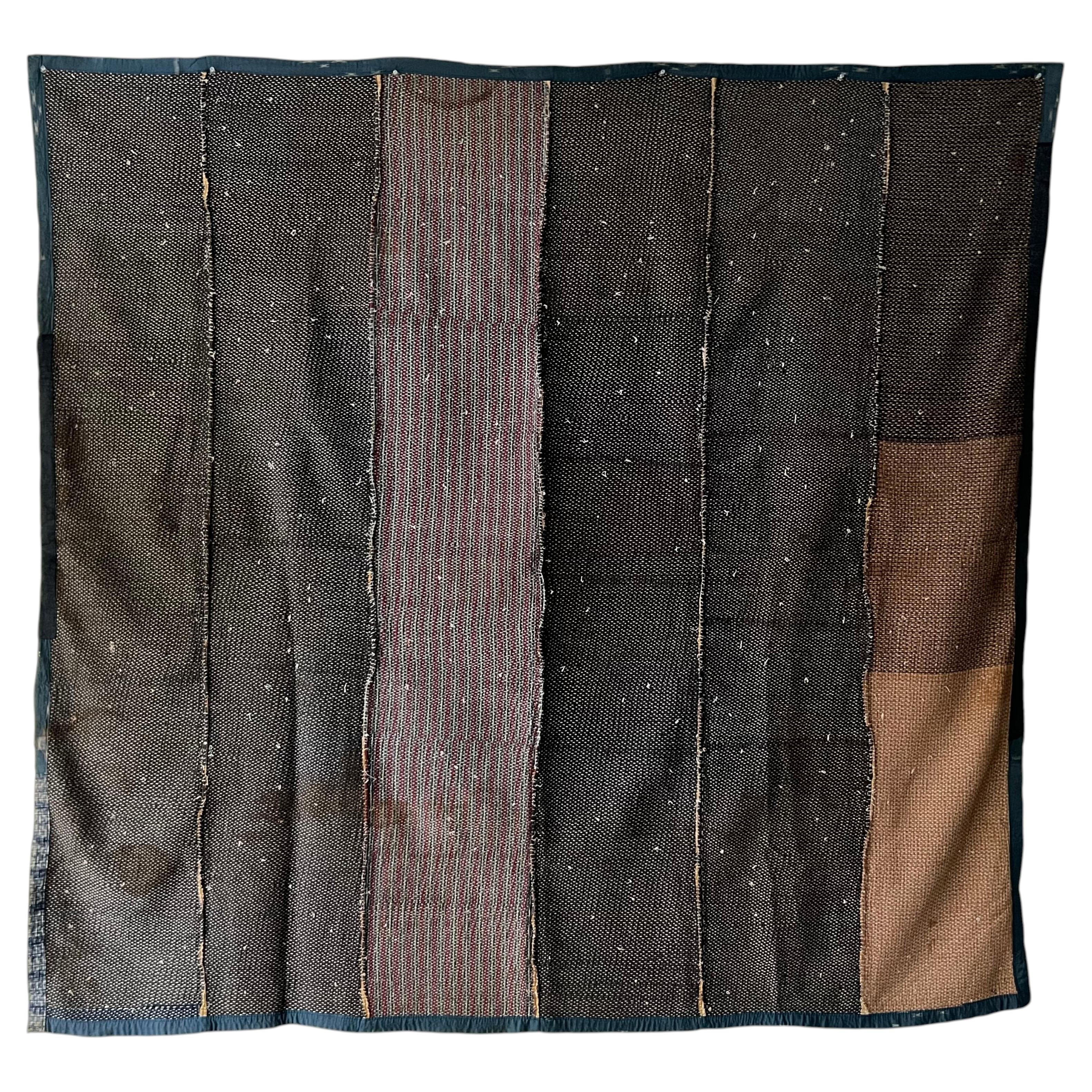
Furthermore, this piece offers two entirely different aesthetic experiences on its front and back sides, allowing it to be displayed as a reversible masterpiece. The front side is a dynamic patchwork quilt composed of various indigo-dyed stripes, solids, and checked patterns stitched together with precision(SASHIKO). The reverse side offers a bolder, minimalist composition featuring large horizontal bands of deep indigo and earth-toned striped panels.
Authentic Boro textiles of this substantial size and exceptional compositional balance dating back to the Bakumatsu and Meiji eras are becoming exceedingly rare on the global art market. In Western interior design, Boro is highly sought after as a form of "accidental abstract expressionism"—resembling the modernist canvases of Mark Rothko or early avant-garde patchworks, yet born from generations of mindful repair and utility. Its combination of profound nineteenth-century history, large dimensions suitable for prominent walls, and dual-sided versatility makes it a premier investment for high-end collectors and interior designers.
The textile possesses a tactile softness and a beautiful color balance. The shades of natural indigo range from deep midnight blue to faded denim, punctuated by warm, earthy brown checks and stripes.
In terms of physical attributes, the textile is relatively thin, measuring approximately 0.5 cm in thickness. Because it is not bulky or overly heavy, it is exceptionally lightweight for its size, making it remarkably easy and safe to hang on any wall without causing structural strain.
Regarding its condition, this piece is in excellent antique state for a historical Boro from this early period. As an item mended over decades, it features intentional raw edges, fraying, historical abrasions, and patches , all of which are considered essential to its character rather than flaws. It has been professionally cleaned and stabilized. Please note that a slight, characteristic antique scent remains, which is natural for organic fabrics of this age. It is ready to be immediately displayed as a wall tapestry.
Boro (literally "rags" or "scraps") was born out of extreme necessity in the impoverished, freezing northern regions of Japan like Yamagata. During the late Edo and Meiji periods, cotton was a precious luxury that could not grow locally in the north. Every scrap of fabric—whether cotton brought by trading ships (Kitamaebune) or hand-spun hemp and ramie—was painstakingly saved, layered, and stitched together using Sashiko embroidery to extend its life over generations. Today, Boro is celebrated globally as a profound symbol of Mottainai (the philosophy of wastefulness prevention) and a stunning example of utilitarian textile art.
Material: Indigo-dyed antique Cotton and wild Ramie (Choma)
Period: Late Edo (Bakumatsu) to Meiji Period (Mid-to-Late 19th Century)
Provenance: Yamagata Prefecture, Tohoku Region, Japan
Dimensions: 171 x 161 cm (approx. 67.3 x 63.4 inches)
Thickness: Approximately 0.5 cm (0.2 inches) — Lightweight and easy to hang.
Condition Note: Retains a slight antique scent typical of historical textiles. Features natural wear, abrasions, and patches essential to true Boro.
Display Note: Equipped for use as a wall tapestry. Best displayed hung away from continuous direct sunlight to preserve the organic indigo dyes and antique plant fibers.