Mid-20th Century Sculptures

to
139
617
155
102
38
83
Overall Width
to
Overall Height
to
225
753
4,012
17,217
102
46
114
120
68
157
367
371
549
539
80
364
102
55
29
21
20
17
6
5
4
2
286
197
176
133
133
115
76
61
59
58
54
41
38
33
29
27
26
22
21
20
384
321
256
159
128
110
13
12
11
10
1
12
626
359
Period: Mid-20th Century
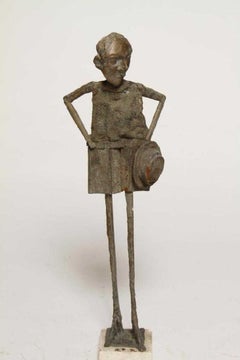
1960s Pop Art Unique Cast Bronze Sculpture Americana Folk Art William King

1960s Pop Art Unique Cast Bronze Sculpture Americana Folk Art William King

By William King (b.1925)

Located in Surfside, FL

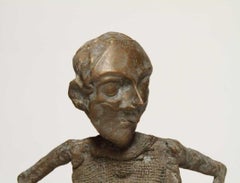
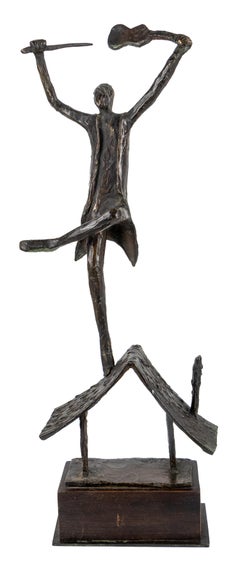
Mid-Century Modern wrought iron sculpture a person with oversize top, shorts, and carrying a hat, signed, artist's monogram and cipher, further mounted on a plaster base. 28" H. This a unique piece. It is interesting in that it speaks of a transition, leading into the later aluminum public pieces that kind of defined his work in the 70's. According to his estate this is most probably cast bronze. It might possibly be wrought iron.. William Dickey King was born in 1925 in Jacksonville, Florida and grew up in the Coconut Grove neighborhood of Miami. As a boy, William King made model airplanes and helped his father and older brother build furniture and boats. “I was 19, 20, my mother gave me a hundred bucks, says, ʻGet out of this state and don’t come back until you’re 65; there is nothing here for you,’ ” Bill King recalled in a video interview for the Smithsonian museum. He came to New York, where he attended the Cooper Union and began selling his early sculptures even before he graduated. He later studied with the sculptor Milton Hebald and traveled to Italy on a Fulbright grant. He was a contemporary, at the Cooper Union, of Alex Katz and Lois Dodd, his first wife, and remained close in many ways to their common aesthetic grounding, shared also with younger sculptors such as Red Grooms and Marisol Escobar. The hallmark of King’s early work was radical experiment keeping company with social connection and hedonism. The mix of big, important, innovative ideas and immediate, sensory, in-the-moment experience was a kind of visual jazz. For this was not just the time of Franz Kline’s big open defiant brushstrokes and Jackson Pollock’s all-over mists of intricately drooling line, but of Charlie Parker and Dizzy Gillespie. If we look at the works that King made in the early 1950s when he got back from his Fulbright to Italy we see free, experimental, open forms that take their cue from jazz as much as art in their fusion of virtuosity and cool.American sculptor King is most noted for his long-limbed figurative public art sculptures depicting people engaged in everyday activities such as reading or conversing. He created his busts and figures in a variety of materials, including clay, wood, metal, and textiles. Mr. King worked in clay, wood, bronze, vinyl, burlap and aluminum. He worked both big and small, from busts and toylike figures to large public art pieces depicting familiar human poses — a seated, cross-legged man reading; a Western couple (he in a cowboy hat, she in a long dress) holding hands; a tall man reaching down to tug along a recalcitrant little boy; a crowd of robotic-looking men walking in lock step. Mr. King’s work often reflected the times, taking on fashions and occasional politics. In the 1960s and 1970s, his work featuring African-American figures (including the activist Angela Davis, with hands cuffed behind her back) evoked his interest in civil rights. But for all its variation, what unified his work was a wry observer’s arched eyebrow, the pointed humor and witty rue of a fatalist. His figurative sculptures, often with long, spidery legs and an outlandishly skewed ratio of torso to appendages, use gestures and posture to suggest attitude and illustrate his own amusement with the unwieldiness of human physical equipment. His subjects included tennis players and gymnasts, dancers and musicians, and he managed to show appreciation of their physical gifts and comic delight at their contortions and costumery. His suit-wearing businessmen often appeared haughty or pompous; his other men could seem timid or perplexed or awkward. Oddly, or perhaps tellingly, he tended to depict women more reverentially, though in his portrayals of couples the fragility and tender comedy inherent in couplehood settled equally on both partners. His first solo exhibit took place in 1954 at the Alan Gallery in New York City. William Dicky King was elected to the American Academy of Arts and Letters in 2003, and in 2007 the International Sculpture Center honored him with the Lifetime Achievement in Contemporary Sculpture Award. Mr. King’s work is in the collections of the Metropolitan Museum of Art, Guggenheim Museum, Whitney Museum and the Museum of Modern Art in New York and the Hirshhorn Museum at the Smithsonian American Art Museum in Washington, among other places, and he had dozens of solo gallery shows in New York and elsewhere. Reviews of his exhibitions frequently began with the caveat that even though the work was funny, it was also serious, displaying superior technical skills, imaginative vision and the bolstering weight of a range of influences, from the ancient Etruscans to American folk art to 20th-century artists including Giacometti, Calder and Elie Nadelman. The New York Times critic Holland Cotter once described Mr. King’s sculpture as “comical-tragical-maniacal,” and “like Giacometti conceived by John Cheever.” From an article by David Cohen "In a career that ran in tandem with the hegemony of formal abstraction in sculpture, Bill King inevitably struggled with the prejudice that sculpture full of humanity and humor can’t be quite as serious as sculpture devoid of them. But the tide has clearly turned in ways that ought to work in King’s favor, with an increasing number of sculptors, fêted internationally, who are producing work that looks remarkably close in spirit, if not quite as regal in sheer mastery of form, as his own. When art historians of the future connect the dots of modern sculpture then artists like Franz West, Stephan Balkenhol, Huma Bhabha...

Category

Pop Art Mid-20th Century Sculptures

Materials

Bronze

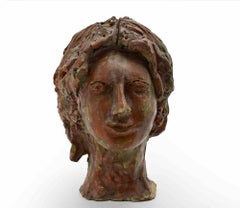
Head of Woman
Head of Woman

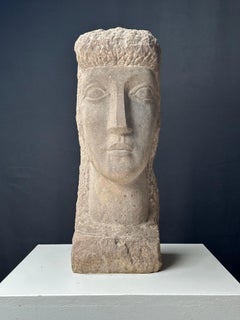
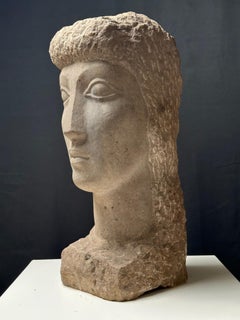
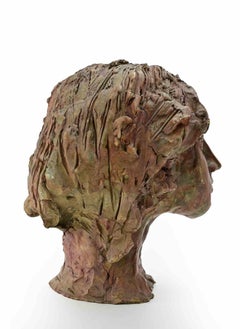
Mark MorrisonHead of Woman, ca. 1940

$6,000Sale Price|50% Off

Head of Woman

By Mark Morrison

Located in Wilton Manors, FL

Mark Morrison (1895-1964) Head of Woman , ca. 1950 Carved stone 7.75" wide, 9" deep, height is 20 7/8" Signed at base. Provenance: Estate of Mrs. Mark Morrison. Born: Kingf...

Category

Cubist Mid-20th Century Sculptures

Materials

Granite

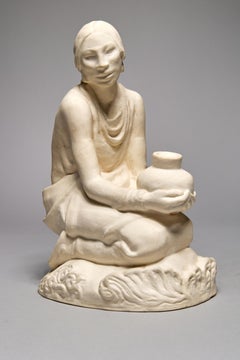
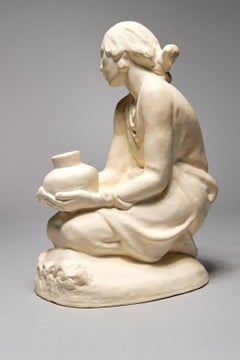
Relining Nude (WG6)
Relining Nude (WG6)

Relining Nude (WG6)

By Waylande Gregory

Located in Wilton Manors, FL

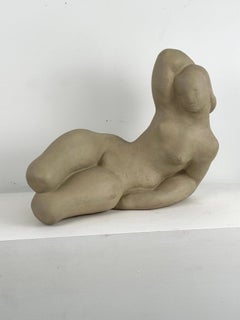
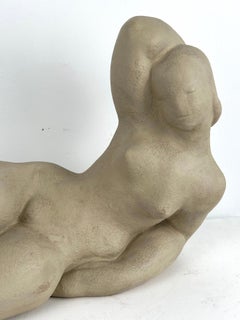
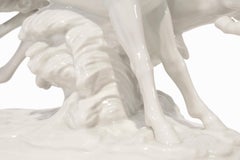
Waylande Gregory (1905-1971). Nude Reclining, ca. 1950's. Painted composite cast from original sculpted in 1930's. Casting sanctioned and approved by the artist during his lifetime in partnership with MPI, Museum Pieces Incorporated. Very few examples were produced and even fewer survive. Waylande Gregory was considered a major American sculptor during the 1930's, although he worked in ceramics, rather than in the more traditional bronze or marble. Exhibiting his ceramic works at such significant American venues for sculpture as the Whitney Museum of American Art in New York City and at the venerable Pennsylvania Academy of the Fine Arts in Philadelphia, he also showed his ceramic sculptures at leading New York City galleries. Gregory was the first modern ceramist to create large scale ceramic sculptures, some measuring more than 70 inches in height. Similar to the technique developed by the ancient Etruscans, he fired his monumental ceramic sculptures only once. Gregory was born in 1905 in Baxter Springs, Kansas and was something of a prodigy. Growing up on a ranch near a Cherokee reservation, Gregory first became interested in ceramics as a child during a native American burial that he had witnessed. He was also musically inclined. In fact, his mother had been a concert pianist and had given her son lessons. At eleven, he was enrolled as a student at the Kansas State Teacher's College, where he studied carpentry and crafts, including ceramics. Gregory's early development as a sculptor was shaped by the encouragement and instruction of Lorado Taft, who was considered both a major American sculptor as well as a leading American sculpture instructor. In fact, Taft's earlier students included such significant sculptors as Bessie Potter Vonnoh and Janet Scudder. But, Taft and his students had primarily worked in bronze or stone, not in clay; and, Gregory's earliest sculptural works were also not in ceramics. In 1924, Gregory moved to Chicago where he caught the attention of Taft. Gregory was invited by Taft to study with him privately for 18 months and to live and work with him at his famed "Midway Studios." The elegant studio was a complex of 13 rooms that overlooked a courtyard. Taft may have been responsible for getting the young man interested in creating large scale sculpture. However, by the 1920's, Taft's brand of academic sculpture was no longer considered progressive. Instead, Gregory was attracted to the latest trends appearing in the United States and Europe. In 1928 he visited Europe with Taft and other students. "Kid Gregory," as he was called, was soon hired by Guy Cowan, the founder of the Cowan Pottery in Cleveland, Ohio, to become the company's only full time employee. From 1928 to 1932, Gregory served as the chief designer and sculptor at the Cowan Pottery. Just as Gregory learned about the process of creating sculpture from Taft, he literally learned about ceramics from Cowan. Cowan was one of the first graduates of Alfred, the New York School of Clayworking and Ceramics. Alfred had one of the first programs in production pottery. Cowan may have known about pottery production, but he had limited sculptural skills, as he was lacking training in sculpture. The focus of the Cowan Pottery would be on limited edition, table top or mantle sculptures. Two of the most successful of these were Gregory's Nautch Dancer, and his Burlesque Dancer. He based both sculptures on the dancing of Gilda Gray, a Ziegfield Follies girl. Gilda Gray was of Polish origin and came to the United States as a child. By 1922, she would become one of the most popular stars in the Follies. After losing her assets in the stock market crash of 1929, she accepted other bookings outside of New York, including Cleveland, which was where Gregory first saw her onstage. She allowed Gregory to make sketches of her performances from the wings of the theatre. She explained to Gregory, "I'm too restless to pose." Gray became noted for her nautch dance, an East Indian folk dance. A nautch is a tight, fitted dress that would curl at the bottom and act like a hoop. This sculpture does not focus on Gray's face at all, but is more of a portrait of her nautch dance. It is very curvilinear, really made of a series of arches that connect in a most feminine way. Gregory created his Burlesque Dancer at about the same time as Nautch Dancer. As with the Nautch Dancer, he focused on the movements of the body rather than on a facial portrait of Gray. Although Gregory never revealed the identity of his model for Burlesque Dancer, a clue to her identity is revealed in the sculpture's earlier title, Shimmy Dance. The dancer who was credited for creating the shimmy dance was also Gilda Gray. According to dance legend, Gray introduced the shimmy when she sang the Star Spangled Banner and forgot some of the lyrics, so, in her embarrassment, started shaking her shoulders and hips but she did not move her legs. Such movement seems to relate to the Burlesque Dancer sculpture, where repeated triangular forms extend from the upper torso and hips. This rapid movement suggests the influence of Italian Futurism, as well as the planar motion of Alexander Archipenko, a sculptor whom Gregory much admired. The Cowan Pottery was a victim of the great depression, and in 1932, Gregory changed careers as a sculptor in the ceramics industry to that of an instructor at the Cranbrook Academy in Bloomfield Hills, Michigan. Cranbrook was perhaps the most prestigious place to study modern design in America. Its faculty included the architect Eliel Saarinen and sculptor Carl Milles. Although Gregory was only at Cranbrook for one and one half years, he created some of his finest works there, including his Kansas Madonna. But, after arriving at Cranbrook, the Gregory's had to face emerging financial pressures. Although Gregory and his wife were provided with complimentary lodgings, all other income had to stem from the sale of artworks and tuition from students that he, himself, had to solicit. Gregory had many people assisting him with production methods at the Cowan Pottery, but now worked largely by himself. And although he still used molds, especially in creating porcelain works, many of his major new sculptures would be unique and sculpted by hand, as is true of Kansas Madonna. The scale of Gregory's works were getting notably larger at Cranbrook than at Cowan. Gregory left the surface of Kansas Madonna totally unglazed. Although some might object to using a religious title to depict a horse nursing its colt, it was considered one of Gregory's most successful works. In fact, it had a whole color page illustration in an article about ceramic sculpture titled, "The Art with the Inferiority Complex," Fortune Magazine, December, 1937. The article notes the sculpture was romantic and expressive and the sculpture was priced at $1,500.00; the most expensive sculpture...

Category

Art Deco Mid-20th Century Sculptures

Materials

Plaster

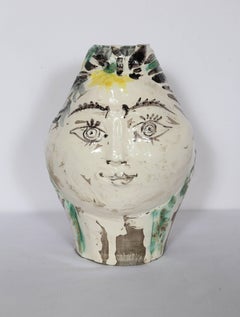
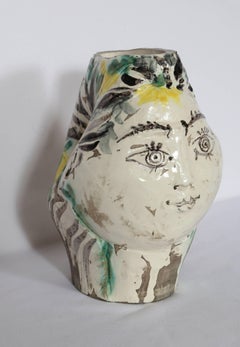
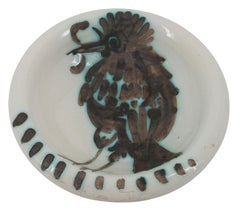
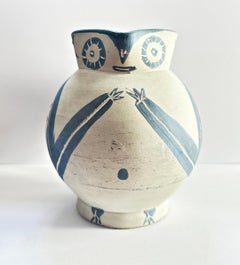
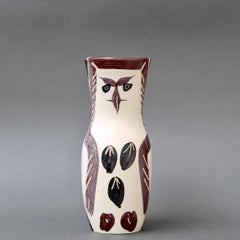
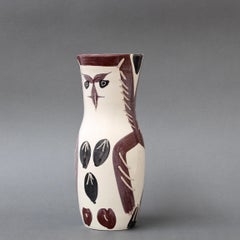
Ceramic Owl Vase (A.R. 135) from the Madoura Pottery by Pablo Picasso

Ceramic Owl Vase (A.R. 135) from the Madoura Pottery by Pablo Picasso

By Pablo Picasso

Located in London, GB

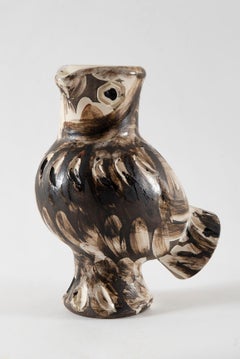
Mid-Century earthenware vase with painted owl decoration, by Pablo Picasso, Vallauris, France (1952). This is a vintage, limited edition earthenware creation, in a run of 500 (Edition Picasso) at the Madoura pottery...

Category

Modern Mid-20th Century Sculptures

Materials

Ceramic

Two Untitled Compositions

Two Untitled Compositions

Located in Wilton Manors, FL

Fumio Otani (Japanese, 1929-1995). Untitled and Untitled, ca, 1965. Cast and polished steel. Smaller composition measures 14.75 x 7.75 x 1.5 inches. Larger composition measures 16...

Category

Abstract Expressionist Mid-20th Century Sculptures

Materials

Steel

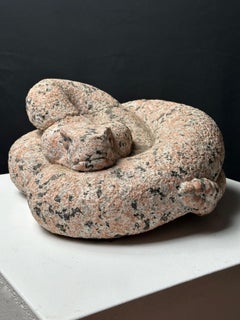
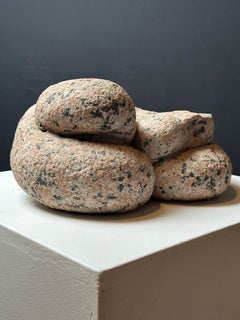
Rattlesnake
Rattlesnake

Mark MorrisonRattlesnake, ca. 1950

$3,000Sale Price|70% Off

Rattlesnake

By Mark Morrison

Located in Wilton Manors, FL

Mark Morrison (1895-1964) Rattlesnake , ca. 1950 Carved pink Texas granite 13.5" wide, 13" deep, height is 7" Repair and conservation to uppermost part of snake's body. Provena...

Category

Realist Mid-20th Century Sculptures

Materials

Granite

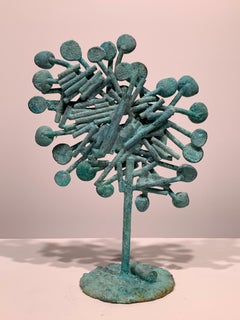
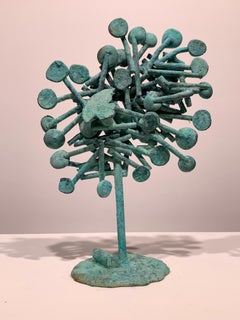
Untitled (Organic abstract bronze sculpture)

Untitled (Organic abstract bronze sculpture)

Located in Wilton Manors, FL

Klaus Ihlenfeld (b.1934) Untitled (Flower Form), sculpted phosphor bronze-coated copper sounding sculpture, early 1970s. Exhibited: Klaus Ihlenfeld - Recent Sculpture at Albright College - Campus Center Gallery from Feb. 18 - March 18, 1973.. Welded bronze. 15 h x 12.5 inches w. Signed with initial on base. Provenance: Albright College Museum collection. Excellent condition. Klaus Karl Otto Ihlenfeld. He was born in Berlin, Germany in 1934. He studied art at the Hochschule für Bildende Künste and completed graduate work with the metal sculptor Hans Uhlmann. He visited the US in 1957 for the first time living in Durham, NC, where he befriended Dr. W. R. Valentiner, the Rembrandt authority and Director of the Museum of Art, Raleigh, NC. Through this friendship in 1960 he met and worked with the metal sculptor Harry Bertoia in Barto, PA. He joined the Staempfli Gallery in NYC and entered in many group and one-man shows. He has been an Artist-in-Residence in Ogden, Utah; Huntington Museum of Art in West Virginia, Penn State University at University Park; the Colorado State University in Denver; and Shippensburg University. He has large commissions at Kutztown University, Pottstown Hospital, and a monumental relief sculpture at the Emigrant Savings Bank in NYC. He has traveled extensively in Spain, Greece, and Mexico. He is living and working on a farm in Barto, PA welding bronze and forged iron metal sculptures and painting watercolors. Group Shows: North Carolina Museum of Art in Raleigh, NC - 1957 Solomon R. Guggenheim Museum in New York City - 1962 Staempfli Gallery in New York City - 1962, 1964 and 1965 Gallery Ludwig Lange in West Berlin, Germany - 1977 Gallery Herbert Remmert and Dr. Barth in Dusseldorf in West Germany - 1981 Jack Savitt Gallery in Macungie, PA - 1981 and 1984 Heinz Ortleb Gallery, West Berlin, Germany - 1992 Central Bucks Chamber of Commerce Show at the James A. Michener Art Museum in Doylestown, PA - 1997 Berks Art Alliance Show at the Reading Art Museum in Reading, PA - 1997 Mayfair Festival of the Arts at the Allentown Art Museum - 1998 Baum School of Art in Allentown, PA - 1997 Schwenkfelder Library and Heritage Center Art Show in Pennsburg, PA - 2001 Reading Public Museum in Reading PA, 2014 Solo Shows: Kutztown University in Kutztown, PA - 1960 and 1965 Allentown Art Museum in Allentown, PA - 1960 and 1961 Staempfli Gallery in New York City - 1962 Penn State University in University Park, PA - 1964 and 1972 Berks Art Alliance in Wyomissing, PA - 1966 Bertha Eccles Art Center in Ogden, Utah - 1967 Mansfield University in Mansfield, PA - 1967 Huntington Museum of Art in Huntington, WV - 1971 Shippensburg University in Shippensburg, PA - 1972 Albright College in Reading, PA - 1973 Ianuzzi Gallery in Scottsdale, AZ - 1974 Gallery Heimat 85 in West Berlin, Germany - 1977 Jack Savitt Gallery in Macungie, PA - 1981 College Misericordia in Dallas, PA - 1983 Schwenkfelder Library and Heritage Center in Pennsburg, PA, 2013 Periodical Reference: Kaye, Ellen "The Obsessive Collector," Philadelphia Inquirer Sunday Magazine Sptember 21, 1986 pp. 32-33. Chronology: 1-30-1934 Born in Berlin, Germany. Father, Kurt Ihlenfeld, Lutheran pastor, novelist, critic and publisher was born in 1901 in Colmar, Alsace Lorain. Mother, Annie Stuhlmann, was born in 1905 in Breslau, Lower Silesia. 1940 - 1950 Public schools in Berlin; Löwen, Lower Silesia; Coswig, Radebeul, Glaubitz, Saxony. Königin Luise-Gymnasium in Dahlem, Berlin. First artworks, drawings and paintings; few sculptures. 1950 - 1956 Studied at the Hochschule für Bildende Künste in West Berlin, Germany. Graduate work with metal sculptor Hans Uhlmann. For 2 years maintained own studio at the Academy. Friendship with writer Günter Grass, and painter F. S. Sonnenstern. Met painters: Max Pechstein, Karl Schmidt-Rottluff, Carl Hofer, Max Kaus, and sculptors: Bernhard Heiliger, Renee Sintenis, and Richard Scheibe. Opened own gallery in the Kurfürstendam area of Berlin. 1954 Traveled to West Germany, France, Barcelona, Spain (Balearic Islands), and Menorca for 3 months. 1957 First visit to the United States in Durham, NC. Participated in a group show at the Museum of Art, Raleigh, NC. Friendship with Dr. W. R. Valentiner, the Rembrandt authority and Director of the Museum of Art, Raleigh, NC. Work with metal sculptor Harry Bertoia in Bally, PA. Started own metal sculptures in Bertoia Studio. Traveled to Mexico and throughout the US. Visited Monte Alban, and Mitla-Oaxaca. Started collecting works of pre-Columbian art. Also African and South Pacific works of art and the works of children. 1958 Returned to West Berlin, Germany to open own workshop and gallery. Cooperation with his brother Bertram Ihlenfeld and brother-in-law, violinist Heinz Ortleb. Precise metal sculptures in various medias. 1959: Motion picture of the development of sculptures: Spiel in Stahl (Play in Steel), filmed by Dr. Hans Cürlis shown at the Bergamo Film Festival in Italy, in West Germany, and German Embassies in South America. 1960 Second visit to the United States. Cooperation with sculptor Harry Bertoia in Bally, PA. Friendship with Brigitta Valentiner Bertoia. Worked on large commissions. Met painter Willem DeKoonig, gallerist Georg W. Staempfli in New York City, and furniture maker George Nakashima in New Hope, PA. First one-man show of sculptures at Kutztown State College, Kutztown, PA. One-man show of sculptures at the Allentown Museum of Art under Director Hirsch. 1961 Traveled and studied archeological sites in Mexico (Monte Alban, Mitla-Oaxaca; Colima, Nayarit, Sinaloa, Patzcuaro, etc.). Collected pre-Columbian art in Mexico and New York City. Second one-man show at the Allentown Museum of Art (sculptures) under Director Caldwell. 1962 One-man show at Staempfli Gallery in New York City. Participated in various group shows at the gallery: "Twenty Sculptors" and "Recent Acquisitions". Met artists Marcel Duchamp and Salvador Dali; sculptors Alexander Calder and Alexander Lieberman. Participated in a major exhibition at the Solomon R. Guggenheim Museum in New York City entitled "Modern Sculpture from the Joseph H. Hirshhorn Collection". 1963 Married Patricia A. Lambert of Springfield, PA. Harry Bertoia was their best man. 1964 One-man show at the Pennsylvania State University, University Park, PA and a group show "Stone, Wood and Metal" at Staemplfi Gallery in New York City. First child, Paul Vincent born. 1965 Entered group show at Staempfli Gallery "Stone and Crystal". One-man show of graphics at Kutztown State Teachers College in Kutztown, PA. One-man show at Wyomissing Art Alliance, Reading, PA. 1966 Commissioned for a fountain sculpture at Kutztown State Teachers College, Kutztown, PA. Birth of twins, Phillip Sydney and Naomi Andrea. 1967 Artist-in-Residence at the Bertha Eccles Art Center, Ogden, Utah (received a grant from the National Endowment of the Arts). Met sculptor Larry Elsner. One-man show at Mansfield State College, Mansfield, PA. Fourth child born, Douglas Robinson. 1968 - 1969 Commissioned to create a large relief sculpture for the Emigrant Savings Bank at 5 East 42nd Street in Manhattan, New York City entitled: Heavenly Bodies, 250 ft. X 32 ft. (weighing 8 tons). Moved to the estate "Iron Masters Mansion", Barto, PA. 1970 - 1971 Artist-in-Residence at the Huntington Museum of Art, Huntington, WV (received a grant from the National Endowment of the Arts). One-man show at the Huntington Museum of Art. A movie was made of the exhibition by the Huntington Television Station. Met A. Moretti, sculptor of glass figures. One-man show at the old Sears and Roebuck mansion in Haverford, PA. 1971 - 1972 Artist-in-Residence at the Pennsylvania State University, University Park, PA (received a grant from the National Endowment of the Arts). Classes for drawing and experimental sculpture. One-man show at the Chambers Building and the Hetzel Union Building. Also Artist-in-Residence at Shippensburg State College, Shippensburg, PA. Commissioned to execute a sculpture for the new Library at the Shippensburg State College. Death of father, Kurt Ihlenfeld. 1973 Invitation to lecture and work with sculpture classes at Colorado State University, Denver, Colorado. One-man show at Albright College, Reading, PA. 1974 - 1976 Years of increased studies and work. Acquisition of a farm in Barto, PA. Built a new workshop. Works and lives with his wife and four children at the Barto, PA farm. New sculptures in iron, bronze, brass and wood. Traveled to Belgium, West Germany and Switzerland. One-man show at Gallery Heimat 85, West Berlin, Germany. One-man show at the Ianuzzi Gallery, Scottsdale, Arizona. Friendship with sculptor Tom Althouse and paintress Jane Mitchell. 1977 - 1981 Traveled to West Berlin. Works exhibited at Gallery Heimat 85, West Berlin. Also exhibited at Gallery Ludwig Lange. New workshop opened at parent's house in West Berlin. Many sculptures in steel, iron and bronze, some are represented at the Gallery Herbert Remmert and Dr. Barth, Düsseldorf, West Germany. Visited the Island of Korfu in Greece. New graphics. First visit to Italy. A fire at the farm destroyed two buildings, also 38 sculptures (created from 1950 to 1979), reliefs, graphics, correspondences, and various art collections. 1981 - 1984 One-man show and group shows at the Jack Savitt Gallery, Macungie, PA. One-man show at Misericordia College, Dallas, PA. 1984 - 1985 Change of direction. Painting in watercolor dominates sculptural work. Also greater interest in collecting other artists' work. One-man show at the James A. Caplan estate in Villanova, PA. 1989 Represented in the June 1989 Colonial Homes magazine. The article and photographs described the artist's life and his collections. 1992 Traveled to Europe, mainly living and working in Germany and Belgium. One-man show in Liegé, Belgium. Sculptures, drawings and paintings shown at the Heinz Ortleb Gallery, Berlin. Death of mother, Annie Ihlenfeld, in Berlin. 1994 - 1996 Restored a large barn at the farm with his son Phillip for extensive art collections and completed sculptures. Created sculpture garden at farm. 1996 Created many new bronze and brass sculptures during the winter months. Participated in the Central Bucks Chamber of Commerce Sculpture Show. Study tour to Bermuda with his wife. The semi-tropical plants and landscapes inspired new works. 1997: Traveled, study-tour, to St. Lucia, near Martinique, in the West Indies with his wife. This tropical environment was most inspiring. Participated in the Central Bucks Chamber of Commerce Sculpture Show at the James A. Michener Art Museum in Doylestown from June 13 to September 7, 1997. 1998 Entered the Berks County Art Alliance juried art show in the fall at the Reading Art Museum, Reading, PA. 1999 Travels and studies with family members of ruins near Oaxaca City, Oaxaca, Mexico (Monte Alban, Mitla, Dainzu, Teotitlan del Valle, Lambityeco, San Jose El Mogote, Yagul), the Rufino Tamayo Museum of Pre-Columbian Art, and the Regional Museum of Anthropology in Oaxaca City, in May. This is one of the most productive years in metal sculpting - forged iron and steel (many large scale works) all welded, new watercolors and art acquisitions. 2000 Sculptures entered in the Baum School Art Auction, Allentown, PA. 2001 Entered a group show of sculpture and paintings at the Schwenkfelder Library and Heritage Center, Pennsburg, PA. Continues to create new sculptures in iron, bronze, brass and wood. Also has continued to produce a wide variety of watercolor & other graphics large and small. 2002 Study tour to the Key West, Cozumel, Tulum, Belize and Nassau. Continues to produce many sculptures in bronze and iron. 2003 - 2004 Visited Niagara Falls, the Finger Lakes, Thousand Islands, Rockport, Maine and Concord, Massachusetts. Many inspirations for water colors and sculptures. 2005 - Exploring Maryland during the summer. First grandchild born in July, which was an extraordinary event. Painting many watercolors and continuing to work in forged iron. 2006 Sculptures entered in the PA Sinfonia Orchestra Art Auction, Allentown, PA. Continues to produce a wide variety of watercolors and bronze sculptures. Acquired over 200 African artifacts. Sculptures sold at David Rago Auctions...

Category

Abstract Mid-20th Century Sculptures
Materials

Bronze

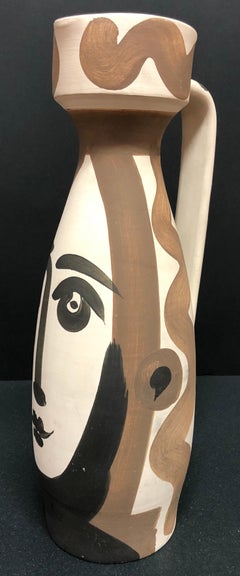
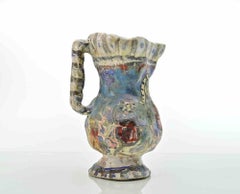
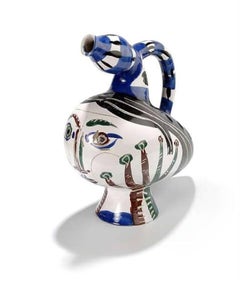
Visage (A.R. 288)
Visage (A.R. 288)

Visage (A.R. 288)

By Pablo Picasso

Located in Östermalm, Stockholms län

Visage (A.R. 288), 1955 White earthenware ceramic pitcher with colored engobe and glaze Edition of 500 Stamped “Picasso” and “Madoura Plein Feu” (underneath) The piece is in excelle...

Category

Modern Mid-20th Century Sculptures

Materials

Ceramic

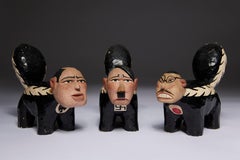
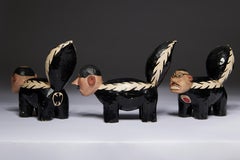
The Three Skunks of WWII, Carved Wooden Figures of Hitler, Mussolini & Tojo

The Three Skunks of WWII, Carved Wooden Figures of Hitler, Mussolini & Tojo

Located in Beachwood, OH

Three Skunks of WWII c. 1940s Carved and painted wood Unsigned 8 x 10 in. h. each These skunks are depicted as Adolf Hitler, Benito Mussolini, and Hideki Tojo. Condition: There ...

Category

Mid-20th Century Sculptures

Materials

Wood, Paint

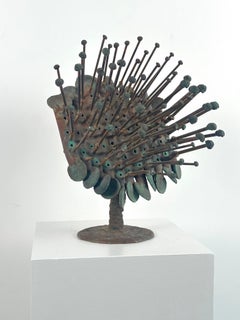
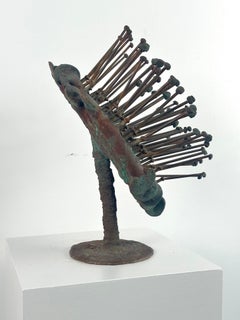
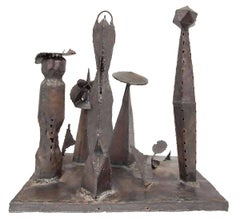
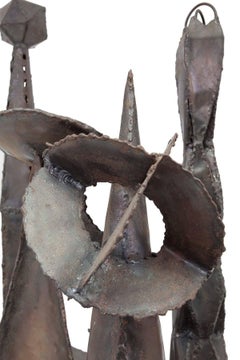
Mid Century Modern Brutalist Welded Expressionist Sculpture After Paul Evans

Mid Century Modern Brutalist Welded Expressionist Sculpture After Paul Evans

Located in Surfside, FL

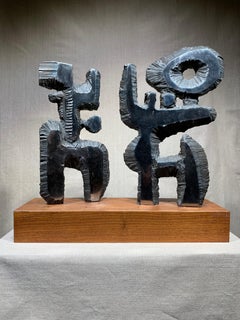
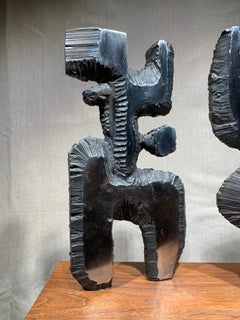
In this bronze sculpture the artist (unknown) has welded together a group of totems or monuments into a unified piece. T Neo-Dada Abstract Sculpture: Assemblages In contrast, abstra...

Category

Abstract Expressionist Mid-20th Century Sculptures

Materials

Metal

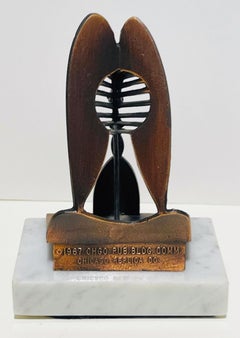
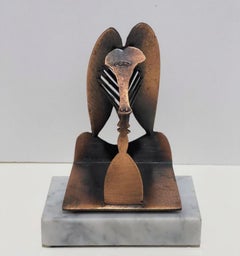
The Lady maquette, replica of Chicago Picasso sculpture, American Bridge Company

The Lady maquette, replica of Chicago Picasso sculpture, American Bridge Company

By Pablo Picasso

Located in New York, NY

(After) Pablo Picasso The Lady (Maquette), ca. 1967 Mixed Media Sculpture edition Cor-ten Steel This maquette is based upon the original Chicago Picasso-a monumental sculpture by Pablo Picasso in Chicago, Illinois. The sculpture, dedicated on August 15, 1967, in Daley Plaza in the Chicago Loop...

Category

Abstract Mid-20th Century Sculptures
Materials

Stone, Steel

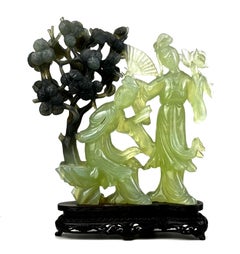
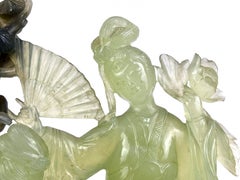
Oriental Jade Sculpture of Two Court Ladies with Tree – Mid-20th Century

Oriental Jade Sculpture of Two Court Ladies with Tree – Mid-20th Century

Located in Sant Celoni, ES

Elegant hand-carved bicolor jade sculpture from the Oriental tradition, depicting two court ladies beneath a flowering tree. The figures are crafted in translucent light green jade, ...

Category

Mid-20th Century Sculptures

Materials

Other Medium

Dove
Dove

Mark MorrisonDove, ca. 1960

$2,000Sale Price|60% Off

Dove

By Mark Morrison

Located in Wilton Manors, FL

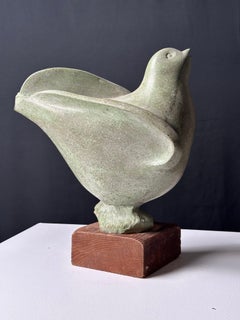
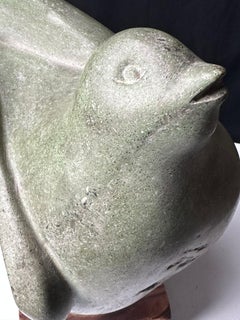
Mark Morrison (1895-1964) Dove, ca. 1960 Carved and polished stone 10" wide, 6.25" deep, height is 12" Tail exhibits a small area of loss. Our conservator can repair this at no ex...

Category

Realist Mid-20th Century Sculptures

Materials

Stone

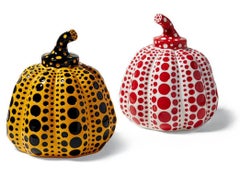
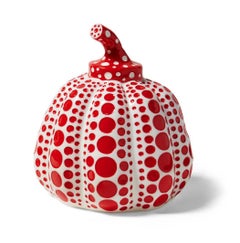
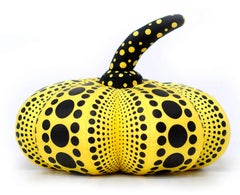
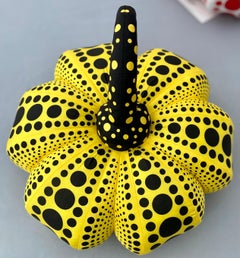
Kusama Pumpkins (Set of Two)

Kusama Pumpkins (Set of Two)

By Yayoi Kusama

Located in NEW YORK, NY

Yayoi Kusama Set of Two Pumpkins: Yellow and Black / Red and White: An iconic, vibrantly colored pop art set - these small Kusama pumpkin sculptures feature the universal polka dot p...

Category

Pop Art Mid-20th Century Sculptures

Materials

Resin

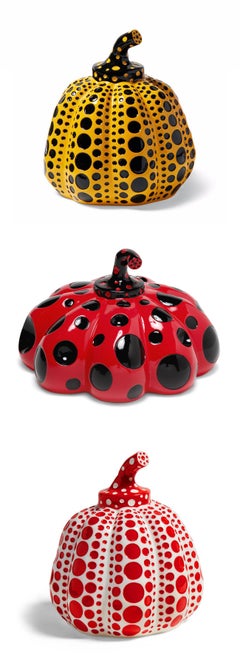
Kusama Pumpkins (Set of 3 works)

Kusama Pumpkins (Set of 3 works)

By Yayoi Kusama

Located in NEW YORK, NY

Yayoi Kusama Set of 3 Pumpkins: Yellow and Black, Red & White and Red & Black Naoshima: An iconic, vibrantly colored pop art set - these small Kusama pumpkin sculptures feat...

Category

Pop Art Mid-20th Century Sculptures

Materials

Resin

RECLINGING WOMAN
RECLINGING WOMAN

RECLINGING WOMAN

By Antoniucci Volti

Located in Los Angeles, CA

ANTONIUCCI VOLTI "RECLINGING WOMAN" BRONZE, SIGNED, NUMBERED 2/6 VALSUANI FOUNDRY ITALiAN, WORKED IN PARIS, C.1960 6.5 X 18.5 X 10.5 INCHES Antoniucci Volti 1915-1989 Sculptor, painter, and printmaker Antoniucci Volti was born in Albano, Italy, in 1915. His family lived in Italy until 1920 when the family moved to France. Volti studied at the Ecole des Arts Décoratifs in Nice from 1928 to 1920. By 1932 the young artist had won a gold medal for two polychrome bas-reliefs before going to Paris, where he entered the studio of Jean Boucher at the Ecole Nationale des Beaux-Arts in Paris at the age of only fifteen. After serving in the Second World War, when he was interned as a prisoner of war in Bavaria, he returned in poor health to Paris, only to find his studio destroyed. From 1947 he showed work at various Paris Salons and, in 1954 and 1955 at the Brussels and Antwerp Biennales. In 1957 a retrospective of his work was organized at the Museum Rodin in Paris. He died in Paris in 1989 Works by Volti are in leading museums such as the Musée National d'Art Moderne, Paris. Antoniucci Volti is one of the most important Late Modern...

Category

Modern Mid-20th Century Sculptures

Materials

Bronze

Untitled (Organic abstract bronze sculpture)

Untitled (Organic abstract bronze sculpture)

Located in Wilton Manors, FL

Klaus Ihlenfeld (b.1934). Untitled, ca. 1960. Welded bronze. 8" h.; 5.5 " w; 3.25" d (base). Signed with initial under base. Provenance: Directly from estate of Harry Bertoia. The piece was a gift from Ihlenfeld and is a very early example created during Bertoia apprenticeship era. Excellent condition. Klaus Karl Otto IhlenfeldHe was born in Berlin, Germany in 1934. He studied art at the Hochschule für Bildende Künste and completed graduate work with the metal sculptor Hans Uhlmann. He visited the US in 1957 for the first time living in Durham, NC, where he befriended Dr. W. R. Valentiner, the Rembrandt authority and Director of the Museum of Art, Raleigh, NC. Through this friendship in 1960 he met and worked with the metal sculptor Harry Bertoia in Barto, PA. He joined the Staempfli Gallery in NYC and entered in many group and one-man shows. He has been an Artist-in-Residence in Ogden, Utah; Huntington Museum of Art in West Virginia, Penn State University at University Park; the Colorado State University in Denver; and Shippensburg University. He has large commissions at Kutztown University, Pottstown Hospital, and a monumental relief sculpture at the Emigrant Savings Bank in NYC. He has traveled extensively in Spain, Greece, and Mexico. He is living and working on a farm in Barto, PA welding bronze and forged iron metal sculptures and painting watercolors. Group Shows: North Carolina Museum of Art in Raleigh, NC - 1957 Solomon R. Guggenheim Museum in New York City - 1962 Staempfli Gallery in New York City - 1962, 1964 and 1965 Gallery Ludwig Lange in West Berlin, Germany - 1977 Gallery Herbert Remmert and Dr. Barth in Dusseldorf in West Germany - 1981 Jack Savitt Gallery in Macungie, PA - 1981 and 1984 Heinz Ortleb Gallery, West Berlin, Germany - 1992 Central Bucks Chamber of Commerce Show at the James A. Michener Art Museum in Doylestown, PA - 1997 Berks Art Alliance Show at the Reading Art Museum in Reading, PA - 1997 Mayfair Festival of the Arts at the Allentown Art Museum - 1998 Baum School of Art in Allentown, PA - 1997 Schwenkfelder Library and Heritage Center Art Show in Pennsburg, PA - 2001 Reading Public Museum in Reading PA, 2014 Solo Shows: Kutztown University in Kutztown, PA - 1960 and 1965 Allentown Art Museum in Allentown, PA - 1960 and 1961 Staempfli Gallery in New York City - 1962 Penn State University in University Park, PA - 1964 and 1972 Berks Art Alliance in Wyomissing, PA - 1966 Bertha Eccles Art Center in Ogden, Utah - 1967 Mansfield University in Mansfield, PA - 1967 Huntington Museum of Art in Huntington, WV - 1971 Shippensburg University in Shippensburg, PA - 1972 Albright College in Reading, PA - 1973 Ianuzzi Gallery in Scottsdale, AZ - 1974 Gallery Heimat 85 in West Berlin, Germany - 1977 Jack Savitt Gallery in Macungie, PA - 1981 College Misericordia in Dallas, PA - 1983 Schwenkfelder Library and Heritage Center in Pennsburg, PA, 2013 Periodical Reference: Kaye, Ellen "The Obsessive Collector," Philadelphia Inquirer Sunday Magazine Sptember 21, 1986 pp. 32-33. Chronology: 1-30-1934 Born in Berlin, Germany. Father, Kurt Ihlenfeld, Lutheran pastor, novelist, critic and publisher was born in 1901 in Colmar, Alsace Lorain. Mother, Annie Stuhlmann, was born in 1905 in Breslau, Lower Silesia. 1940 - 1950 Public schools in Berlin; Löwen, Lower Silesia; Coswig, Radebeul, Glaubitz, Saxony. Königin Luise-Gymnasium in Dahlem, Berlin. First artworks, drawings and paintings; few sculptures. 1950 - 1956 Studied at the Hochschule für Bildende Künste in West Berlin, Germany. Graduate work with metal sculptor Hans Uhlmann. For 2 years maintained own studio at the Academy. Friendship with writer Günter Grass, and painter F. S. Sonnenstern. Met painters: Max Pechstein, Karl Schmidt-Rottluff, Carl Hofer, Max Kaus, and sculptors: Bernhard Heiliger, Renee Sintenis, and Richard Scheibe...

Category

Abstract Mid-20th Century Sculptures
Materials

Bronze

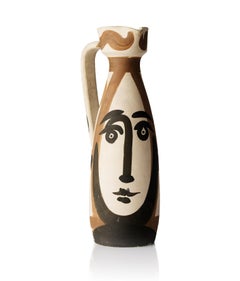
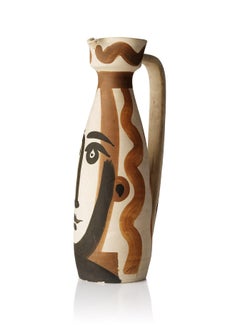
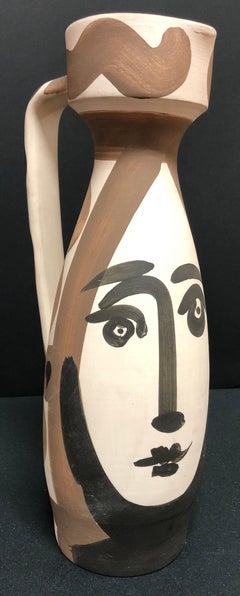
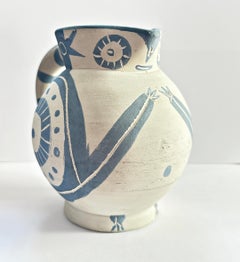
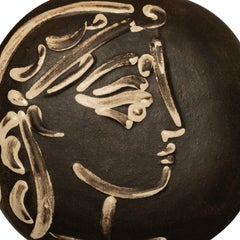
Pablo Picasso, "Face Turned Pitcher, " ceramic

Pablo Picasso, "Face Turned Pitcher, " ceramic

By Pablo Picasso

Located in Chatsworth, CA

This piece is an A.R. turned pitcher created by Pablo Picasso in 1955. It is made with white earthenware clay, decoration in engobes in red and black with glaze inside. It bears the ...

Category

Surrealist Mid-20th Century Sculptures

Materials

Clay

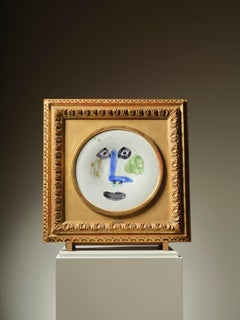
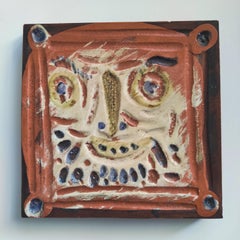
Visage (Nez à Angle Droit)

Visage (Nez à Angle Droit)

By Pablo Picasso

Located in PARIS, FR

An authenticated work Dated June 21, 1963, this unique painted and glazed ceramic comes with a certificate of authenticity from Claude Ruiz Picasso (2019). A dated work Inscribed Ju...

Category

Modern Mid-20th Century Sculptures

Materials

Ceramic

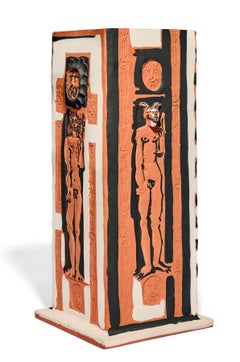
Personnages et tetes (Figures and heads), 1954

Personnages et tetes (Figures and heads), 1954

By Pablo Picasso

Located in Palo Alto, CA

Pablo Picasso Ceramic Personnages et tetes (Figures and heads), 1954 Though Picasso never traveled to Greece, he was endlessly fascinated with the Greek vases of antiquity. As a res...

Category

Mid-20th Century Sculptures

Materials

Earthenware

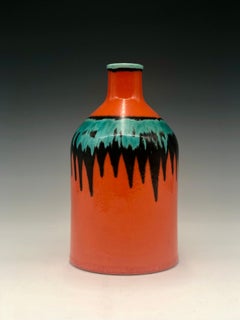
Vintage Cortendorf Orange Black and Aqua Green Ceramic Vase, West Germany

Vintage Cortendorf Orange Black and Aqua Green Ceramic Vase, West Germany

Located in East Quogue, NY

Bright, boldly colored orange, black, and aqua green mid-century vase by Cortendorf. A beautiful, bold example of West German Art Pottery from the 1950s. It has its original maker's ...

Category

Modern Mid-20th Century Sculptures

Materials

Ceramic

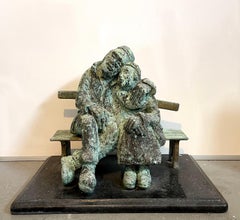
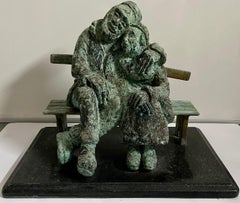
Heavy Bronze Sculpture Austrian Israeli judaica Jewish Couple Bench Nicky Imber

Heavy Bronze Sculpture Austrian Israeli judaica Jewish Couple Bench Nicky Imber

By Nicky Imber

Located in Surfside, FL

Large and heavy with magnificent patina. This is the large version of this piece. we cannot find any markings on it and it might be unique. Nicky Imber (Vienna, Austria, 1920 -1996) was a multidisciplinary Jewish artist best known for his sculptures on Jewish themes. Grand nephew of Naftali Herz Imber, author of the Israeli national anthem 'Hatikva'. After escaping the Nazi concentration camp in Dachau, he pledged to dedicate his art to perpetuating the memory of the Holocaust. Among his more famous works are "The Hope" and "The Love of Torah". His work can be seen around the world, in Northern Israel, the United States, and the Venezuelan Museum of Natural History in Caracas. Nicky Imber was born in Vienna, Austria. During his studies at the Academy of Arts in Vienna, he drew anti-Nazi caricatures for Jewish student publications. After several thwarted attempts by the family to leave Vienna, in 1938, in the wake of the 'Anschluss', Imber was deported to Dachau. Witnessing the murders of family and friends, he plotted his escape. Using skills he had learned in art school, he made a face mask out of bread and sand, stole a Nazi soldier's uniform and walked out the front gate unnoticed. In 1940, he boarded a ship headed to Haifa. The ship's passengers were refused entry by the British mandatory authorities and imprisoned in a detention camp in Mauritius. In 1943, Imber worked out a deal with the authorities for his release by joining the British Army, serving as a war artist and a dental assistant in East Africa. After the war, he opened an art school in Nairobi, Kenya, and worked as a photographer and a safari guide. In 1949 to 1954, he lived in Venezuela, where he was contracted to do an East African Diorama series. The National Museum added an entire wing to display it. During this period he got married and had a daughter Raquel, who accompanied and assisted him. In 1959, Imber was commissioned to create sculptures and dioramas for the Haifa Prehistory Museum at Gan Ha-em in Haifa, Israel. In 1960 he returned to Venezuela to restaured the Phelps series of Dioramas for the Museum in Caracas. Between 1961 and 1971 he travelled extensively around Europe and after establishing an international name for himself, returned to the United States. In New York he became famous for his realistic oil paintings of portraits of Aga Khan, Tyrone Power, Ava Gardner, David Ben-Gurion, Golda Meir, Sir Richard Burton...

Category

Post-Impressionist Mid-20th Century Sculptures

Materials

Marble, Bronze

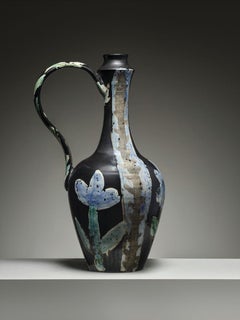
Fleurs
Fleurs

Fleurs

By Pablo Picasso

Located in PARIS, FR

• An authenticated work This work is authenticated by Paloma Ruiz Picasso and Diana Widmaier Ruiz Picasso, who issued a certificate of authenticity on October 7, 2024. • A dated wor...

Category

Modern Mid-20th Century Sculptures

Materials

Ceramic

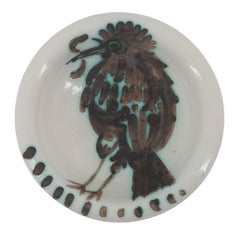
Chouette (A.R.604)
Chouette (A.R.604)

Chouette (A.R.604)

By Pablo Picasso

Located in PARIS, FR

• Picasso began working with ceramics in 1946 at the Madoura workshop in Vallauris, marking the beginning of an important and highly productive chapter in his career. What initially ...

Category

Modern Mid-20th Century Sculptures

Materials

Ceramic

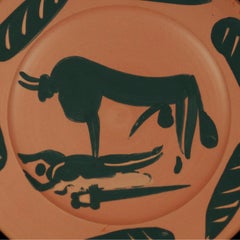
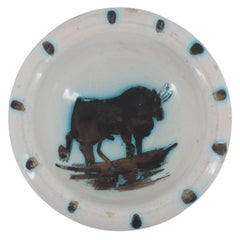
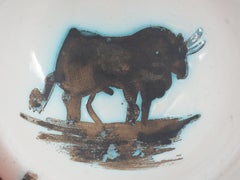
Pablo Picasso, "Tauromachy Scene", ceramic plate

Pablo Picasso, "Tauromachy Scene", ceramic plate

By Pablo Picasso

Located in Chatsworth, CA

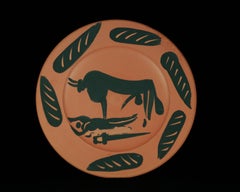
This piece is an A.R. turned round plate by Pablo Picasso made in 1957. It is made with red earthenware clay, engobe decoration, and knife engraved in black. It is numbered 279/ 500 ...

Category

Modern Mid-20th Century Sculptures

Materials

Ceramic

Mountain Goat
Mountain Goat

Mark MorrisonMountain Goat, ca. 1940

$1,000Sale Price|50% Off

Mountain Goat

By Mark Morrison

Located in Wilton Manors, FL

Mark Morrison (1895-1964) Mountain Goat, ca. 1940 Carved diorite 3 7/8" wide, 2.5" deep, height is 3" Provenance: Estate of Mrs. Mark Morrison. Born: Kingfisher, OK Educatio...

Category

Realist Mid-20th Century Sculptures

Materials

Stone

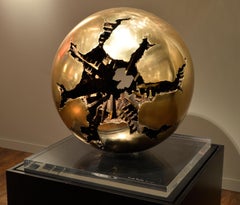
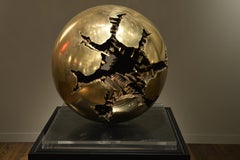
Sfera con perforazione

Sfera con perforazione

By Arnaldo Pomodoro

Located in London, GB

An exceptional example of Arnaldo Pomodoro’s iconic Sfera con Sfera series, — a pivotal period in the artist’s exploration of fractured geometric perfection. Signed, dated "'66," and...

Category

Abstract Geometric Mid-20th Century Sculptures

Materials

Bronze

Kusama Plush Pumpkin (Kusama yellow & black pumpkin)

Kusama Plush Pumpkin (Kusama yellow & black pumpkin)

By Yayoi Kusama

Located in NEW YORK, NY

Yayoi Kusama Yellow & Black Pumpkin (plush): An iconic, vibrantly colored pop art piece - this large Kusama plush pumpkin features the universal polka dot patterns and bold colors fo...

Category

Contemporary Mid-20th Century Sculptures

Materials

Nylon

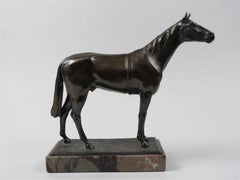
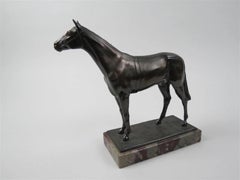
Horse
Horse

Horse

Located in Greenwich, CT

Figure of a horse , French 1940's , on a marble base appears unsigned finely carved, beautiful rendering, nice patina

Category

Mid-20th Century Sculptures

Materials

Bronze

Hibou
Hibou

Hibou

By Pablo Picasso

Located in PARIS, FR

• A unique ceramic by Pablo Picasso This work is a unique ceramic by Pablo Picasso, dated on the reverse, reflecting the artist’s direct and personal intervention in the creation of ...

Category

Modern Mid-20th Century Sculptures

Materials

Ceramic

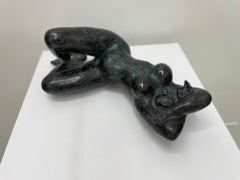
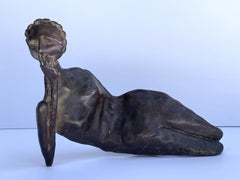
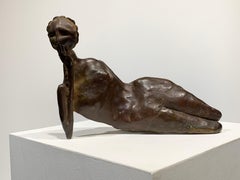
Reclining Figure (woman)

Reclining Figure (woman)

By William King (b.1925)

Located in Wilton Manors, FL

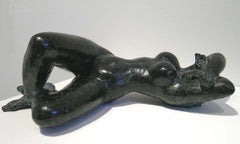
William King (1925-2015). Reclining figure, ca. 1965. Cast and welded bronze, 7 x 9.5 x 5 inches. Unsigned. William King, a sculptor in a variety of materials whose human figures traced social attitudes through the last half of the 20th century, often poking sly and poignant fun at human follies and foibles, died on March 4 at his home in East Hampton, N.Y. He was 90. His death was confirmed by Scott Chaskey, who is married to Mr. King's stepdaughter, Megan Chaskey. Mr. King worked in clay, wood, bronze, vinyl, burlap and aluminum. He worked both big and small, from busts and toylike figures to large public art pieces depicting familiar human poses -- a seated, cross-legged man reading; a Western couple (he in a cowboy hat, she in a long dress) holding hands; a tall man reaching down to tug along a recalcitrant little boy; a crowd of robotic-looking men walking in lock step. But for all its variation, what unified his work was a wry observer's arched eyebrow, the pointed humor and witty rue of a fatalist. His figurative sculptures, often with long, spidery legs and an outlandishly skewed ratio of torso to appendages, use gestures and posture to suggest attitude and illustrate his own amusement with the unwieldiness of human physical equipment. His subjects included tennis players and gymnasts, dancers and musicians, and he managed to show appreciation of their physical gifts and comic delight at their contortions and costumery. His suit-wearing businessmen often appeared haughty or pompous; his other men could seem timid or perplexed or awkward. Oddly, or perhaps tellingly, he tended to depict women more reverentially, though in his portrayals of couples the fragility and tender comedy inherent in couplehood settled equally on both partners. Mr. King's work is in the collections of the Metropolitan Museum of Art and the Museum of Modern Art in New York and the Smithsonian American Art Museum in Washington, among other places, and he had dozens of solo gallery shows in New York and elsewhere. But the comic element of his work probably caused his reputation to suffer. Reviews of his exhibitions frequently began with the caveat that even though the work was funny, it was also serious, displaying superior technical skills, imaginative vision and the bolstering weight of a range of influences, from the ancient Etruscans to American folk art to 20th-century artists including Giacometti, Calder. and Elie Nadelman. The critic Hilton Kramer, one of Mr. King's most ardent advocates, wrote in a 1970 essay accompanying a New York gallery exhibit that he was, "among other things, an amusing artist, and nowadays this can, at times, be almost as much a liability as an asset." A "preoccupation with gesture is the focus of King's sculptural imagination," Mr. Kramer wrote. "Everything that one admires in his work - the virtuoso carving, the deft handling of a wide variety of materials, the shrewd observation and resourceful invention - all this is secondary to the concentration on gesture. The physical stance of the human animal as it negotiates the social arena, the unconscious gait that the body assumes in making its way in the social medium, the emotion traced by the course of a limb, a torso, a head, the features of a face, a coiffure or a costume - from a keen observation of these materials King has garnered a large stock of sculptural images notable for their wit, empathy, simplicity and psychological precision." William Dickey King...

Category

Abstract Mid-20th Century Sculptures
Materials

Bronze

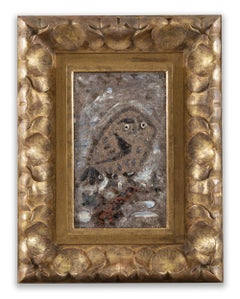
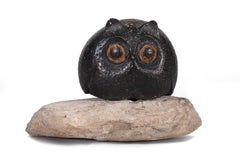
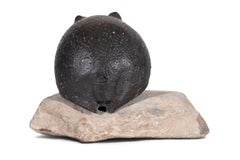
"Owl" Bronze Sculpture, Caricature, Rich Dark Brown Surface

"Owl" Bronze Sculpture, Caricature, Rich Dark Brown Surface

Located in Detroit, MI

The bronze sculpture "Owl" is an exaggerated rendition of an owl that emphasizes the bird's most prominant characteristics - a big fluffy round body and large unblinking eyes making it a charicature of the bird. It is very touchable and calls for one to pet its rounded back. Tom Brun, the sculptor and zookeeper, is well-known for his wood, stone, marble, ceramics and ivory sculptures. One of them, a large hippopotamus, carved from walnut wood travelled the world in the State Department collection. It is said that Tom would often go into a house and pick up one of his sculptures and say that it was unfriendly – meaning that it had not been handled enough. Morley Driver has said of Brun in a newspaper article from the 1950’s “In Any Animal He Sees Beauty”: No one who has ever seen a Tom Brun hippopotamus will ever again think of it as ugly or ungainly, meaning that the artist not only gives you beauty but teaches you to see it. Tom has said: “Small pieces are like a proverb – a gem of meaning that one can dissect.” They are meant to be picked up, caressed and held. This owl, too, seems destined to be caressed. Brun was born in England in 1913. A few years after the end of World War I his father moved the family in 1919 to Detroit, Michigan. In 1935 at age 23, he officially became a U.S. citizen. He served in the army during World War II for five years and upon discharge and at the age of 36 took advantage of the GI Bill and applied for admission to Society of Arts and Crafts (now known as the College for Creative Studies) where he was gladly accepted. While at Arts and Crafts his instructors and established artists such as Sarkis Sarkisian, John P. Foster, Morris Brose, Richard Koslow, Patricia Burnett, Lloyd and Renee Radell...

Category

Modern Mid-20th Century Sculptures

Materials

Bronze

PABLO PICASSO - Petit visage barbu

PABLO PICASSO - Petit visage barbu

By Pablo Picasso

Located in BRUCE, ACT

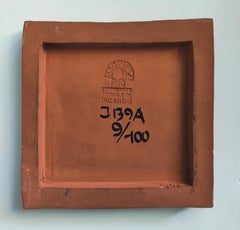
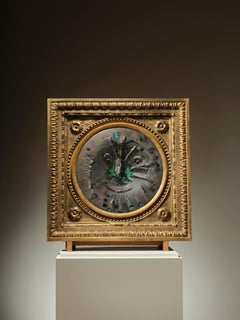
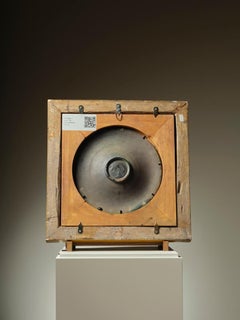
PABLO PICASSO (Spanish, 1881-1973) Petit visage barbu (A.R. 557) Verso impressed "Madoura Plein Feu" and "Empreinte Originale de Picasso" Hand-numbered "J139A 9/100" Size 17.2 X 17...

Category

Mid-20th Century Sculptures

Materials

Ceramic

Visage
Visage

Visage

By Pablo Picasso

Located in PARIS, FR

An authenticated work Authenticated by Claude Ruiz Picasso on February 1, 2021, the piece comes directly from the Marina Picasso Collection. A prestigious provenance A provenance fr...

Category

Modern Mid-20th Century Sculptures

Materials

Ceramic

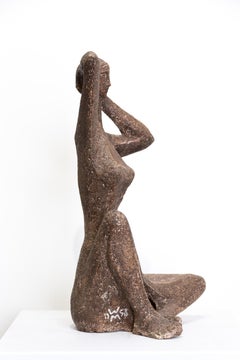
Walter Midener "Contemplation" Seated Figure Clay Sculpture Mid-Century Modern

Walter Midener "Contemplation" Seated Figure Clay Sculpture Mid-Century Modern

Located in Detroit, MI

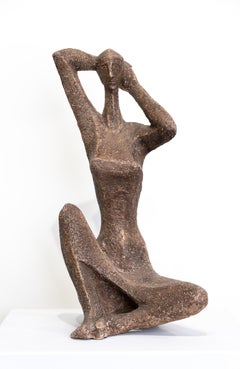
“Contemplation” is an abstract clay sculpture of a female. The figure has both arms and legs extended, but the dignified pose suggests an intimate rather than a sexual moment. The sculpture is delicately rendered, but monumental in pose and clean composition reminiscent of the English artist Henry Moore. The surface is warm and slightly rough to the touch. This sculpture is in the round and beautifully balanced geometrically with the hands clasped behind the head forming a slightly flattened polygon shape that is echoed in the positioning of the legs and draped fabric of a presumed dress. The figure draws the viewer into her contemplation, peace and confidence. An exceptional piece by Midener. Walter Midener...

Category

Modern Mid-20th Century Sculptures

Materials

Clay

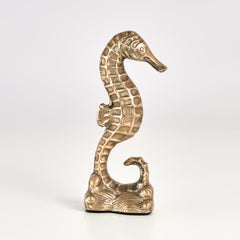
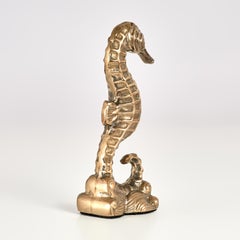
Vintage Art Deco Style Brass Seahorse Sculpture

Vintage Art Deco Style Brass Seahorse Sculpture

Located in Palm Beach, FL

Charming mid century seahorse sculpture or object of art crafted in cast brass in a stylized art deco form.

Category

Modern Mid-20th Century Sculptures

Materials

Brass

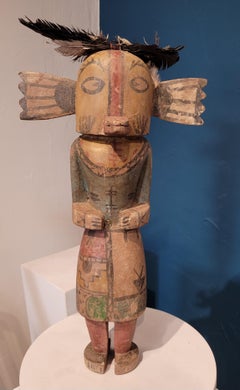
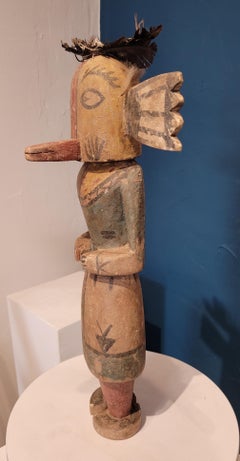
Hopi Katsina Doll.
Hopi Katsina Doll.

Hopi Katsina Doll.

Located in Cotignac, FR

A Native North American carved wood and painted effigy figure, Hopi Katsina or Kachina doll. A wonderfully playful, coloured and highly individual Hopi Katsina doll. Each doll repr...

Category

Mid-20th Century Sculptures

Materials

Wood

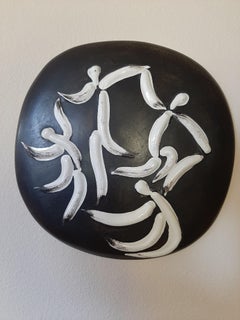
Four Dancers
Four Dancers

Four Dancers

By Pablo Picasso

Located in New York, NY

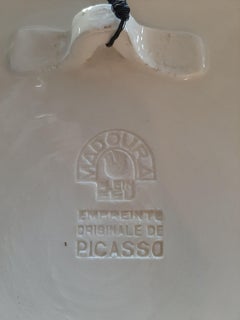
Partially glazed terre-de-faïence convex wall plaque painted in black and white, 1956. Edition of 450. With the Madoura Plein Feu and Empreinte Originale de Picasso stamps, verso. ...

Category

Cubist Mid-20th Century Sculptures
Materials

Clay, Ceramic

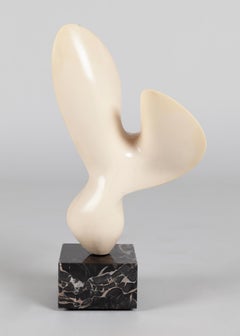
Untitled
Untitled

Untitled

By Antoine Poncet

Located in Columbia, MO

Antoine Poncet (French‑Swiss, 1928 - 2022) was a sculptor whose work belongs to the lineage of modern abstraction shaped by Jean Arp and Constantin Brâncuşi. Born in Paris into an ar...

Category

Contemporary Mid-20th Century Sculptures
Materials

Alabaster, Marble

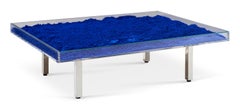
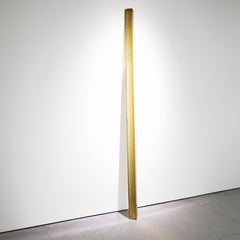
Table IKB (Blue) Sculpture, Metal and Glass, Minimalist, 1960s

Table IKB (Blue) Sculpture, Metal and Glass, Minimalist, 1960s

By Yves Klein

Located in New York, NY

Yves Klein is renowned for his groundbreaking exploration of pure color, with an intense focus on the color blue. He is perhaps best known for his creation of International Klein Blu...

Category

Minimalist Mid-20th Century Sculptures
Materials

Metal

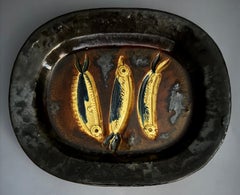
Trois Poissons
Trois Poissons

Trois Poissons

By Pablo Picasso

Located in PARIS, FR

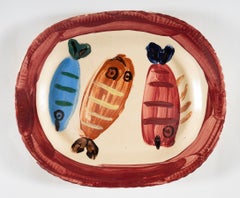
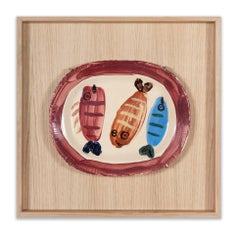
An authenticated work Accompanied by a certificate of authenticity issued by Paloma Ruiz-Picasso and Diana Widmaier-Ruiz-Picasso, dated October 17, 2024. A stamped work This unique ...

Category

Modern Mid-20th Century Sculptures
Materials

Ceramic

Read More

At Hosfelt Gallery, Bertoia Masterworks Complement Dynamic Contemporary Art

For nearly three decades, San Francisco–based Todd Hosfelt has curated against the grain — with a show on the legendary modernist Harry Bertoia the latest case in point.

This Weathered-Steel Sculpture Distills a Form of Protest into a Minimalist Monument

Part of Alejandro Vega Beuvrin’s “Barricada” series, the work is a subversive tribute to the street smarts of citizen activists.

How the Chunky, Funky Ceramics of 5 Mid-Century American Artists Balanced Out Slick Modernism

Get to know the innovators behind the pottery countercultural revolution.

Art Brings the Drama in These Intriguing 1stDibs 50 Spaces

The world’s top designers explain how they display art to elicit the natural (and supernatural) energy of home interiors.

Chryssa’s 1962 Neon Sculpture Was Way ahead of the Art-World Curve

By working with lettering, neon and Pop imagery, Chryssa pioneered several postmodern themes at a time when most male artists detested commercial mediums.

How to Spot a Fake KAWS Figure

KAWS art toys have developed an avid audience in recent decades, and as in any robust collectible market, counterfeiters have followed the mania. Of course, you don’t have to worry about that on 1stDibs, where all our sellers are highly vetted.

A Giant Wedding Cake Has Us Looking at Portuguese Tiles in a New Light

At Waddesdon Manor, artist Joana Vasconcelos has installed a three-tiered patisserie inspired by the narrative tile work of her homeland. We take a look at the cake sculpture and how Portuguese tiles have been used in architecture from the 17th century to today.

These Soft Sculptures Are Childhood Imaginary Friends Come to Life
Miami artist and designer Gabriela Noelle’s fantastical creations appeal to the Peter Pan in all of us.