Mid-20th Century Sculptures

to
140
617
152
103
39
86
Overall Width
to
Overall Height
to
222
742
4,018
17,203
101
46
115
123
67
152
370
375
550
539
78
365
101
55
29
21
20
17
7
6
5
2
284
197
176
136
134
112
78
59
58
57
51
41
37
33
29
28
24
23
21
20
388
315
260
160
128
105
13
12
11
9
1
23
625
362
Period: Mid-20th Century
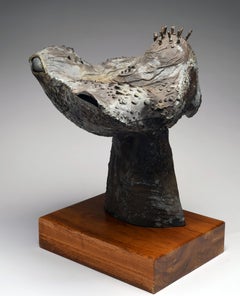
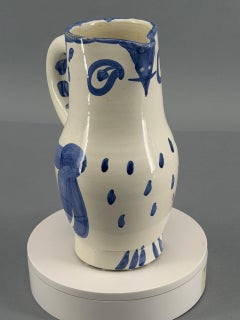
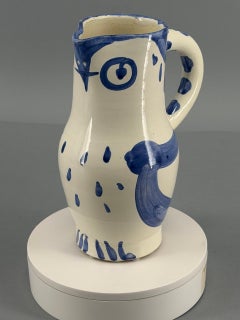
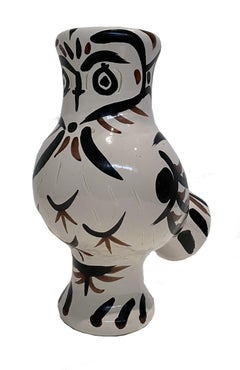
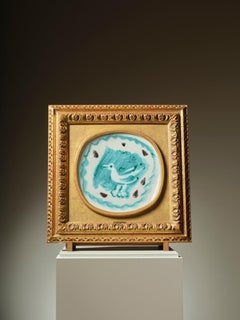
Oiseau Posé
Oiseau Posé

Oiseau Posé

By Pablo Picasso

Located in PARIS, FR

• An authenticated work Stamped on the base “Madoura plein feu,” this unique painted and partially glazed ceramic is accompanied by a certificate of authenticity issued by Claude Rui...

Category

Modern Mid-20th Century Sculptures

Materials

Ceramic

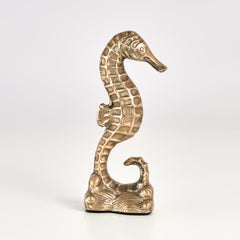
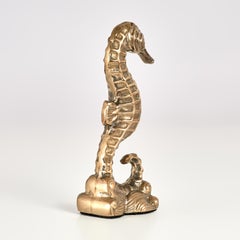
Vintage Art Deco Style Brass Seahorse Sculpture

Vintage Art Deco Style Brass Seahorse Sculpture

Located in Palm Beach, FL

Charming mid century seahorse sculpture or object of art crafted in cast brass in a stylized art deco form.

Category

Modern Mid-20th Century Sculptures

Materials

Brass

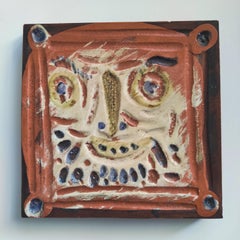
PABLO PICASSO - Petit visage barbu

PABLO PICASSO - Petit visage barbu

By Pablo Picasso

Located in BRUCE, ACT

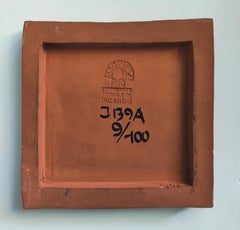
PABLO PICASSO (Spanish, 1881-1973) Petit visage barbu (A.R. 557) Verso impressed "Madoura Plein Feu" and "Empreinte Originale de Picasso" Hand-numbered "J139A 9/100" Size 17.2 X 17...

Category

Mid-20th Century Sculptures

Materials

Ceramic

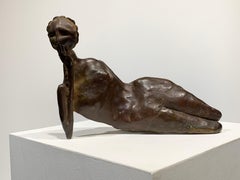
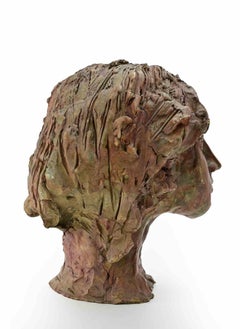
Reclining Figure (woman)

Reclining Figure (woman)

By William King (b.1925)

Located in Wilton Manors, FL

William King (1925-2015). Reclining figure, ca. 1965. Cast and welded bronze, 7 x 9.5 x 5 inches. Unsigned. William King, a sculptor in a variety of materials whose human figures traced social attitudes through the last half of the 20th century, often poking sly and poignant fun at human follies and foibles, died on March 4 at his home in East Hampton, N.Y. He was 90. His death was confirmed by Scott Chaskey, who is married to Mr. King's stepdaughter, Megan Chaskey. Mr. King worked in clay, wood, bronze, vinyl, burlap and aluminum. He worked both big and small, from busts and toylike figures to large public art pieces depicting familiar human poses -- a seated, cross-legged man reading; a Western couple (he in a cowboy hat, she in a long dress) holding hands; a tall man reaching down to tug along a recalcitrant little boy; a crowd of robotic-looking men walking in lock step. But for all its variation, what unified his work was a wry observer's arched eyebrow, the pointed humor and witty rue of a fatalist. His figurative sculptures, often with long, spidery legs and an outlandishly skewed ratio of torso to appendages, use gestures and posture to suggest attitude and illustrate his own amusement with the unwieldiness of human physical equipment. His subjects included tennis players and gymnasts, dancers and musicians, and he managed to show appreciation of their physical gifts and comic delight at their contortions and costumery. His suit-wearing businessmen often appeared haughty or pompous; his other men could seem timid or perplexed or awkward. Oddly, or perhaps tellingly, he tended to depict women more reverentially, though in his portrayals of couples the fragility and tender comedy inherent in couplehood settled equally on both partners. Mr. King's work is in the collections of the Metropolitan Museum of Art and the Museum of Modern Art in New York and the Smithsonian American Art Museum in Washington, among other places, and he had dozens of solo gallery shows in New York and elsewhere. But the comic element of his work probably caused his reputation to suffer. Reviews of his exhibitions frequently began with the caveat that even though the work was funny, it was also serious, displaying superior technical skills, imaginative vision and the bolstering weight of a range of influences, from the ancient Etruscans to American folk art to 20th-century artists including Giacometti, Calder. and Elie Nadelman. The critic Hilton Kramer, one of Mr. King's most ardent advocates, wrote in a 1970 essay accompanying a New York gallery exhibit that he was, "among other things, an amusing artist, and nowadays this can, at times, be almost as much a liability as an asset." A "preoccupation with gesture is the focus of King's sculptural imagination," Mr. Kramer wrote. "Everything that one admires in his work - the virtuoso carving, the deft handling of a wide variety of materials, the shrewd observation and resourceful invention - all this is secondary to the concentration on gesture. The physical stance of the human animal as it negotiates the social arena, the unconscious gait that the body assumes in making its way in the social medium, the emotion traced by the course of a limb, a torso, a head, the features of a face, a coiffure or a costume - from a keen observation of these materials King has garnered a large stock of sculptural images notable for their wit, empathy, simplicity and psychological precision." William Dickey King...

Category

Abstract Mid-20th Century Sculptures

Materials

Bronze

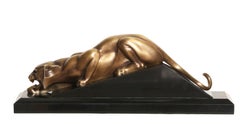
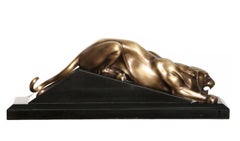
Tigre à l'affût, Art Deco Bronze Sculpture by Georges Lavroff

Tigre à l'affût, Art Deco Bronze Sculpture by Georges Lavroff

By Georges Lavroff

Located in Long Island City, NY

Georges Lavroff, Russian (1895 - 1991) - Tigre à l'affût, Year: circa 1925, Medium: Bronze sculpture on marble base, signature inscribed at base, Size: 4.5 x 21 x 4 in. (11.43 x 5...

Category

Art Deco Mid-20th Century Sculptures

Materials

Marble, Bronze

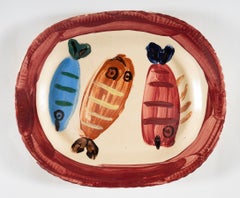
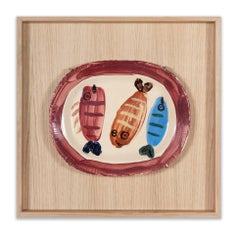
Trois Poissons
Trois Poissons

Trois Poissons

By Pablo Picasso

Located in PARIS, FR

An authenticated work Accompanied by a certificate of authenticity issued by Paloma Ruiz-Picasso and Diana Widmaier-Ruiz-Picasso, dated October 17, 2024. A stamped work This unique ...

Category

Modern Mid-20th Century Sculptures

Materials

Ceramic

"Owl" Bronze Sculpture, Caricature, Rich Dark Brown Surface

"Owl" Bronze Sculpture, Caricature, Rich Dark Brown Surface

Located in Detroit, MI

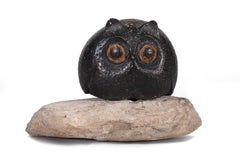
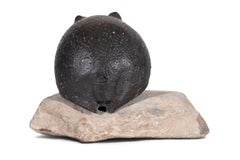
The bronze sculpture "Owl" is an exaggerated rendition of an owl that emphasizes the bird's most prominant characteristics - a big fluffy round body and large unblinking eyes making it a charicature of the bird. It is very touchable and calls for one to pet its rounded back. Tom Brun, the sculptor and zookeeper, is well-known for his wood, stone, marble, ceramics and ivory sculptures. One of them, a large hippopotamus, carved from walnut wood travelled the world in the State Department collection. It is said that Tom would often go into a house and pick up one of his sculptures and say that it was unfriendly – meaning that it had not been handled enough. Morley Driver has said of Brun in a newspaper article from the 1950’s “In Any Animal He Sees Beauty”: No one who has ever seen a Tom Brun hippopotamus will ever again think of it as ugly or ungainly, meaning that the artist not only gives you beauty but teaches you to see it. Tom has said: “Small pieces are like a proverb – a gem of meaning that one can dissect.” They are meant to be picked up, caressed and held. This owl, too, seems destined to be caressed. Brun was born in England in 1913. A few years after the end of World War I his father moved the family in 1919 to Detroit, Michigan. In 1935 at age 23, he officially became a U.S. citizen. He served in the army during World War II for five years and upon discharge and at the age of 36 took advantage of the GI Bill and applied for admission to Society of Arts and Crafts (now known as the College for Creative Studies) where he was gladly accepted. While at Arts and Crafts his instructors and established artists such as Sarkis Sarkisian, John P. Foster, Morris Brose, Richard Koslow, Patricia Burnett, Lloyd and Renee Radell...

Category

Modern Mid-20th Century Sculptures

Materials

Bronze

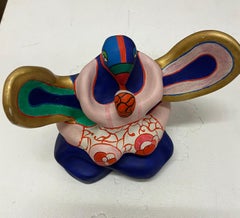
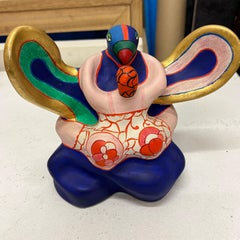
Tantric Couple Sculpture, Resin and Paint, French School, Circa 1930s

Tantric Couple Sculpture, Resin and Paint, French School, Circa 1930s

By Niki de Saint Phalle

Located in PARIS, FR

Rare and beautiful sculpture by Niki de Saint Phalle, certificate by Niki de Saint Phalle Foundation. Some small lacks of gilding on the wings of the bird. Signed and numbered at the...

Category

French School Mid-20th Century Sculptures

Materials

Resin, Paint

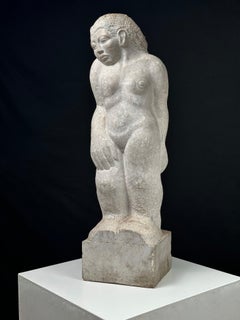
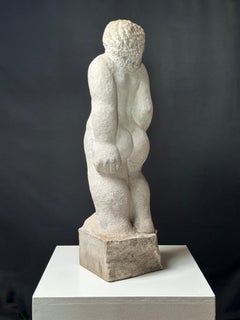
Lilith (Female Nude)

Lilith (Female Nude)

By Mark Morrison

Located in Wilton Manors, FL

Mark Morrison (1895-1964) Lilith (Nude Figure) , ca. 1950 Carved stone 8.25" wide, 7.25" deep, height is 28.75" Provenance: Estate of Mrs. Mark Morrison. Born: Kingfisher, OK...

Category

Cubist Mid-20th Century Sculptures

Materials

Granite

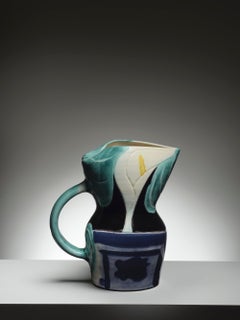
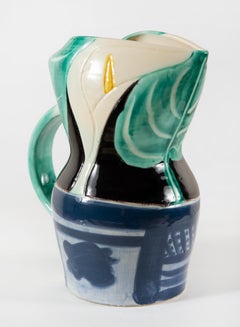
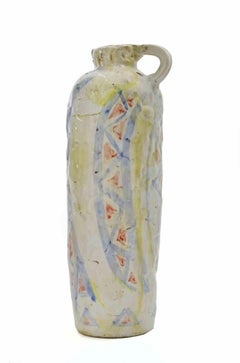
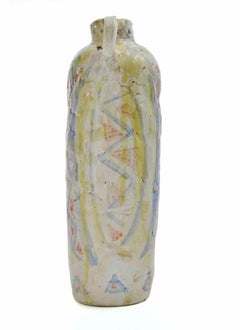
Pichet aux Arums, (A.R.189)

Pichet aux Arums, (A.R.189)

By Pablo Picasso

Located in PARIS, FR

• Picasso began working with ceramics in 1946 at the Madoura workshop in Vallauris, marking the beginning of an important and highly productive chapter in his career. What initially ...

Category

Modern Mid-20th Century Sculptures

Materials

Ceramic

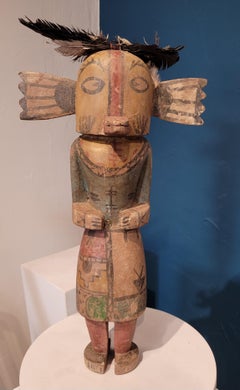
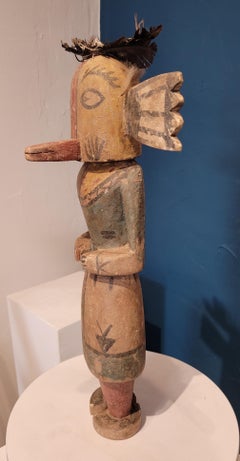
Hopi Katsina Doll.
Hopi Katsina Doll.

Hopi Katsina Doll.

Located in Cotignac, FR

A Native North American carved wood and painted effigy figure, Hopi Katsina or Kachina doll. A wonderfully playful, coloured and highly individual Hopi Katsina doll. Each doll repr...

Category

Mid-20th Century Sculptures

Materials

Wood

Visage Et Hibou (A.R.407)

Visage Et Hibou (A.R.407)

By Pablo Picasso

Located in PARIS, FR

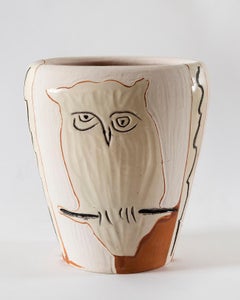
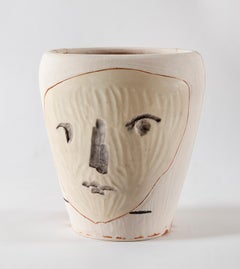
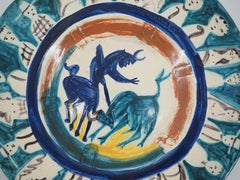
Signed, numbered, and stamped on the base: Edition Picasso, 64/200; Madoura Plein Feu; Edition Picasso White earthenware, decorated with engobe, knife engraving under partially brus...

Category

Modern Mid-20th Century Sculptures

Materials

Ceramic, Faience

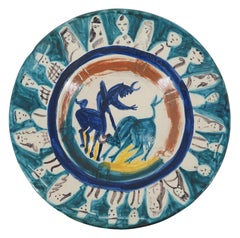
Famille, Têtes Laurées : Quatre Personnages

Famille, Têtes Laurées : Quatre Personnages

By Pablo Picasso

Located in PARIS, FR

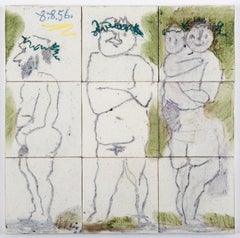
• A unique ceramic work by Pablo Picasso Famille, Têtes Laurées : Quatre Personnages is a unique ceramic composition by Pablo Picasso, dated August 8, 1956, with the date inscribed a...

Category

Modern Mid-20th Century Sculptures

Materials

Ceramic

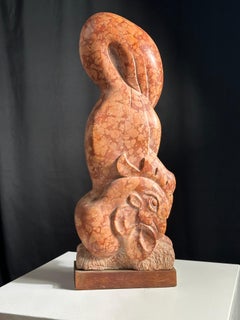
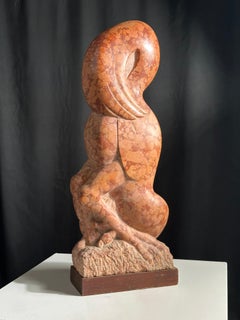
Cockerel (Rooster) Marble Sculpture

Cockerel (Rooster) Marble Sculpture

By Mark Morrison

Located in Wilton Manors, FL

Mark Morrison (1895-1964) Cockerel, ca. 1950 Carved and polished red Verona marble 4.25" wide, 8" deep, height is 22.25" Provenance: Estate of Mrs. Mark Morrison. Born: Kingf...

Category

Cubist Mid-20th Century Sculptures

Materials

Marble

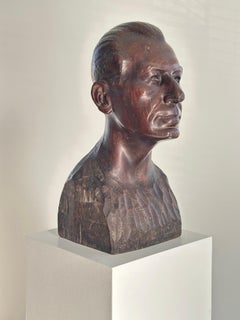
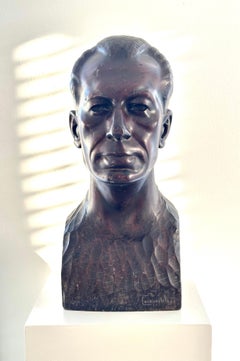
Portrait of a Man
Portrait of a Man

Portrait of a Man

Located in Wilton Manors, FL

Francisco Vazquez Diaz, known as Compostela (1898-1988). Portrait of a Man, 1949. Carved mahogany, measuring 18.75 inches h, 8.5 inches w, 11 in...

Category

Realist Mid-20th Century Sculptures

Materials

Mahogany

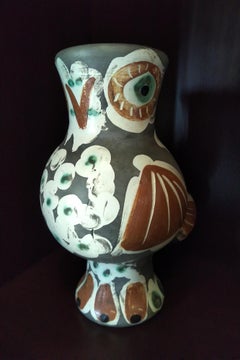
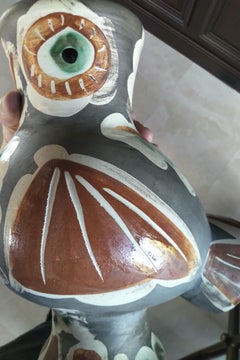
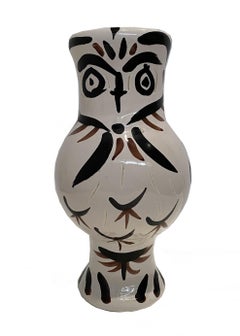
Picasso Madoura Ceramic A.R. 542 Wood Owl

Picasso Madoura Ceramic A.R. 542 Wood Owl

By Pablo Picasso

Located in Boca Raton, FL

Pablo Picasso A.R. 542 Wood Owl 1968 11.8” x 8.8” Edition of 500 White earthenware clay, decoration in engobes under partial brushed glaze, black patina Ramie 542 is a Madoura ceramic that one rarely sees come on the market. The photo you see here is the actual piece that you will receive. Most sellers online post using stock photos that don’t necessarily match exactly to the piece you receive. This particular piece is pristine: there are no nicks, bruises or scratches of any kind. Be careful when buying from others – the pieces sometimes have nicks or scratches. The Certificate of Authenticity comes with this piece. We have sold over 3300 pieces with all positive reviews. We are located in the USA. When you buy from a foreign seller on 1stdibs, you have to consider the problems of getting the piece through Customs. There are often delays and considerable fees to pay in order to import the item. When purchasing from us, we ship the same day and you receive it via FedEx the next day, no problems or hassles. When you purchase from an auction house, you pay a buyer’s premium of anywhere from 23% to 28% over the “hammer price”. So when you “win” an auction for $20,000, the actual price paid is more like $25,000. By contrast, when purchasing from us, the price agreed to is the price paid by the buyer, no hidden fees. When you purchase from an auction house, you pay the packing and shipping fees, which are usually exorbitant. By contrast, when purchasing from us, the price includes packing and shipping. When you purchase from an auction house, the sale is final. If you receive the piece and are not 100% satisfied with it, there is nothing you can do about it. You are stuck with it. By contrast, when purchasing from us, the buyer can determine if they want to keep it. If not, the buyer returns to piece to us for full refund, and we pay the shipping both ways! The prices of Picasso Madoura Ceramics have been on fire lately (no pun intended). The major auction houses – Sotheby’s, Christie’s and Phillips – have now been regularly holding Picasso Madoura Ceramic auctions...

Category

Cubist Mid-20th Century Sculptures

Materials

Ceramic

Latin American Sculpture by Raúl Valdivieso

Latin American Sculpture by Raúl Valdivieso

By Raúl Valdivieso

Located in Washington, DC

Bronze sculpture by Latin American sculptor Raúl Valdivieso (Chilean, 1931-1993). Valdivieso is known for his reinterpretation of the classic organic forms and human figures. Raúl Valdiveso was born September 9, 1931 in Santiago, Chile. In 1952 he began his studies at the School of Fine Arts at the University of Chile. There he took to sculpture and studied under professors like Marta Colvin...

Category

Abstract Mid-20th Century Sculptures

Materials

Bronze

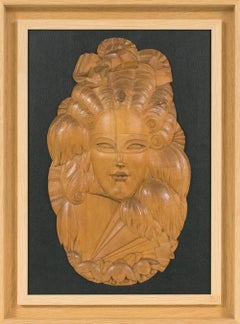
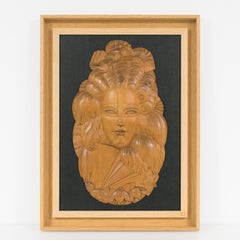
Art Deco Venetian Mask Handcarved Wood Panel Wall Sculpture, circa 1930

Art Deco Venetian Mask Handcarved Wood Panel Wall Sculpture, circa 1930

Located in Atlanta, GA

This extraordinary Art Deco wood panel or wall-mounted sculpture features a spectacular Venetian mask. The rare piece was crafted in France circa 1930. The sculpted panel boasts fine...

Category

Art Deco Mid-20th Century Sculptures

Materials

Wood

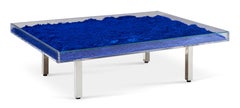
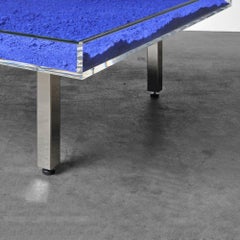
Table IKB (Blue) Sculpture, Metal and Glass, Minimalist, 1960s

Table IKB (Blue) Sculpture, Metal and Glass, Minimalist, 1960s

By Yves Klein

Located in New York, NY

Yves Klein is renowned for his groundbreaking exploration of pure color, with an intense focus on the color blue. He is perhaps best known for his creation of International Klein Blu...

Category

Minimalist Mid-20th Century Sculptures

Materials

Metal

Rumination, Small Bronze Thinker, 20th Century Cleveland School Artist

Rumination, Small Bronze Thinker, 20th Century Cleveland School Artist

Located in Beachwood, OH

William Mozart McVey (American, 1905-1995) Rumination Cast bronze with brown patina Signed on back foot 8 x 4 x 3 inches William McVey (12 July 1905-31 May 1995) became Cleveland's ...

Category

Mid-20th Century Sculptures

Materials

Bronze

Sleek Wooden Boat - Mid Century Modern Wall Hanging Sculpture

Sleek Wooden Boat - Mid Century Modern Wall Hanging Sculpture

Located in Soquel, CA

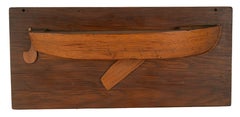
Sleek Wooden Boat - Mid Century Modern Wall Hanging Sculpture Simple but elegant wooden sculpture of a boat by William Tripp (American.) The body of the boat is comprised on multipl...

Category

American Modern Mid-20th Century Sculptures

Materials

Wood

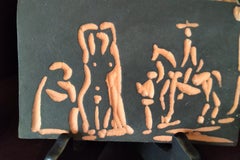
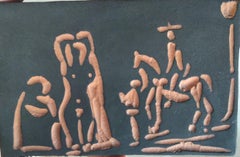
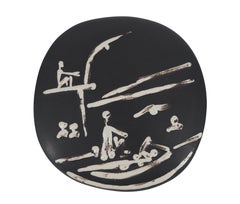
Picasso Madoura Ceramic A.R. 540 Personnage et Cavaliers

Picasso Madoura Ceramic A.R. 540 Personnage et Cavaliers

By Pablo Picasso

Located in Boca Raton, FL

Pablo Picasso A.R. 540 Personnage et Cavaliers 1968 3.9” x 6.3” Edition of 500 Plein Feu/Empreinte originale de Picasso, Partially glazed terracotta plaque. Ramie 540 is a Madoura ceramic that one rarely sees come on the market. The photo you see here is the actual piece that you will receive. Most sellers online post using stock photos that don’t necessarily match exactly to the piece you receive. This particular piece is pristine: there are no nicks, bruises or scratches of any kind. Be careful when buying from others – the pieces sometimes have nicks or scratches. The Certificate of Authenticity comes with this piece. We have sold over 3300 pieces with all positive reviews. We are located in the USA. When you buy from a foreign seller on 1stdibs, you have to consider the problems of getting the piece through Customs. There are often delays and considerable fees to pay in order to import the item. When purchasing from us, we ship the same day and you receive it via FedEx the next day, no problems or hassles. When you purchase from an auction house, you pay a buyer’s premium of anywhere from 23% to 28% over the “hammer price”. So when you “win” an auction for $20,000, the actual price paid is more like $25,000. By contrast, when purchasing from us, the price agreed to is the price paid by the buyer, no hidden fees. When you purchase from an auction house, you pay the packing and shipping fees, which are usually exorbitant. By contrast, when purchasing from us, the price includes packing and shipping. When you purchase from an auction house, the sale is final. If you receive the piece and are not 100% satisfied with it, there is nothing you can do about it. You are stuck with it. By contrast, when purchasing from us, the buyer can determine if they want to keep it. If not, the buyer returns to piece to us for full refund, and we pay the shipping both ways! The prices of Picasso Madoura Ceramics have been on fire lately (no pun intended). The major auction houses – Sotheby’s, Christie’s and Phillips – have now been regularly holding Picasso Madoura Ceramic auctions...

Category

Cubist Mid-20th Century Sculptures

Materials

Ceramic

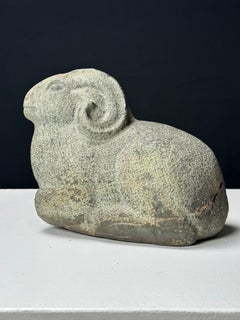
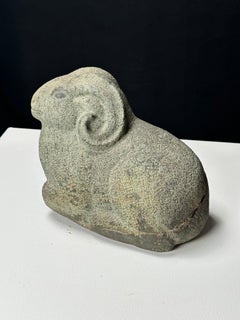
Ram
Ram

Mark MorrisonRam, ca. 1940

$2,000Sale Price|60% Off

Ram

By Mark Morrison

Located in Wilton Manors, FL

Mark Morrison (1895-1964) Ram, ca. 1940 Carved diorite 9" long, 6" wide, height is 7.5" Rusty band on hind quarter is a naturally occurring iron ore occlusion in stone, which bot...

Category

Realist Mid-20th Century Sculptures

Materials

Granite

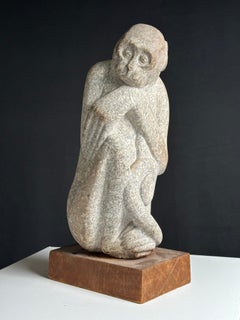
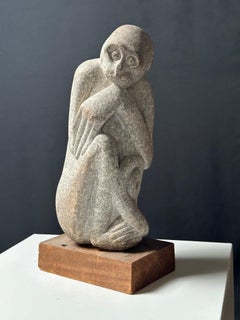
Monkey
Monkey

Mark MorrisonMonkey, ca. 1940

$4,000Sale Price|50% Off

Monkey

By Mark Morrison

Located in Wilton Manors, FL

Mark Morrison (1895-1964) Monkey, ca. 1940 Carved New Hampshire granite 8.5" by 5", height is 16.5" Provenance: Estate of Mrs. Mark Morrison. Born: Kingfisher, OK Education: ...

Category

Realist Mid-20th Century Sculptures

Materials

Granite

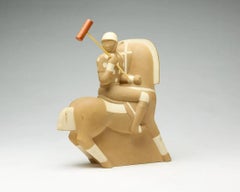
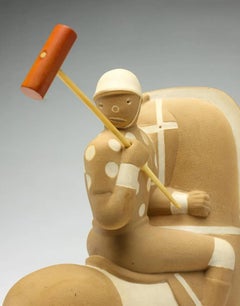
Early 20th Century Ceramic Sculpture of a Polo Player and Horse

Early 20th Century Ceramic Sculpture of a Polo Player and Horse

By Waylande Gregory

Located in Beachwood, OH

Waylande Gregory (American, 1905-1971) Polo Player, c. 1930s Ceramic Inscribed signature on bottom 11 x 8.5 inches Waylande Gregory was considered a major American sculptor during the 1930's, although he worked in ceramics, rather than in the more traditional bronze or marble. Exhibiting his ceramic works at such significant American venues for sculpture as the Whitney Museum of American Art in New York City and at the venerable Pennsylvania Academy of the Fine Arts in Philadelphia, he also showed his ceramic sculptures at leading New York City galleries. Gregory was the first modern ceramist to create large scale ceramic sculptures, some measuring more than 70 inches in height. Similar to the technique developed by the ancient Etruscans, he fired his monumental ceramic sculptures only once. Gregory was born in 1905 in Baxter Springs, Kansas and was something of a prodigy. Growing up on a ranch near a Cherokee reservation, Gregory first became interested in ceramics as a child during a native American burial that he had witnessed. He was also musically inclined. In fact, his mother had been a concert pianist and had given her son lessons. At eleven, he was enrolled as a student at the Kansas State Teacher's College, where he studied carpentry and crafts, including ceramics. Gregory's early development as a sculptor was shaped by the encouragement and instruction of Lorado Taft, who was considered both a major American sculptor as well as a leading American sculpture instructor. In fact, Taft's earlier students included such significant sculptors as Bessie Potter Vonnoh and Janet Scudder. But, Taft and his students had primarily worked in bronze or stone, not in clay; and, Gregory's earliest sculptural works were also not in ceramics. In 1924, Gregory moved to Chicago where he caught the attention of Taft. Gregory was invited by Taft to study with him privately for 18 months and to live and work with him at his famed "Midway Studios." The elegant studio was a complex of 13 rooms that overlooked a courtyard. Taft may have been responsible for getting the young man interested in creating large scale sculpture. However, by the 1920's, Taft's brand of academic sculpture was no longer considered progressive. Instead, Gregory was attracted to the latest trends appearing in the United States and Europe. In 1928 he visited Europe with Taft and other students. "Kid Gregory," as he was called, was soon hired by Guy Cowan, the founder of the Cowan Pottery in Cleveland, Ohio, to become the company's only full time employee. From 1928 to 1932, Gregory served as the chief designer and sculptor at the Cowan Pottery. Just as Gregory learned about the process of creating sculpture from Taft, he literally learned about ceramics from Cowan. Cowan was one of the first graduates of Alfred, the New York School of Clayworking and Ceramics. Alfred had one of the first programs in production pottery. Cowan may have known about pottery production, but he had limited sculptural skills, as he was lacking training in sculpture. The focus of the Cowan Pottery would be on limited edition, table top or mantle sculptures. Two of the most successful of these were Gregory's "Nautch Dancer," (fig. 1) and his "Burlesque Dancer," (fig. 2). He based both sculptures on the dancing of Gilda Gray, a Ziegfield Follies girl. Gilda Gray was of Polish origin and came to the United States as a child. By 1922, she would become one of the most popular stars in the Follies. After losing her assets in the stock market crash of 1929, she accepted other bookings outside of New York, including Cleveland, which was where Gregory first saw her onstage. She allowed Gregory to make sketches of her performances from the wings of the theatre. She explained to Gregory, "I'm too restless to pose." Gray became noted for her nautch dance, an East Indian folk dance. A nautch is a tight, fitted dress that would curl at the bottom and act like a hoop. This sculpture does not focus on Gray's face at all, but is more of a portrait of her nautch dance. It is very curvilinear, really made of a series of arches that connect in a most feminine way. Gregory created his "Burlesque Dancer" at about the same time as "Nautch Dancer." As with the "Nautch Dancer," he focused on the movements of the body rather than on a facial portrait of Gray. Although Gregory never revealed the identity of his model for "Burlesque Dancer," a clue to her identity is revealed in the sculpture's earlier title, "Shimmy Dance." The dancer who was credited for creating the shimmy dance was also Gilda Gray. According to dance legend, Gray introduced the shimmy when she sang the "Star Spangled Banner" and forgot some of the lyrics, so, in her embarrassment, started shaking her shoulders and hips but she did not move her legs. Such movement seems to relate to the "Burlesque Dancer" sculpture, where repeated triangular forms extend from the upper torso and hips. This rapid movement suggests the influence of Italian Futurism, as well as the planar motion of Alexander Archipenko, a sculptor whom Gregory much admired. The Cowan Pottery was a victim of the great depression, and in 1932, Gregory changed careers as a sculptor in the ceramics industry to that of an instructor at the Cranbrook Academy in Bloomfield Hills, Michigan. Cranbrook was perhaps the most prestigious place to study modern design in America. Its faculty included the architect Eliel Saarinen and sculptor Carl Milles. Although Gregory was only at Cranbrook for one and one half years, he created some of his finest works there, including his "Kansas Madonna" (fig. 3). But, after arriving at Cranbrook, the Gregory's had to face emerging financial pressures. Although Gregory and his wife were provided with complimentary lodgings, all other income had to stem from the sale of artworks and tuition from students that he, himself, had to solicit. Gregory had many people assisting him with production methods at the Cowan Pottery, but now worked largely by himself. And although he still used molds, especially in creating porcelain works, many of his major new sculptures would be unique and sculpted by hand, as is true of "Kansas Madonna." The scale of Gregory's works were getting notably larger at Cranbrook than at Cowan. Gregory left the surface of "Kansas Madonna" totally unglazed. Although some might object to using a religious title to depict a horse nursing its colt, it was considered one of Gregory's most successful works. In fact, it had a whole color page illustration in an article about ceramic sculpture titled, "The Art with the Inferiority Complex," Fortune Magazine, December, 1937. The article notes the sculpture was romantic and expressive and the sculpture was priced at $1,500.00; the most expensive sculpture in the article. Gregory was from Kansas, and "Kansas Madonna" should be considered a major sculptural document of Regionalism. Gregory and his wife Yolande moved to New Jersey in the summer of 1933. And the artist began construction on his new home in the Watchung Mountains of Bound Brook (Warren today) in 1938. His enormous, custom kiln was probably constructed at the start of 1938. Gregory's new sculptures were the largest ceramic sculptures in western art, in modern times. To create these works of ceramic virtuosity, the artist developed a "honeycomb" technique, in which an infrastructure of compartments was covered by a ceramic "skin." Science and atomic energy were a theme in Gregory's most significant work, the "Fountain of the Atom" (fig. 4), at the 1939 New York's World Fair. This major work included twelve monumental ceramic figures at the fairground entrance from the newly constructed railway entrance, giving the work great visibility and prominence. The framework of the fountain itself was of steel and glass bricks. It consisted of a bluish green pool which was sixty five feet in diameter. Above it were two concentric circular tiers, or terraces, as Gregory called them; the first wider than the second. On the first terrace were eight "Electrons," comprised of four male and four female terra cotta figures, each approximately 48 inches high. These relate to the valance shell of the atom. Above them on a narrower terrace, were the much larger and heavier terra cotta figures depicting the four elements, each averaging about 78 inches in height and weighing about a ton and a half. Of the four, "Water" and "Air" were male, while "Earth" and "Fire" were female. This terrace represents the nucleus of the atom. In the center of the fountain, above the "Elements," was a central shaft comprised of sixteen glass tubes from which water tumbled down from tier to tier. At the top, a colorful flame burned constantly. The glass block tiers were lit from within, the whole creating a glowing and gurgling effect. Since the fair was temporary, the figures could be removed after its closing. But the credit for the design of the structure of the fountain belongs to collaborator Nembhard Culin, who was responsible for several other structures on the fair grounds as well. Although Gregory created a figure of "Fire" for the "Fountain of the Atom," he also executed a second, slightly smaller but more defined version which he exhibited at various locations (including Cranbrook, Baltimore Museum, etc.) in 1940-1941, during the second year of the fair (fig.5). Measuring 61 inches in height, "Fire" may be a metaphor for sexual energy, as well as atomic energy. Gregory stated, "Fire is represented by an aquiline female figure being consumed in endless arabesques of flame." Portraiture was also a significant focus of Gregory's sculpture. Gregory produced many commissioned portraits of local people as well as celebrities. He created Albert Einstein's portrait from life (fig. 6, ca. 1940) after Einstein had seen Gregory's "Fountain of the Atom." He also sculpted some of the leading figures in entertainment, including 2 sculptures of Henry Fonda, who became a personal friend. Gregory also sculpted a series of idealized female heads, both in terra cotta and in porcelain. These include "Girl with Olive" (ca. 1932) and "Cretan Girl;"(ca. 1937) both are very reductive and almost abstract works that call to mind Constantine Brancusi's "Mademoiselle Pogany" (1912, Philadelphia Museum of Art). But perhaps one of his most original female heads is "Head of a Child" (fig. 7, ca. 1933), a sensitive white glazed terra cotta portrayal with elaborately crafted braded hair, was originally created as one of a pair. Gregory also produced sculptural works for the Works Progress Administration. The WPA was a work relief project that greatly helped artists during the great depression. Founded by the Federal Government in 1935, an estimated 2500 murals were produced. Among these public works were the iconic post office murals. But, among the painted murals were also sculptural relief murals including Gregory's "R.F.D.," 1938, for the Columbus, Kansas Post Office. But, Gregory's largest WPA relief...

Category

Mid-20th Century Sculptures
Materials

Ceramic

Untitled
Untitled

Untitled

By Antoine Poncet

Located in Columbia, MO

Antoine Poncet (French‑Swiss, 1928 - 2022) was a sculptor whose work belongs to the lineage of modern abstraction shaped by Jean Arp and Constantin Brâncuşi. Born in Paris into an ar...

Category

Contemporary Mid-20th Century Sculptures

Materials

Alabaster, Marble

Nude Walking, Early 20th Century Bronze Sculpture, Cleveland School Artist

Nude Walking, Early 20th Century Bronze Sculpture, Cleveland School Artist

By Max Kalish

Located in Beachwood, OH

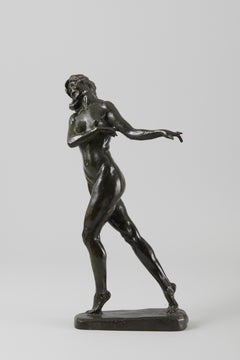
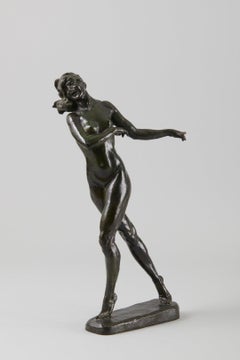
Max Kalish (American, 1891-1945) Nude Walking, 1930 Bronze Signed and dated on base 17 x 9 x 4 inches Born in Poland March 1, 1891, figurative sculptor Max Kalish came to the United States in 1894, his family settling in Ohio. A talented youth, Kalish enrolled at the Cleveland Institute of Art as a fifteen-year-old, receiving a first-place award for modeling the figure during studies with Herman Matzen. Kalish went to New York City following graduation, studying with Isidore Konti and Herbert Adams...

Category

American Modern Mid-20th Century Sculptures

Materials

Bronze

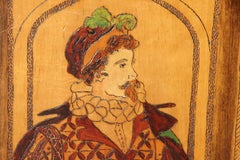
Antique Renaissance Man Carved  and Polychromed Plaque

Antique Renaissance Man Carved and Polychromed Plaque

Located in Douglas Manor, NY

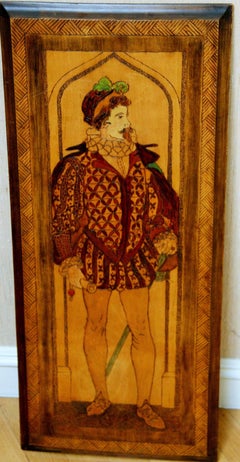
A Renaissance man,circa 1930's polychrome painting on a wood plaque . Artist unknown

Category

Mid-20th Century Sculptures

Materials

Wood, Oil

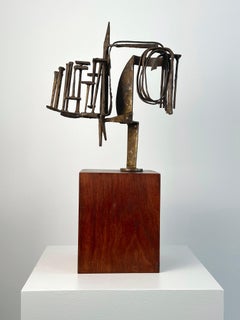
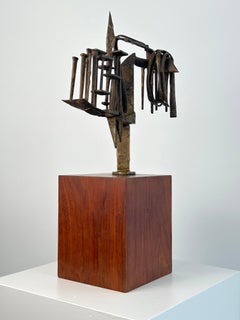
Banner (abstract expressionist sculpture, Tulsa OK artist)

Banner (abstract expressionist sculpture, Tulsa OK artist)

Located in Wilton Manors, FL

Duayne Hatchett ((1925-2015). Banner, 1958. Welded metal, sculpture measures 11 h. x 9 w. x 3.75 d. inches. Measuring a total of 17.5 inch high on base. Base measures 5.5 x 5.5 by 6 ...

Category

Abstract Expressionist Mid-20th Century Sculptures

Materials

Metal

Vase Deux Anses Hautes (A.R.213)

Vase Deux Anses Hautes (A.R.213)

By Pablo Picasso

Located in PARIS, FR

• Picasso began working with ceramics in 1946 at the Madoura workshop in Vallauris, marking the beginning of an important and highly productive chapter in his career. What initially ...

Category

Modern Mid-20th Century Sculptures

Materials

Ceramic

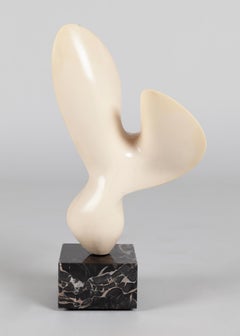
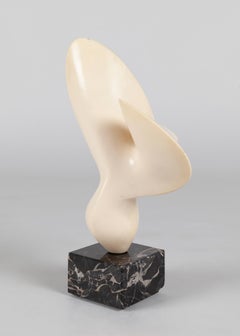
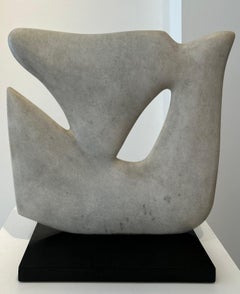
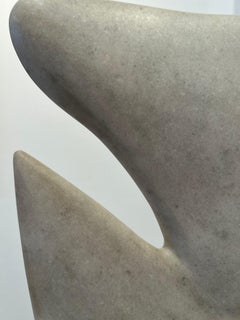
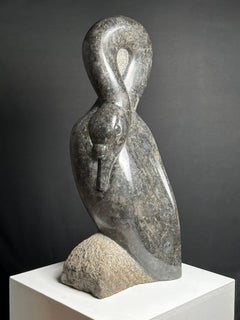
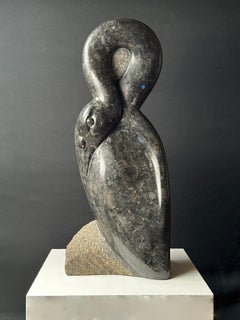
L'oiseau
L'oiseau

L'oiseau

Located in PARIS, FR

This elegant marble sculpture by Étienne Hajdu transforms stone into a fluid, abstract form that conveys both movement and serenity. Smooth, flowing contours and carefully designed n...

Category

Abstract Mid-20th Century Sculptures

Materials

Marble

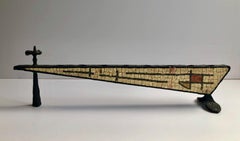
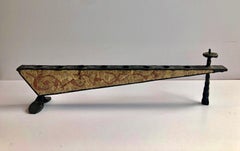
Brutalist Hand Forged Iron Mosaic Sculpture Menorah Israeli David Palombo

Brutalist Hand Forged Iron Mosaic Sculpture Menorah Israeli David Palombo

By David Palombo

Located in Surfside, FL

Hand Forged Iron Stone Mosaic Hanukah Menorah Candelabra David Palombo was an Israeli sculptor and painter. He was born in Turkey to a traditional family and immigrated to the Land of Israel with his parents in 1923. They lived in the Nahalat Shiva neighborhood of Jerusalem. In 1940 he began his studies at Bezalel Academy of Arts and Design, and from 1942 was a student of sculptor Ze’ev Ben-Zvi. For a period of time, Palombo was an assistant at Ben-Zvi’s studio and also taught at Bezalel. During this period he was also a member of the “Histadrut HaNoar HaOved VeHaLomed” (The General Federation of Students and Young Workers in Israel). In the 1940s he took art lessons at night. In 1948 he went to Paris, where he visited the studio of the sculptor Constantin Brancusi whose work influenced him. Around 1958 he married the artist Shulamit Sirota. In 1960 he quit his job to devote himself to art. In 1964 he married for the second time to the artist Yona Palombo. The two of them went to live in an abandoned home on Mount Zion in Jerusalem. In 1966 he was killed when the motorcycle on which he was riding ran into a chain stretched across the street to prevent the desecration of Shabbat. His widow opened a museum in their home that was active until the year 2000. Work by Palombo is included in the Judaic collection of the Jewish Museum (a well known Hanukkah menora). Palombo executed the impressive metal gates of the Tent of Remembrance at the Yad Vashem, the memorial to the martyrs of the holocaust, as well as the gates to the Knesset Building the United Nations Educational Scientific and Cultural Organization (Unesco award) awarded him a scholarship for study in Japan. He worked in marble, granite, bronze, iron and steel. as well as with glass mosaic tiles. Palombo’s early works, in the 1950s, were influenced by modernist sculptors such as Brancusi. These works were composed of abstract images from nature and were carved out of stone or wood. At the end of the 1950s he began making metal sculptors, using the technique of welding. His work took on a more abstract and expressive character. Education 1940 Painting with Isidor Ascheim, New Bezalel School for Arts and Crafts, Jerusalem 1942 Sculpture with Zeev Ben Zvi, Jerusalem 1956 Mosaic, Ravenna, Italy 1958 Welding Course Awards And Prizes 1966 UNESCO Award Exhibitions: Sculpture in Israel, 1948-1958 Mishkan Museum of Art, Kibbutz Ein Harod Artists: Zvi Aldouby, Yitzhak Danziger, Arieh Merzer, Dov Feigin, Aaron Priver, David Palumbo, Menashe Kadishman, Kosso Eloul, Yehiel Shemi, Zahara Schatz. The Spring Exhibition of Jerusalem Artists, Artists' House, Jerusalem Artists: Palombo, David Bezalel Schatz, Mordechai Levanon, Fima, Ludwig Blum 12 Artists, The Bezalel National Museum, Jerusalem Avraham Ofek, Aviva Uri, Avigdor Arikha, Yosl Bergner, Lea Nikel, Palombo, Ruth Zarfati...

Category

Arte Povera Mid-20th Century Sculptures

Materials

Stone, Iron

Black Swan
Black Swan

Mark MorrisonBlack Swan, ca. 1950

$7,500Sale Price|70% Off

Black Swan

By Mark Morrison

Located in Wilton Manors, FL

Mark Morrison (1895-1964) Black Swan , ca. 1950 Carved and polished black pearl granite 7" wide, 11.5" deep, height is 29" Provenance: Estate of Mrs. Mark Morrison. Born: Kin...

Category

Realist Mid-20th Century Sculptures

Materials

Granite

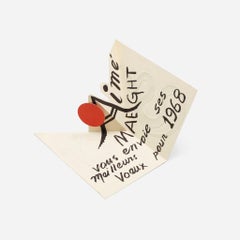
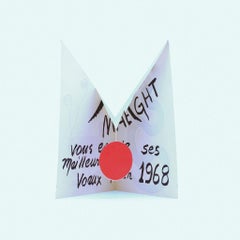
Alexander Calder - rare Maeght sculpted holiday card - collectors item, 1960s

Alexander Calder - rare Maeght sculpted holiday card - collectors item, 1960s

By Alexander Calder

Located in New York, NY

Alexander Calder rare Maeght sculpted holiday card, 1968 Hand made sculpted paper collage on paper with embossing Embossed artist's monogram 10 × 7 × 6 1/2 inches This rare, fold-ou...

Category

Contemporary Mid-20th Century Sculptures

Materials

Mixed Media, Offset, Lithograph, Laid Paper, Paper

Vintage Midcentury Demitasse Coffee Set Hans Achtziger for Hutschenreuther Selb

Vintage Midcentury Demitasse Coffee Set Hans Achtziger for Hutschenreuther Selb

Located in East Quogue, NY

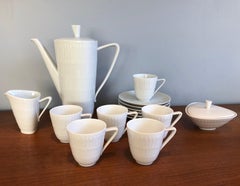
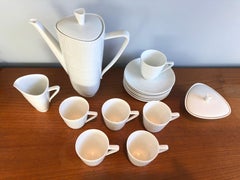
Pristine decorative white porcelain 'Apart' coffee demitasse set from Hutschenreuther Selb, with 6 cups, 6 saucers, coffee pot, creamer/milk jug, sugar bowl (15 piece set). Germain porcelain maker Hutschenreuther (est.1814) commissioned sculptor Hans Achtziger...

Category

Modern Mid-20th Century Sculptures

Materials

Porcelain

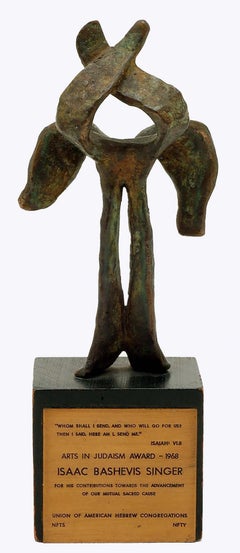
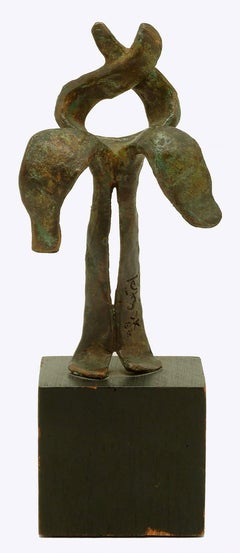
Nathaniel Kaz - Sculpture for Isaac Bashevis Singer Arts in Judaism Award Signed

Nathaniel Kaz - Sculpture for Isaac Bashevis Singer Arts in Judaism Award Signed

By Nathaniel Kaz

Located in New York, NY

Nathaniel Kaz Bronze Sculpture to Isaac Bashevis Singer for Arts in Judaism Award, 1966 Bronze, Square wooden base, Metal tag Signed and dated "66" to back of bronze portion of the w...

Category

Abstract Expressionist Mid-20th Century Sculptures

Materials

Metal, Bronze

Chouette (A.R. 606)
Chouette (A.R. 606)

Chouette (A.R. 606)

By Pablo Picasso

Located in OPOLE, PL

Chouette (A.R. 606) stamped, marked and numbered 'Edition Picasso / Madoura Plein Feu / Edition Picasso / 110/500 / R 149' (underneath) white earthenware ceramic vase, partially engr...

Category

Modern Mid-20th Century Sculptures

Materials

Ceramic

Owl, 1954
Owl, 1954

Owl, 1954

By Pablo Picasso

Located in Palo Alto, CA

Pablo Picasso Hibou, 1954 AR 253 Inspired by one of the most celebrated ceramic works of Pablo Picasso, this striking Hibou vase, 1954 (AR 253), capture...

Category

Mid-20th Century Sculptures
Materials

Ceramic, Earthenware

Read More

At Hosfelt Gallery, Bertoia Masterworks Complement Dynamic Contemporary Art

For nearly three decades, San Francisco–based Todd Hosfelt has curated against the grain — with a show on the legendary modernist Harry Bertoia the latest case in point.

This Weathered-Steel Sculpture Distills a Form of Protest into a Minimalist Monument

Part of Alejandro Vega Beuvrin’s “Barricada” series, the work is a subversive tribute to the street smarts of citizen activists.

How the Chunky, Funky Ceramics of 5 Mid-Century American Artists Balanced Out Slick Modernism

Get to know the innovators behind the pottery countercultural revolution.

Art Brings the Drama in These Intriguing 1stDibs 50 Spaces

The world’s top designers explain how they display art to elicit the natural (and supernatural) energy of home interiors.

Chryssa’s 1962 Neon Sculpture Was Way ahead of the Art-World Curve

By working with lettering, neon and Pop imagery, Chryssa pioneered several postmodern themes at a time when most male artists detested commercial mediums.

How to Spot a Fake KAWS Figure

KAWS art toys have developed an avid audience in recent decades, and as in any robust collectible market, counterfeiters have followed the mania. Of course, you don’t have to worry about that on 1stDibs, where all our sellers are highly vetted.

A Giant Wedding Cake Has Us Looking at Portuguese Tiles in a New Light

At Waddesdon Manor, artist Joana Vasconcelos has installed a three-tiered patisserie inspired by the narrative tile work of her homeland. We take a look at the cake sculpture and how Portuguese tiles have been used in architecture from the 17th century to today.

These Soft Sculptures Are Childhood Imaginary Friends Come to Life
Miami artist and designer Gabriela Noelle’s fantastical creations appeal to the Peter Pan in all of us.